
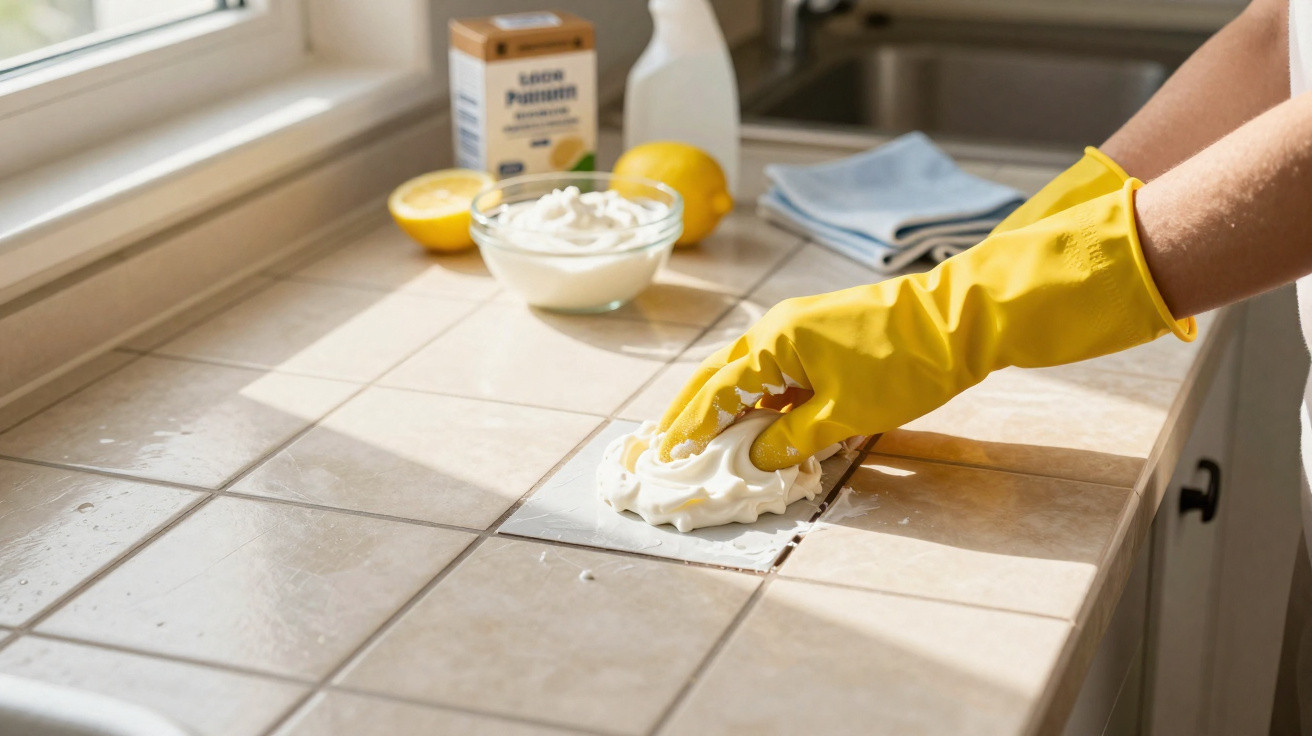
On a Saturday morning, when moving the fruit bowl, you may notice that grey line along the splashback. The tiles are clean and the worktop is gleaming, yet the grout tells a different story: sauce splashes, cooking steam, coffee marks and tiny spots of grease that have built up over the weeks. We all know that moment when the kitchen suddenly looks less tidy, despite having just been cleaned. The good news is that there is no need to reach for bleach or buy a strongly scented product. A homemade paste made from a few very simple ingredients can revive dull grout. The result is often surprisingly effective.
Why kitchen grout blackens faster than expected
Grout has an annoying habit of absorbing everything that circulates in a kitchen. Unlike glazed tiles, which are smooth and easy to wipe down, it is slightly porous: hot grease, moisture and fine dust all find a discreet place to settle. Around the hob, this happens more quickly, especially when a frying pan is sizzling or a saucepan boils over slightly. You may feel as though you clean regularly without ever shifting that greyish discolouration. In fact, dirt does not simply remain on the surface. It gradually lodges in the tiny texture of the cement. That is why a quick wipe with a sponge can sometimes seem pointless.
For Claire, who cooks frequently for her two teenagers, the white grout around the hob turned dark beige in under a year. At first she thought it was mould, before noticing that the worst areas were precisely where she made sauces and fried onions. A frequently cited study on household cleaning notes that a kitchen can collect grease particles invisible to the naked eye on surfaces close to cooking appliances within only a few days. This does not mean the room is dirty. Rather, it shows that grout quietly records everyday life.
Black marks are not therefore always a sign of fungus, although areas that remain constantly damp, particularly near the sink, should be monitored. In most instances, they are a combination of baked-on grease, dust and poorly rinsed cleaning-product residue. Grout does not become dirty all at once: it slowly becomes worn-looking. Let us be honest: nobody truly scrubs tile lines every day. Bleach may create an immediate impression of cleanliness, but its smell, fumes and repeated use do not appeal to everyone. A gentler approach can still make a real difference.
The homemade paste that brightens grout without the smell of bleach
This recipe uses three easy-to-find allies: two tablespoons of bicarbonate of soda, one tablespoon of 3% hydrogen peroxide and a few drops of washing-up liquid. Combine them in a small bowl until you have a thick, almost creamy paste that will not run between the tiles. Apply it to blackened grout with an old toothbrush or small soft brush, without trying to scrub furiously from the first minute. Leave it to work for 10 to 15 minutes. The hydrogen peroxide releases oxygen, while the bicarbonate of soda helps loosen embedded residue.
When the waiting time is over, lightly dampen the brush and scrub using small circular movements. Technique matters more than force: vigorous rubbing can weaken old or already cracked grout. Rinse using a clean sponge and warm water, then dry with a microfibre cloth. The first application may lighten the grout without making it perfectly white; that is not a failure. Where grease has been established for months, a second treatment two or three days later often delivers a more even finish. Patience works better than aggression.
Before treating the entire splashback, try the paste in an inconspicuous corner, particularly on coloured grout or old tiles. Do not add vinegar to this mixture: it is a common instinct, but the acidity neutralises part of the bicarbonate of soda’s action and may reduce the intended effectiveness.
“Good cleaning is not about stripping everything away; it is about removing dirt without damaging what needs to last.”
- Make the paste immediately before use so that it retains its active effect.
- Wear gloves if your skin is sensitive to hydrogen peroxide.
- Never combine this preparation with bleach or another chemical cleaner.
- Air the kitchen while cleaning, even though the smell remains mild.
The small habit that stops kitchen grout turning grey again
Once the grout has been brightened, the most frustrating outcome would be seeing it become dull again within a few weeks. After cooking a fatty dish or frying meat, running a lightly damp cloth over the splashback takes less than a minute and prevents some of the build-up. This is not about turning the kitchen into an immaculate laboratory. The aim is simply to stop grease drying in place, because that is when it really starts to cling. A more thorough clean once a month, using a soft brush and a little diluted black soap, is often enough to keep it looking clean.
The most common mistakes stem from an understandable wish to finish quickly. An abrasive sponge, overly harsh scouring powder or a wire brush can scratch the tiles and gouge the grout, leaving it to trap even more dirt afterwards. Also avoid soaking the area for hours: sound grout can cope with moisture, but it does not need to be saturated unnecessarily. If black stains keep returning in exactly the same place, check for a small leak beneath the sink or inadequate ventilation. The kitchen often gives a warning before the issue becomes visible elsewhere.
This homemade paste does not claim to restore grout that is damaged, broken or worn away by time. In that case, it may be necessary to remove a thin layer and regrout the area-an operation that is less difficult than it appears, but one that requires some method. For grout that is simply dull, the change is almost immediate: tiles look brighter and the room appears more orderly, even without moving a single piece of furniture. One clean detail changes the overall impression. It is also a way of taking back control of the everyday marks that we eventually, and wrongly, stop noticing.
| Key point | Detail | Added value for the reader |
|---|---|---|
| Homemade paste | Bicarbonate of soda, 3% hydrogen peroxide and washing-up liquid | Whitens grout without using bleach |
| Waiting time | 10 to 15 minutes before gentle brushing | Helps lift deposits without excessive scrubbing |
| Regular maintenance | A quick wipe after greasy cooking | Limits the return of grey and black marks |

Comments
No comments yet. Be the first to comment!
Leave a Comment