
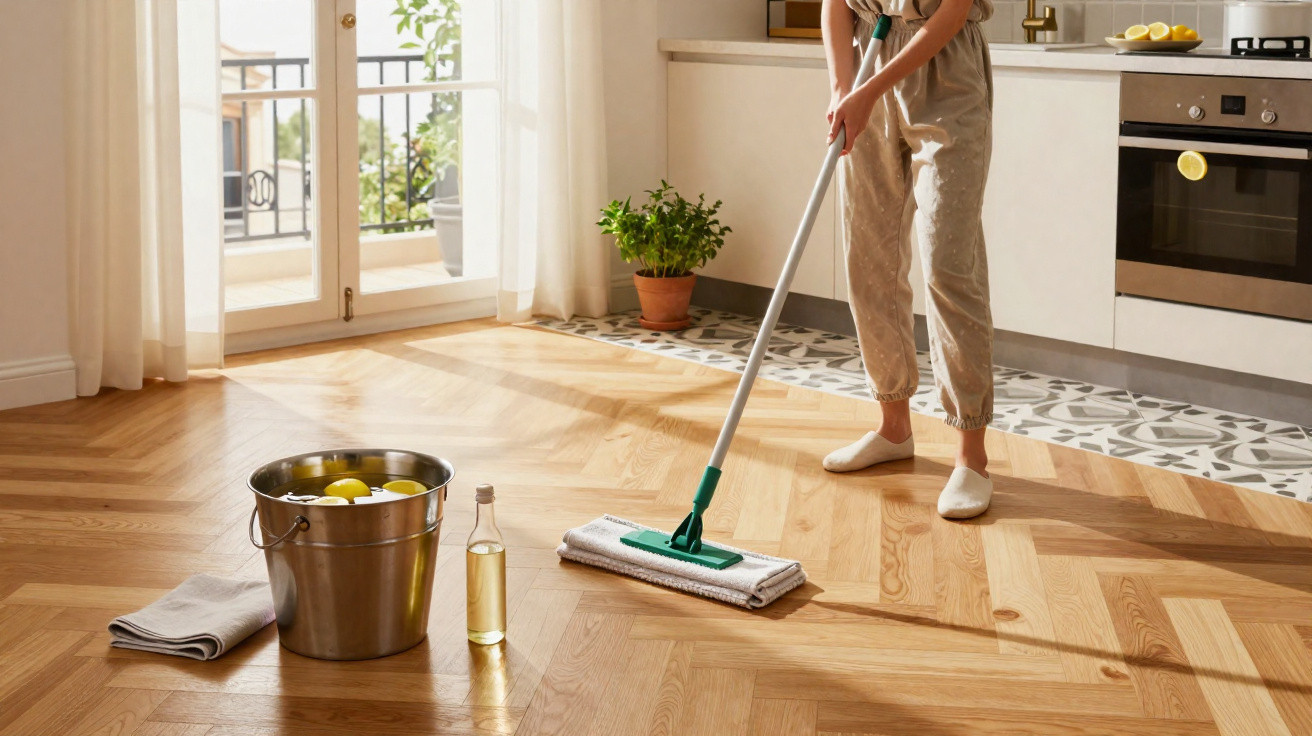
In France, lemon can add fragrance to floor-washing water, provided the nature of each type of flooring is respected.
Published on 23 May 2025, the source page, whose media outlet is not named in the material provided, suggests using lemon juice for routine cleaning. The approach is primarily intended to reduce the strong smells associated with certain household products and leave a fresh feeling after mopping.
Lemon for routine floor cleaning
When a floor looks dull or shows footprints, people often reach first for a scented cleaner, bleach or, less commonly, ammonia. Such products may have a pronounced odour and require careful use, particularly in poorly ventilated rooms.
Lemon offers an alternative for everyday cleaning. Its juice contains citric acid, a compound naturally found in this citrus fruit. On compatible surfaces, it may help lift some light marks, including deposits left by water and small greasy splashes.
“Lemon juice is not a substitute for a disinfectant: its main purpose is to provide light cleaning, neutralise certain odours and fragrance the room.”
The source page also points out that adding lemon to water does not necessarily kill bacteria. This distinction matters: a clean-looking home does not automatically mean that a surface has been disinfected. Following food contamination, mould or illness in the household, an appropriate product should be selected for the situation and used according to its instructions.
The suggested mixture for mopping
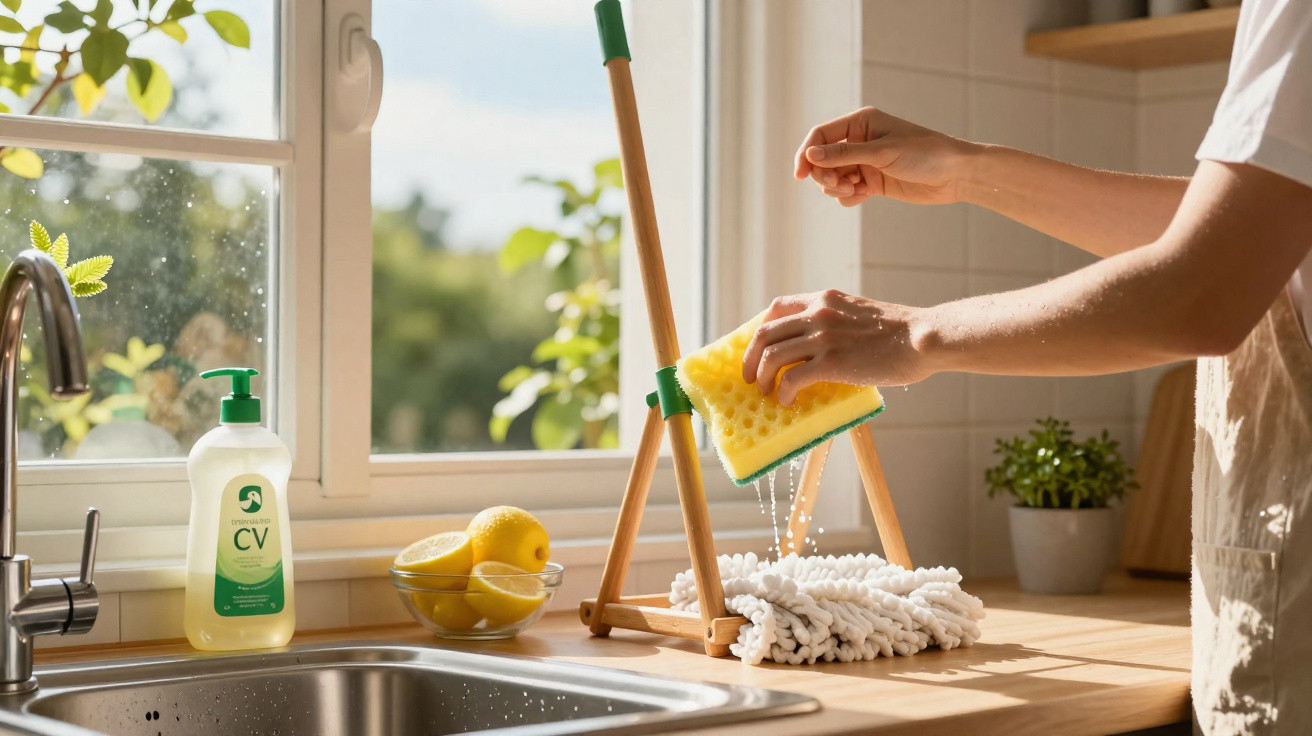
The stated recipe is straightforward: pour one litre of warm water into a bucket, then squeeze in the juice of two lemons. Warm water makes washing easier without being scalding, which also reduces handling risks.
According to the source, one tablespoon of your usual cleaning product may be included if you want to boost the washing action. However, avoid combining several products. Household cleaners should never be mixed at random, especially when they contain powerful active substances.
- Fill a bucket with one litre of warm water.
- Add the juice of two lemons.
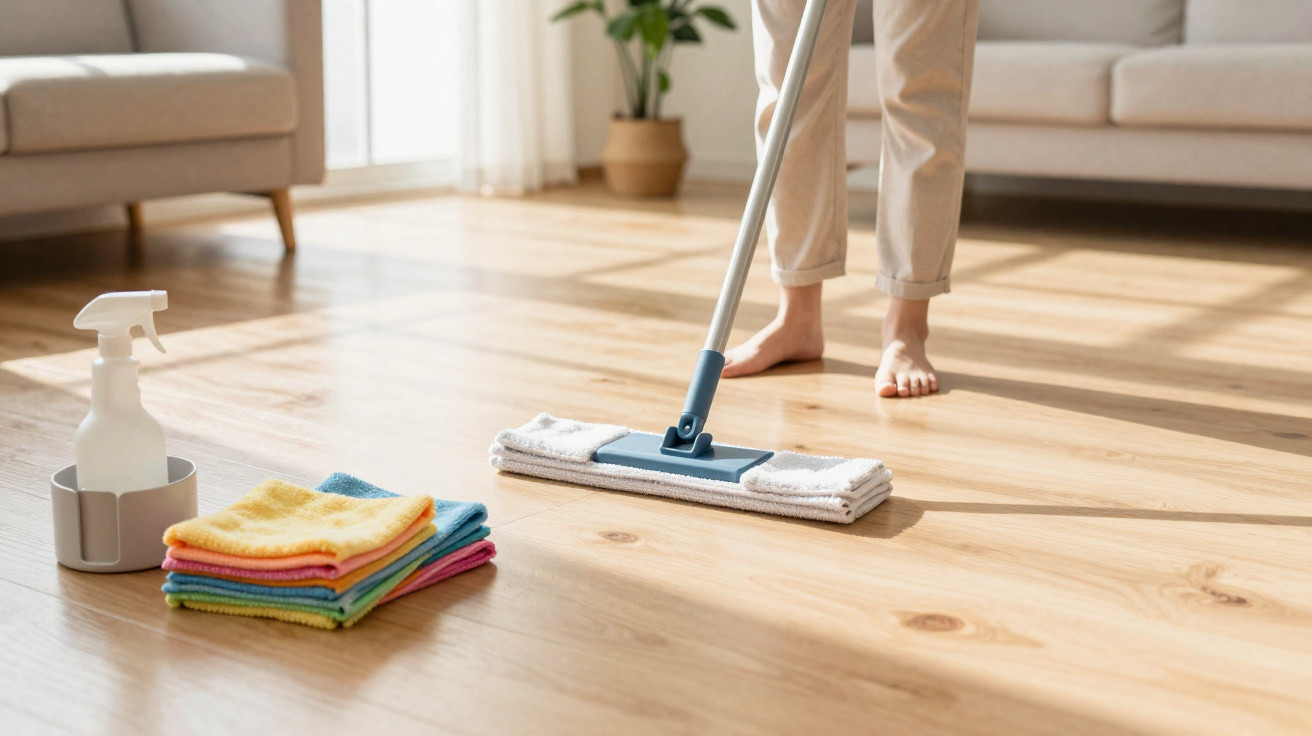
- Use a clean mop, ideally a microfibre one.
- Wring the mop out thoroughly before using it on the floor.
- Allow the room to dry, ventilating it where possible.
Microfibre is widely valued for domestic cleaning because its fine fibres collect dust and dirt. By contrast, a dirty or excessively wet mop may spread residues instead of removing them.
Adapting lemon cleaning to the floor type
The main precaution concerns lemon’s acidity. Not all floor coverings respond in the same way. Limestone-based materials, such as marble, travertine and certain natural stone floors, are sensitive to acidic products. Lemon may dull the surface, leave marks or gradually damage its finish.
The same care is needed with waxed floors, delicate parquet and some laminate coverings. On these materials, too much water itself can be an issue. It can seep between boards, cause the material to swell or damage the joints.
Testing an inconspicuous area
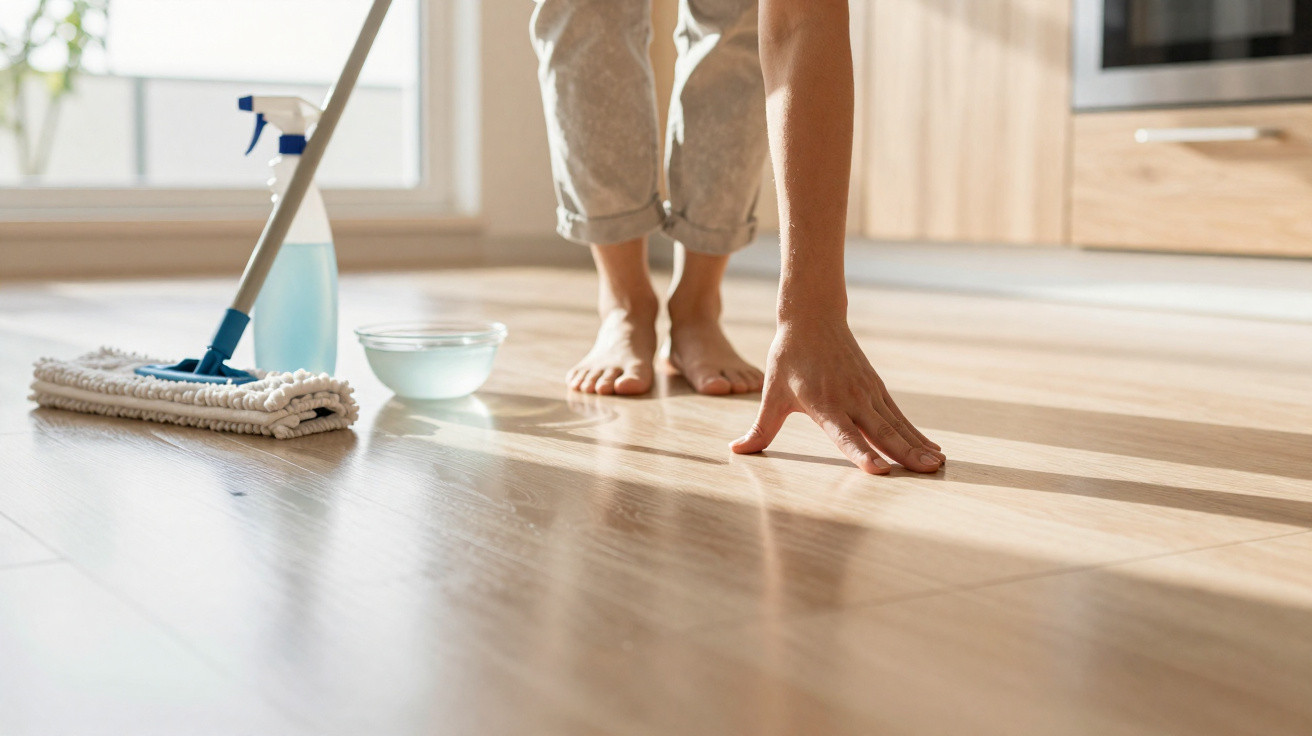
Before applying this mixture across an entire room, the source advises trying it in a hidden corner. This makes it possible to check how the floor reacts once dry. Wait until the tested area is completely dry before assessing the result.
If the covering becomes dull, sticky or develops a ring mark, it is best to stop the test and return to a product expressly recommended by the floor manufacturer. The care guidance supplied when the flooring was installed remains the safest reference.
What also matters before mopping
The result does not depend solely on what is poured into the bucket. Sweeping or vacuuming before washing prevents dust, grains of sand and damp crumbs from being moved across the whole surface. When rubbed beneath a mop, these small particles can also scratch certain floors.
“A floor that has been dusted first, a thoroughly wrung-out mop and a product suited to the covering often make all the difference.”
For greasy kitchen marks, it may be helpful to treat the affected area locally before washing the entire floor. The water should also be changed once it turns grey. Carrying on with dirty water can leave a film after drying.
Where does this method fit in France?
In France, floor care depends chiefly on the material: tiles, sealed parquet, laminate flooring, linoleum, natural stone or resilient flooring. Manufacturers generally specify which products to avoid, especially acids on limestone-based stone and excessive water on wood or laminate.
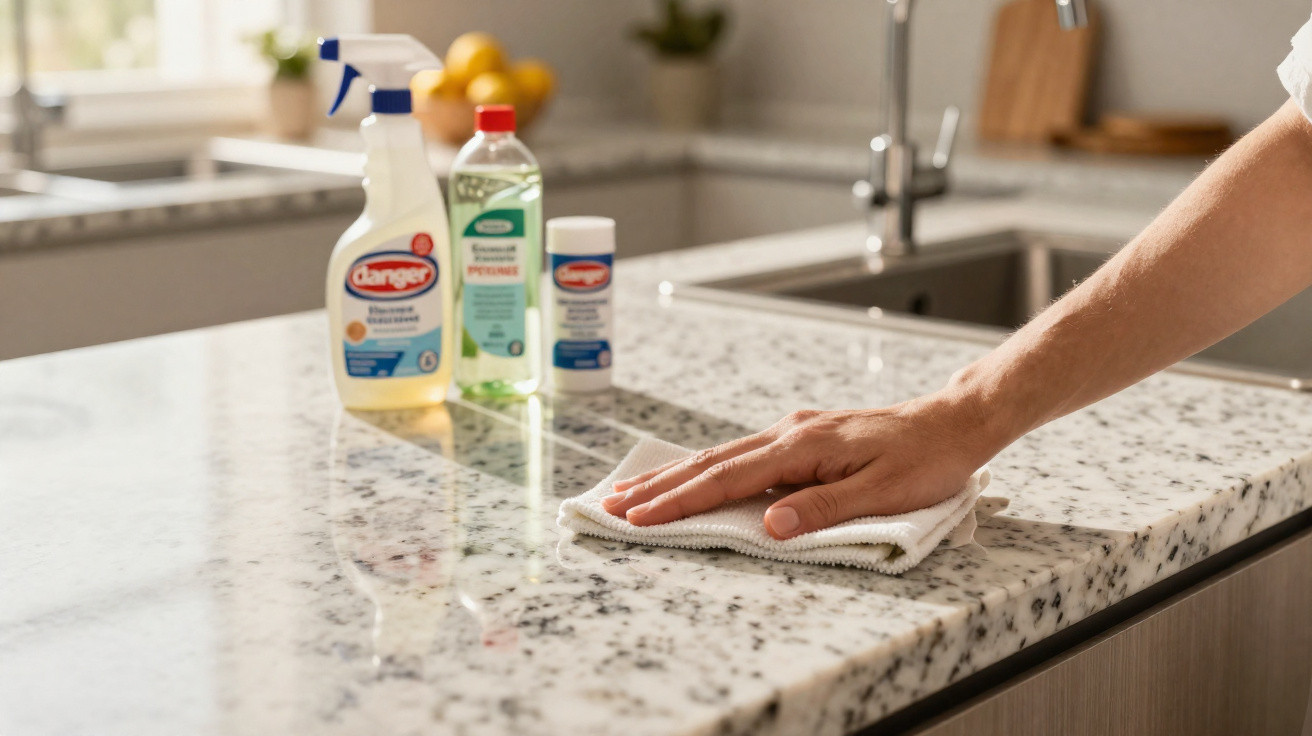
Bleach also calls for particular care. It must never be mixed with other household products, including acidic products such as lemon or vinegar. Combining these products can release dangerous fumes. If a bucket or mop has been used with bleach, it must be rinsed thoroughly before being used for anything else.
A pleasant fragrance does not mean disinfection
Lemon’s fresh scent can make cleaning more pleasant, but it is not a health guarantee. Citric acid is the chemical term for the acid naturally found in citrus fruits. Its action may help with certain marks, but that does not justify using it on every material or in every circumstance.
For regular care of compatible tiled flooring, this mixture can be a simple option. For valuable, old or unidentified flooring, it is better to favour gentle cleaning with very little water, then seek advice from the manufacturer or a floor-care professional.
Comments
No comments yet. Be the first to comment!
Leave a Comment