
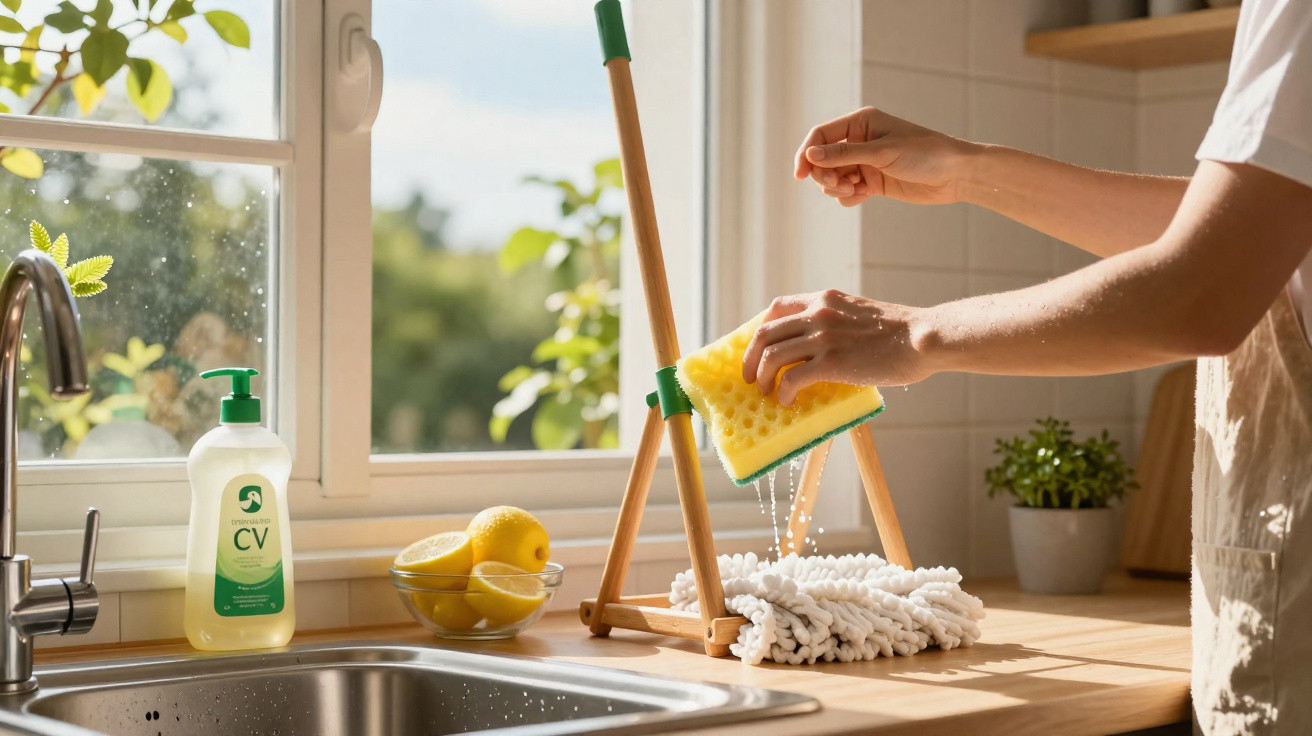
Sometimes, all it takes is opening the cupboard beneath the sink to realise something is wrong. A damp, slightly sour smell rises from the mop left in a heap the day before, while the sponge perched by the sink seems to have absorbed the moisture from the entire kitchen. We all know that awkward moment: you have just cleaned, yet the smell suggests the opposite. The usual response is to add more washing-up liquid or choose a more strongly scented product. However, the issue is not a lack of cleaner. It nearly always comes from what happens after the cleaning, when the sponge and mop stay wet, bunched up and forgotten in a corner. One small habit can make all the difference.
That persistent smell rarely comes from visible dirt
A sponge may look clean yet start to smell unpleasant a few hours later. It is confusing, particularly after thoroughly scrubbing the worktop or carefully rinsing the washing-up. In fact, its porous material traps water, food residue and tiny grease particles in its cells. Without air circulation, the moisture creates a welcoming environment for the bacteria that cause unpleasant smells.
The same applies to a mop, only more dramatically. After cleaning the kitchen floor or bathroom, it is often given a quick rinse and then left at the bottom of a bucket, inside a closed cupboard or even on the edge of the bath. Within 24 hours, that forgotten-laundry smell can take hold. A frequently cited study of kitchen sponges found that they can contain a wide range of bacteria: it is not particularly glamorous, but it explains a great deal.
The key detail is therefore not washing alone, but drying. A sponge that has been drained but not properly aired remains damp at its centre, where the moisture cannot be seen. A folded mop also keeps its fibres pressed together, greatly slowing evaporation. Hidden moisture is more troublesome than the dirt you can see. This is why an item can look spotless at first glance while giving off an unpleasant odour as soon as you pick it up.
The simple trick: hang them up and let them properly breathe
The most effective habit is never to put away a sponge or mop while it is still damp in an enclosed space. Once you have finished using them, rinse them thoroughly, wring them out carefully, then leave them somewhere with good ventilation. For a sponge, a small open holder fixed near the sink makes an immediate difference: it can dry on both sides instead of sitting in a dish. For a mop, the best option is to hang it up, upside down or spread out over a drying rack.
It is easy to leave the sponge on the sink edge because it is convenient and close at hand. Let us be honest: nobody manages this every day with military discipline. Yet leaving it in a saucer of water or wedged beneath a dripping tap turns this small item into an odour sponge. The same principle applies to the mop: a closed bucket may look tidy, but it is precisely where it will dry least effectively.
A more thorough wash once a week also helps provide a fresh start, provided you follow the manufacturer's instructions and replace the sponge when it begins to crumble or retains its smell after cleaning. Proper storage means complete drying. It is not another chore; it simply adds a few seconds to the final step of cleaning.
“A clean sponge is not simply a rinsed sponge: it is a sponge that has had time to dry.”
- Rinse the sponge and mop with clean water after every use.
- Wring them out as thoroughly as possible before leaving them to dry.
- Avoid buckets, drawers and closed cupboards while they are damp.
- Choose a perforated holder or hook that allows air to circulate.
- Replace the sponge as soon as its smell persists despite cleaning.
A small change that makes the kitchen more pleasant
What is surprising about this tip is that it requires neither an expensive product nor a complete cupboard reorganisation. You only need to consider where the sponge ends up after washing the dishes, or what happens to the mop once the floor has dried. The right place is wherever air can circulate, even if it is not always the most discreet location. A hook behind a door, a wall-mounted holder or a corner of a drying rack can solve a problem that has been returning for months.
This habit also prevents the instinct to cover up smells with powerful fragrances. A lemon-scented sponge that remains damp is not necessarily cleaner; it is simply perfumed. Allowing the fibres to dry fully reduces lingering odours and often extends the life of the equipment. That matters, especially when you keep buying sponges without really knowing why they wear out so quickly.
There is something satisfying about these understated everyday improvements. The kitchen feels cleaner, the cupboard beneath the sink is no longer an area you open reluctantly, and the next cleaning session begins without that small grimace. Perhaps everyone has their own method: a sponge on a metal soap dish, a mop dried in the sun, or its handle placed near a radiator in winter. These simple tips often spread more readily among friends and family than through product instructions.
| Essential point | Detail | Added value for the reader |
|---|---|---|
| Air-dry | Do not leave the sponge or mop in a closed container. | Reduces the moisture that feeds unpleasant smells. |
| Choose an open holder | Use a rack, hook or perforated holder. | Allows air to circulate around the fibres. |
| Maintain without delay | Rinse, wring out and replace overly worn equipment. | Keeps the kitchen fresher and cleaning more pleasant. |

Comments
No comments yet. Be the first to comment!
Leave a Comment