
It is 21:40, dinner is over, and someone opens the microwave to warm up a forgotten coffee. That is when the verdict arrives: sauce splatters have dried onto the walls, a mysterious mark is stuck to the turntable, and yesterday’s fish smell seems to have made itself at home inside the appliance. We all know the moment when we close the door again, telling ourselves we will deal with it “tomorrow”. The trouble is that tomorrow quickly turns into next week. Yet one very simple, almost ordinary step can turn this small ordeal into a job lasting just a few minutes. There is no need to scrub until it becomes frustrating. Simply let steam do the dirty work.
The bowl of hot water that really transforms microwave cleaning
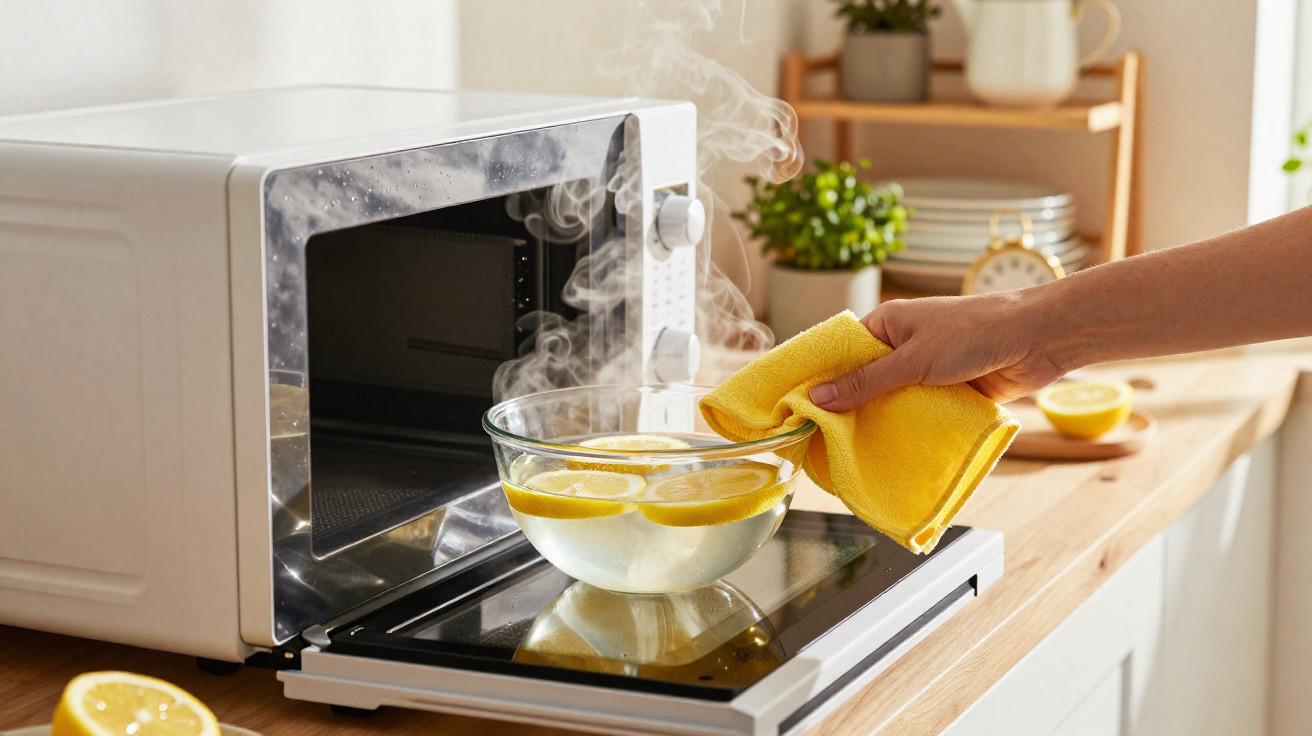
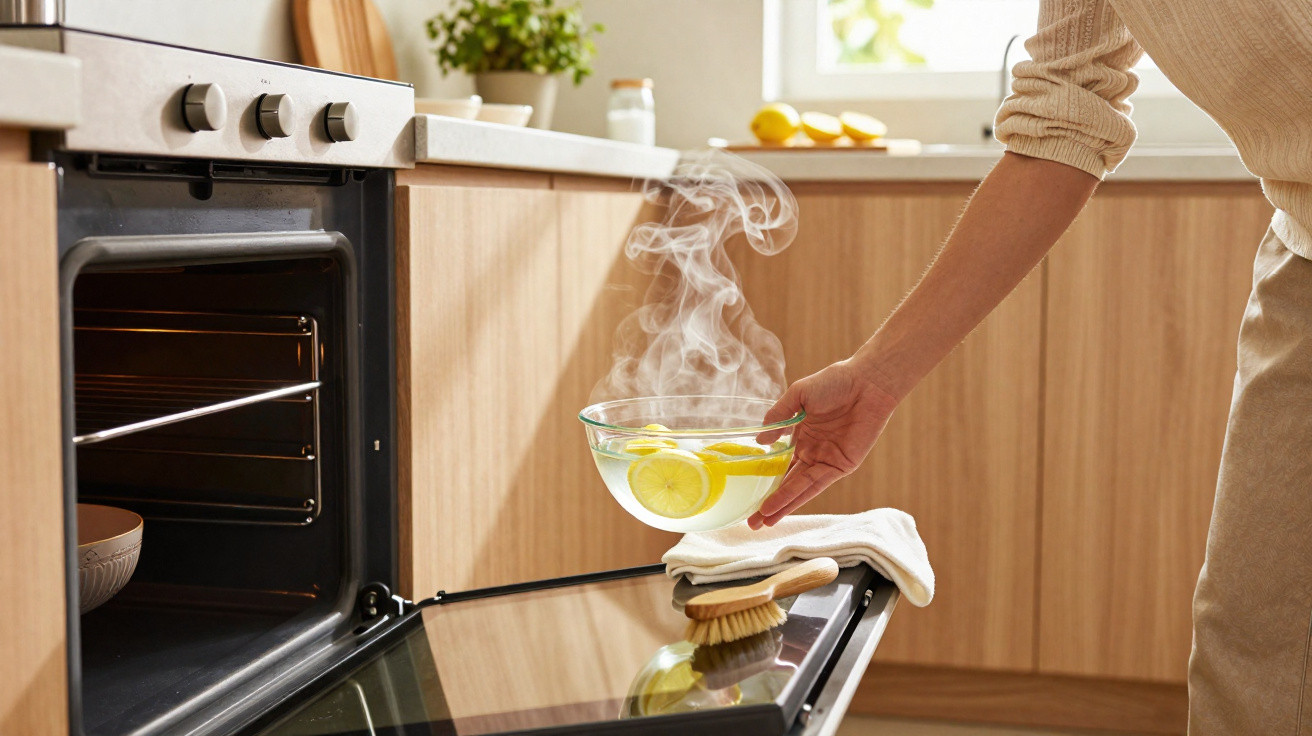
The microwave hack that many people discover too late requires only a bowl of water, a lemon and five minutes of patience. Put a microwave-safe container of water, with a few lemon slices, inside the appliance, then heat it until steam starts to mist up the door. At that point, do not rush in with a sponge: just leave the bowl inside, with the door shut, for two or three minutes. The steam settles on the walls and softens even the greasiest splashes. What appeared baked on suddenly feels far less daunting. A soft cloth will often be enough. It is the sort of tip that seems too straightforward to be effective, until you actually try it.
For Claire, a mother of two, the turning point came after a rather chaotic pasta supper. An overfilled plate burst while heating, sending tomato sauce into the least accessible corners of her appliance. She had considered taking drastic action with degreaser and a brush before trying the bowl of lemon water. After six minutes of heating and three minutes of waiting, the marks came away in under a minute with a damp paper towel. Lemon is not, strictly speaking, a miracle product: above all, it leaves a fresh scent and provides a little help with grease. Steam is the real star. It saves time without making unrealistic promises.
A microwave works by heating the water molecules in food, but the same principle can also be useful for cleaning. Creating a warm, humid environment in the cavity loosens food residues that have dried out after repeated use. They no longer cling as stubbornly to the enamel or interior walls. Steam does not clean everything for you; it gets the surface ready. That is the important distinction. Let us be honest: hardly anyone does this every day. Once a week, or as soon as a splash appears, is more than enough to prevent an unidentified brown crust from forming. A cleaner appliance also tends to smell much more pleasant.
The right method, without mistakes or harsh products
To try this method, half-fill a large, sturdy glass or ceramic bowl that is microwave-safe with water. Add two slices of lemon, or one tablespoon of lemon juice if that is all you have, then heat it for between three and five minutes, depending on your appliance’s power. The water should be very hot, but does not need to boil vigorously. Leave the door closed for a few moments afterwards, allowing the steam to spread around the cavity. Remove the bowl carefully: it will be very hot. Wipe the walls, ceiling, door and turntable with a damp microfibre cloth. The effect is often immediately visible, which makes it easier to carry on.
The most common mistake is using any container simply because it is within reach. Metal vessels, bowls with gold or silver trim, some flimsy plastics and airtight containers do not belong in a microwave. Avoid heating a bowl of water until it has completely evaporated, too: it is neither useful nor safe. If the dirt is old, repeat the process a second time rather than scraping at it with an abrasive sponge. Scratches on the walls or door help no one. Gentle but regular cleaning is more effective than a rescue operation every six months, accompanied by a grimace or two.
For lingering odours, lemon is helpful, although hot water alone can already achieve a great deal. Some people prefer to add a small amount of white vinegar, provided they air the appliance afterwards, as its smell may last longer than expected.
“The right instinct is not to look for the strongest product, but to let time and heat make cleaning easier.”
Keep these points in mind before starting the programme:
- use a wide, stable, microwave-safe bowl;
- never seal the container with an airtight lid;
- wait a few minutes before opening the door;
- remove the turntable and wash it separately if needed;
- wipe the door seal as well, as it is often overlooked.
A small routine that prevents major chores
There is nothing spectacular about this hack, and that may be exactly why it is so easy to make part of your routine. It does not require buying a miracle spray or getting out a full set of cleaning products when the kitchen is already tidy. On an evening when soup has boiled over or a dish has splattered, a bowl of hot water is enough to take control before the marks become established. You begin to notice an appliance that may be used several times a day without ever really being looked at. Keeping the microwave clean is not about household obsession: it simply makes warming up a meal more pleasant, without being met by the smell of the previous one. These quiet details make a kitchen easier to live in.
| Key point | Detail | Added value for the reader |
|---|---|---|
| Steam | A bowl of heated water softens dried-on residues. | Less scrubbing and faster cleaning. |
| Lemon | A few slices add a fresh note and help to deodorise. | A simple alternative to heavily scented sprays. |
| Regularity | A quick wipe after splatters limits build-up. | Avoiding a major weekend chore. |

Comments
No comments yet. Be the first to comment!
Leave a Comment