
On a all experienced it: on a Sunday morning, the kitchen cupboard door squeaks again, the cutlery drawer catches, and an old chest of drawers will not slide open without a little nudge from the hip. The house can suddenly seem to demand ten repairs at once, precisely when there is no time, no tools and, above all, no inclination. Yet the answer is often sitting in a drawer: an ordinary white candle. Rub its wax in the right place and furniture moves more smoothly, doors become quieter and screws can even be easier to drive into wood. It may not look impressive in a renovation video, but you notice the result from the very first movement. Before long, it is hard to do without it.
The white candle: a small household item that puts furniture back in order
The idea seems almost too simple to work: wax reduces friction. Applied to the edges of a wooden drawer, old runners or the bottom edge of a door that rubs slightly, it forms a thin coating that lets surfaces slide against one another more easily. There is no aerosol spray noise, no lingering smell in the living room and no need to bring out the toolbox. An unscented candle is more than enough. Minor points of friction are often what make a home unnecessarily tiring. They may go unnoticed at first, but eventually they irritate everyone.
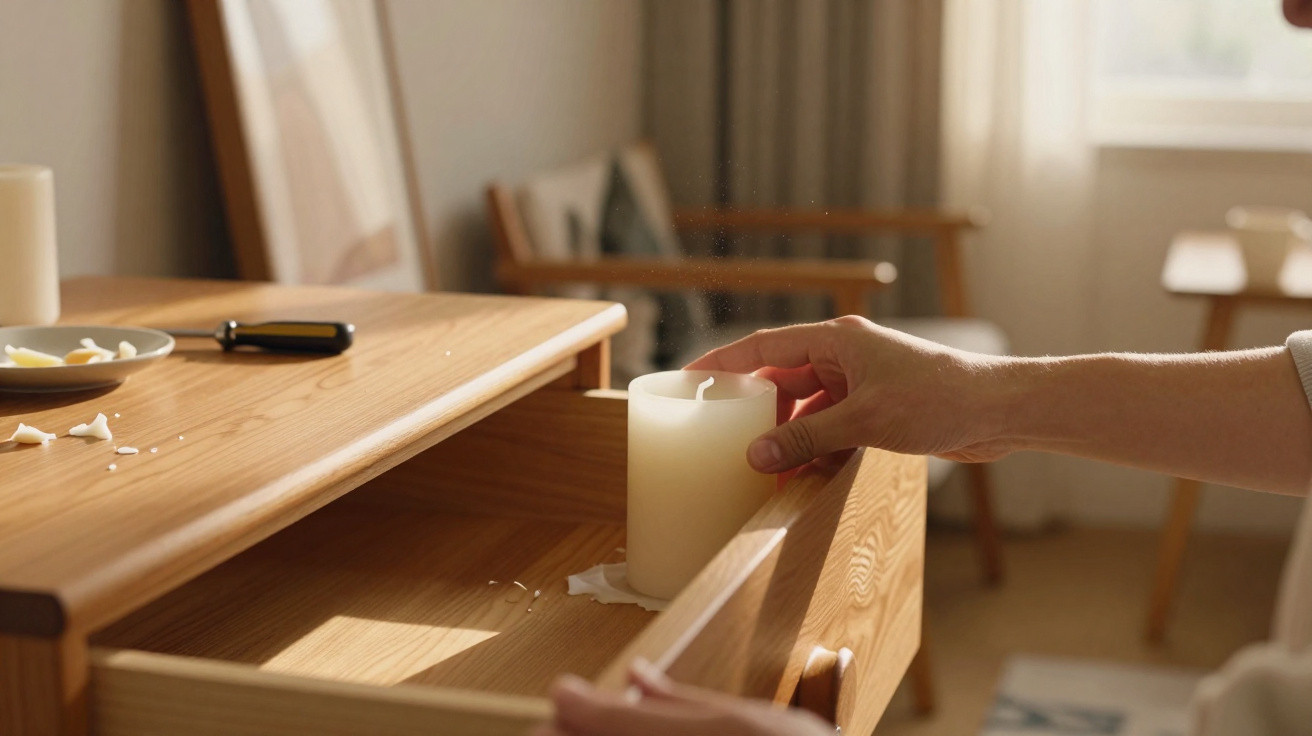
In an older flat, a chest of drawers can resist every opening because the wood has shifted with humidity or temperature changes. Empty the drawer, remove it, then rub wax over the two areas resting on the side battens. Make a few firm passes without trying to leave a thick layer, then put the drawer back. The difference is often immediate. A study by ADEME notes that extending the life of furniture, even through small repairs, reduces premature replacement and the waste that comes with it. This does not fix a broken item; it simply restores its ease of movement.
Wax works because it remains dry and reasonably stable on wood. Unlike cooking oil or a very greasy product, it does not run, soak deeply into the grain or attract as much dust. That detail makes all the difference for everyday furniture. A runner lubricated too heavily can eventually turn sticky, particularly near the kitchen. Using a candle is cleaner and more discreet. In truth, nobody is likely to do this every day. However, five minutes of attention can improve dozens of openings and closings for several months.
Where to apply candle wax for a noticeable difference at home
First, identify the precise contact point. On a drawer, this will be the wooden strips underneath or at the sides, where it slides inside its housing. For an internal door that rubs on the floor, apply a little wax to the lower part of its edge after removing any dust. If the door is badly sticking or the wood has swollen, a candle cannot replace an adjustment or light sanding; it can still ease minor rubbing. The right approach is to use only a small amount, then test the movement several times before applying more.
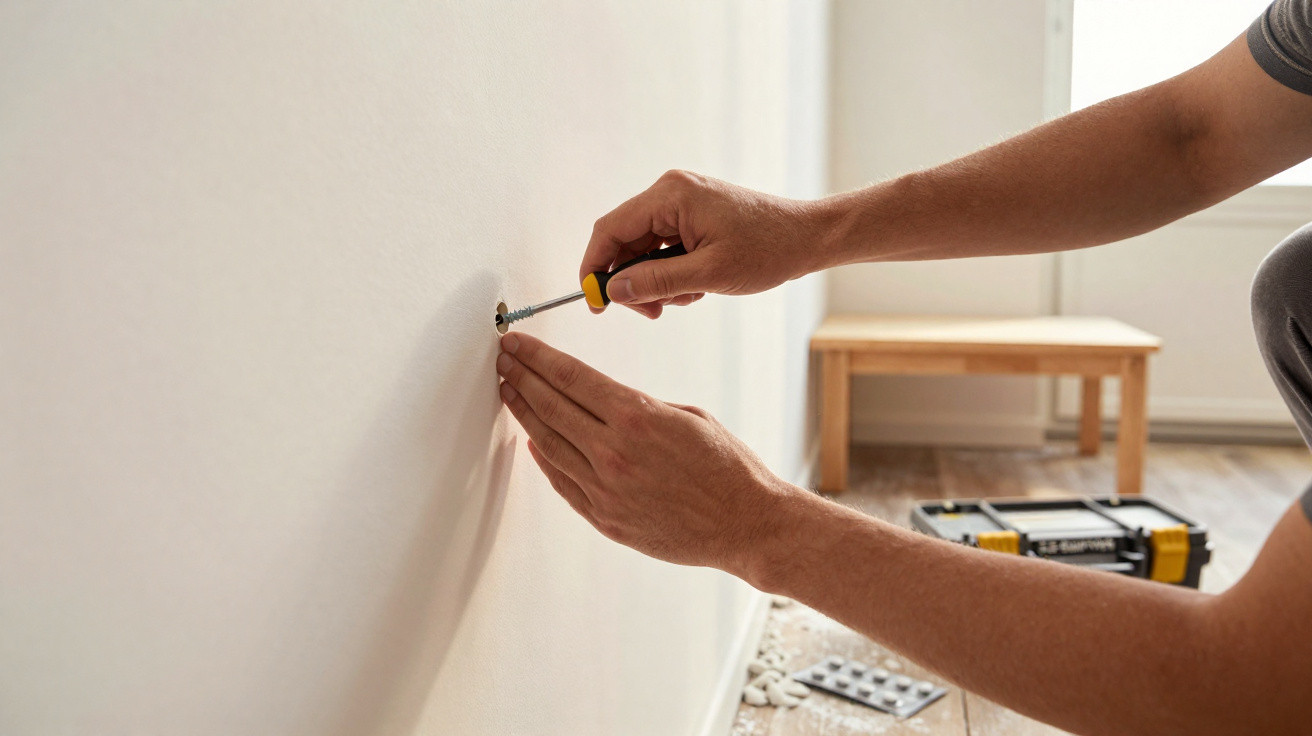
The same trick is useful when driving a screw into solid wood. Rub the thread against the candle, especially when working without a drill or with a dense timber such as oak. The screw goes in more easily, and there is less risk of it jamming halfway through. Many DIY enthusiasts have used this method for years, yet it is surprisingly absent from family advice. Do not wax a screw intended for a support that must remain completely stable in metal or in a technical fixing: in that situation, suitable hardware remains the priority. A simple tip must never replace caution.
Mistakes often start with good intentions: wax is rubbed everywhere, a coloured, scented or glittery candle is chosen, and then a mark is left on pale wood. Choose clean, unscented white wax and try it in an inconspicuous corner if the furniture is varnished. Wax is intended for light friction, not for concealing a genuine fault.
“Good DIY does not always mean adding something: sometimes, it is enough to remove resistance.”
- Clean the area with a dry cloth before applying the wax.
- Rub the candle directly on the surface; do not melt it.
- Test the movement around ten times to distribute the wax.
- Repeat the process when the squeak or catching returns.
A modest action that changes the feel of a room
After treating a drawer or door, the most striking change is not just the return of quiet. It is the almost unusual feeling of living in a place that finally works with you. In the morning, the cupboard opens without waking the entire household; in the evening, cutlery can be put away without battling an awkward drawer. These small frictions, quite literally, weigh more heavily than one might think. They create the impression that everything is ageing badly, even when the furniture is still sturdy. With a candle costing a few pounds, you may rediscover the quality of an old piece you had assumed needed replacing.
There is also something reassuring about such an accessible repair. There is no need for professional-level equipment or mastery of complicated tutorials. You look, touch and test. The same principle can be used elsewhere in the home: clean a seal before replacing it, tighten a handle before changing the door, or steady a chair leg before buying a new one. Useful DIY often begins with very simple attention. When someone close to you asks how you got rid of that old squeak, the answer may surprise them: with a candle forgotten in a drawer.
| Key point | Detail | Added value for the reader |
|---|---|---|
| A white candle | Dry wax reduces friction on wood. | An immediate, affordable and easy-to-find solution. |
| The right areas | Drawer runners, door edges and wood screw threads. | Quieter furniture that is more pleasant to use. |
| The limit to remember | Wax does not correct warped furniture or damaged fixings. | Avoids ineffective repairs and helps you act at the right time. |




Comments
No comments yet. Be the first to comment!
Leave a Comment