
Sometimes, all it takes is opening the microwave door after reheating soup to trigger that slightly awkward moment: dried splashes on the walls, a lingering smell, and a turntable that still feels faintly greasy even after a quick wipe with a sponge. We all know the feeling of promising to deal with it “this weekend”, then shutting the door and heating the next meal. Yet there is no need to reach for an eye-stinging degreasing spray or scrub for half an hour. With a bowl of water, a few very simple ingredients and a little patience, the results can be genuinely surprising. Even the oldest marks eventually lift away. The microwave regains that reassuring cleanliness you thought was gone for good.
Why a microwave gets dirty faster than you realise
Every use leaves behind a trace, even when it is not immediately visible. A bubbling sauce, milk that boils over, a portion of gratin heated too intensely: heat sends tiny droplets onto the ceiling, corners and door, where they dry almost instantly.
The issue is that these residues do not simply sit on the surface. As food is reheated over and over, grease hardens and traps smells, particularly those from fish, cheese or spicy dishes. A study carried out by appliance manufacturers also recommends cleaning the interior at least once a week for an appliance used daily.
The good news is that microwave grime responds exceptionally well to steam. It softens splatters without scratching the walls, artificial fragrances or leaving chemical residue close to food. The most effective cleaning method is often the one that does the work for us.
The lemon steam method that removes almost everything
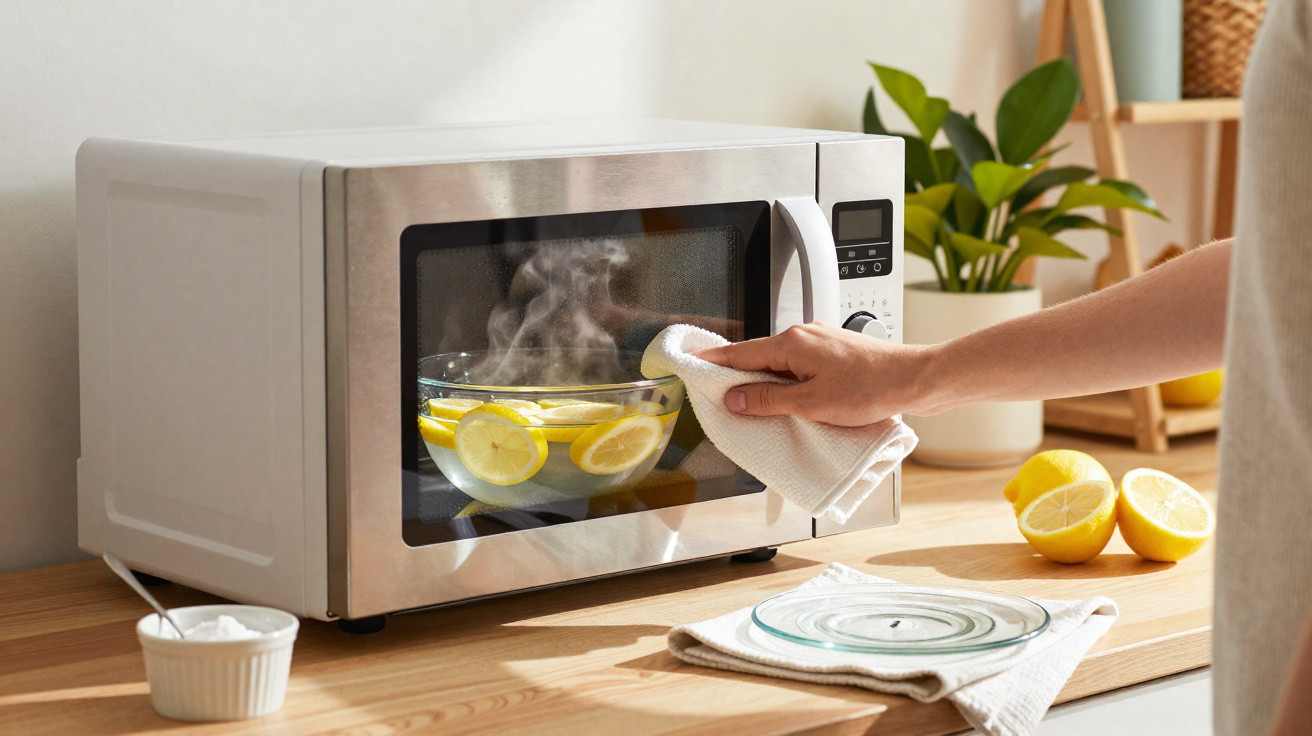
Start by pouring around 250 millilitres of water into a microwave-safe bowl. Squeeze in the juice of half a lemon, then add the squeezed lemon pieces to the water too: their natural oils help neutralise odours while creating a pleasantly fresh feel.
Heat the bowl on high for between three and five minutes, until steam has filled the cavity properly. Do not open the door straight away: leave it to work for a further five minutes. This pause may seem insignificant, but it makes all the difference because condensation settles on the stains and makes them far less stubborn.
Then open the door carefully, as the bowl will be hot, and wipe the walls with a soft sponge or microfibre cloth. Let us be honest: nobody really does this every day. However, this small routine, once a week or after a kitchen mishap, prevents lengthy scrubbing sessions.
The right approach for corners, the door and turntable
The turntable should be removed whenever you give the microwave a thorough clean. Simply wash it in warm water with a drop of mild washing-up liquid, then allow it to dry fully before putting it back; crumbs and unnoticed spills often build up beneath it without us giving them a thought.
For the door, avoid soaking the seals or ventilation grilles. A barely damp cloth moistened with lukewarm water and a little diluted white vinegar is enough to remove fingerprints and the greasy film. Vinegar is highly effective, but its smell may not appeal: if so, go over the area again with a clean damp cloth and plain water.
If a mark remains, do not immediately reach for an abrasive sponge. The interior coating is more delicate than it looks, and scratches can become places where dirt collects.
“Steam does most of the work: the cloth should only be used to carry away what has loosened.”
- Use a glass or ceramic bowl, never a metal container.
- Choose a non-abrasive sponge and a clean cloth.
- Clean seals gently, without pulling at them or soaking them.
When bicarbonate of soda becomes the ally for old stains
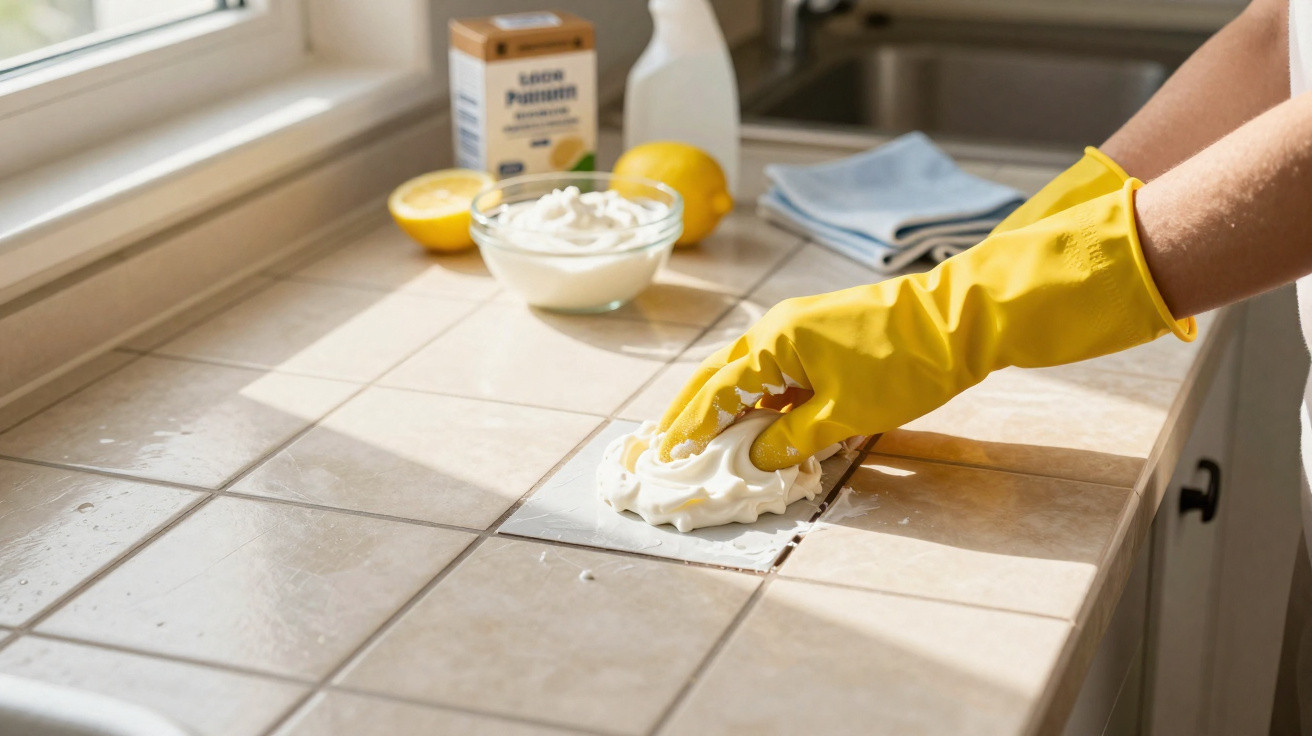
Sometimes a splash has been heated several times, until it forms a small brown crust that seems almost baked on. In that case, mix one teaspoon of bicarbonate of soda with a few drops of water to make a soft paste, then apply it only to the affected area.
Leave it for ten minutes without switching on the appliance, then rub very lightly with a damp cloth. Bicarbonate of soda works as a gentle cleaner and absorbs unpleasant odours effectively, without the harshness of scouring powders. There is no need to use it everywhere: a small amount is more than enough.
Avoid bleach, oven cleaners and heavily fragranced products, however. They may leave unpleasant fumes when the appliance heats up and can even damage some coatings. A clean microwave does not need to smell of household cleaner: it should simply smell of… nothing.
The detail that makes all the difference: preventing new splatters
A deep clean makes you want to keep the result for at least a few days. The easiest step is to cover dishes with a microwave-safe cover or an upturned plate, always leaving a small gap so steam can escape without building up pressure.
This habit reduces splashes dramatically, especially with tomato sauces, creamy dishes and leftovers. It also helps food heat more evenly, avoiding that familiar situation where soup explodes over the walls while still being cold in the middle.
After each messy use, a ten-second wipe with a damp cloth is often enough. It is not particularly glamorous, but it is the difference between a small fresh mark and a stain that will require lemon, steam and a little courage on a Sunday morning.
A cleaner appliance, and a kitchen that feels different
Cleaning your microwave without harsh products is not about pursuing perfection or turning the kitchen into an eco laboratory. Above all, it is about returning to a simple, almost calming habit that stops you heating lunch amid yesterday’s smells. Lemon, steam and bicarbonate of soda are so accessible: they are already in the cupboard, or nearly so.
You also notice something quite tangible after this clean: smells mingle less, the interior light appears clearer and the appliance immediately looks less worn out. A clean microwave makes you want to cook with greater care, even for a meal eaten between two appointments.
The next time a sauce boils over, your instinct may be different. A few minutes may be enough to stop the chore from taking hold. And if this method has rescued a neglected appliance, it probably deserves a place in a conversation, somewhere between a soup recipe and a slightly overexcited kitchen story.
| Key point | Detail | Added value for the reader |
|---|---|---|
| Steam before scrubbing | A bowl of water with lemon heated for three to five minutes, followed by a resting period with the door closed, dampens dried residue and loosens a large proportion of splatters. | Less effort, less scrubbing and no need to spray a harsh product inside an appliance intended for heating food. |
| Targeted bicarbonate of soda | A light paste made from bicarbonate of soda and water can be left for around ten minutes on old stains, without using an abrasive powder. | A gentle solution for baked-on areas, which also helps absorb persistent cooking smells. |
| Everyday prevention | A suitable cover or a plate placed over the dish reduces splashes, while wiping with a cloth immediately after an overflow prevents dirt from being repeatedly baked on. | An appliance that stays visibly cleaner over time, with deep cleans that are quicker and far less discouraging. |
Comments
No comments yet. Be the first to comment!
Leave a Comment