
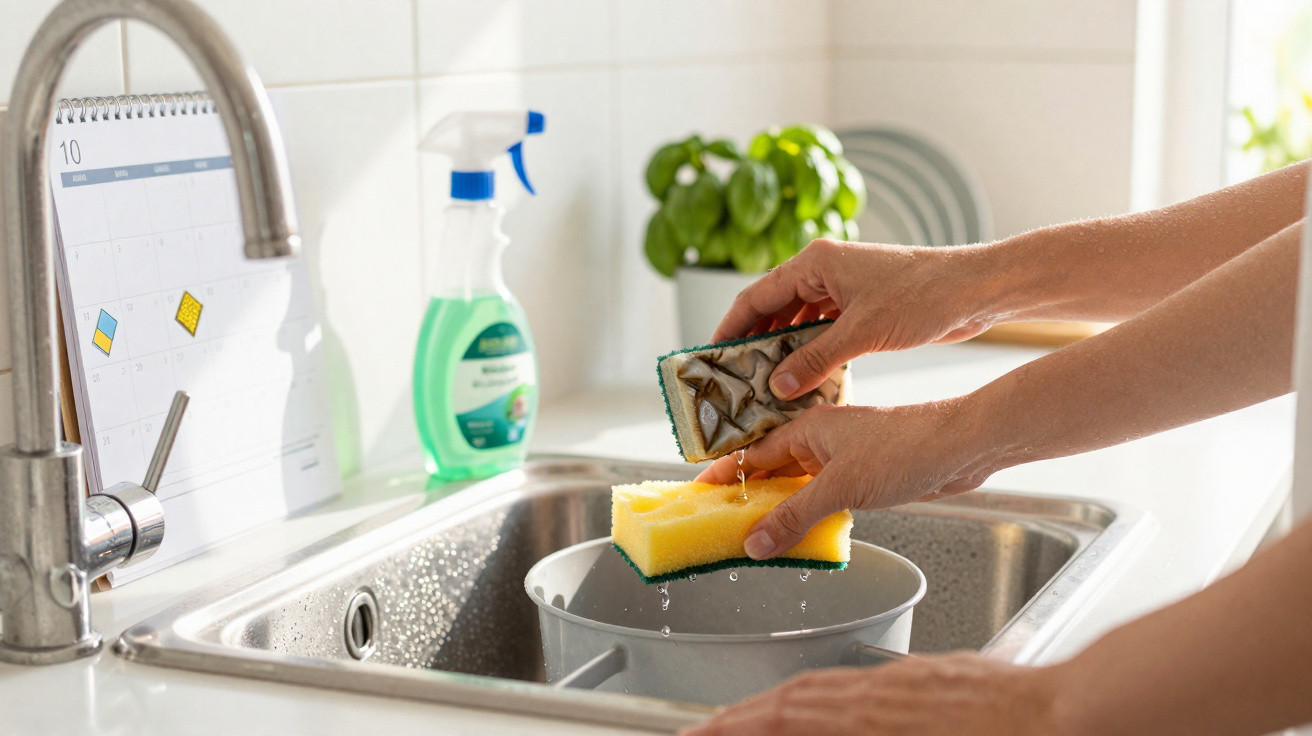
It only takes one slightly rushed dinner for it to go back into action: the sponge is left by the sink, still damp from lunch, ready to wipe away a sauce stain or scrub a forgotten plate. It looks harmless and reassuringly familiar, with its yellow foam and green scouring side that has seen better days. Yet this everyday item can become one of the busiest spots in the kitchen. Food debris, warmth and standing water: it offers exactly the conditions this tiny ecosystem needs. We all know the moment when the sponge starts to smell “a little strong”, but we tell ourselves it will last another two days. Is that a bad idea? Not necessarily disastrous, but it is rarely very hygienic. The crucial detail lies inside its tiny pores.
Why a kitchen sponge quickly becomes a haven for bacteria
A new sponge looks clean once it has been rinsed, and that is exactly what makes it misleading. Crumbs may no longer be visible, and the foam may have regained its colour, but its interior stays damp for hours, sometimes overnight. In this material, filled with tiny holes, bacteria find water, warmth and food residue all at once. It is practically a three-star hotel for microbes.
A frequently cited National Sanitation Foundation study of everyday household items found coliform bacteria on around 75 % of the kitchen sponges and dishcloths examined. Thankfully, that figure does not mean every sponge will cause food poisoning. Above all, it shows that an accessory used for cleaning can also spread what it has collected, particularly across worktops and around the sink.
The issue rarely comes down to one single action. You wipe a chopping board that held raw chicken, then the table, then a plate; between uses, the sponge sits compressed in a holder where the water barely evaporates. Bacteria readily multiply in this warm, damp environment. A sponge does not only become dirty when it looks dirty: it also collects what cannot be seen.
How often should you really replace your sponge?
In a kitchen used daily, the easiest habit is to replace the sponge roughly once a week. In a household that cooks frequently, has children, prepares homemade meals or handles raw meat regularly, changing it every three to five days may be more sensible. A lingering smell, a slimy feel or stains that no longer come out are clear signs that the sponge has reached the end of its useful life.
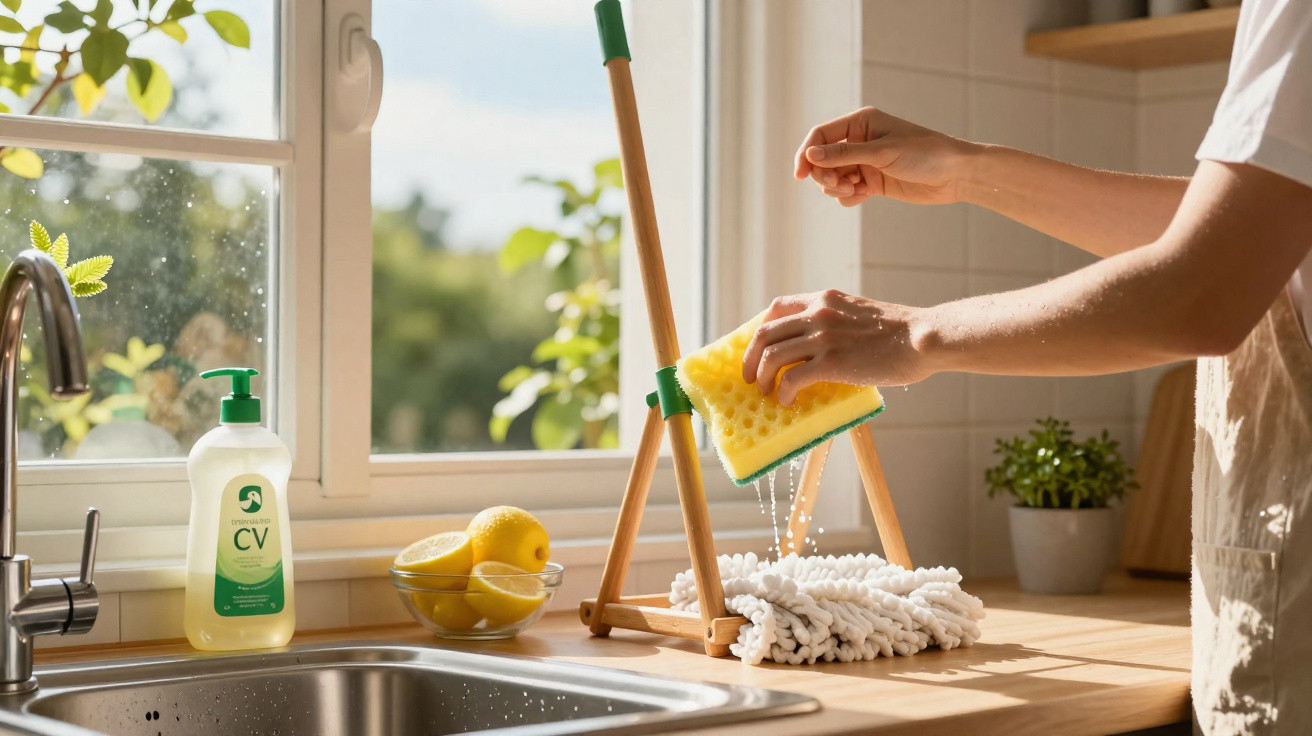
The right routine begins after every wash-up: remove trapped food particles, rinse thoroughly in hot water, wring it out firmly, then allow it to dry somewhere with good airflow. Do not leave it at the bottom of the sink or shut inside a small damp container. Let us be honest: hardly anyone follows that routine every day with military discipline. Still, standing it upright on a ventilated holder takes only seconds and already makes a substantial difference.
Many people try to extend its lifespan by putting it in the microwave, dishwasher or a bowl of very hot water. When done correctly, these methods may reduce some microbes, but they do not make the sponge new again.
“Disinfecting a sponge can be useful as a temporary measure, but replacing a worn sponge remains the simplest and most reliable solution,” domestic hygiene professionals regularly point out.
- Replace it immediately after contact with raw meat juices.
- Keep a separate sponge for cleaning the floor or the bin.
- Use a clean dishcloth for food-preparation surfaces.
Small daily habits for a healthier kitchen
Rather than looking for a miracle sponge, the most helpful approach is usually to separate tasks. Use one sponge for washing up, a washable dishcloth for the table, and a cloth reserved for splashes on the worktop: this system prevents cross-contamination without turning the kitchen into a laboratory. Microfibre cloths, washed regularly at a suitable temperature, can be a practical alternative, provided they are not left damp in a bundle.
The most common mistake is waiting until the sponge falls apart before throwing it away. However, smells and visible wear are often late indicators. A sponge can harbour large numbers of micro-organisms while still looking perfectly acceptable. A schedule is more reliable than a visual impression: choosing a fixed day, such as Sunday evening or shopping day, makes it easier to remember.
There is no need to pursue every bacterium anxiously. A lived-in kitchen is never sterile, nor does it need to be to remain pleasant and safe. The aim is chiefly to prevent needless build-up caused by keeping an item for too long out of habit. A clean sponge, dried properly and replaced regularly, is an almost invisible routine that also protects those simple moments of preparing food for other people.
| Key point | Detail | Added value for the reader |
|---|---|---|
| Moisture | The pores retain water and food residue. | Understand why a quick rinse is not always enough. |
| Replacement schedule | A sponge used every day should ideally be replaced each week, or sooner depending on how it is used. | Adopt a clear benchmark without waiting for an unpleasant smell. |
| Drying | Rinsing, wringing out and air-drying the sponge limits microbial growth. | Reduce risks with a simple, free and realistic action. |
Comments
No comments yet. Be the first to comment!
Leave a Comment