
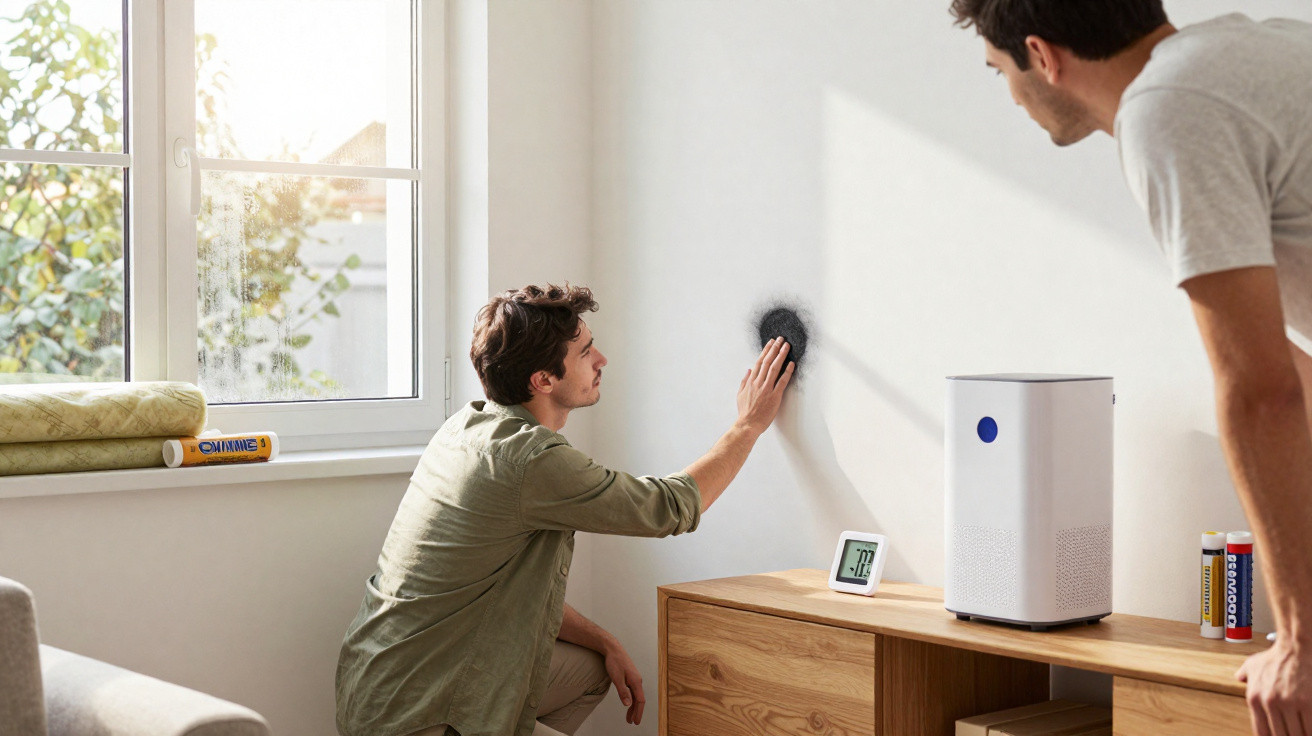
The living room had just been refurbished, the windows were new, and the white paint had finally created the bright home the owners had hoped for over many years. Then, one January morning, a greyish shadow appeared behind the sofa. A few days later, the corner of the bedroom was darkening too, accompanied by that slightly heavy smell everyone recognises but would rather not name. The surprise is often identical: how can a home that has been renovated, better insulated and made more attractive than before become damp? We all know the moment when we believe one issue has been resolved, only to uncover another, more subtle one. Behind immaculate walls, the air is simply looking for a way out. Sometimes, it can no longer find one.
A renovated home can become too airtight without anyone noticing
Following building work, everything appears to be moving in the right direction: draughts vanish, radiators need less output and rooms retain their warmth more effectively. That is welcome, particularly in the depths of winter. However, the improvement can also turn a property into an almost sealed box, trapping the water vapour generated every day indoors. Cooking, showers, drying laundry and breathing overnight: a family of four can release several litres of water into the air over twenty-four hours. Before renovation, old windows or gaps in the building fabric sometimes allowed air to circulate, despite themselves. That was not ideal for heating bills, but it gave moisture a route out.
Sophie’s experience, as the owner of a 1980s detached house, is typical of many others. Once her single-glazed windows had been replaced with high-performance double glazing, she began noticing small droplets on the panes each morning. She wiped them away quickly and thought little of it. Three months later, black marks had appeared above the skirting board in an underheated bedroom. Readings showed humidity regularly exceeding 70%, whereas a comfortable home is generally between 40 and 60%. The window itself was not at fault. It was doing its job very effectively. The humid air, however, was no longer being renewed sufficiently.
Condensation forms when warm, moisture-laden air meets a cold surface: a window pane, a wall corner or the back of a cupboard positioned against an external wall. Water then settles as tiny droplets, which can initially be invisible. Over time, finishes deteriorate and mould finds favourable conditions. Poorly planned insulation can worsen the problem when it leaves cold areas known as thermal bridges. A wall may look completely dry to the naked eye while moisture builds up in its least visible corners. This is often where the first black marks develop.
Simple steps to stop walls turning black after renovation work
Before blaming the paint or insulation, the first thing to check is ventilation. A mechanical ventilation system should run continuously, with clean extract vents and unobstructed air inlets in windows or joinery. In a bathroom, steam should clear within a reasonable time after a shower. If the mirror remains misted for an hour and towels never properly dry, the message is clear. Opening windows for ten minutes in the morning and after cooking also helps, even when it is cold outside. A wide, brief opening refreshes the air without chilling the walls.
Many people close ventilation grilles as soon as the first cold weather arrives because they can feel a slight flow of air. That is understandable: no one wants to feel cold in a newly refurbished living room. Yet these small air inlets are crucial to keeping the home in balance. Covering them with tape, paper or furniture is effectively stopping the house from breathing. Let’s be honest: nobody thinks to inspect their mechanical ventilation vents every day. A seasonal check in autumn and again in spring is already enough to prevent many unwelcome surprises. Holding a sheet of toilet paper in front of an extract vent offers a simple way to test the suction.
When marks have already appeared, hiding them beneath a coat of anti-damp paint almost never addresses the underlying cause. First, it is necessary to measure, observe and understand the affected room, noting when condensation occurs.
“Visible mould is often the final stage of an imbalance that has been in place for several weeks, and sometimes several months.”
- Check ventilation in the kitchen, toilet and bathroom.
- Keep temperatures reasonably stable, especially in bedrooms that are used less often.
- Avoid drying all laundry in one enclosed room.
- Leave a few centimetres between furniture and external walls.
- Use a hygrometer, an inexpensive small device that finally makes humidity visible.
A blackened wall often points to more than a simple stain
A renovated property has not necessarily been renovated badly. Its operation may simply have changed without residents receiving all the guidance they need. New insulation, more efficient windows or a highly airtight front door alter airflow patterns, sometimes overnight. The house becomes more comfortable, but it also calls for new habits. Behind a chest of drawers, in a north-facing corner or above a shower, walls reveal weaknesses in the system before the rest of the property does. Looking at them without panic often makes it possible to act early, before plaster or paintwork is permanently damaged.
It is still important to tell the difference between condensation, water ingress and rising damp. A mark that worsens after heavy rain, a wall base that remains permanently damp or a localised patch beneath a roof do not have the same cause. A building professional, damp surveyor or heating engineer familiar with ventilation issues can help identify the correct diagnosis. Treating the cause before the mark prevents repeated costs and the frustration of repainting the same wall every year. In some homes, adjusting the mechanical ventilation system is enough; in others, a thermal bridge must be corrected or air extraction reviewed.
Energy-efficiency renovation remains excellent news for comfort, household costs and a property’s environmental impact. It works fully when insulation, heating and air renewal progress together, like parts of the same mechanism. A healthy home is not one that never lets air through: it is one where the air is replaced at the right rate. However unpleasant they may be, these small dark marks can serve as a useful warning. They encourage people to view recent work, daily habits and what they assumed was settled behind freshly painted walls in a different way.
| Key point | Detail | Benefit for the reader |
|---|---|---|
| More airtight home | Building work reduces air leakage but can trap indoor moisture. | Understand why the issue can arise after renovation. |
| Ventilation to monitor | Mechanical ventilation, air grilles and brief window opening remove water vapour. | Adopt straightforward habits without sacrificing thermal comfort. |
| Black marks to diagnose | Condensation, water ingress and thermal bridges require different responses. | Avoid repainting unnecessarily and target the real cause. |



Comments
No comments yet. Be the first to comment!
Leave a Comment