
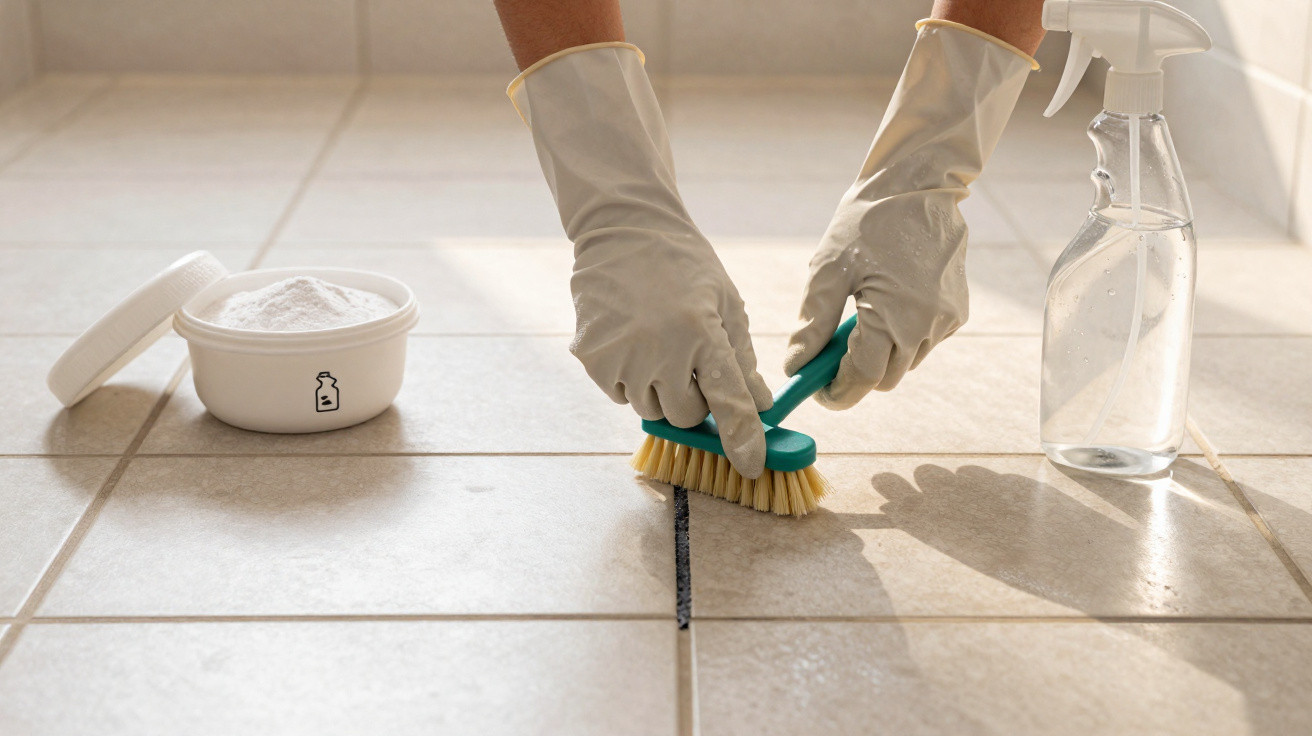
On a Saturday morning, slanting light across the bathroom floor reveals what we would often rather ignore: grout lines that used to be white are now grey, or even properly black, around the shower. We give them a quick scrub with a sponge, spray on a strong-smelling cleaner, then give up and decide the tiles are simply showing their age. We all know how a room can look untidy despite being clean, merely because of a few dark lines between the tiles. The good news is that these marks are not necessarily permanent. Tilers regularly recommend one very straightforward product, available for just a few pounds from hardware shops or the cleaning aisle: sodium percarbonate. Its results can be surprisingly effective.
Why white grout turns black far sooner than expected
In kitchens and bathrooms, grout never gets a break. It takes in splashes, limescale, soap residue, grease spatters and the damp left behind after a rushed shower. Although it appears smooth, its surface is slightly porous, allowing dirt to settle in and gradually build up.
The pattern is usually familiar. First, a faint grey line appears at the base of the shower or behind the tap. A few weeks later, black marks spread into the corners, particularly in small bathrooms with poor ventilation. Tilers often encounter this during renovations: in a 5 m² room, darkened grout can make it seem as though all the tiling needs replacing, when a focused clean is enough.
This darkening is not invariably mould in the strict sense, although fungi may be part of it. More commonly, it is a combination of damp dust, dried soap, limescale and micro-organisms. The grout effectively becomes a small sponge, retaining the traces of every shower and every meal cooked nearby. Honestly, no one properly cleans it every day, particularly in awkward areas beside the toilet or beneath the vanity unit.
Sodium percarbonate: the understated product tilers often keep close by
The product frequently mentioned by tiling professionals is sodium percarbonate, also known as “solid hydrogen peroxide”. This white powder, usually sold for between £3 and £8 per packet depending on the size, releases active oxygen when mixed with hot water. It helps lift organic grime and brighten grout without requiring you to breathe in the harsh fumes produced by certain chlorine-based cleaners.
The approach is almost too easy to sound convincing: mix roughly two tablespoons of sodium percarbonate into half a litre of very hot water, then apply it to the grout using an old toothbrush or a small grout brush. Leave it for 15 to 30 minutes, taking care not to let the area dry out completely, then scrub gently and rinse thoroughly. For heavily stained white grout, two treatments a few days apart will often produce a noticeable improvement.
How you clean matters just as much as the product itself. There is no need to scrape with a wire brush or scrub so vigorously that you wear away the grout. One tradesperson neatly sums up this sensible approach: “You clean the grout; you do not sand it.” Before starting, bear these straightforward points in mind:
“Percarbonate is effective on ingrained marks, but you should always test it in an inconspicuous area first, especially on coloured grout or old tiles.”
- Wear gloves and open a window, even when using a common household cleaning product.
- Choose hot water, as it activates sodium percarbonate more effectively.
- Avoid using it on marble, delicate natural stone, aluminium and waxed surfaces.
- Never combine sodium percarbonate with bleach, vinegar or any other detergent.
- Rinse generously, then dry damp areas with a microfibre cloth.
The real way to keep grout bright after a deep clean
Once the grout has regained a cleaner colour, the most useful habit requires neither specialist equipment nor a lengthy chore. After showering, quickly squeegee the walls and leave the door or window open for a few minutes. Damp that lingers provides ideal conditions for black marks, especially in corners where air does not circulate well.
Many people also make an understandable mistake: reaching for bleach as soon as the first dark mark appears. It can create an immediate whitening effect, but it has a strong smell and repeated use may weaken some grout, particularly if it is old or already cracked. Gentle, regular cleaning is better than a major chemical battle every six months. A little diluted black soap or bicarbonate of soda can be sufficient for routine maintenance between more intensive cleans.
It is equally important to assess the condition of the grout realistically. If it is crumbling, allowing water through, or a musty smell returns despite several cleans, the issue may no longer be purely cosmetic. In that situation, replacing silicone seals locally or repairing damaged cement grout can prevent costly water ingress behind the tiles. Sodium percarbonate whitens marks; it does not restore worn waterproofing.
| Key point | Detail | Benefit for the reader |
|---|---|---|
| Sodium percarbonate | Affordable active powder diluted in hot water | An accessible way to brighten blackened grout |
| Contact time | 15 to 30 minutes before gentle brushing | Prevents prolonged scrubbing and reduces wear on the grout |
| Prevention | Ventilate, dry splashes and monitor cracks | Cleaner grout for longer, with fewer products needed |




Comments
No comments yet. Be the first to comment!
Leave a Comment