
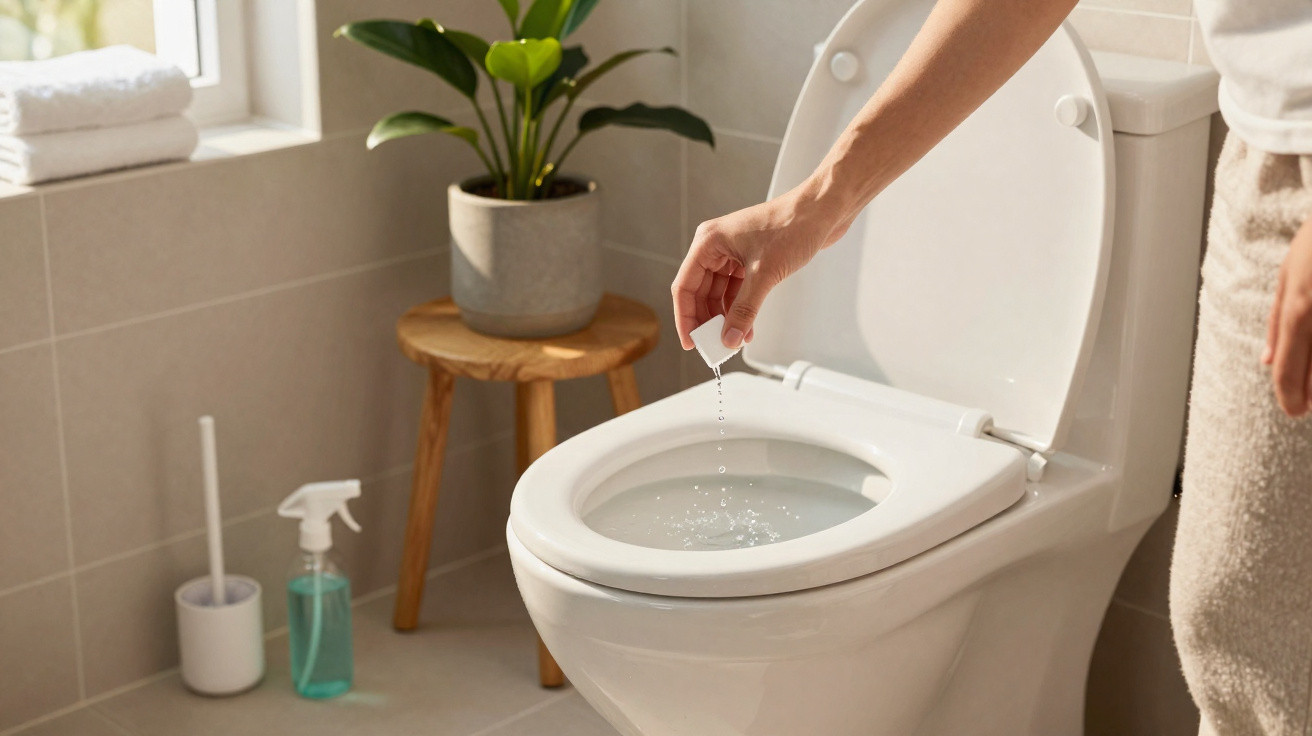
You are back on your knees, wearing rubber gloves, with the sharp scent of bleach catching in your nose. The bathroom extractor fan drones as usual, acting as though it is doing something useful. Your arm already aches as you scrub at the same yellowy mark around the bowl, the one that always seems to return. You put more pressure into it, unsure whether the porcelain is wearing away or whether it only feels that way.
A few minutes afterwards, you flush, stand back and get that brief sense of achievement. Clean. Fresh. Finished.
But two days later, the ring has returned. That is when you begin to realise what is happening.
Why scrubbing does not solve your “dirty toilet” problem
Most people treat the toilet as though it were an enemy that endlessly reappears. Brush, bleach, hard work, then do it all again. Yet that routine tackles only the dirt visible at that particular time. It does not alter what is going on in the water, the pipework or the unseen areas of the bowl.
As a result, the marks return, odours begin to creep in again and you may decide that your bathroom is somehow doomed.
When I ask people about cleaning, I hear a version of the same account repeatedly: “I scrubbed my toilet every few days for years, and it never looked truly white.” One reader said she applied three separate products at once simply to feel that she had done “enough.” Blue gel, bleach and scented tablets combined to make her bathroom feel like a chemical soup.
Her toilet appeared clean for a weekend, perhaps. Then the same strange-looking ring came back as though nothing had changed. She assumed that she had simply failed to scrub hard enough.
The real explanation is partly chemical and partly biological. Hard water creates mineral deposits that hold on to tiny rough areas in the porcelain. Bacteria then form a film over those deposits. Conventional scrubbing largely shifts the build-up around temporarily, before the bowl refills with the same minerals and microorganisms. You are watching the same film on repeat.
The problem is not that you are lazy - it is that your method is stuck in the 90s.
The “set it and walk away” toilet cleaning method
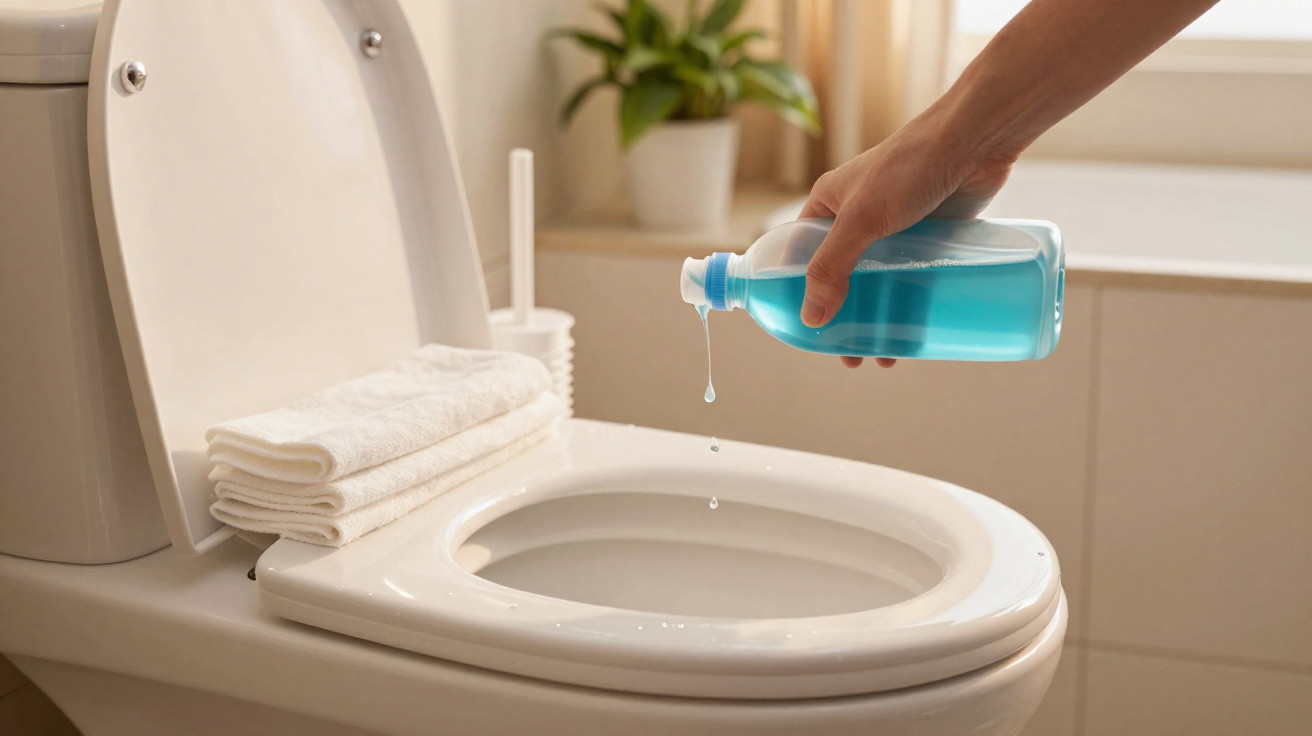
A calmer, more effective method begins with a simple principle: allow time and suitable ingredients to do the work. Rather than fighting the bowl with all your strength, try soaking it. Before bed, pour roughly one cup of white vinegar straight into the bowl. For obvious mineral rings, add a generous scattering of baking soda. It will fizz like a mild school science experiment.
Put the lid down. Leave it alone. Get on with your evening. Allow the solution to sit for at least a few hours, or overnight if possible.
Check the bowl the following morning. Much of the ring should already appear lighter or softened. At that point, use the brush gently, almost without effort. You are not trying to scour the porcelain; you are only releasing what the vinegar has already loosened. Give the waterline and beneath the rim one or two quick strokes, then flush.
That is all there is to it. No overpowering bleach fumes. No 20-minute battle with a plastic toilet brush. Your arms will not feel as though you have completed an unwanted workout either.
Many of us feel oddly ashamed if we have not scrubbed “hard enough.” We were raised on adverts showing people attacking a toilet as if it had personally wronged them. Consequently, we rinse products away too soon, keep switching cleaners or layer chemicals that should never be combined.
In truth, no one genuinely follows that routine every day. Nor is there any need to. Regularity and contact time matter more than effort. Leave a straightforward product on a stain for long enough and it can often work better than the fluorescent gel bought on impulse. Your role is to monitor the process rather than punish yourself.
“You don’t need stronger products, you need smarter habits,” says a professional cleaner I spoke to. “I spend more time letting solutions sit than actually scrubbing. That’s the whole trick.”
- Soak with vinegar each week
Leaving one cup in the bowl overnight helps control mineral rings and smells. - Brush gently rather than fiercely
A short brush after soaking is sufficient. Vigorous scrubbing only exhausts you. - Do not combine several chemicals
Bleach + other cleaners can produce dangerous fumes. Choose one approach and use that alone. - Drop-in cleaners are not a miracle solution
They colour the water and cover up odours, but they are not a substitute for proper cleaning. - Check beneath the rim
Lightly clean this concealed edge once a week, as much of the odour can linger there.
Rethinking what “clean” means in your bathroom
There is a subtle sense of relief in entering a bathroom that smells of nothing at all. No pine, artificial lemon or “ocean breeze”. Simply... neutral air. When the toilet stays clean without reminding you of the last time you fought with it, your mind has one fewer background stress to manage. It is a small change, but you notice it.
This is not really just about a toilet bowl. It is about making your home feel less like an endless chore list and more like a place that supports you.
When you no longer scrub all the time, patterns become easier to spot. Perhaps stains sit precisely at your hard-water level, or an odour consistently returns after you miss a weekly soak. Instead of merely battling your bathroom, you start to understand it.
That is the change: moving from panic cleaning to regular maintenance. It turns “oh no, not again” into a relaxed five-minute check once a week. There is something unexpectedly satisfying about discovering that less work, done with more care, is genuinely effective.
We have all had that moment: you flush, step back and still think the toilet does not look as spotless as the ones in glossy magazine photographs. But those images are not your everyday reality. A real bathroom handles children, midnight snacks, stomach bugs, visitors and hectic mornings. It carries stories.
You do not require a showroom toilet. You need one that is safe, easy to maintain and does not silently criticise you when you walk in half-awake. Replace constant scrubbing with a straightforward, dependable routine - soaking, gentle brushing and brief checks - and the bathroom begins to feel less like a battleground and more like a truce.
| Key point | Detail | Value for the reader |
|---|---|---|
| Soak rather than scrub | Use vinegar (with baking soda for rings) overnight instead of scrubbing forcefully | Less work, fewer harsh chemicals and improved long-term results |
| Prioritise habits | Choose weekly soaks and brief, gentle brushing over occasional “deep clean” marathons | Lowers stress and keeps the toilet reliably clean |
| Avoid layering chemicals | Do not mix several cleaners or depend solely on drop-in tablets | Makes cleaning safer and saves money while keeping odours and stains manageable |
FAQ:
- Question 1: Can a toilet really be cleaned using only vinegar and baking soda?
- Question 2: For the best results, how often should you use the soak method?
- Question 3: Is it safe to stop using bleach altogether?
- Question 4: What should you do if you have extremely hard water and persistent brown stains?
- Question 5: Does this approach tackle toilet odours as well as stains?


Comments
No comments yet. Be the first to comment!
Leave a Comment