
A bucket left in the corner of the utility room, a hose running with “just a little” water trickling out, the sink piled with lunch dishes, and a faint sense of waste lingering in the back of your mind.
The same scene plays out in homes, flats and small businesses across Brazil, almost always in the same way: plenty of water, little planning. The bill arrives at the end of the month, along with the surprise on the invoice. You swear you have not taken that many long showers. And you probably have not. The water is being lost elsewhere: in everyday cleaning. Floors, bathrooms, cars, pavements. Every detail adds up to invisible litres. Anyone who has tried to save water knows that guiltily turning off the tap is not enough. The way you clean has to change. That means altering long-standing, almost automatic habits. The good news is that you can wash everything properly using less than half as much water. The question is: are you willing to try a different approach?
Why everyday cleaning so often wastes so much water
Most people clean their homes by repeating what they saw growing up. An open hose in the garage, a soaking-wet mop, a bucket refilled again and again. It works, of course. But it is expensive-not only financially, but also in terms of actual water use. When the weather gets hotter, people tend to wash more, throw water over the floor “to cool it down”, and extend their shower a little after a heavy clean. Hardly anyone calculates this in their head. In the rush of daily life, there is only one standard: it must look clean. And the more water used, the cleaner it feels. Even when that is not true.
A simple survey in a block of flats reveals the scale of the issue: in many buildings, consumption peaks do not come from showers but from cleaning days and the washing of shared spaces. Caretakers hose down pavements with a continuous jet, while residents splash water over garages as though rainfall were endless. At ground-level houses, the image is much the same: the tap left running while the pavement is scrubbed, the car washed as if it were in a washing-powder advert. In neighbourhoods subject to water rationing, this habit has already started to shift. Elsewhere, people still feel the problem is “too far away” to justify changing their routine. Yet cubic metres keep disappearing all the same.
From a technical perspective, cleaning depends not on the volume of water but on the right combination of product, contact time and friction. On many surfaces, leaving degreaser to work for a few minutes matters more than soaking the floor. Scrubbing with a well-wrung cloth can remove more dirt than using a squeegee to push dirty water from one side to the other. Water should support cleaning rather than take centre stage. Once this principle is understood, the hose becomes almost a luxury rather than an essential item. And a bucket stops seeming old-fashioned and becomes a tool for controlling use.
Practical tips for cleaning while using far less water
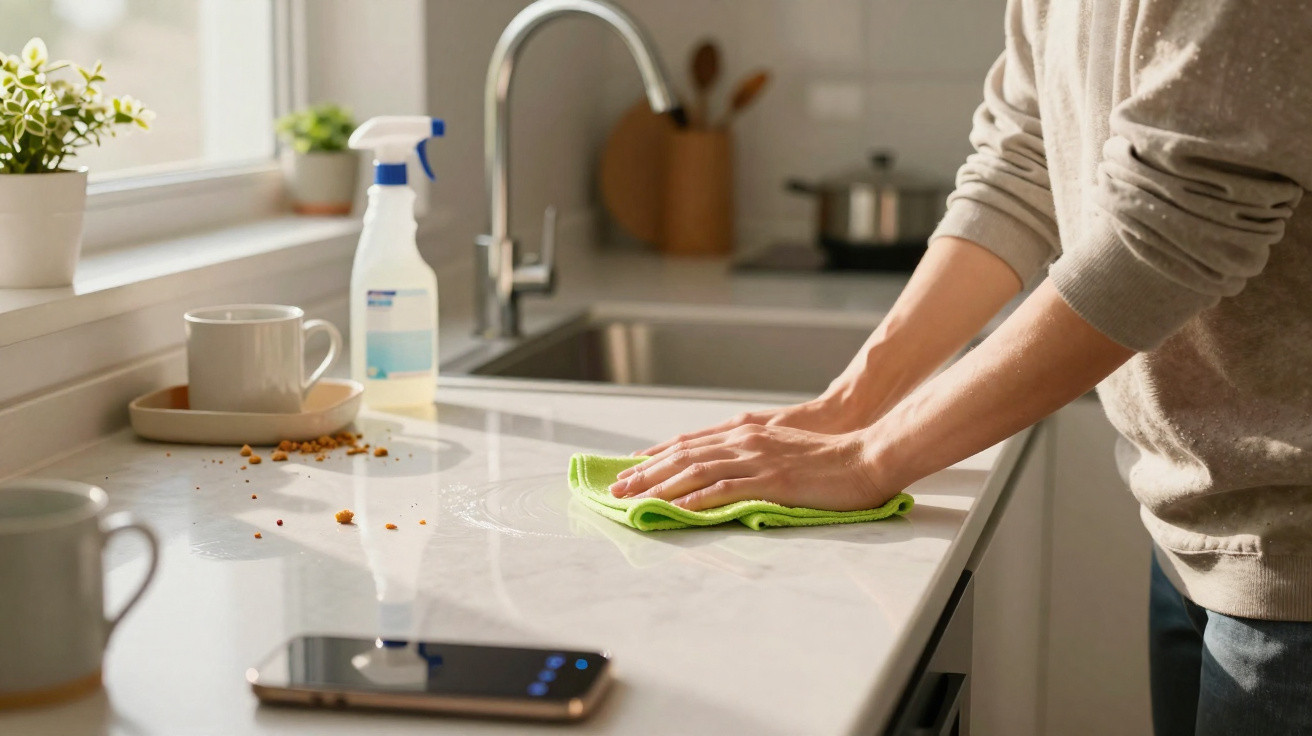
One straightforward technique can transform the process: clean in “dry layers” before bringing in water. Start by sweeping thoroughly, removing dust with a dry or slightly damp cloth, and collecting hair, food scraps and sand. Only then should you move on to washing the floor. This stage can cut the amount of water needed by up to half, as it removes loose dirt that would otherwise require dozens of extra buckets. Another highly effective measure is to use one bucket of diluted cleaning product and well-wrung cloths, replacing the water only once it is genuinely dirty. Crystal-clear water going down the drain is pure waste.
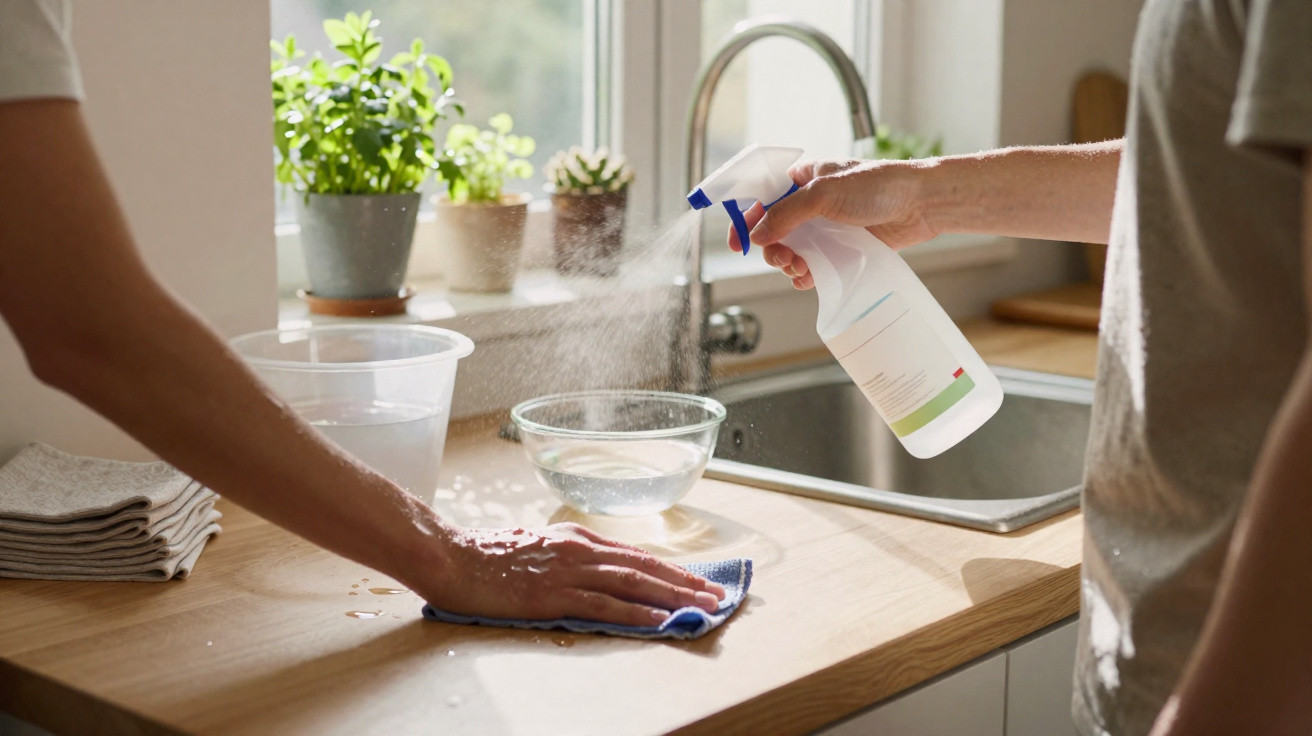
In the kitchen, the difficulty usually starts at the sink. Many people turn on the tap and let it run while they soap everything up, only rinsing afterwards. The better sequence is nearly the reverse: scrape food remains away with a spatula, group dishes by type, wash them with the tap off, then turn on the water and rinse them one after another. You can place a washing-up bowl inside the sink and reuse some of the rinse water for less greasy items, such as cutlery and glasses. Nobody needs to become the inspector of their own tap, but small changes in the order of tasks can quickly affect the bill. It is also reassuring to realise that a clean sink does not need to become a waterfall.
The same principle applies in the bathroom. Those who clean the shower enclosure only once it has become grimy end up using more water and more effort. Using a shower squeegee every day after bathing, along with a cloth and vinegar or mild disinfectant twice a week, prevents heavy build-up. Let us be honest: nobody gives the shower enclosure a full clean every day. The solution, then, is to reduce the effort required later. For the toilet, an efficient flush and carefully targeted products replace those old buckets of water poured over it “to help”. On outdoor floors, a stiff-bristled broom, dustpan and damp cloth for specific spots can handle many tasks that people assume only a hose can manage.
Common mistakes, small changes and a different view of water
One practical adjustment is to stop treating the hose as an extension of your arm. Watering plants with a watering can or reused bottle, and cleaning smaller areas with a bucket, gives you a visible sense of how much you are using. Anyone who has tried to clean a garage using only a broom, cloth and spray bottle filled with water and washing-up liquid knows the work feels different, but the result can be surprising. For tougher marks, such as car oil, it works far better to apply the product, allow it to act, and remove it with a cloth or brush than to pour litres of water over the area in an attempt to dilute the problem.
We have all had that moment when laziness wins and you “just throw a little water” over the yard rather than sweeping it. The issue is that this shortcut becomes the norm. Water turns into an excuse not to deal with solid waste: leaves, plastic, cigarette ends and sand. In blocks of flats, the conversation is even more delicate because many people believe a shared bill spreads out individual responsibility. In this situation, it is worth agreeing set days for heavy washing and prioritising dry maintenance on the other days. The aim is not to create guilt, but to stop treating water as a magic answer to everything that mildly offends the eye.
“When people understand that cleaning well does not depend on lots of water, but on method, behaviour changes faster than with any shock campaign,” comments a sanitary engineer who works on rational water-use programmes in major Brazilian cities.
- Start with dry cleaning: sweep and remove dust and solid debris before wetting any surface.
- Use a bucket and a well-wrung cloth: this provides visible control over consumption and more efficient cleaning with less water.
- Make use of the product’s action: allow degreasers and detergents to work for a few minutes.
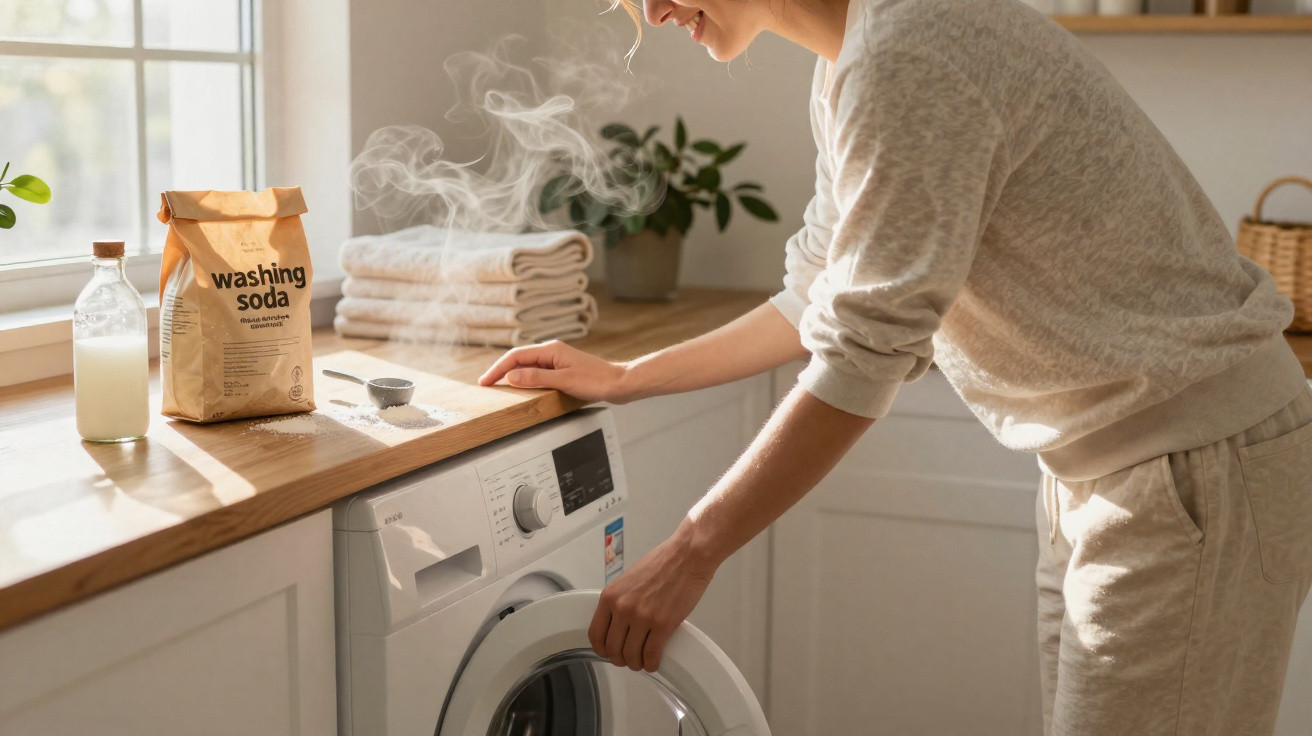
- Reuse lightly used water: water from the washing machine or dish rinsing can be used on non-greasy outdoor floors.
- Build light routines: small daily tasks prevent heavy cleaning jobs that demand rivers of water.
An invitation to see cleaning differently
When you replace the habit of “wet it first and then work out what to do” with the idea of “plan before turning on the tap”, even your relationship with your home changes. The floor is no longer somewhere that becomes clean only when a wave of water arrives; instead, it is cared for gradually and attentively. In neighbourhoods where water rationing is already part of everyday life, many families have discovered-partly through necessity-that a bucket is an ally and an open hose is a luxury that no longer makes sense. In other areas, this change can be a conscious choice rather than an imposed one.
Perhaps the biggest shift is letting go of the idea that saving water means living in a permanent state of scarcity. In practice, the opposite is true: when less is wasted during cleaning, there is more room for that long shower after a tiring day, cooking without guilt, and caring for plants at an unhurried pace. Ultimately, using less water for cleaning is not only about utility bills or environmental messaging. It is a way of adjusting the rhythm of the home and recognising that cleaning need not mean a flood. And that turning off the tap at the right time is worth more than any campaign slogan.
| Key point | Detail | Value for the reader |
|---|---|---|
| Cleaning in dry layers | Sweep, remove dust and clear solid debris before using water | Halves the volume of water used during cleaning and speeds up the process |
| Replacing the hose with a bucket | Using a bucket, a well-wrung cloth and products that work for a few minutes | Visible control over consumption and more efficient cleaning with less effort |
| Light, frequent routines | Simple daily care in the bathroom, kitchen and outdoor areas | Prevents heavy dirt that requires long cleaning sessions and high water use |
FAQ:
- Question 1: How can you save water when washing the pavement without using a hose?
- Question 2: Is it true that washing a car with a bucket uses much less water?
- Question 3: How can water from the washing machine be safely reused?
- Question 4: Do concentrated cleaning products really help save water?
- Question 5: Does saving water during cleaning make the home less hygienic?

Comments
No comments yet. Be the first to comment!
Leave a Comment