
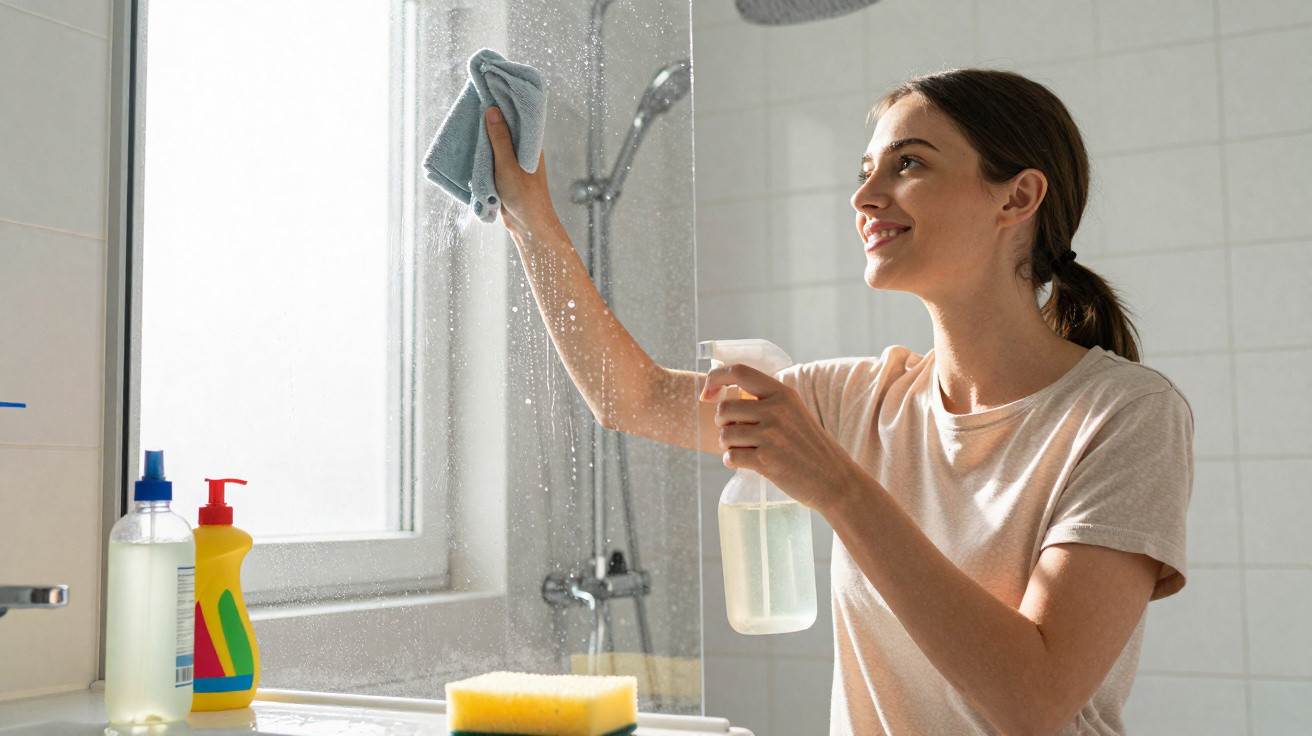
On a Sunday morning, the light falls at an angle across the mirror, exposing what we would sometimes rather ignore: limescale marks on the taps, a slightly dull shower seal and a screen dotted with tiny dried droplets. We all know that moment when the bathroom looks clean from a distance, but far less so up close. So we reach for a powerful cleaner and an abrasive sponge, ready to scrub as though the room has issued a personal challenge. Yet an old tip, passed from one kitchen to another, is resurfacing: a very simple mixture, left in the right place for a few minutes, can lift much of the grime without wearing out your arms. There is no instant miracle here, merely a cleaning principle our grandmothers already understood. The outcome is often surprisingly effective.
The forgotten mixture that transforms the morning chore
The method relies on a spray bottle: slightly warmed white cleaning vinegar mixed with washing-up liquid. This modest combination tackles two familiar bathroom problems: limescale left by water and the greasy film created by soap, shampoo or body oils. The vinegar helps break down mineral deposits, while the washing-up liquid clings to oilier dirt. It is not the foam that does the work; it is the waiting time.
For Claire, 42, the tip became useful again after moving to an area with very hard water. She says she used to spend nearly twenty minutes scrubbing her shower screen every week, before trying the mixture recommended by her aunt: half white vinegar and half washing-up liquid. After leaving it on for fifteen minutes, a quick wipe with a microfibre cloth was enough for the worst-affected areas. Old marks did not vanish all at once, but they stopped putting up such a fight.
The key difference is that you are no longer relying on your own effort alone to clean. You allow the mixture to work before stepping in yourself. It is a gentler way to let the product do the work for you. Let us be honest: nobody really does this every day. But using it once a week on the shower, taps and basin prevents deposits from building up until they become a battle. The bathroom then keeps that fresh-looking finish which makes the whole home feel as though it can breathe more easily.
How to use white vinegar and washing-up liquid without making life difficult
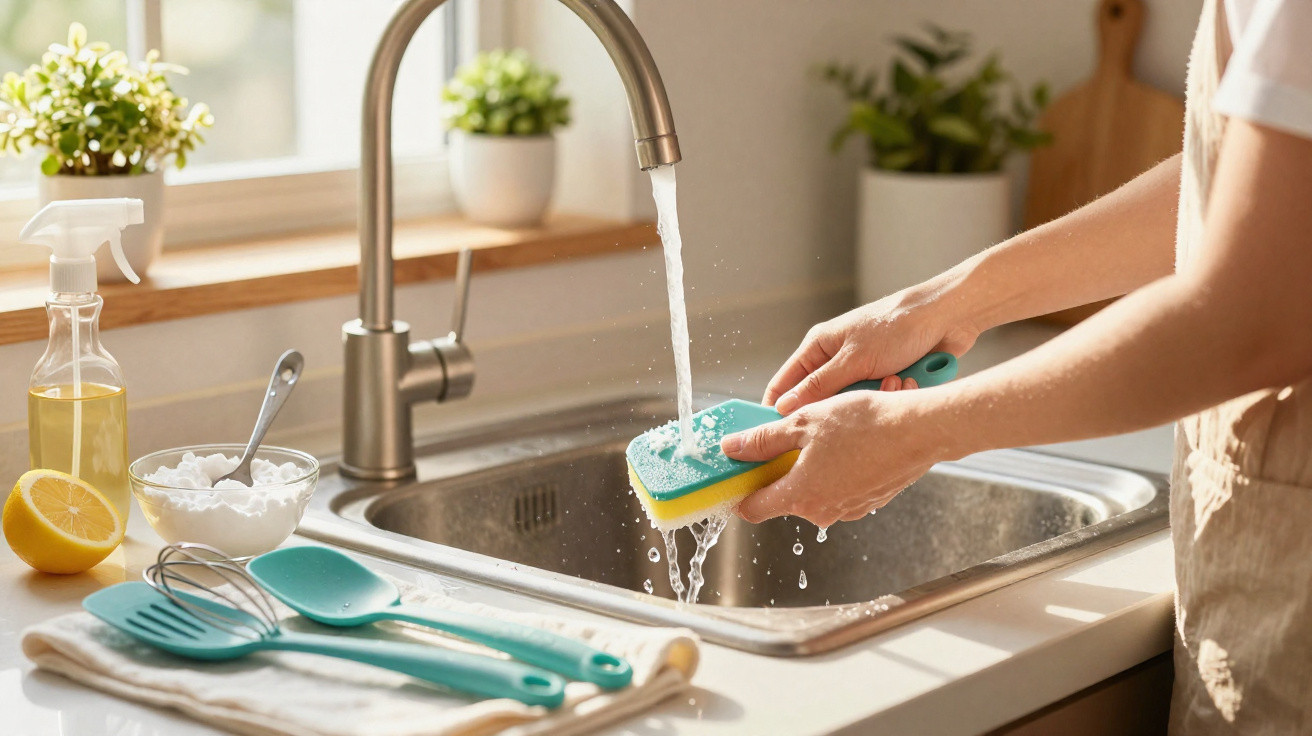
Pour roughly a glass of white vinegar and a glass of washing-up liquid into a clean spray bottle, then stir gently rather than shaking it frantically, to avoid creating a mountain of foam. When the vinegar is slightly warm, the mixture spreads more readily across glass screens and ceramic surfaces. Spray it over a cold or lukewarm shower, the basin and the area around the tap, then leave it for ten to fifteen minutes. Wipe with a non-abrasive sponge, rinse thoroughly and dry with a microfibre cloth.
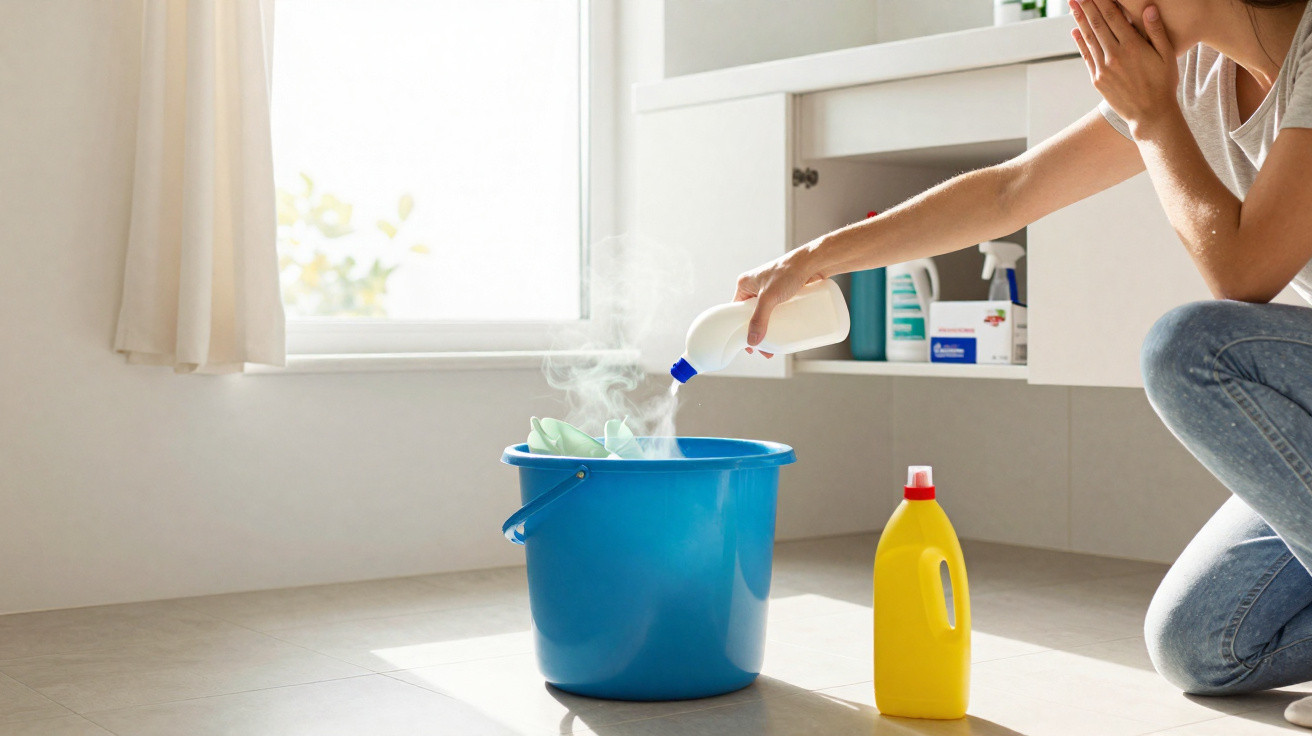
The most common mistake is trying to use the same formula throughout the bathroom. Vinegar is highly useful, but it is unsuitable for natural stone such as marble, travertine or certain reconstituted-stone basins: its acidity may dull or damage them. It is also better to avoid very fragile seals and to test the mixture first on an inconspicuous area. Above all, never mix vinegar with bleach. Even when you are in a hurry, this combination can release dangerous fumes.
The right approach remains straightforward: apply it, wait, then wipe.
“My grandmother always said that a good product needs silence: leave it to do its job before asking it for miracles.”
- Use a soft sponge or microfibre cloth.
- Rinse surfaces once the contact time has ended.
- Dry the taps to slow the return of limescale.
- Air the room, particularly if it is a small bathroom.
These small details, rather than the force used for scrubbing, are what make that clean feeling last.
A modest habit that genuinely eases everyday life
This rediscovered tip is appealing partly because it brings a little common sense back to a chore that is often tiresome. You do not need a cupboard full of bottles making dazzling promises to maintain the most frequently used surfaces in the home. An everyday product, a little patience and a clean cloth are often enough to restore a gleaming basin or a clearer shower door. The real luxury is not allowing cleaning to become an ordeal.
There is also something reassuring about these straightforward recipes, the sort once shared over coffee or during a family meal. They do not replace products suited to particular situations, such as deep mould or heavily scaled sanitaryware. Instead, they provide a realistic, less harsh routine that is easy to remember. One family may prefer to clean the shower on Saturday; another may give it a quick wipe after every use. Everyone can find their own rhythm, without guilt.
The next time the mirror looks hazy and the tap has lost its shine, the idea may come to mind again: rather than scrubbing immediately, let it work first. A few minutes of waiting can change how you view this room, which is so often cleaned in haste. And perhaps this old recipe will become the tip you pass on to someone close to you, with the quiet smile of someone who has just saved time on a household chore.
| Key point | Detail | Added value for the reader |
|---|---|---|
| Simple mixture | Equal parts white vinegar and washing-up liquid | Reduces the effort needed to remove limescale and soap marks |
| Contact time | Leave to work for between 10 and 15 minutes | Avoids lengthy scrubbing of surfaces |
| Caution | Avoid natural stone and never mix with bleach | Protects materials and everyday health |

Comments
No comments yet. Be the first to comment!
Leave a Comment