
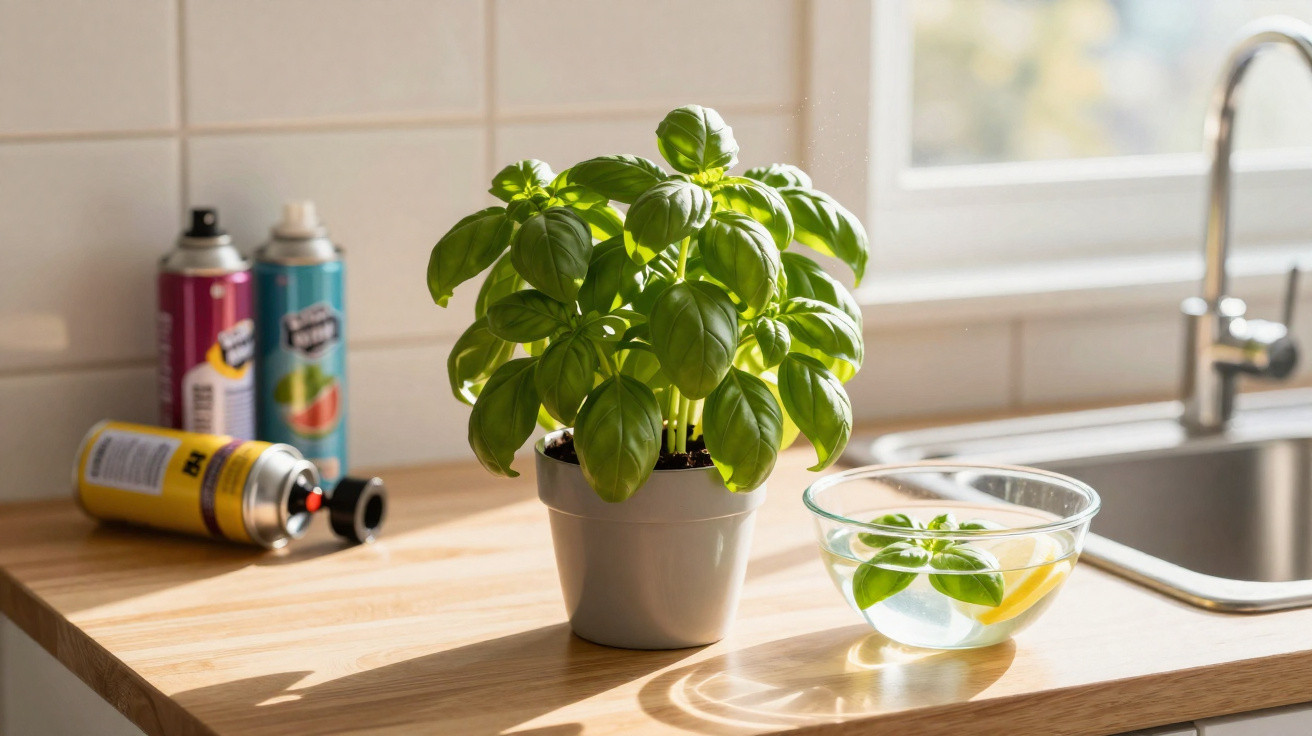
The laboratory smelled like a changing room after a summer tournament.
Not through lack of cleanliness, but by deliberate design. Along one side stood shelves stocked with the newest “48-hour” sprays and sophisticated deodorising gels. Along the other sat several modest herb pots beneath a flickering strip light. No one voiced it, yet the technicians’ expressions made their expectations clear: chemicals would come first, nature second.
Two hours later, their noses delivered another verdict. The sprays had dwindled to a light blend of perfume and stale air, while one pot was still making itself known. Clean. Crisp. Almost defiant. The unexpected winner of this odour control shock test was neither packaged in a polished bottle nor promoted by a celebrity. It was a familiar kitchen herb, usually associated with cooking pasta.
When a kitchen herb beats the “48-hour” sprays
Basil was the star of that day in the odour laboratory. Fresh, lively green basil - the same herb you tear over a tomato salad - outperformed several leading odour-control sprays in controlled “shock tests”. These trials are far from gentle: they involve concentrated sweat-like compounds, potent food odours and even the smell of damp dog fabric. Researchers recorded both the speed at which each option neutralised unpleasant smells and the duration of its effect.
Many sprays initially concealed the odour, but their effectiveness dropped markedly within an hour. Basil worked differently. Its essential oils appeared to bind with and suppress the odour rather than merely covering it in perfume. Around the basil pots, the air seemed calmer and less harsh on the nose. It was not fragranced like a candle shop; it simply felt discreetly clean.
One technician called it “turning the volume down on the stink” rather than drowning it in scent. That distinction matters in everyday settings. A space heavy with artificial fragrance can be as overwhelming as a gym bag. The herb’s effect felt cooler, gentler and, oddly, more human - rather like opening a window onto a garden rather than entering a detergent aisle.
In subsequent measurements, basil continued to achieve unexpectedly high scores. After three hours, air samples collected close to the plants contained fewer volatile sulphur compounds than areas treated solely with sprays. There is a sound reason for this: basil leaves contain complex aromatic molecules, including linalool and eugenol. Laboratory teams already knew these had antimicrobial properties; they are now observing how they also interact with airborne odour compounds.
Sprays commonly use a faster, more dramatic approach: burst, perfume, evaporate. Basil takes its time. While the plant remains healthy and its leaves are lightly moved by the air, it gives off a consistent, low-level release of active molecules. This gradual emission forms a natural kind of buffer. There is no dramatic “woah” burst of fragrance - but unpleasant smells do not hit you in the face either.
How to use basil as an odour shield at home
The most successful arrangement in the shock tests was remarkably straightforward: several medium-sized basil plants grouped in the “danger zone”. Beside the laundry basket. Near the shoe rack. Close to the litter tray. Proximity was the key. Rather than looking decorative on a faraway windowsill, the pots were placed almost directly in the path of the odours.
At home, this means thinking more like a strategist than an interior decorator. Position two or three basil pots where smells originate, rather than only where the light is ideal. Whenever someone passes by, the slight movement of air stirs the leaves and refreshes their aroma. In a darker room, a small grow lamp on a timer can help keep the plants vigorous. Weak basil means weak odour control.
The laboratory also identified another important factor: leaf surface area. Plants that were pinched back regularly - through those small harvests where the upper leaves are removed - became bushier and developed more aromatic surface. Snipping basil for dinner therefore has an additional benefit: it also strengthens your invisible odour shield for the week.
You may now be thinking, “Sounds nice, but my life is chaos and my plants always die.” Fair enough. Indoor basil is not entirely effortless to grow. It requires reliable light, regular watering and a pot with proper drainage. If the soil remains waterlogged, the plant becomes unhappy, its leaves lose their intensity and your odour control gradually fails.
However, the laboratory team noticed something that contradicts much online plant advice. The basil that worked best in the tests was not fussed over. It was watered when the top layer of soil felt dry, then left alone. No hourly misting and no elaborate fertiliser routine. Let’s be honest: nobody really does that every day.
The larger error was relying on the “one sad pot in the corner” method. Measurements showed that a single struggling plant in a large living room made little difference. It is like expecting a tea light to illuminate a football field. Grouping plants produced a cumulative reduction in odours, particularly in small and medium-sized rooms with restricted air circulation.
“We threw everything we had at those basil plants - sweat compounds, ammonia, food odours,” one researcher told me. “They never covered it up with a fake smell. They just stopped the room from tipping into gross.”
A clear framework emerged from the raw data and real-room trials:
- Use at least two basil pots in any space that regularly smells “stale”.
- Position them within one to two metres of the odour source.
- Provide six hours of light and prevent the soil from becoming waterlogged.
- Pinch out the tops every week to maintain bushiness and fragrance.
- Pair them with basic hygiene: open windows, wash fabrics and empty bins.
It’s not magic, it’s margins. Basil does not replace cleaning or personal hygiene; it extends the period between “okay” and “too much”. In real homes, that margin makes all the difference.
Rethinking what “fresh” is supposed to smell like
There is something quietly radical about a €3 herb pot competing with shelves full of engineered odour eliminators. It encourages us to reconsider what “fresh” should mean. Is it an intense synthetic citrus scent that announces itself from the hallway, or an almost imperceptible feeling that the air is simply… easy to be in?
We have all experienced walking into a friend’s home and finding the air smells like an argument between fabric conditioner, last night’s meal and dog. No one mentions it, but everyone notices. Basil changes that pattern. Rather than adding another layer of fragrance, it reduces the room’s emotional temperature. Less assault, more background comfort. It is a small, tangible way to make a space feel kinder.
Odour control shock tests are intentionally severe, which is exactly why their findings translate so effectively to ordinary life. If basil can soften laboratory-level stink, it can cope with a teenager’s trainers or a small bathroom without a window. The broader point is about selecting tools that work with the air rather than against it. Sprays still have a role in emergencies. Basil is more of a long-term approach - a habit.
The next time you reach for a bright aerosol can promising miracles, you may think of those plants beneath the strip light, holding their own in a room full of synthetic smells. Not heroic. Simply, quietly, better than anyone expected.
| Key point | Detail | Benefit for the reader |
|---|---|---|
| Basil outperforms sprays in shock tests | Fresh basil plants reduced measurable odour compounds for longer than several branded sprays | Provides a low-cost, natural option for daily odour control |
| Placement and quantity matter | The strongest results came from grouped plants positioned close to odour sources | Helps you arrange basil effectively rather than wasting time and space |
| Simple care, consistent effect | Basic watering, light and regular pinching maintained basil’s odour-fighting strength | Makes the method achievable even for people who “kill plants” |
FAQ:
Does dried basil work as well as fresh basil for odour control?
No. The shock tests emphasised the effectiveness of living plants and their continual release of aromatic compounds. Dried basil may smell pleasant in a jar, but it does not interact with a room’s air in the same dynamic manner.Can basil replace my regular deodorant or cleaning routine?
It is a supporting measure, not a replacement. Basil can soften background odours and prolong that “fresh enough” feeling, but it does not clean surfaces or take the place of personal hygiene products.Which variety of basil is best for odour control?
Classic sweet basil performed strongly in the laboratory, largely because of its high essential-oil content. Other varieties, such as lemon basil or Thai basil, may also work, but they were not the principal focus of these tests.What if I don’t have much natural light at home?
A small LED grow lamp on a timer (around six to eight hours a day) can keep basil healthy even in darker corners. The healthier the plant, the greater its odour-reducing effect.Is it safe to keep basil near pets and children?
Basil is generally regarded as non-toxic to people and most pets when used normally. Even so, do not allow animals to chew whole plants regularly, and choose stable, heavy pots so that nothing is knocked over.

Comments
No comments yet. Be the first to comment!
Leave a Comment