
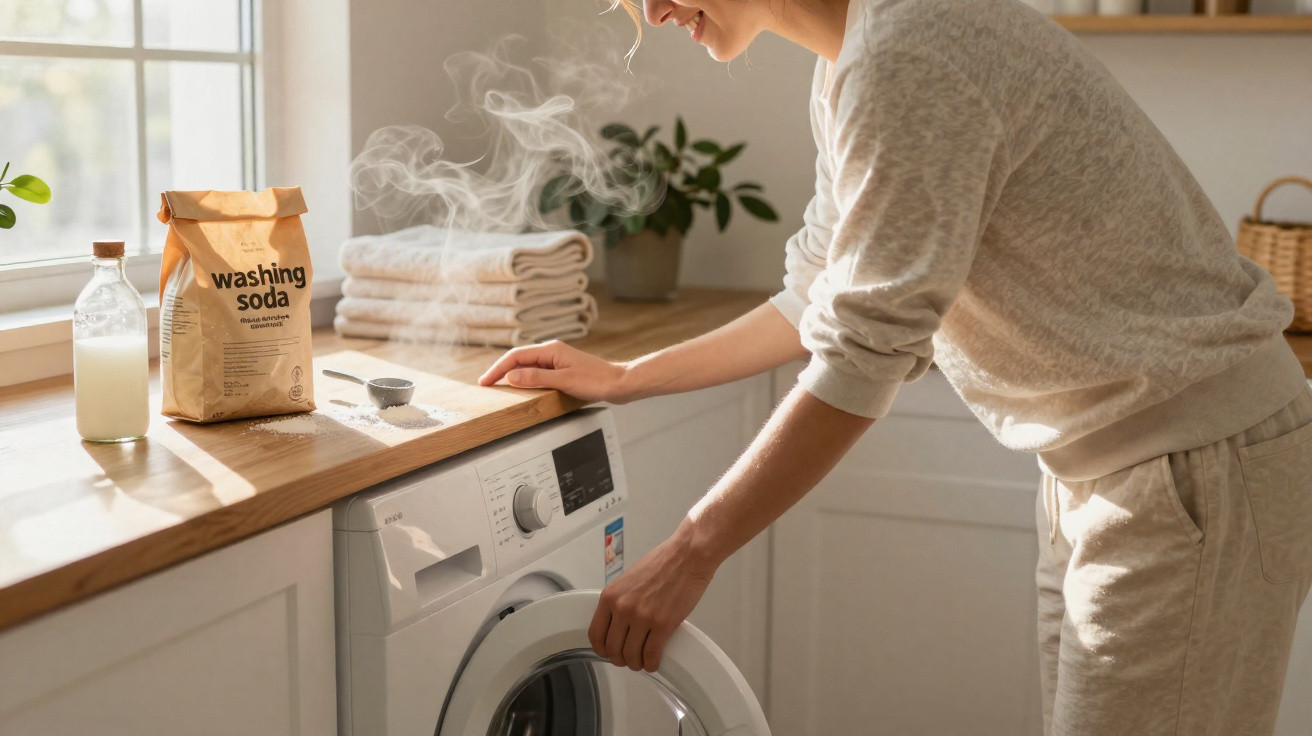
My washing machine had begun to reek like a changing room on a rainy Wednesday: that sour, stale odour that leaves you questioning whether properly clean clothes are even achievable.
First, I blamed the dog, then the teenagers, then the ever-growing pile of socks that appears when nobody is watching. Yet the real offender was far more discreet: a grey, tacky layer of soap residue lodged in unseen spots - the drawer, the seal and the drum - steadily dulling every wash. Clothes emerged sort-of clean and sort-of soft, but never truly fresh. I had learned to ignore it, much as you ignore a creaky door, until a friend sent a voice note to the school-run group chat with a tip that sounded almost magical. She promised the sour smell would vanish by the afternoon. I doubted her. But I was also rather keen to test it.
When the laundry day turns on you
There is a familiar rhythm to a British laundry day: kettle on, washing machine on, rain on. You press start automatically, expecting the appliance to act like the quiet, dependable member of the household it is meant to be. Then, one day, you open the door and get hit by a clammy odour - a damp slap that tells you something has spoiled in the dark corners. Pull back the rubber seal and there it is: grey sludge, as though porridge and lip gloss have had an argument. Suddenly, you understand that your clothes have been washed among yesterday’s remnants.
We have all had the point at which an ordinary household job feels oddly personal. For me, it came with a hinge squeak and a faint smear of slime on my thumb. Nothing theatrical happened. There was simply a gentle squelch, a glance at the drawer with its forlorn blue streaks, and a quiet “oh”. It was not a disaster, just the machine admitting: I have been storing traces of your life in here. And honestly, nobody carries out this job every day.
Soap buildup: the hidden culprit in your washing machine
Soap buildup sounds innocent enough - it is only soap, after all. In reality, it is a mixture of unused detergent, fabric softener, body oils and a little chalky hard-water residue, all clinging where it should not like cling film. Each cool wash leaves behind a little more; every overly generous scoop creates another layer. The coating builds more quickly if you favour liquid detergents and softener, particularly around the drawer and seal, where water does not rinse with as much force.
That residue holds on to odours and nourishes biofilm: the glossy, slippery coating you can feel when you run a finger beneath the rubber rim. The washing machine continues to spin, and clothes may still appear clean. Yet fabrics lose their crispness, while that fresh feeling disappears before the folding is done. It is like preparing food in a pan that has not been properly rinsed. What remains unseen still changes the result.
The two-step hack that really works
The answer is not an expensive cleaner or an exhausting scrub that steals your Saturday. This is a two-stage routine with everyday cupboard staples that can transform the machine in an afternoon. Start with an alkaline treatment to break down greasy soap residue, then use a brief acidic rinse to remove minerals and the final traces of odour. There is no combining ingredients, no fizzy volcano and no fuss - only two cycles, a cloth and ten proper minutes spent checking the hidden areas.
The core of the method is simple: soda crystals first, white vinegar second. The first wash breaks up the clag, while the second neutralises and rinses it away. Afterwards, your machine can breathe again, and the following load smells of absolutely nothing - precisely how clean laundry should smell.
What you need
There is no need for a basket full of specialist products. You will need a bag of soda crystals (sodium carbonate), plain white vinegar, a jug of hot water, an old microfibre cloth, and a soft brush or unused toothbrush. If your washing machine has a filter flap near the bottom, use a shallow tray or an old baking tray to collect unexpected water and the occasional coin. Your phone torch is useful for inspecting the furthest corners of the seal and detergent-drawer housing.
That is all. No floral concoctions, mysterious tablets or lemon-scented performance. Just practical essentials, a little patience, and the pleasing feeling of components becoming clean beneath your hands.
The steps
Step one: remove the detergent drawer. It may resist and seem sulky, but a gentle press with your thumb on the blue catch should release it. Put it in a bowl or sink filled with very hot water and a generous handful of soda crystals. Leave it soaking while you tackle the rest. The water will quickly turn cloudy - that is the detergent and softener residue giving way.
Step two: inspect the cavity behind the drawer. It is the part most of us prefer to overlook. Dampen your cloth with hot water, add a sprinkling of soda crystals, and wipe the sides and roof of the channel. Use a toothbrush for the corners; you may shift little blue-grey gel-like snails of residue. Rinse the cloth, wipe once more, and continue until the surfaces feel smooth rather than sticky under your fingers.
Step three: open the door and carefully pull back the front lip of the rubber seal. Do not remove the entire seal. This is the retirement home for pennies, hair and miniature Lego hands. Make a small paste using soda crystals and warm water, spread it over any dull grey coating, and leave it for ten minutes. Wipe it away, rinse, then wipe again. As the cloth finally glides properly, you will hear that tiny squeak-clean sound you have not heard for ages.
Step four: pour around 250g of soda crystals directly into the empty drum. Add another small handful to the drawer. Choose the hottest cotton programme available - 90°C, if your machine offers it - and start the cycle. The machine may grumble before getting on with its job. Heat and alkaline water quickly tackle the stubborn buildup beyond the areas you can reach.
Step five: once that programme has ended, open the door and inspect the machine. Wipe the seal again, and you should lift soft residue that resembles grey pencil-eraser shavings. If there is a filter flap, put your tray beneath it, loosen the cap and drain a little water before taking the filter out fully. It will look worse than anticipated, then less alarming than feared. Rinse the filter beneath the tap, clean the housing and screw it back securely.
Step six: pour roughly 500ml of white vinegar into the detergent drawer - into the main-wash compartment and with a splash in the softener section. Run a shorter warm wash at around 60°C. This is not intended to create a dramatic shine. It provides a final clearing of mineral film and a neutral finish, leaving the washing machine smelling like… nothing. Which is lovely.
Never mix vinegar with bleach or chlorine-based products, and do not use them in consecutive cycles. If you have recently used anything else, run a normal rinse cycle in between. This is washing day, not a chemistry experiment.
Why soda crystals and white vinegar work - no lab coat required
Soda crystals are highly alkaline, making them very effective at lifting fatty deposits - which is essentially what soap scum becomes once it has stuck to plastic and rubber. Heat helps the crystals dissolve and travel through the machine’s pipes, while the lengthy cotton programme gives them time to work into grime sitting outside your reach.
White vinegar is mildly acidic. It does not attack; it gently coaxes. A vinegar cycle afterwards dissolves the chalky mineral deposits created by hard water and neutralises any alkaline film left by the soda crystals. The result is a drum that is truly clean rather than merely covered by fragrance. Inside, the machine feels still and clear, like a room once everyone has gone home after a party.
A brief word on dishwasher tablets
You have probably watched the videos: one or two dishwasher tablets thrown into an empty drum, a hottest-cycle setting, plenty of bubbles and all the drama that follows. I tried it once in a reckless mood, and it did remove some slime. However, these tablets are made to foam less and rinse in a deep bath of water, not in a carefully balanced washing-machine cycle with rubber seals and sensors that do not appreciate excessive suds.
The soda crystals and white vinegar method is kinder, less costly and straightforward about its purpose. It does not simply disguise the issue with scent. It loosens residue, dissolves it and rinses it away. Afterwards, there is no concern that products formulated for crockery are lingering in the workings of your machine. Keep it simple. Your washing machine may repay you with improved spins and quieter rinses.
Small details with a big impact
When replacing the drawer, shake the softener channel gently to confirm that it is not blocked. On many machines, the blue siphon piece can be lifted out. When it is clogged, softener does not drain as it should; it simply sits there like exhausted jelly. A quick hot-water rinse and a prod with the toothbrush will free it. You will notice water flowing through more smoothly, with the bright, cheerful sound of a proper seal.
Wipe the door glass as well. It may seem purely cosmetic, but it can carry a coating you will not notice until a dry towel drags across it. Once everything is clean, leave the door ajar and the drawer slightly open. Air is the invisible helper here. Machines that can dry out properly remain pleasant for longer.
Keep your washing machine clean with less work
The main secret is not cleaning more often; it is using less product. Use less detergent than you think you need. Most of us pour in too much, especially when using liquids. Check your water hardness and aim towards the lower end of the recommended dose. Powders often rinse away more cleanly than thick gels, and that alone creates a different kind of freshness.
Avoid fabric softener for towels and sportswear. It can coat fibres and hold smells, especially on modern materials already designed to feel soft. If you enjoy its scent on bed linen, that is fine - but try using half your usual amount. Every reduction leaves less product behind to stick inside the machine after a wash.
Run an empty hot maintenance wash every month, or after a period of fast, cool programmes. Yes, it is unexciting. It also delays the need for a major clean. Think of it as flossing for your washing machine: easy to neglect, but satisfying when you keep up the habit.
If your washing machine is old or your water is hard
Older machines with rubber seals that have seen better days may retain odours in tiny cracks. The two-step approach still works, although it requires a little extra patience. Run the soda-crystals cycle, wipe the seal, then use the vinegar cycle and pause it for half an hour part way through if your machine permits. You will lift more grime from the corners and give the rubber fewer reasons to complain.
If you live in a hard-water area - hello, kettle limescale - occasionally add a scoop of soda crystals to towel washes. It softens the water, so your detergent does not need to work as hard. Your machine will accumulate less residue between deep cleans. Clothes feel lighter and the spin sounds less laboured, as though someone has finally opened a window.
What nobody tells you about laundry smells
The smell in your utility room is neither mysterious nor atmospheric. It comes down to chemistry, habits and a little airflow. Long, cool cycles combined with excess liquid detergent create ideal conditions for slime. Small gaps between loads, a closed door and a shut drawer give it a cosy afternoon nap in which to grow.
After using the hack, there is a quiet satisfaction in a machine that smells of nothing. You begin noticing the small changes: the muted thud of the drum starting, the clean glide of the drawer, and no sour note when the door opens. T-shirts smell like the cupboard. Towels smell like towels. It is not showy, but it feels like a win.
What to do when the smell returns
If the odour starts to creep back after a couple of weeks, a small detail has usually been overlooked. Check the filter once more: it is a treasure chest for hair clips and 20p coins, and it is very good at trapping fluff. Confirm that the drain hose is not kinked, and that the machine is tilted very slightly backwards so water drains as intended. And leave the door open as though you really mean it.
Repeat the two-step method every two or three months if you run many quick washes or share a home with sporty people. You do not need to scrub the drawer every time. Once the washing machine is back to neutral, one vinegar rinse following a spell of heavy loads may be enough to keep it fresh inside. Think small prompts rather than heroic interventions.
The comfort of clean that does not make a fuss
I did not expect this to stir any feeling beyond the usual satisfaction of finishing a domestic task. Yet there was a calmness to it that surprised me. Clothes came out with that airy, newly washed quietness that smells of nothing and somehow of everything - sunshine on a washing line, an honest cupboard, a weekend running to schedule. It is a routine, certainly, but also a small way to regain control in a house that is always in motion.
This is the quiet magic: remove what does not belong, and everyday life becomes good again. There is no glitter or gadgetry involved, only some soda crystals, a little white vinegar and fifteen minutes spent properly examining the appliance that cleans for you all week. The hack succeeds because it is simple and patient. It asks for nothing unfamiliar, only less - less product, less perfume and less hope that the odour will disappear by itself.
One final small ritual
When the second programme ends, I dry the seal using the corner of a tea towel and wedge the door open with a peg so the machine can air out. It is a tiny ritual that takes ten seconds, yet feels strangely grown-up. There is no celebration. The room is still apart from cooling metal ticking and the everyday hum of a home carrying on.
The following morning, I open the door and find… nothing. No changing room, no wet dog and no hint of yesterday’s laundry. There is only a drum that smells of air. It makes you want to wash whites and peg them on the line, even when the sky looks moody. That is the odd gift of a modest domestic victory: the rest of the day feels easier, almost brighter, because clean finally feels clean again.


Comments
No comments yet. Be the first to comment!
Leave a Comment