
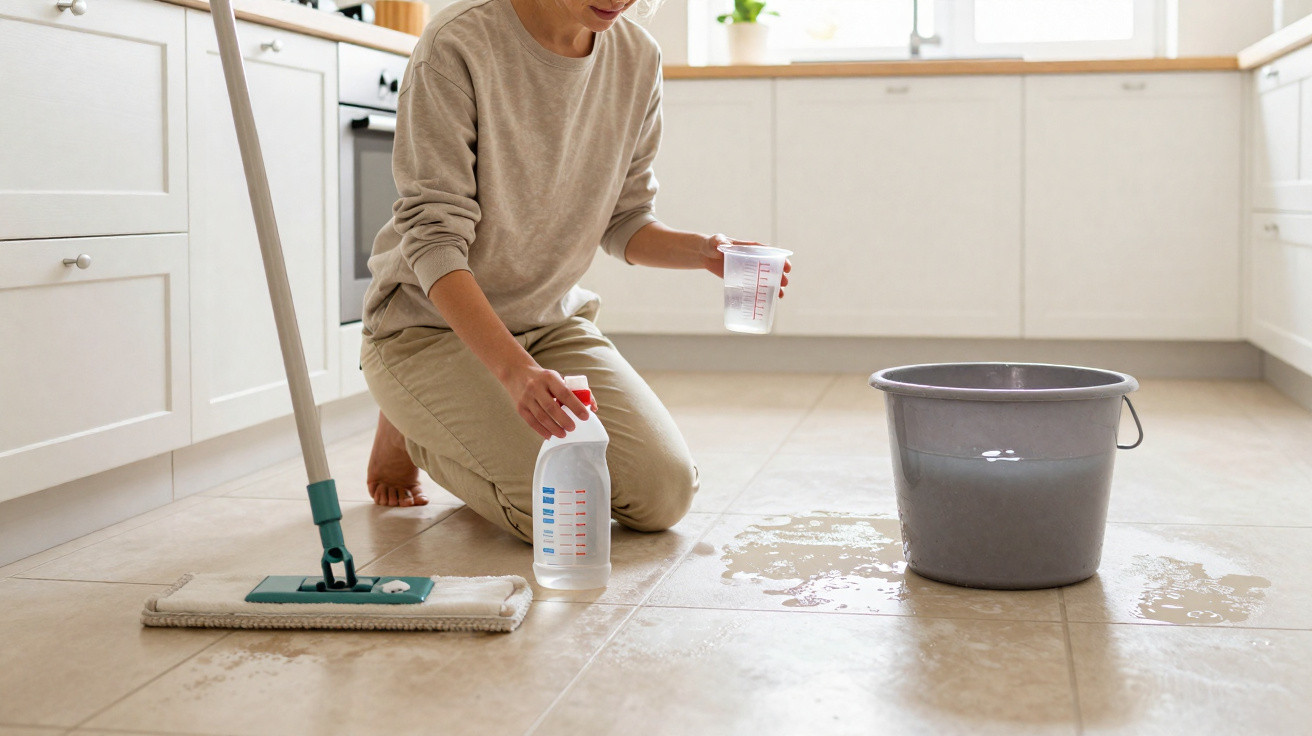
It is 6.30 pm, the shopping has just been set down in the hallway, and a dark trail is already running across the tiles, between damp shoes and the dog's paws. Out comes the bucket, followed by a generous measure of fresh-smelling cleaner, then the mop, with the satisfying feeling that the problem has been dealt with. An hour later, the floor looks clean… yet it feels slightly sticky beneath your socks, and dust returns as though nothing had happened. We all know that slightly disheartening moment. The real culprit is often hiding in the product cap.
The mistaken habit that leaves floors dull and sticky
The main mistake is adding too much cleaner to the water. It feels logical: more product should mean a cleaner floor, while the fresh fragrance can make it seem as if the job is done. However, on tiled floors, sealed wood flooring or laminate, the excess does not simply vanish. As it dries, it leaves an invisible coating, sometimes greasy to the touch, which catches dust, hair and footprints from the very next day. A sticky floor is not a more thoroughly washed floor.
For Claire, a mother of two in northern France, the situation had become almost comical: she cleaned her kitchen every other day, yet could not understand why shoe marks returned before dinner. Once she reduced the amount of product by four, she noticed a difference after the very first wash. Her tiled floor did not need to be “fed” with detergent. It simply needed to be freed from the build-up already coating it. This detail makes all the difference, especially in rooms that see plenty of daily use.
The issue stems from a very human tendency to confuse foam, fragrance and effectiveness. Many household cleaners are concentrated: a few millilitres are enough for an entire bucket, but we often pour by eye, sometimes adding two or three capfuls “just to be on the safe side”. The excess then creates a layer that traps dirt rather than removing it. On dark floors, it produces streaks that show up in the light. On pale surfaces, the effect is less obvious, but your feet soon notice it. A genuinely clean floor does not need an overpowering scent.
The simple step that improves results straight away
Start by emptying the bucket and preparing warm, rather than scalding, water. Check the dosage stated on the bottle, then use less if your floor is not especially greasy: a small amount is often more than enough for routine cleaning. Choose a clean, well-wrung microfibre mop head instead of a heavy mop that spreads dirty water from one room to the next. The right indication is simple: the floor should dry quickly, with no puddles or shiny marks. This approach actually cleans the surface instead of applying another layer.
If the floor is already sticky, do not panic or reach for ten different products. Go over it once with a microfibre mop and clean water, changing the water as soon as it turns cloudy, then allow the floor to dry fully before assessing the result. A second pass may be needed if you have been heavy-handed with detergent for a long time. Let us be honest: no one measures a perfect dose every day, especially after a busy day. The aim is not to make anyone feel guilty, but simply to break a very common habit.
Rinsing with clean water is the detail forgotten in many homes, even though it can restore a floor's appearance within minutes. As a cleaning professional often points out:
“Visible dirt comes away with washing; product residue, on the other hand, can sometimes require a pass with clean water.”
A few habits make a real difference:
- follow the recommended dosage instead of filling the cap;
- wash the mop head after every use, as it retains residue;
- change the water before it turns grey;
- avoid homemade mixtures on wooden flooring or delicate floors.
A clean floor does not necessarily smell strongly scented
The instinct to use “more and more” is understandable: advertising has long linked an immaculate home with abundant foam, a powerful scent and an almost artificial shine. Yet a healthy floor is often noticeable for its simplicity. It does not feel sticky, leave a haze or become dull over the weeks. Using a smaller dose also helps protect certain sensitive floor coverings, particularly wood, vinyl and laminate. It is a minor adjustment, but it prevents many frustrating cleaning sessions.
| Key point | Detail | Added value for the reader |
|---|---|---|
| Reduce the dosage | Concentrated cleaners often require far less than a full cap. Too much leaves a film that dries on the surface and quickly attracts dust, footprints and pet hair. | A less sticky, visibly cleaner floor, plus a bottle that lasts longer. |
| Rinse when the floor feels sticky | A microfibre mop head and clean water remove old residue without layering new product over an existing build-up. | An immediate way to restore a clean feeling underfoot, with no unnecessary purchase. |
| Use very little water | A thoroughly wrung mop head limits water marks, protects grout and is better suited to floors sensitive to moisture, such as laminate or certain wooden floors. | Fewer drying marks and less risk of damaging the floor covering over time. |




Comments
No comments yet. Be the first to comment!
Leave a Comment