
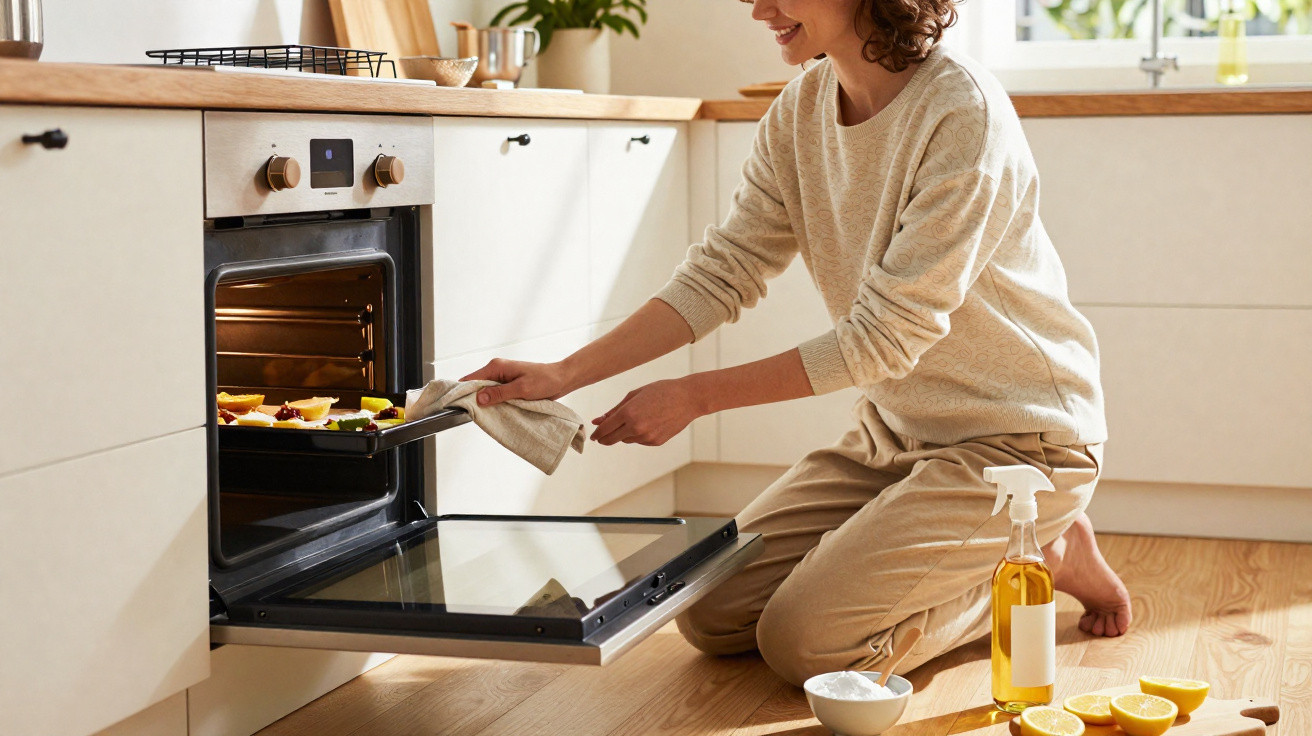
There is that slightly awkward moment when you open the oven to put in a tart and the smell of an old bake rises out before the heat has even begun its work. Browned splatters on the glass tell the story of several rushed dinners, while a blackened crust at the bottom appears to have taken up permanent residence. We all know the instinct: close the door and promise to deal with it another day. Except that “another day” can quickly turn into three months. The good news is that a truly dirty oven does not necessarily call for harsh products, thick gloves or an afternoon-destroying scrubbing session. With gentle heat, time and the right approach, the results can be surprisingly impressive. The oven can become presentable again.
Why a dirty oven seems harder to clean than it really is
Oven grime has a particular knack for looking indestructible because it has been baked on, sometimes ten or twenty times. A drop of sauce falls, caramelises, catches some chicken fat the following Sunday, then hardens further during Friday's pizza. Eventually, you are no longer tackling a simple stain but a small geological layer. The key is not to try to scrape it away while it is dry. First, let it soften gradually, just as you would with a saucepan left forgotten in the sink.
In many homes, oven cleaning only happens before the holidays, a house move or a visit from a mother-in-law who is especially alert to detail. A study by the British institute YouGov also found that ovens were among the household appliances least likely to receive a thorough clean. There is nothing shameful about that: it is an everyday task that stays out of sight, so it is easy to put off. Let us be honest: nobody really does it every day. Even so, a few straightforward steps after greasy cooking can dramatically reduce the scale of the job.
Very powerful oven cleaners may seem quicker, yet their smell can be unpleasant and they require genuine care when used. Bicarbonate of soda, white vinegar, lemon and steam do not magically “dissolve” everything; instead, they help lift residue and neutralise some odours. Their real advantage is the waiting time. The product works while you do something else, which is exactly the point when you want to clean without exhausting yourself. Effective cleaning is often less about muscle power than patience.
The gentle oven-cleaning method that works while you rest
Start by taking out the shelves, trays and anything else that can be removed from the oven. In a bowl, combine around six tablespoons of bicarbonate of soda with three tablespoons of water, making a thick paste that is neither runny nor crumbly. Spread it over the cold oven walls, base and inner glass, taking care to avoid heating elements, fans and seals. There is no need for a huge layer: a light coating will do. Leave it to work for at least eight hours, ideally overnight, with the door closed.
The following day, wipe away the dried paste with a damp sponge or microfibre cloth. Greasy areas will often come away in sheets, which is admittedly rather childishly satisfying. Where a crust remains stubborn, use a silicone spatula or an old plastic card rather than a metal blade, which could scratch the enamel. A common mistake is to scrub hard immediately out of impatience. It is better to dampen the area again, wait ten minutes and then continue gently: the oven is not personally challenging you.
To finish, spray a little diluted white vinegar over any remaining bicarbonate marks. The fizz that appears is normal and helps release the final deposits. Wipe over with a clean cloth, then leave the door open for around ten minutes so moisture and odours can escape.
“The least troublesome clean is the one you prepare the day before: let time do half the work.”
- For oven shelves: soak them in hot water with black soap and bicarbonate of soda for one hour.
- For the glass: use a bicarbonate of soda paste, a damp cloth and gentle movements.
- For odours: heat half a lemon in a bowl of hot water for a few minutes at a low temperature.
Small habits that prevent another major oven-cleaning chore
Once the oven is clean, there is no need to live with a sponge in your hand. Simply deal with the most obvious spills after the appliance has cooled down. Sauce that has just overflowed can be removed in thirty seconds; the same sauce, baked on six times, will require an overnight treatment. You can also place a suitable baking tray or oven mat beneath dishes likely to bubble over, but never cover ventilation components. This small detail prevents many disasters, particularly with generously filled gratins and overstuffed fruit tarts.
The seals deserve a gentle touch because they keep heat inside the oven. A slightly damp cloth with a drop of washing-up liquid is usually enough; avoid soaking or scraping them. For pyrolytic ovens, check the manual before trying any homemade method, as certain coatings and accessories cannot withstand the same treatments. A clean oven also heats more pleasantly, since burnt grease can create smoke and odours every time it preheats. That is not a cleaning obsession; it is simply about comfort.
One simple truth remains: a perfect clean is not always necessary. Slight discolouration on the walls does not mean your oven is unhygienic or that you have failed at anything. What matters is removing residue that smokes, sticks or could burn onto the next food you cook. Gentle regular care beats an exhausting deep clean. Spend a few minutes after a messy cooking session, apply a bicarbonate of soda paste from time to time, and the glass door will stop becoming that little opaque screen you avoid looking at.
| Key point | Detail | Benefit for the reader |
|---|---|---|
| Waiting time replaces scrubbing | Bicarbonate of soda paste works on baked-on grease for eight hours or overnight. | Less physical effort and stains that are easier to remove without harsh oven cleaner. |
| Steam helps residue release | A bowl of water with lemon, gently heated, softens grime and freshens the oven's smell. | An accessible option for lightly soiled areas and lingering odours. |
| Small actions prevent the major chore | Wiping spills once the oven is cool limits the build-up of carbonised layers. | Faster, more realistic maintenance that is far less discouraging over the weeks. |
Cleaning your oven without strong chemicals is not about finding a spectacular technique to share on social media. It is more about returning to a little domestic common sense: allowing products to work, using what is already in the cupboard and not blaming yourself for leaving it too long. Some people will favour bicarbonate of soda, others black soap, while others will choose lemon steam for minor touch-ups. The important thing is to pick a routine you are willing to repeat. An oven does not need to look flawless, like one in an advert, to be pleasant to use. It simply needs to stop smoking when you cook dinner. And if that door becomes transparent again, there is every chance you will suddenly feel like cooking something good.


Comments
No comments yet. Be the first to comment!
Leave a Comment