
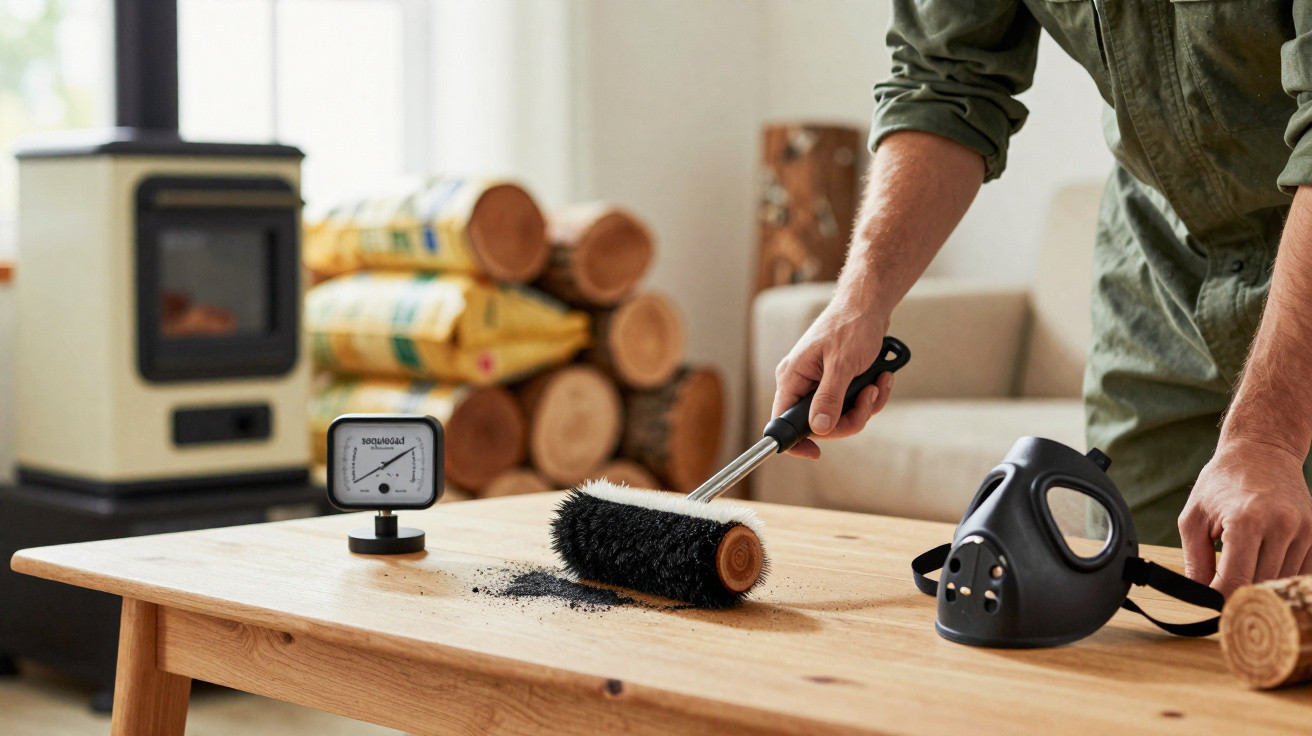
As evenings become colder, millions of households turn to their wood burner controls, frequently overlooking one essential task.
Throughout Europe and North America, fireplaces and wood stoves are being fired up again as summer recedes. Yet before enjoying the season’s first reassuring blaze, there is a legal and safety requirement to deal with; postponing it may be both costly and hazardous.
Why wood heating is booming again
Over the last ten years, wood heating has regained popularity. Higher gas bills, worries over energy security and a wish for greater self-reliance are leading many householders to choose logs, pellets and wood briquettes. A contemporary stove or pellet boiler can warm a property effectively, while delivering the inviting glow that central heating cannot quite replicate.
In France, as across a number of European nations, public schemes subsidise high-efficiency wood-burning equipment. Certifications including “Flamme Verte” identify appliances that produce cleaner combustion and require less fuel for an equivalent heat output. Comparable efficiency labels operate in the UK, the US and Canada, directing buyers towards stoves with lower emissions.
This revived enthusiasm for wood comes with a demanding regulatory backdrop. Operating a stove or chimney is no longer simply a matter of piling up logs and lighting a match. There are defined legal duties covering installation, maintenance and cleaning frequency.
Regular chimney sweeping is not just a good habit. In many regions it is a legal requirement tied to fire safety and insurance coverage.
The legal rule: sweeping is not optional
France is a useful illustration of how legislation now addresses wood heating. A July 2023 decree concerning the upkeep of fireplaces, heating equipment and hot-water systems establishes a straightforward duty: every flue used to discharge combustion gases must be swept at least annually.
This applies to:
- Open fireplaces
- Closed inserts and wood stoves
- Pellet stoves and boilers
- Traditional fuel or biomass boilers connected to a flue
Within densely populated locations or areas designated as higher risk, two sweeps each year are required instead. Local rules and building regulations may impose additional conditions, particularly in town and city centres where air quality is already under strain.
The decree further requires installation by a professional. The appliance and flue must be fitted by a certified technician in accordance with safety and performance requirements. For householders, that documentation is often directly connected to an insurance policy. Insurers favour work that can be traced, and may request evidence if a fire leads to a claim.
What “proper sweeping” actually means
Sweeping may appear straightforward on paper: remove the black residue from the chimney. Technically, however, it involves more. French rules call for “mechanical action” across the full internal surface of the flue, removing soot and deposits while ensuring the whole passage is clear from one end to the other.
It involves:
- Brushing the principal flue using rods and appropriate brush heads
- Cleaning the connecting pipes between the stove and chimney
- Examining roof-level terminal sections, known as the “stack” or “pot”
- Checking ventilation and smoke-extraction components
A full sweep is not just a quick pass with a brush. It is a safety inspection of the entire route that smoke and hot gases follow out of your home.
Why September is the real deadline
Under French law, householders need at least one sweep during the heating period, which runs from November to March. Although this technically allows them to wait until the middle of winter, September is the more sensible and safer cut-off point in practice.
Cutting the risk of chimney fires
Each fire produces some soot and, in certain circumstances, creosote within the flue. This tar-like material develops when wood burns slowly or in an appliance with inadequate ventilation. It adheres to the flue walls and may ignite at extremely high temperatures.
At the end of summer, a chimney used throughout the previous winter can contain several millimetres of combustible residue. The first intense fires of autumn create a hot column of gases that can occasionally set off a chimney fire. Flames can race through the flue, roof tiles may split and, at worst, the roof structure can catch fire.
Having the system professionally swept at the beginning of autumn removes these deposits before the stove is used again. This routine appointment greatly reduces the likelihood of one of the most common household fire situations.
Protecting your health and your neighbours’ air
A neglected flue performs poorly too. Soot narrows its internal diameter and makes the surface rougher, interrupting the draught. When the draught is weak, smoke and fine particles can be forced back indoors or leave the chimney at a lower height and speed, allowing them to remain around street level.
Fine particles, particularly PM2.5, can travel deep into the lungs and are associated with respiratory and cardiovascular illness. Towns and cities with widespread wood burning already face winter smog events. On cold, still evenings, low chimneys and badly maintained stoves can leave an otherwise quiet suburb shrouded in smoke.
Sweeping your flue once a year reduces particulate emissions and improves combustion, which means more heat from each log and less smoke for everyone.
Unwanted guests and blocked flues
Chimneys appeal to birds, squirrels and even wasps. Throughout spring and summer, an unused flue may seem like ideal accommodation. By September, nests or combs can partially obstruct the airflow. Such a blockage raises the chance of smoke spilling back and carbon monoxide entering the home.
During autumn visits, technicians regularly clear out twigs, nesting debris and sometimes dead animals. Booking in September gives them an opportunity to address these unexpected issues before the heating system becomes essential.
Beating the seasonal rush
There is a practical case for acting early as well. From October onwards, chimney sweeps’ appointment books commonly fill up, occasionally several weeks ahead. Calling at the last minute in mid-November may mean waiting in a cold home or feeling tempted to light a fire without the inspection.
Arranging a sweep in early September avoids this congestion. It also provides a wider selection of appointment slots, which is useful for anyone wishing to be at home during the work.
The hidden cost of skipping your sweep
In France, breaking sweeping requirements can result in a fixed penalty of up to €450. Local bylaws may introduce still stricter conditions and inspection arrangements. This is similar to the approach in certain German regions, where chimney sweeps have semi-public status and statutory responsibilities.
The monetary consequences extend beyond a fine. Following a fire, insurers nearly always seek evidence of recent maintenance. Without a current sweeping certificate, they may lower the settlement or refuse the claim entirely, on the basis that negligence contributed to the loss.
| Aspect | With annual sweeping | Without annual sweeping |
|---|---|---|
| Fire risk | Lower, deposits removed | Higher, creosote builds up |
| Insurance coverage | Easier to validate | Possible refusal after a claim |
| Heating efficiency | Better draught, more useful heat | Poor draught, more fuel wasted |
| Legal exposure | Compliance with decree | Risk of fines and disputes |
Timing your log and pellet purchases
Getting ready for winter wood heating involves more than chimney sweeping. Your fuel-buying approach matters just as much for household costs. Log and pellet prices generally fluctuate during the year in recognisable patterns.
Across most European markets, two periods are especially notable:
- Spring and early summer: Demand falls, supplies stay plentiful and prices ease.
- Late autumn and early winter: Demand reaches its high point as temperatures drop, lifting prices.
Purchasing in April, May or June commonly offers a lower price per tonne and a broader choice of suppliers. The wood can then spend several dry months stored under shelter before it is burned, improving its energy value. A log containing excessive moisture uses heat to evaporate water rather than warming the room.
Seasoned wood with less than 20% moisture can deliver up to twice as much usable heat as freshly cut logs of the same volume.
In comparison, delaying until late September or October can mean scarcer stock and higher prices. Many households replenish supplies as soon as the first cold mornings arrive, and suppliers recognise this cycle. Early purchasers not only spend less but also secure the driest loads.
How to check if your logs are really dry
Purchasing at the right point in the year is not enough if poor storage spoils the wood. A few simple checks can help:
- Check for radial splits at the ends of logs.
- Strike two pieces together: properly dry wood produces a clear, ringing sound.
- Use a simple moisture meter; a reading below 20% is ideal.
Store logs raised off the ground, beneath cover with open sides, leaving a narrow gap between the stack and the wall. Pellets require even greater protection: keep them indoors or beneath fully waterproof covering, as one wet pallet can become unusable sawdust.
Beyond France: what other homeowners can learn
Whether you live in the UK, the US or elsewhere in Europe, French requirements offer a clear indication of the direction of travel. Lawmakers increasingly view domestic wood burning as an air-quality and public-safety concern, rather than solely a private source of comfort. Routine sweeping and efficient appliances are likely to become expected standards instead of individual preferences.
Householders can take this opportunity to assess their own arrangements. A yearly visit from a licensed sweep, a straightforward draught test and careful attention to fuel quality can already reduce risks substantially. Anyone who depends heavily on wood can also make a brief calculation of annual usage, available storage and fuel-purchasing timing to spread costs more evenly across the year.
Some households decide to combine their wood stove with another low-carbon technology, such as a heat pump or solar thermal panels. The wood burner can then cover the coldest weather or provide backup during power cuts. This “hybrid” approach distributes risk, reduces peaks in local pollution and retains the familiar comfort of a visible flame without relying on it throughout every day of winter.





Comments
No comments yet. Be the first to comment!
Leave a Comment