

The vacuum is still whirring when it hits you: that small, heavy feeling in your stomach. You have been cleaning for an hour. Technically, the floor is clean, yet the kitchen worktops still need attention, the bathroom seems to be judging you, and a mysterious heap of socks is growing in the hallway. You look around and wonder, “How does this place get messy this fast?” Then comes another thought, softer but more weighty: “I can’t keep doing this every week.”
You are not lazy. You are exhausted, and perhaps a little resentful.
One quiet change in perspective can alter the whole experience.
The small mental shift that transforms cleaning
Most people approach cleaning as a project: a huge, draining task that “needs to be done” in one heroic burst, often on a valuable day off. That way of thinking is the trap. You prepare yourself, turn up the music, promise that you will “get everything done today”, then collapse two hours later and wonder why your own lounge has left you feeling beaten.
The change is simple: stop viewing cleaning as an occasion and begin treating it as a collection of short, timed routines.
Think back to the last full deep clean you did “because it was time”. It may have been a Saturday. You changed the bedding, scrubbed the bathroom, dealt with the kitchen, ran three loads of washing and finished with aching shoulders and a half-folded stack of towels. By Sunday, you were not resting; you were recuperating.
Now picture the reverse. Spend ten minutes after breakfast doing the washing-up and surfaces. Take five minutes in the evening for a reset of “floors and stuff off the couch”. Do one modest task in each room on its allotted day, and no more. Your home will not always be perfect, but it will seldom feel unmanageable. You are not pursuing spotless; you are aiming for “good enough, most of the time.”
This approach works because the brain dislikes long, undefined jobs but responds well to short, specific ones. “Clean the house” is a misty mountain without a route. “Set a ten-minute timer and only do the visible surfaces in the living room” is a level path with a clear finish.
As time passes, these mini-sessions reduce your mental resistance. You no longer have to bargain with yourself because the routine does the work. The work doesn’t shrink, but your sense of effort does. Your home starts to feel less connected to guilt and more connected to rhythm.
Building a low-fatigue cleaning routine instead of burning out
Begin with one small principle: do not clean for longer than 15 minutes unless you genuinely want to. That is your boundary. Choose an existing daily “anchor moment”, such as after breakfast, before your shower or immediately before bed, and link a brief cleaning routine to it.
For instance, set a 10-minute timer every evening. During that time, do visible resets only: return items to their proper places, clear surfaces and perhaps quickly wipe the sink. Stop when the timer sounds, even if you are halfway through something. This shows your brain that cleaning has a definite endpoint rather than being an endless downhill slide. Within a few weeks, it can become as automatic as cleaning your teeth.
Much of the fatigue around cleaning comes from perfectionist rules we never consciously accepted but still follow. It is the voice saying, “If you’re going to start the bathroom, you should scrub the grout, wash the shower curtain, reorganize the drawers…” It is hardly surprising that you delay getting started.
Consider one woman I interviewed, who once spent an hour at a time trying to “clean the kitchen”. She divided the work into micro-routines: morning = dishes and worktops; Tuesday = a quick fridge check; Thursday = wipe the cabinet fronts; Sunday = sweep and mop only. Nothing elaborate. After a month, she did not feel that she was cleaning more often. Instead, she felt that her kitchen was “never disastrous.” Her secret was not motivation; it was boundaries.
In reality, nobody manages this every day without exception. There will be days when you are ill, travelling, or simply finished with people and dishes. That is normal. The aim of this small shift is not to turn you into a cleaning robot. It is to cut down the decision fatigue and emotional strain on the days when you do have some energy.
When cleaning is divided into small, repeating parts, missing one session does not feel like failure. It simply becomes, “Okay, I’ll catch that next time.” Your home may move from “pretty good” to “a bit messy”, rather than from “okay” to “disaster zone.” That narrower gap protects you from enormous, soul-draining cleaning marathons. You are not trying to find motivation; you are creating a gentle, dependable groove.
The cleaning routine script, common traps and one key sentence
At its most basic, the method is this: choose three non-negotiable micro-routines, then give each one a trigger and a time limit. For example:
Morning trigger (after coffee): 7 minutes in the kitchen – dishes, wipe table, quick counter swipe.
Evening trigger (before TV or scrolling): 10-minute whole-room reset – pick up clutter, straighten cushions, clear hotspots.
Weekly trigger (same day, same hour): 15-minute bathroom power pass – sink, toilet, mirror, bin.
Set a timer and stop when it rings, even if you feel able to continue. Finishing with the sense that you “could do more” can actually help the habit last.
The error many of us make is emotional bundling. We do not merely wipe a worktop; we connect a whole set of stories to it: “I’m failing at adulting,” “My partner doesn’t help,” “Why is this so hard for me?” The job becomes wrapped up in shame and comparison. It is no surprise that doom-scrolling can feel easier than picking up a cloth.
Instead, try seeing every micro-routine as you would cleaning your teeth. It is not a test of your character; it is simply hygiene. On some days you will be thorough, while on others you will do a quick once-over. The floor does not have to be Instagram-ready, and the kitchen does not need to gleam like it is in an advert. The goal is to feel less ambushed by mess, not to prove that you can win at domesticity.
“Once I stopped chasing ‘a clean house’ and started aiming for ‘less friction in my day,’ cleaning stopped being this big, emotional monster and became something I just… do, like making coffee.”
- Choose tiny, repeatable tasks Think “wipe bathroom sink” rather than “clean bathroom.” It helps your brain stay calm and ready to act.
- Link tasks to existing habits After dinner, after work or before bed, attach the task to something you already do without thought.
- Keep time limits firm Five, ten or fifteen minutes at most. Tiredness rises sharply beyond that, so protect your energy.
- Accept ‘good enough’ results A few crumbs may remain, and that is fine. Consistency matters more than perfection.
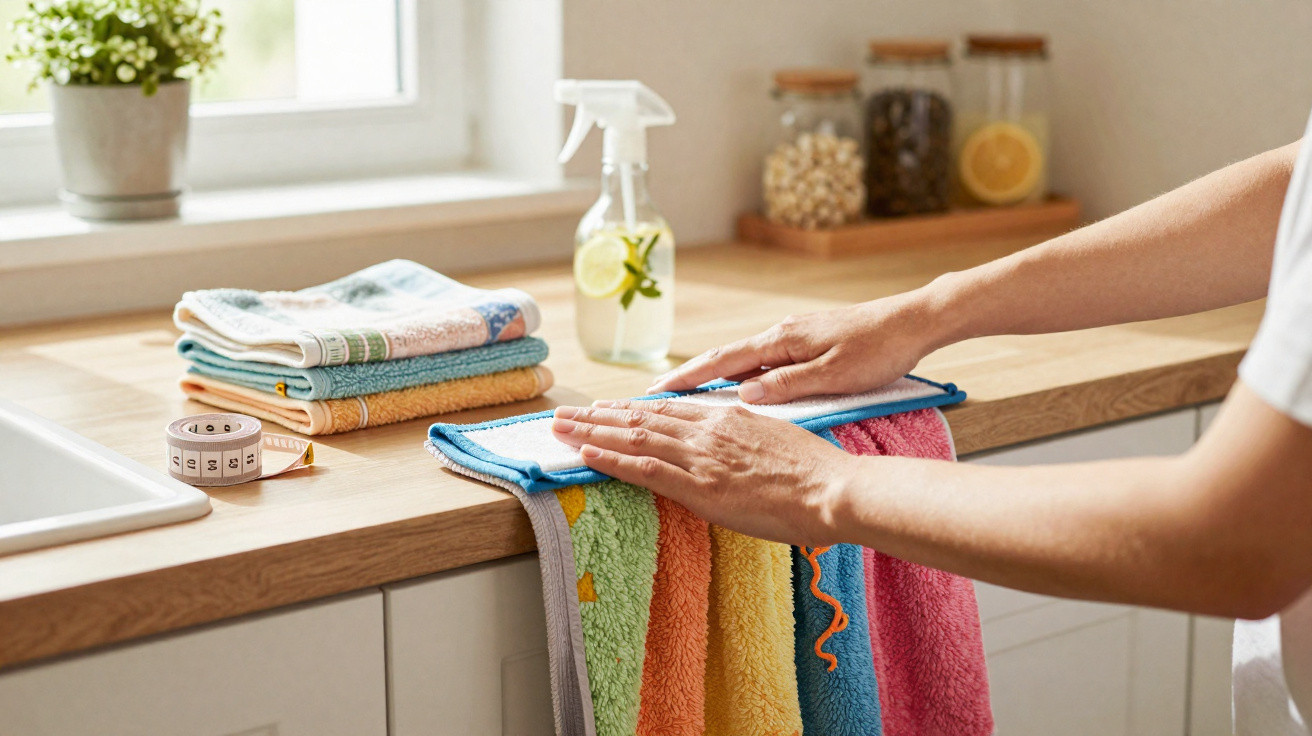
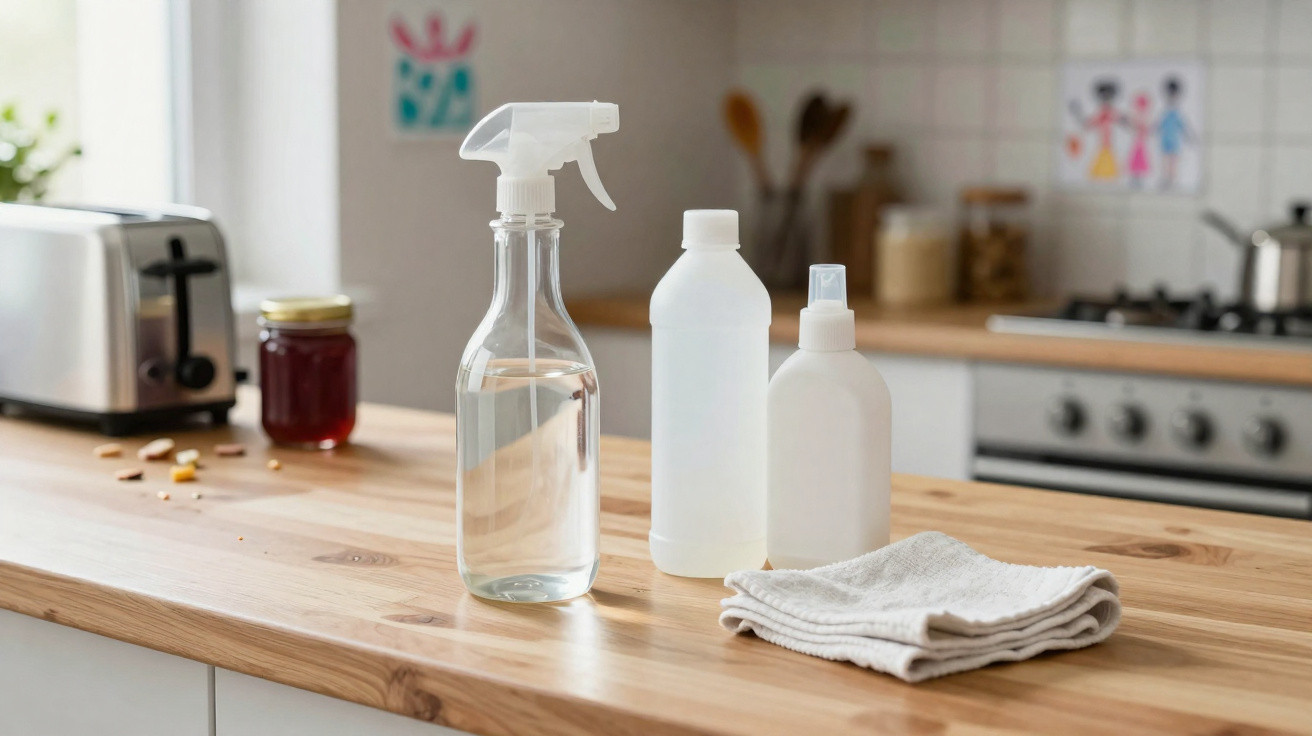
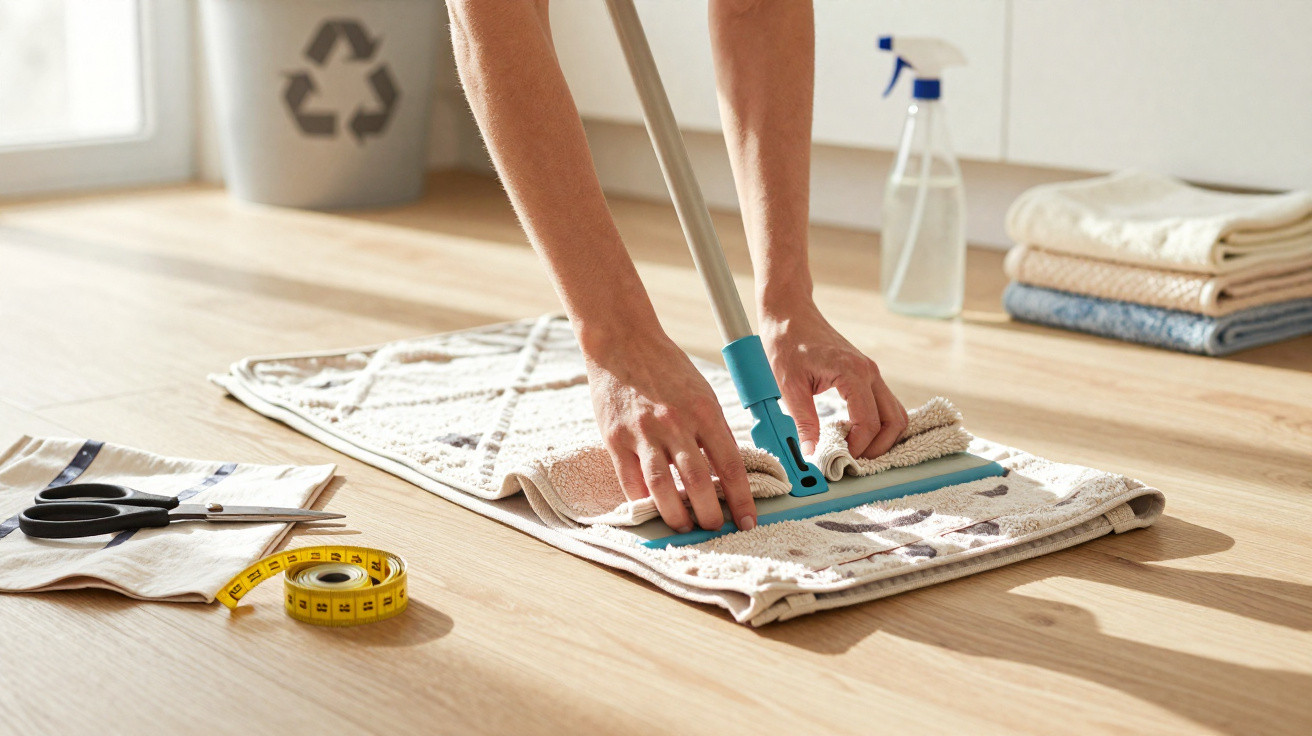
- Keep tools simple and visible One spray, one cloth and a small caddy are enough. If supplies are difficult to reach, the routine will not survive.
Living in a home that does not require heroics
A subtle relief arrives when your home no longer needs rescue operations. You enter the kitchen on a Tuesday evening and, although it is not ready for a magazine shoot, you can see the worktops. The sink is not demanding attention. You can make dinner without first having to shift a mountain. That sense of calm is worth far more than a deep clean once a month.
Eventually, this modest shift can spread into other areas of life. You begin asking, “What’s the ten-minute version of this?” about emails, washing and even finances. The drama eases. Tasks become less about “Who I am” and more about “What I do in this small window.” You reclaim some weekends and some mental space. Perhaps, on an ordinary Saturday, you clean the windows not because you must, but because you finally have enough energy to care.
| Key point | Detail | Value for the reader |
|---|---|---|
| Shift from “big clean” to micro-routines | Brief, timed sessions connected to daily triggers rather than marathon cleaning days | Cuts burnout and makes cleaning feel more manageable and sustainable |
| Set time limits and stop on time | Limit sessions to 5–15 minutes and follow the timer | Preserves energy, reduces resistance and prevents motivation from collapsing |
| Embrace “good enough” over perfect | Prioritise visible resets and lower your standards slightly | Supports a consistently liveable home without continual pressure or guilt |
FAQ:
- How do I start if my house is already a disaster? Start with a single room and one ten-minute timer. Work only on the visible surfaces in that room. Do this daily for a week before adding another task. You are creating momentum, not trying to achieve a complete reset overnight.
- What if I have kids, pets, or roommates who undo everything? Treat renewed mess as part of the system. Use very short resets of 5 minutes after high-mess moments, such as meals or play. Give each person one small repeating job so maintenance does not rest entirely on your shoulders.
- Do I still need to deep clean sometimes? Yes, although much less frequently. Your micro-routines deal with 70–80% of everyday chaos. When a deep clean is necessary, it will feel like fine-tuning rather than crisis management.
- What if I struggle with low energy or burnout? Halve your targets. A three-minute routine still counts. Sit down to fold, clean only what is within reach and keep supplies in every main room. Small wins count twice on low-energy days.
- Can digital tools or apps help with this? A basic timer is generally enough. If structure helps you, use a simple habit app or calendar reminder to anchor your three core micro-routines. The benefit comes from repetition, not complicated systems.

Comments
No comments yet. Be the first to comment!
Leave a Comment