
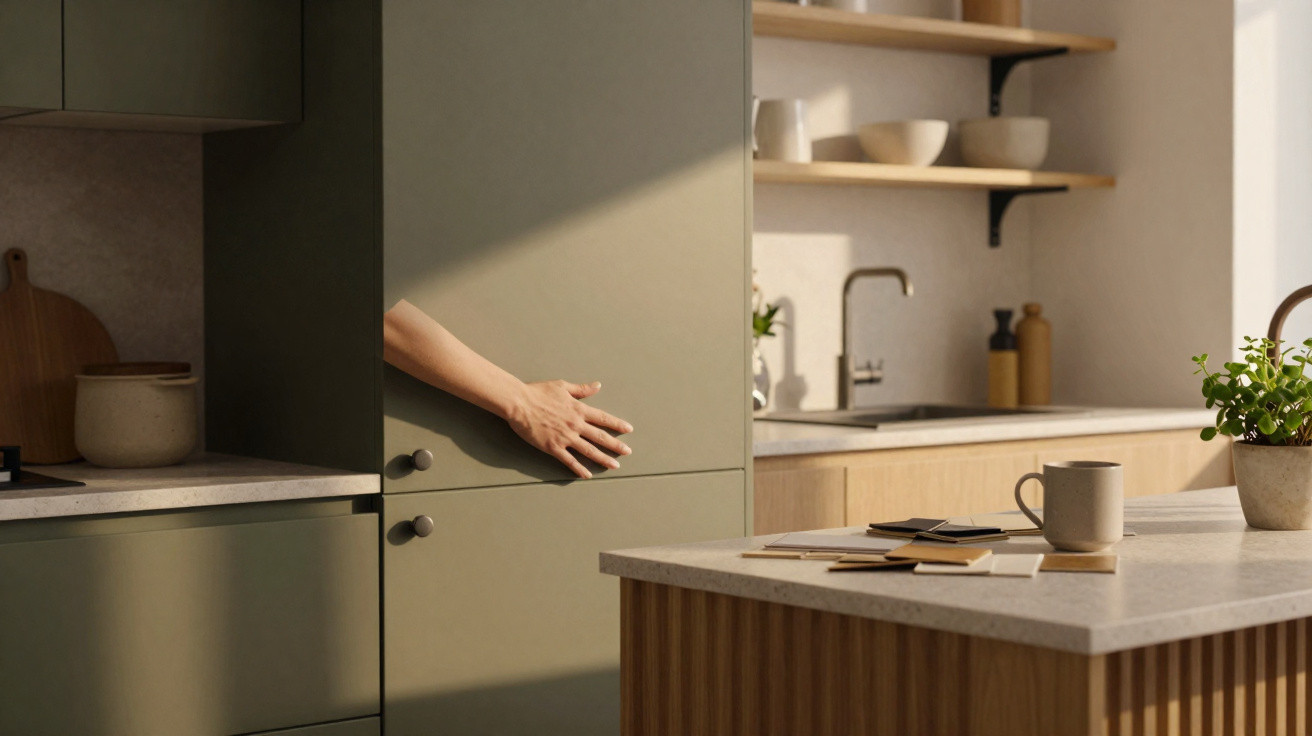
No glare, no harsh window reflections and no glossy fingerprints demanding to be noticed. Instead, there is a gentle, velvety finish that appears to absorb the morning light and settle the atmosphere of the entire room. Matte and textured kitchens are not designed to dazzle at first sight. Their appeal builds gradually and discreetly, like a room that feels genuinely inhabited rather than arranged for a catalogue.
For years, a glossy kitchen represented the standard aspiration: high-shine lacquered cupboard doors, brilliant white finishes and a mirror-like island that seemed almost too immaculate to use. Today, those same schemes can seem chilly, visually busy and slightly draining. The latest direction offers something different. Rather than seeing your reflection on every surface, you can simply feel at home.
There is a clear reason why more homeowners are moving away from glossy kitchens.
The quiet revolution of matte and textured kitchens
This transition was gradual rather than sudden. It began with smaller choices: a matte-black tap in one space, a powder-coated handle in another, or a lightly textured stone worktop replacing polished granite. Before long, whole runs of cupboard fronts followed suit. Soon, velvety finishes were appearing throughout the design fairs of Milan and Cologne.
Glossy kitchens started to resemble an Instagram filter from 2016: attractive, but faintly out of date. Matte and textured finishes bring a different quality: visual calm. Rather than reflecting light back into the room, they take it in. They make outlines gentler and disguise the tiny imperfections of everyday living. In a world filled with screens and reflective surfaces, that softness can feel restorative.
A recent survey by a major European kitchen retailer found that more than 60% of new customers selected a matte finish for their cupboard fronts, while demand for high-gloss fell by almost a third over five years. Designers describe it as a change in mood. A couple in their 30s may arrive asking for a shiny, all-white “show kitchen”, then leave having chosen dark ultra-matte cabinetry and a textured worktop with a stone-like feel beneath their fingertips.
One designer described a family who replaced only their glossy white wall cupboards with a subdued matte greige finish. Everything else remained unchanged. Yet the room immediately appeared quieter, warmer and somehow more luxurious. There was nothing showy about it; there was simply less visual clutter. The layout did not change, only the way light and texture worked within it.
There is practical reasoning behind the change. Kitchens now work harder than ever, acting as offices, homework areas, Zoom backgrounds and emotional retreats. High-gloss finishes reflect every laptop display, ceiling light and fingerprint left behind after a hurried lunch. Matte surfaces interrupt those distractions. Textured finishes diffuse reflections and create gentle shadows that are more comfortable for the eyes.
From a practical perspective, glossy doors reveal streaks, smudges and fine scratches as clearly as stage lighting on a dark suit. Matte and textured fronts are much more forgiving. Naturally, dirt is still present, but it does not announce itself so loudly. There is also a psychological aspect: texture answers our need to touch things. A lightly brushed wood veneer or stone-effect laminate makes a kitchen seem less like a showroom and more like a place where everyday life genuinely takes place.
Choosing the right matte or textured finish for your home
Begin on a small scale, and use your hands first. Visit a showroom and touch every option. Close your eyes briefly and let your fingers move over the doors and worktops. Certain matte surfaces feel silky and nearly powdery, while others have a more robust grain or stone-like texture. That sensory response can reveal far more than a catalogue page ever could.
Take samples home afterwards. View them in morning light, after dark and on a rainy day. A rich matte green may appear inviting on a grey afternoon yet look nearly black in a dim kitchen. A textured oak-effect door can look warm beneath warm bulbs but turn orange under unsuitable LED lighting. Place samples beside your flooring, appliances and even your favourite mug. It will soon become clear what feels right in your space.
A useful approach for many homes is to combine finishes rather than committing to one alone. Use a deeper ultra-matte shade on base cupboards to anchor the room, then select a softer, paler matte tone for wall cupboards. Alternatively, choose a textured island in stone, concrete-effect or wood, alongside very understated matte wall units. This layering brings depth without creating disorder. In a smaller kitchen, a pale matte finish with little sheen on large surfaces allows them to recede rather than demand attention.
Many people make the same mistake: they spot a dramatic dark matte kitchen on Pinterest and reproduce it in a small north-facing room. On a screen, the result looks like a design magazine. In reality, it may feel cave-like. There is no need to abandon the matte aesthetic; it simply needs adapting. Lighter shades, warm undertones and effective under-cupboard lighting can transform the outcome.
Another frequent error is selecting a heavily textured worktop without considering cleaning. Deep grooves and pronounced relief can collect crumbs and oil. It may look beautiful in a showroom but become mildly frustrating after three months of chopping and frying. Textures that look rich but remain physically subtle generally perform better over daily use. Be realistic about maintenance, too: let’s be honest, nobody thoroughly cleans every kitchen front every week.
“Our clients no longer ask for ‘shiny and white,’ they ask for ‘soft and calm’,” says interior designer Lara McNeil. “Matte finishes make kitchens feel like part of the home, not a separate, sterile zone.”
- Choose tactility first: Make decisions with your hands as well as your eyes.
- Use contrast: Combine matte and texture so the overall look does not become flat or monotonous.
- Consider longevity: think about how a finish will appear after five years of cooking, spills and late-night snacks.
What this change reveals about how we want to live
At a deeper level, this is more than a story of style. It reflects weariness with perfect surfaces that make every small imperfection visible. A glossy kitchen draws attention to every splash of ketchup on a drawer front. A softly textured matte door gives you room to breathe and clean up later. At some point, most of us have experienced a kitchen mess seeming to reflect the messiness in our own minds.
Textured, low-sheen kitchens suit a different pace of life. They make room for chipped mugs beside designer glassware, open shelving, visible appliances and a fruit bowl that is not arranged perfectly. Their language differs from the hyper-minimal, handleless, glassy boxes of the previous decade. They are neither worse nor better, simply more human and more forgiving.
That is why this trend is unlikely to disappear next season. As more people share their homes on social media, they also want rooms capable of coping with real life away from the camera. Matte and textured finishes photograph well, certainly, but they also wear better when faced with sticky fingers and Sunday pasta sauce. They close the gap between what looks good online and what feels good on a Tuesday evening, reheating leftovers in your pyjamas.
| Key point | Detail | Benefit for the reader |
|---|---|---|
| Matte calms the space | Low-sheen surfaces reduce glare and visual clutter | Makes the kitchen feel gentler, warmer and less tiring to use |
| Texture conceals everyday life | Subtle grain and relief hide smudges and micro-scratches | Creates less pressure to clean constantly and worry about visible mess |
| Mixing finishes creates depth | Combining matte, wood and stone-effect elements | Delivers a designer feel without the cost of a complete renovation |
FAQ:
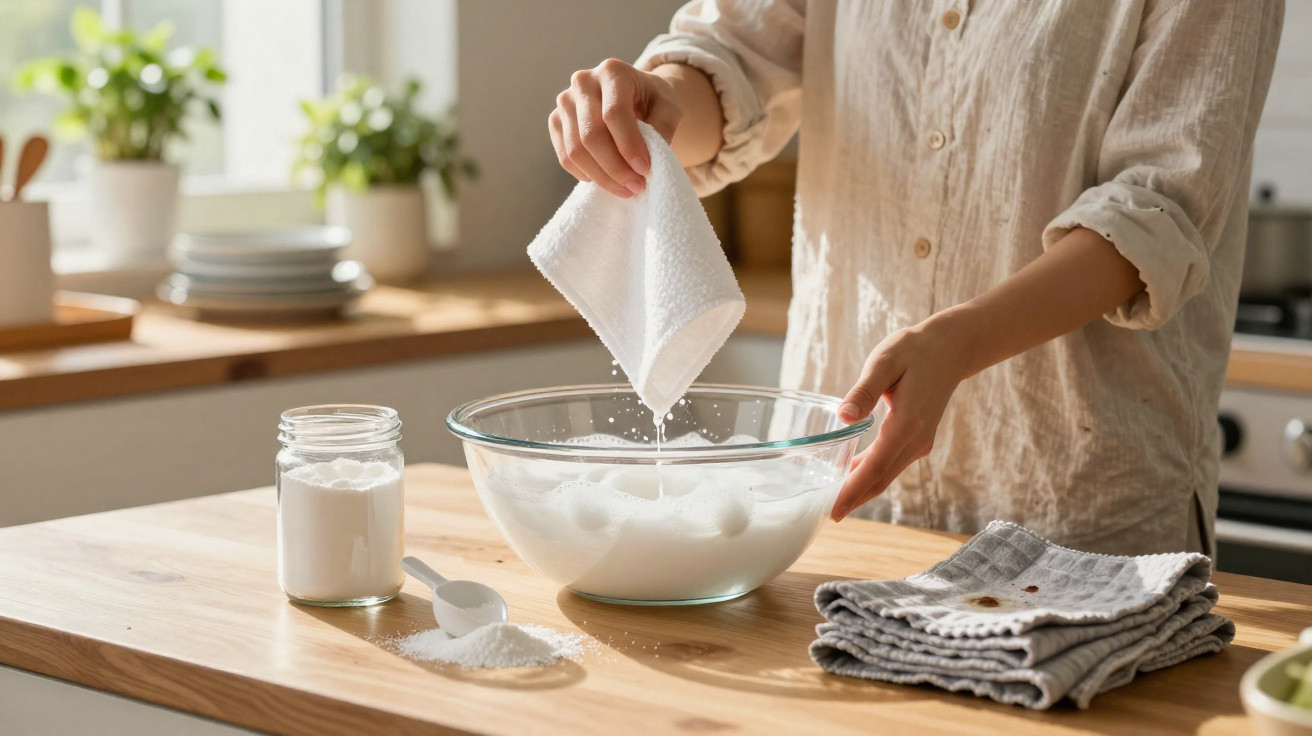
- Are matte kitchen cabinets harder to clean than glossy ones? Not necessarily. Quality matte laminates and lacquers are made to resist stains and can be cleaned with a soft cloth and mild soap. They simply do not reveal every fingerprint as dramatically as gloss does.
- Will a matte kitchen make my small space look darker? It can if you choose very dark colours and have inadequate lighting. Pale matte finishes, warm LEDs and reflective details such as a glass splashback can keep a compact kitchen bright.
- Do textured worktops trap dirt and crumbs? Deeply structured, heavy textures can do so. Choose a gentle finish that you can feel but that does not catch your sponge, and use a soft brush for cleaning when necessary.
- Can I mix matte and glossy finishes in the same kitchen? Yes, and the combination often works very well. Many people pair matte cupboards with a lightly satin or semi-gloss splashback, or glazed tiles, for a touch of reflection without a fully glossy appearance.
- Is a matte or textured kitchen more expensive? The cost depends on the material rather than the appearance alone. Affordable matte laminates are available, alongside more expensive high-tech ultra-matte and structured options. Costs can be lowered by reserving premium textures for prominent areas such as the island.
Comments
No comments yet. Be the first to comment!
Leave a Comment