
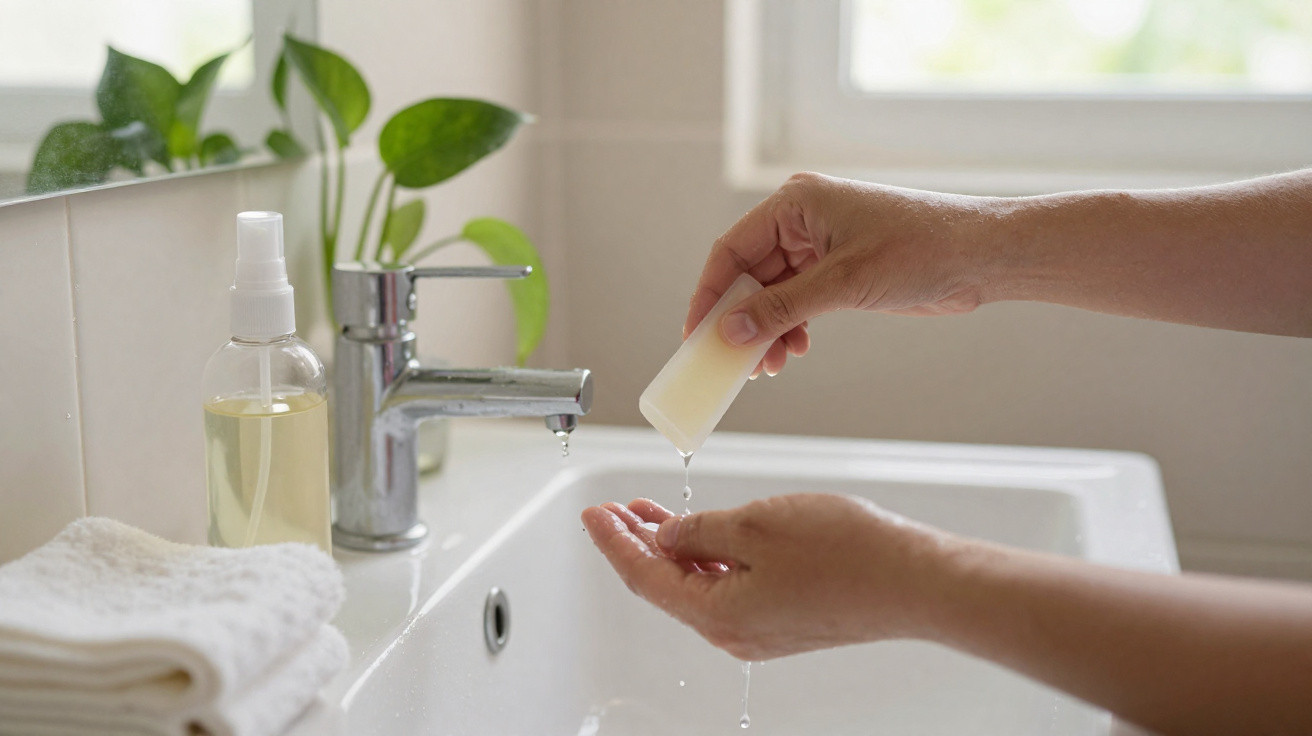
The odour reaches you before the sight does.
It is a sour, damp smell that lingers in the bathroom although everything appears “clean enough”. You polish the mirror, arrange the towels and leave the window open for a moment. Yet it remains. Then you notice it: a dark trace running along the shower silicone, or a light grey film on the ceiling over the bath.
You scrub more vigorously, use harsher sprays and perhaps burn a candle to cover the smell. For a day or two, it seems as though you have beaten it. Then the black flecks return, as if the room belongs to them. It may seem minor, but it can leave an entire home feeling uncared for.
Mould is not simply a matter of cleanliness. It is driven by habits: the small everyday actions that barely register, but gradually alter the air in your home.
Why bathrooms attract mould so easily
Step into a British bathroom on a winter morning and it can feel as though mould is already taking hold. A hot shower, a shut window and a fan that hums without shifting much air create the ideal conditions. The mirror steams up, water runs down the walls and the ceiling becomes a lasting haze.
In effect, bathrooms are humid greenhouses packed into a few square metres. Heat, water, soap deposits and confined corners provide an ideal environment for tiny black marks to flourish.
The tiles may look Instagram-ready, while the grout tells a very different tale.
UK public health surveys regularly associate damp and mould with headaches, coughs and the persistent stuffy nose often dismissed as “allergies”. One housing charity called bathroom mould “the invisible flatmate nobody invited, but everyone breathes in”.
In older properties, it often appears on cold outside walls and around single-glazed windows. In new-build homes, it can develop in highly sealed bathrooms with nowhere for steam to go. You clean it away and it comes back; you paint over it and it seeps through again.
A young couple in Manchester posted photos of their rented bathroom on a housing forum: black areas above the shower and fungal-looking marks around the window frame. They had tried bleach, bicarbonate of soda and even showering less often. Their landlord replied, “Just keep the door open.” The comments quickly erupted.
Mould needs three things: dampness, stagnant air and a surface to settle on. Bathrooms repeatedly supply each one. Hot showers fill the air with water vapour, shut doors hold it in, and small gaps in grout, silicone and paint become convenient landing places.
After spores settle, they live off soap residue, skin cells and even dust. This is why a bathroom may appear “clean” while still supporting a whole microscopic city.
Ventilation is the decisive factor. If steam remains in the room for more than 30 minutes after washing, mould is effectively receiving a daily invitation. Reduce that period and you gradually deprive it of what it needs.
Simple routines that quietly kill mould’s chances
The most effective anti-mould habit begins before the shower is even running. Switch on the extractor fan first rather than last. Allow it to run for a few minutes before the water warms up, so it is already removing moisture as steam begins to rise.
Once you have finished, resist turning it off straight away. Keep it running for at least 20 minutes. If the noise is irritating, it will often need cleaning rather than simply being switched off.
Where there is a window, leave it slightly open, including during winter. The aim is not to make the room cold; it is to give the steam an exit route.
The next habit is almost dull: spend 30 seconds wiping down after each shower. Use an inexpensive squeegee over the tiles, glass screen and bath sides. During the first week it can seem overly fussy, but it soon becomes as automatic as switching off the lights when leaving a room.
In a Reddit discussion about mould, one person said that adopting a squeegee routine halved the damp bathroom smell within ten days. There were no expensive sprays or miracle treatments involved, only less water left on surfaces.
On a hectic weekday morning, that may sound unrealistic. Children are shouting, the kettle is boiling and somebody needs the loo. On a rushed Tuesday, you will forget. That is alright. Success comes from “most days”, rather than “every single day”. Let’s be honest: nobody really does this every day.
The emotional prompt can help: think of that stale odour, or the embarrassment of a guest asking to use the bathroom when you know the ceiling resembles a petri dish.
Preventing mould is largely about narrow margins. Bring humidity down slightly, dry a few areas a little sooner and make one or two places less welcoming to spores.
Set a weekly “bathroom reset” reminder on your phone. Make it ten minutes rather than an hour. Open the window, turn on the fan, quickly clean silicone edges with a mild bathroom product, and inspect corners, ceiling edges and the back of the door.
This short routine finds mould while it is still a faint grey coating rather than heavy black streaks. And faint dust is easy to defeat.
“Treat mould like you treat dishes,” says one damp specialist I spoke to. “Leave it to pile up for weeks and it’s a horrible job. Rinse things often, and it never quite becomes a drama.”
- Run the fan 20 minutes after every shower
- Use a squeegee on glass and tiles most days
- Do a 10-minute weekly “mould patrol” in corners and ceilings
- Wash bathmats and towels at 60°C regularly
- Leave the shower curtain or door fully open to dry
Living with less mould, not chasing perfection
There is a subtle sense of relief when the bathroom no longer smells like a neglected swimming pool. You notice it through small changes: towels dry more quickly, the mirror does not remain steamed up for half an hour, and guests can use the loo without you silently apologising beforehand.
For many people, mould is not a cleaning problem but a source of stress. It creates the sense that your home is gradually moving beyond your control. These straightforward routines will not produce a show-home bathroom, but they can create a room that feels breathable, liveable and ordinary.
And often, that is all you wanted in the first place.
| Key point | Detail | Benefit for the reader |
|---|---|---|
| Ventilate before and after showering | Fan on for 5 minutes before and 20 minutes after, with the window slightly open | Quickly lowers humidity without costly work |
| Remove water from surfaces | Daily squeegee use, with occasional drying of grout and corners | Starves mould by removing standing water |
| Short weekly routine | A 10-minute “mould patrol”, visual inspection and a small targeted clean | Prevents major cleaning jobs and the need for harsh products |
FAQ:
- How often should I deep-clean my bathroom to prevent mould? Every 4–6 weeks is generally sufficient when you keep up the small daily habits. Concentrate on grout lines, silicone and ceiling edges instead of aggressively scrubbing every surface.
- Are natural products like vinegar enough to fight bathroom mould? White vinegar may help with light, recent mould. For persistent black marks, begin with a specialist anti-mould cleaner before moving to gentler products for maintenance.
- My extractor fan seems useless. What can I do? Clean its cover, inspect the filter and leave it running longer. If steam still lingers after 30 minutes, a more powerful fan or professional advice may be necessary.
- Can a dehumidifier really help in a bathroom? Yes, particularly in internal bathrooms or those without windows. Use a compact dehumidifier for an hour after showering to remove moisture from the air.
- Is bathroom mould dangerous for my health? For many people, it is mainly an irritant, but it can aggravate symptoms for children, people with asthma and those with weak lungs. This is why these simple habits matter more than elaborate décor.


Comments
No comments yet. Be the first to comment!
Leave a Comment