
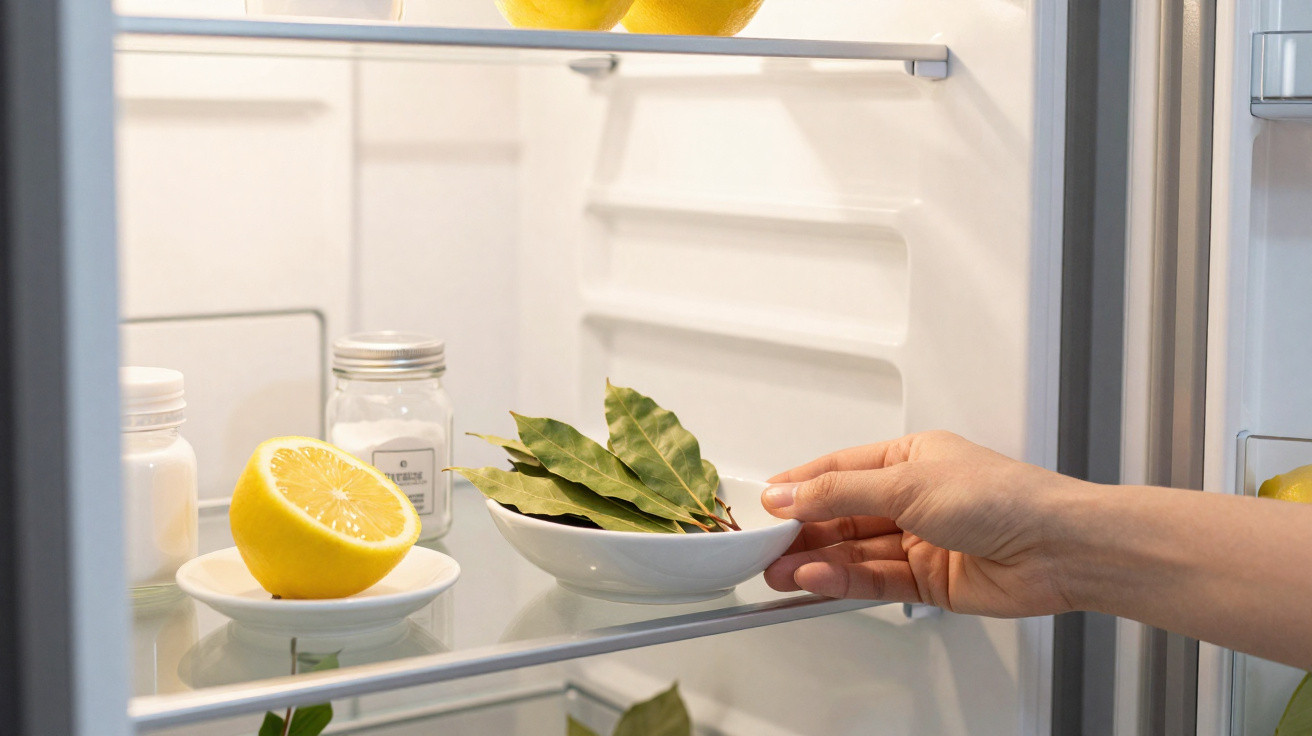
In France, a household tip suggests putting bay leaves in the fridge to improve its smell and maintenance.
Published on 3 June 2025, the source article presents bay leaves as an easy way to scent the inside of a refrigerator. Best known as a culinary herb, this aromatic plant can also feature in everyday cleaning routines, provided it is not credited with benefits it cannot guarantee.
An aromatic herb used beyond cooking
Bay laurel is widely used to flavour stocks, sauces, slow-cooked dishes and marinades. Its dried leaves give off a distinctive warm, woody fragrance. That scent is exactly why they appear in some household tips.
The idea is straightforward: a few leaves placed in a small fabric pouch or a clean dish gradually release their aroma in the enclosed space of the fridge. They can make the atmosphere more pleasant when strongly scented foods are being stored.
“Bay leaves can add an aromatic note to the refrigerator, but they are no substitute for cleaning or storing food correctly.”
Cheese, leftover cooked meals, fish, onions and some vegetables can leave lingering smells. Bay leaves do not remove the source of an odour. Their role is mainly that of a mild air freshener that may mask a temporary nuisance.
What this bay leaf tip can genuinely offer
The source article refers to traditional uses of bay leaves to reduce unpleasant smells and protect stored provisions. In a modern kitchen, their main advantage is practical: they are an inexpensive option, found in many cupboards, and do not require an industrial scented diffuser.
The leaves should be clean and dry, and kept away from unpackaged food. A cotton or lightweight fabric bag prevents them from scattering across shelves or into the vegetable drawer.
- Put several dried leaves in a small, clean dish;
- Place it in a secure corner of the fridge;
- Keep the leaves away from direct contact with food;
- Replace them once their fragrance has faded;
- Clean the fridge if the smell remains.
No specialist product is needed for this method. It may suit people who prefer not to use perfumed deodorisers where food is stored.
Bay leaves do not clean the fridge
A strong smell that does not go away should be treated as a warning sign. It may be caused by forgotten food, leaking packaging, a dirty vegetable drawer or residue trapped beneath a shelf. Adding bay leaves is not enough in these circumstances.
Spoiled food should be discarded, use-by dates checked, and removable surfaces washed with hot water and a suitable cleaning product. Drying everything thoroughly also helps prevent smells caused by moisture from returning.
The fridge needs to stay at a sufficiently low temperature to keep perishable food safe. Organisation matters too: raw foods should be kept separate from ready-to-eat dishes, while leftovers need to be properly covered.
Claims about food preservation require caution
The source article suggests that bay leaves might help fruit and vegetables stay fresh for longer by absorbing some ethylene. Ethylene is a gas produced naturally by certain plants and plays a part in ripening.
Apples, bananas, tomatoes and pears, for example, can speed up the ripening of other sensitive fruit and vegetables when stored together. Separating the relevant produce remains a practical, easy step for slowing this process.
Bay leaves are not a recognised way of controlling ethylene in a domestic fridge. Nor can they make food that has already deteriorated safe to eat. Appearance, smell, texture and storage conditions remain the first indicators to check.
“To cut food waste, organising food, checking products regularly and maintaining the cold temperature are more reliable than a scented tip.”
Bay leaves are sometimes linked with antimicrobial or antifungal properties. These properties do not mean that a leaf placed inside a household appliance should be considered a disinfectant. It does not protect food against contamination and cannot replace food-hygiene rules.
The situation in France: recommended steps for a hygienic appliance
In France, food safety depends first and foremost on the cold chain, following the dates shown on packaging, and good kitchen hygiene. A clean, well-organised fridge reduces risks associated with perishable foods.
The most delicate products, such as raw meat, fish and cooked meals, should be stored in the coldest part of the appliance, in line with the manufacturer’s guidance. Vegetables can go in the dedicated drawer after damaged parts, which may speed up deterioration, have been removed.
An unusual smell should prompt you to find its source. Open foods can be moved into sealed containers. Leftovers should be cooled and stored without being left unnecessarily at room temperature. These habits do more than the fragrance of a plant to keep a fridge pleasant.
Bay leaves, bicarbonate of soda and citrus: different uses
The source article also mentions bicarbonate of soda for odours. Its use is different from that of bay leaves: bicarbonate of soda can be left in an open container to reduce certain smells, whereas bay leaves primarily give off their fragrance.
Citrus peel and rosemary can also provide a plant-based scent. They should be replaced quickly, however, because fresh material left in a damp environment may deteriorate itself. Thoroughly dried bay leaves are easier to keep.
A simple use, without exaggerated promises
Putting bay leaves in the fridge can be a pleasant small step for people who enjoy their fragrance. This tip can supplement normal cleaning, rather than replace it. If an odour remains after cleaning, it may be useful to inspect the door seals, drawers, packaging and food that has been stored for a long time.
Bay laurel remains, above all, an aromatic herb. Whether in the fridge or in a recipe, its appeal lies in its characteristic scent and ease of use.



Comments
No comments yet. Be the first to comment!
Leave a Comment