
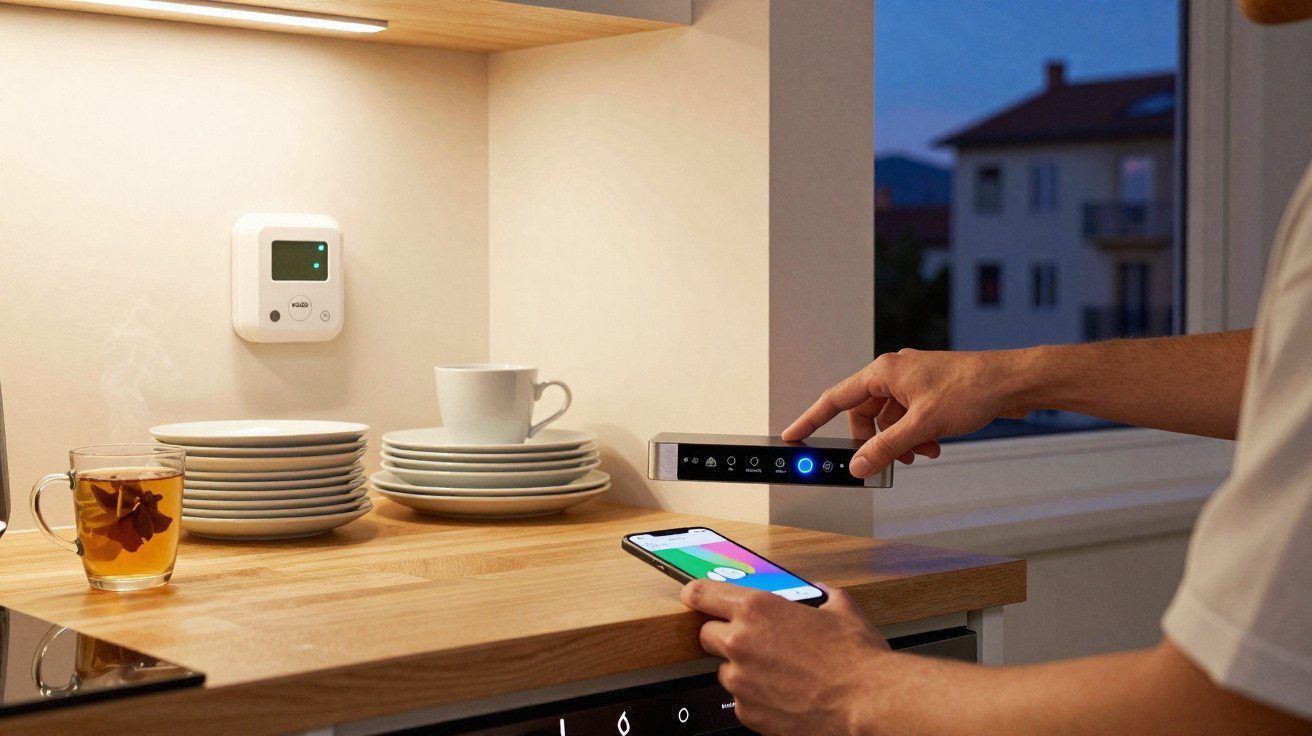
The dishwasher gave off a steady hum from the corner, blending into the children’s cartoons and the vibration of a late work message.
Beyond the window, the streetlights came on as the final bands of daylight disappeared from the buildings. Almost automatically, she opened the energy app on her phone. Its consumption graph rose and fell like a code she was only beginning to read. One figure had fallen sharply over the previous 20 minutes. Her finger paused above the dishwasher’s “Start” button, as though such a small decision could genuinely make a difference.
In most households, it can.
Why a particular time of day can cut your dishwasher energy bill
There is an unusual point in the evening when a home seems to breathe out. Cooking has finished, everyone has showered, washing machines have stopped, and screens gradually take over from household appliances. In many neighbourhoods, this quieter period is not only noticeable: electricity is genuinely cheaper.
Your dishwasher is part of this unseen routine. It is the same appliance, washing the same plates with the same quantity of water. But operating it at 7 p.m. could cost considerably more than pressing “Start” at 10:30 p.m. or 5 a.m. There is no mystery behind it. It is simply how the electricity grid operates.
Electricity suppliers may not make much noise about it, but many now price power by the hour. A dishwasher offers a neat example of this less visible system of charging.
On a typical weekday in a large city, electricity-demand charts tend to follow the same shape. There is a moderate rise in the morning, followed by a steep peak in the late afternoon and early evening, when people return home to cook, wash, and heat or cool their properties. Then, at roughly 9 or 10 p.m., demand starts to decline, as if the grid itself were settling down for the night.
Suppliers refer to these busy periods as “peak hours”. This is when they need additional generation, often from the most expensive and polluting power stations. To encourage customers to move away from this high-demand period, many providers offer lower off-peak or night tariffs. For millions of homes, these reduced rates begin late in the evening and continue into the early morning. With a delayed-start setting, the dishwasher becomes a useful tool for saving money.
On a household bill, this is not an abstract idea. It means a few pounds, euros or dollars remaining in your account rather than vanishing among rows of small figures.
Why does that precise evening threshold matter so much? Technically, the explanation is straightforward. The grid must match electricity supply with demand every second. When households are making dinner at 6:30 p.m., demand surges. Once meals are over, televisions replace cookers, fewer lights are needed, and heating or cooling levels out, demand begins to ease. That fall makes electricity cheaper for the supplier to provide, and potentially cheaper for you when your contract varies by time.
Off-peak tariffs often begin at a fixed hour, such as 9 p.m., 10 p.m. or midnight, depending on the provider and location. From that moment, an identical wash programme costs less money despite using precisely the same energy. In some homes with smart meters, pricing can change almost in real time according to the grid’s actual load. The most suitable time is, quite literally, when your local area becomes quieter.
That is why a calm late-evening period has become the ideal dishwasher slot for many households on variable tariffs.
Dishwasher off-peak hours: choosing the exact money-saving moment
The clearest step is also one that is frequently overlooked: find out exactly when your off-peak hours start and finish. Do not settle for a vague idea of “the evening” or “night”; check the actual times, often printed in tiny text on your electricity contract or shown in your app. For many people, lower-priced electricity begins at around 9 p.m. or 10 p.m. and ends at about 6 or 7 a.m.
Once you know that period, finding your ideal dishwasher time is easy: programme it to begin immediately after off-peak hours start. Do not run it half an hour early or leave it until some unspecified point later in the night. If your cheaper tariff starts at 10 p.m. and your regular programme lasts two hours, selecting “Start” at 10:02 p.m. keeps the full wash and drying cycle within the lower-rate period. A routine task has become a deliberately timed choice.
Many newer dishwashers offer a delayed-start function to handle this automatically.
In practice, households that make the most of this approach usually alter only one small part of their evening. They fill the dishwasher after dinner, shut the door, choose a programme, then use delayed start so that it begins in the cheaper period. Nothing dramatic is required, and there is no need for a “new lifestyle”. It is simply a modest change to when the motor runs.
On a North American time-of-use tariff, one family compared a month of dishwasher cycles run at 6:30 p.m. with another month of cycles run at 10:30 p.m. The number of loads was unchanged and the programmes were similar. Their app recorded an approximately 25–30% lower dishwashing cost in the second month. That is not life-changing over a week, but across a year it could pay for a couple of decent meals out. Alternatively, one small dishwasher setting could offset part of an increasing food bill.
Most of us know the feeling of receiving an energy bill in the post or opening it in an app, only to feel a small jolt of dread. Moving the timing of several power-hungry appliances will not remove that feeling altogether, but it can reduce it more than many people expect.
The argument is not limited to cost either. Power stations working at maximum output during peak hours are often the least efficient and most carbon-intensive parts of the generation fleet. Allowing the dishwasher to operate when the grid is less busy generally lowers the average carbon intensity of a wash, particularly in systems where wind power is plentiful overnight. A late cycle is therefore not only cheaper; it is often slightly cleaner too.
Your household wiring and circuit breakers also face less demand when the oven, tumble dryer, induction hob and kettle are not all competing for power. A single appliance operating at midnight puts less pressure on the structure of your home than everything running at 6 p.m. This quiet period is genuinely gentler on your wiring, the grid and your wallet.
Everyday dishwasher habits: traps, simple savings and realistic routines
The easiest way to make the saving routine stick is to create a small evening ritual. Once the final plate has been cleared, fill the dishwasher completely, add detergent, select the eco or standard programme, and set the delayed start for your off-peak window. That is all. There is no need to remember it later or realise at midnight that you forgot to start it.
If your dishwasher has no delayed-start setting, timing becomes even more important: choose a set hour and connect it to something you already do each day. You might always start it when placing your phone on its bedside charger, for instance, or when turning off the kitchen light before bed. It may sound extremely simple, but that connection is what turns a helpful suggestion into a habit that lasts for months.
And if your day has been chaotic, you can still use a quick cycle during off-peak hours.
One of the most common errors is running a half-full dishwasher in the middle of the evening peak simply to clear the sink. This creates a double cost: you pay a higher price per kilowatt-hour and spread that more expensive electricity across fewer dishes. Another mistake is avoiding the eco programme because its displayed duration looks intimidating. In this case, longer does not necessarily mean worse. Eco cycles warm the water more gradually and maintain its temperature rather than heating it aggressively, reducing energy use per load.
Let’s be honest: nobody manages this perfectly every single day. On some evenings, you will press “Start” at 7 p.m. because the pans are covered in melted cheese and you are exhausted. That is perfectly fine. The benefit comes from moving most loads, rather than every individual one. Where possible, avoid combining the most energy-intensive programme, such as intensive 70°C, with the most expensive hours unless it is genuinely necessary.
Another frequent concern is whether it is safe to leave appliances operating while you sleep.
“Think of it less as being ‘good with money’ and more as quietly rigging the rules of the game in your favour,” says an energy advisor who works with low-income households. “The kilowatt-hours are the same. You’re just choosing the cheap ones.”
There is a psychological aspect as well. Matching dishwashing to lower-cost hours can encourage a more considered relationship with household energy use. It is not about guilt or becoming obsessive. Instead, it can create the quiet sense that your home and the grid are communicating, and that you now understand part of what they are saying.
- Check your tariff type and exact off-peak hours once.
- Choose a default “dishwasher time” connected to a daily habit.
- Use eco programmes when dishes are not heavily soiled.
- Load the machine properly without blocking the spray arms.
- Leave yourself room for comfort: it is fine to break the rule when necessary.
Seeing the dishwasher’s late-night hum differently
There is something unexpectedly intimate about a dishwasher operating while the rest of the house is still. The lights are low, notifications become less frequent, and the road outside changes from steady traffic to occasional cars. In that quiet, the soft movement of water and clatter of crockery can seem like the house is carrying out its own modest night shift while you rest.
Energy discussions are often presented through enormous figures and abstract tonnes of CO₂. This is a far smaller story: you, an appliance and the clock on the wall. Yet it forms part of the wider picture of a grid trying to cope when everyone uses energy at once, while discreetly rewarding people prepared to move a few routines towards the edges of the day.
Run the dishwasher soon after your off-peak hours begin and you become part of the quiet minority using the same electricity at a more intelligent time. There is no need for a new gadget or a major sacrifice. It simply means asking a better question: not “Do I run it?”, but “When do I run it?”.
Once that question becomes part of everyday life, it can spread to other appliances. You may begin to consider the washing machine, tumble dryer or even the water heater. Your home becomes less of a passive energy user and slightly more aware of the system around it. Not flawless, and not always consistent, but more in tune with the unseen pulse behind your walls.
| Key point | Detail | Benefit for the reader |
|---|---|---|
| Choose the off-peak time | Identify exactly when off-peak hours begin and start the dishwasher immediately afterwards | Pay less for precisely the same cycle |
| Use delayed start | Set the dishwasher after dinner so it begins during the night | Save money without staying awake to press “Start” |
| Fill it and select eco | Wait until the dishwasher is full and favour economical programmes | Reduce total consumption without changing daily comfort |
FAQ:
- What is usually the cheapest time to run a dishwasher? In many homes with time-of-use tariffs, late evening to early morning is cheaper, often starting around 9–10 p.m. and lasting until 6–7 a.m. The exact hours depend on your provider and contract.
- How much can I actually save by shifting the time? On a variable tariff, running the dishwasher in off-peak hours can cut the cost of each cycle by 20–40%. Over a year of daily use, that often adds up to a noticeable reduction on your total bill.
- Is it safe to run the dishwasher at night while I sleep? Modern dishwashers are designed to run unattended, but safety advice suggests keeping the machine well maintained, filters clean, and avoiding use if there are any signs of leaks or electrical issues. Some people prefer off-peak early morning if they feel uneasy overnight.
- Does the eco programme really use less energy? Yes. Eco cycles use lower water temperatures and longer wash times, which generally means less electricity per load, especially when combined with an off-peak slot.
- What if I don’t have a time-of-use or off-peak tariff? If your rate is flat 24/7, the “exact time” matters less for money, but running the dishwasher outside of peak demand can still help reduce pressure on the grid and slightly lower your indirect environmental impact.





Comments
No comments yet. Be the first to comment!
Leave a Comment