
The kitchen was undeniably attractive. Still, the woman giving me the tour let out a sigh and said, “We never cook in here. It feels like a showroom.”
Her phone contained dozens of saved kitchen images that bore no resemblance to the room. There were warm timber shelves, pans displayed openly, mismatched mugs, and a padded window seat with a sleeping dog curled on top.
Homeowners are, little by little, pushing back against the immaculate, bare minimalist kitchen. They are looking for rooms that feel lived in rather than merely “Instagram-ready”. Comfort is taking priority, and the change is moving more quickly than trend forecasters expected.
Why Minimalist Kitchens Suddenly Feel Wrong
Step into a traditional minimalist kitchen and it can seem almost echoing. There are no fridge magnets, herbs on the worktop or pile of post beside the toaster. Instead, there are crisp lines, concealed cupboards and the uneasy sense that you ought to remove fingerprints from the fridge before even taking a breath.
These kitchens once appeared aspirational, as though you were living in a design magazine. Today, they can feel slightly chilly and overly controlled: rather like a hotel lobby where you are permitted to cook, provided you do so correctly. Increasingly, homeowners are asking one straightforward question: where has the soul gone?
During 2023, several large home retailers recorded growing sales of open shelving, coloured appliances and patterned splashbacks, while orders for glossy white cabinets levelled off. Designers describe clients who arrive with minimalist Pinterest boards but leave with plans that are darker and cosier.
One London kitchen designer told me that half of her recent projects involve “de-minimalizing” newly renovated kitchens. In practice, this means returning objects to worktops, introducing texture and even bringing back handles removed during the previous style cycle. The minimalist dream kitchen is scarcely five years old before people begin to soften it.
This is not simply a case of tiring of a particular look. It reflects the way we live today. More people work and eat at home, while the kitchen has become a social room rather than a sterile area for food preparation. Once you use a kitchen throughout the day, the weaknesses of ultra-minimalism become clear.
Concealed storage works well until you are repeatedly opening and shutting doors to reach everyday essentials. An entirely seamless white scheme may look smart, until a single scratch is all you can notice. And maintaining a permanent “no clutter, ever” standard is a full-time task. Let’s be honest: nobody really does that every day.
The Comfort-First Kitchen: How It Really Looks
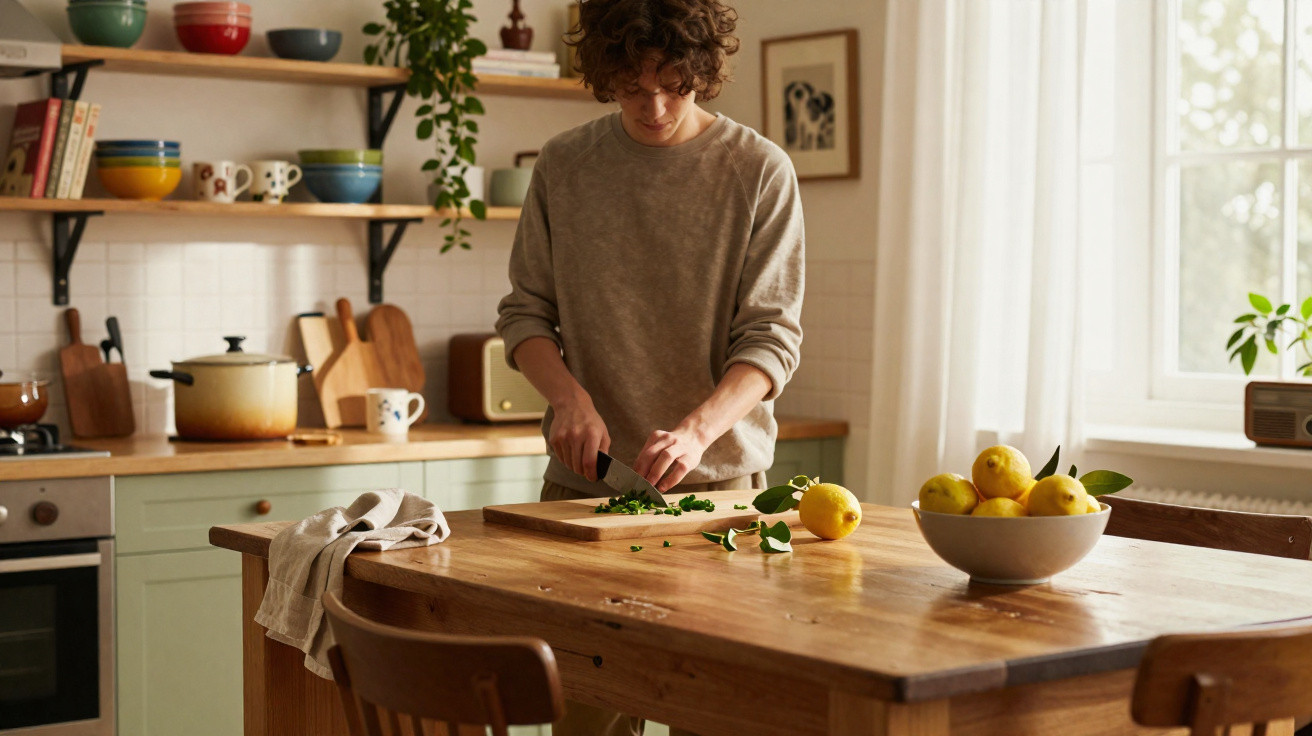
Comfort-first kitchens are not styled like showrooms for photographs. They look as though someone could enter at any moment carrying a mug of tea and a partly sliced lemon. Open shelves might hold cookbooks stacked horizontally, while a lamp sits on the worktop and a basket of onions remains out because it never quite gets put away.
The palette is gentler, richer or simply less tightly managed. Think warm creams rather than brilliant white, herb-like greens and wood with visible grain. Rather than a single harsh ceiling light, there are small pools of illumination above the sink, table and coffee area. It resembles a sitting room that happens to contain an oven.
Consider Emma and Lucas, a couple in their thirties who exchanged their glossy grey kitchen for one that was, frankly, less “perfect”. They swapped handleless cupboards for Shaker-style doors, introduced a second-hand freestanding dresser and kept their coffee machine and jars on the worktop.
Their friends regularly say the room feels “warmer” and “more them”, despite being less streamlined on paper. The couple also report cooking more often. The reason is simple: their most-used tools are visible, easy to reach and inviting. They do not need to switch the kitchen “on” whenever they want to prepare something.
Surveys by US and European kitchen brands point to a growing appetite for what they call “soft functionality”: rooms where performance still matters, but cosiness and imperfection take precedence. That could involve mixed metals, a pan rack above an island or retaining the slightly worn wooden stool you have owned for years.
Comfort-first does not equal untidy or chaotic. It merely stops acting as if everyday life does not occur. A fruit bowl on the table is no longer a design offence. The fridge can display children’s drawings and the electrician’s phone number. A kitchen is allowed to reflect the people who live there.
Shifting Your Kitchen From Minimalist to Comfortable
The simplest route from minimalist to comfort-first is not demolition but layering. Begin with one area you use frequently, such as the coffee corner, the chopping space by the window or the breakfast bar.
Next, let everyday items emerge from their hiding places. Leave a wooden board on the worktop, place a jar of wooden spoons beside the hob, or add a small table lamp or candle near the splashback. These low-risk adjustments immediately make the room feel softer and alter your experience of it.
Textiles can do much of the work. Try a washable runner rug, cushions for seating or a linen curtain beneath the lower cabinets in place of another flat cupboard door. Replace a shiny chrome bar stool with one that has a padded seat. Build in layers: lighting, fabric, texture and a handful of personal pieces that deserve their place.
Many people feel caught between a “museum” kitchen and “total chaos”. They worry that allowing one item to remain on the worktop will make the entire room descend into disorder. On a difficult day, that concern wins, leaving the room unused and frozen simply to avoid possible clutter.
One kind guideline may help: keep things visible, but intentional. Anything left out should either be used every day or bring you real pleasure. Nothing more is required. A favourite ceramic bowl passes the test; five duplicate spatulas in a plastic container do not.
When creating a comfort-first kitchen, the main error is copying another person’s cosy aesthetic without considering your own life. If you never bake, flour jars do not belong on your worktop. If you always eat at the island, spend money on genuinely excellent stools rather than a formal dining table you resent having to dust.
“The most comfortable kitchens aren’t the ones with the best finishes,” says interior architect Sofia Raman. “They’re the ones where you can walk in, kick off your shoes, and know exactly where the kettle is without thinking.”
- Start tiny: Update one corner rather than the entire room.
- Add a single warm light source and one soft textile.
- Leave everyday tools visible, and store items used once a month.
- Mix old and new: pair a vintage chair with a modern tap.
- Deliberately allow one “imperfect” object to remain.
A Kitchen That Likes You Back
There is a subtle relief in accepting that a spotless, empty kitchen does not automatically create a better life. A comfort-first kitchen pardons you for leaving the mixer out, chopping on the board that never makes it back to its drawer, or enjoying colour when the trend report says “taupe”.
On a winter evening, with something simmering in a pot and a lamp glowing in the corner, nobody is concerned whether your cupboard doors use the latest flat-front design. What matters is having a soft place to sit, a mug close at hand and the sense that they are welcome to stay awhile.
Most of us have entered someone’s kitchen and thought, “I could stay here for hours.” That feeling seldom comes from a room that seems untouched. It comes from small evidence of life: a chipped but cherished mug, a radio playing quietly or a dog bowl tucked beneath the radiator.
Minimalist kitchens offered freedom from clutter. Comfort-first kitchens offer something more profound: somewhere your real routines, mess included, are permitted to exist. Beauty comes from belonging rather than pretence.
As more homeowners choose warmth, softness and personal detail, the glossy white box is beginning to seem like a brief chapter rather than the entire story. The next kitchen you save might offer less symmetry and more soul. Once you have experienced the ease of a room that feels as though it likes you back, it becomes far more difficult to imagine going “back to minimal”.
| Key point | Detail | Benefit for the reader |
|---|---|---|
| From showroom to lived-in | Minimalist kitchens are making way for warmer, more personal rooms | Helps you see why your “perfect” kitchen may feel unexpectedly cold |
| Layer, don’t demolish | Small changes, including lighting, textiles and visible tools, can transform the atmosphere | Provides realistic ideas without requiring a full renovation budget |
| Design for your real habits | Comfort-first reflects the way you cook, gather and relax | Helps guide you towards a kitchen you genuinely enjoy using each day |
FAQ:
What exactly is a comfort-first kitchen?
A comfort-first kitchen is planned around the way you genuinely live, rather than simply how it appears in photographs. It values warmth, accessibility and personal detail over strict minimalism or trend-led finishes.Do I need to rip out my minimalist kitchen to change the vibe?
No. A minimalist foundation can be softened through open shelving, warm lighting, everyday tools kept in view, textiles and a few characterful items, such as a vintage chair or freestanding cabinet.How do I keep a cosy kitchen from feeling cluttered?
Apply one simple filter: anything left out must either be used daily or be genuinely loved. Arrange objects on trays or boards, retain some empty surfaces and reassess your worktops every few weeks.Are white kitchens “over” now?
White has not disappeared; it is simply being used in a different way. Many homeowners retain white as a background while adding timber, colour and texture to make the room feel less clinical and more relaxed.What’s the first change I should make if my kitchen feels too cold?
Begin with lighting and texture: introduce a warm-toned lamp or pendant, a soft runner or cushions, then take one or two attractive everyday objects out of the cupboards so you can see and use them.

Comments
Зубовский бул https://giacintn.ru/service/lechenie-pollinoza/
, д https://giacintn.ru/service/videodermatoskopija/
35, стр https://giacintn.ru/service/massazh-oblasti-shei/
1 https://giacintn.ru/service/konsultacija-trihologa/
Пн-Пт 08:00-21:00 https://giacintn.ru/doctors/nasritdinhodzhaev-ashrafulla-omonullaevich/
круглосуточных стационаров https://giacintn.ru/services/ginekologiya/
Реабилитационная и восстановительная медицина на дому https://giacintn.ru/service/konsultacija-vracha-onkologa/
наш формат - универсальная семейная клиника, в которой взрослым и детям оказываются различные виды медицинской помощи https://giacintn.ru/ura-dozhdalis-luchshij-med-centr-v-rajone-juzhnoe-tushino/
Диагностика, лечение и профилактика заболеваний практически по всем направлениям современной медицины https://giacintn.ru/service/lechenie-infekcij/
Скорая помощь и служба помощи на дому https://giacintn.ru/service/konsultacija-urologa-androloga/
Leave a Comment