
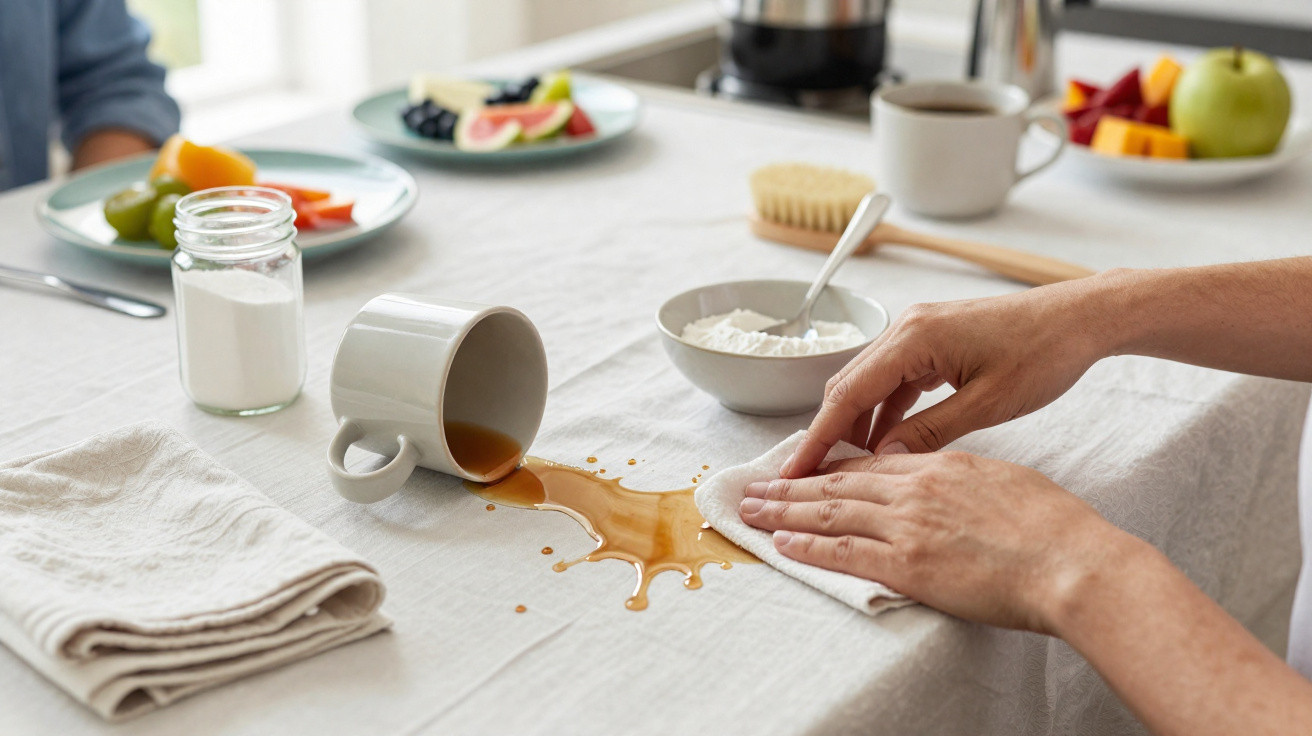
A coffee spill can land on your tablecloth halfway through a meal, spreading into a pale brown circle and tempting you to reach for costly sprays. Yet there is an easy fact that is often overlooked: baking soda can remove coffee stains quickly, stay kind to fabric, and spare you the cost of another so-called “miracle” cleaner with a laboratory-like scent.
A mug caught an elbow, the elbow knocked the table, and coffee flew in a careless curve across a white cotton tablecloth just as guests were reaching for fruit. The room fell silent for a moment - that shared intake of breath you can almost sense - as someone reached for napkins and the host seemed ready to abandon brunch in favour of laundry.
In the kitchen, water ran from the tap and a spoon tapped against a jar. Baking soda was mixed with cold water, forming a smooth, soft paste. The coffee stain had little chance, not because of a branded product, but thanks to a familiar pantry staple. The solution had been there all along.
The mark gradually faded. The table became a table again rather than a crime scene. It was a small rescue with a useful lesson: one straightforward technique can outperform a cupboard full of products. It is the sort of trick you remember when another cup starts to wobble, share with a friend, and feel as though you have discovered a shortcut.
It works.
Why baking soda works on coffee stains
Coffee marks settle into fabric like persistent memories. Because they contain tannins, they grip the fibres as the drink cools and dries. Baking soda is a mild alkali with a fine, gentle abrasive texture, helping to release that grip without damaging the fabric’s weave. The aim is to encourage the stain out, not to scour it away.
Most people know the feeling of seeing a spill and treating it as a minor emergency. In one home I visited, the host automatically used an expensive stain-removal stick. It left a ring behind. A week later, the same tablecloth was treated with a baking soda paste and lightly rinsed. There was no ring and no fuss. The cloth remained soft instead of taking on the stiff, overwashed texture that aggressive products can create.
The principle is straightforward. Raising the pH slightly helps to neutralise tannins and make them more soluble in water, allowing them to release during rinsing. The mild graininess helps lift surface pigment, much as a wave washes sand from skin. A tiny amount of washing-up liquid improves how the paste moves across the fibres. It is chemistry that feels like plain common sense.
Step-by-step: the baking soda method that really works
Begin by blotting the spill with a clean cloth; never rub it. Hold the stained section under cold running water from the reverse side of the fabric, so the coffee is pushed out rather than forced further in. Combine two parts baking soda with one part cold water to make a spreadable paste. Smooth a thin coating over the stain and leave it for 10–15 minutes.
Gently work the area with your fingertips or a soft brush for 10 seconds. Rinse with cold water, then examine the fabric in strong light. If a faint shadow is still visible, repeat the process once or mix one drop of mild washing-up liquid into the paste. Wash as normal in cool or warm water. Let the item air-dry initially, so you can make sure the mark has disappeared. Honestly, few people follow this routine every day, but when you do, it protects both your fabric and your money.
The common mistakes are simple. People scrub too firmly, use hot water before they should, or leave the paste until it dries as hard as cement. Hot water may set tannins, while rubbing can roughen the surface and create a halo. If you are concerned about coloured linen dyes, test an inconspicuous seam first. Cold water and patience are more effective than panic and vigorous scrubbing.
“Baking soda gives you time to breathe,” said a café manager who treats table linens as inventory. “It’s cheap margin protection in a jar.”
- Quick kit: a small bowl, spoon, baking soda, cold water, a clean white cloth and a soft brush.
- Optional helpers: one drop of mild washing-up liquid, or white vinegar for persistent odours.
- Best timing: 10–15 minutes for fresh stains and up to 30 minutes for tougher marks.
- Inspect in bright light before drying, so no faint shadow becomes set.
Smart habits that protect your money and fabric
Turn the process into a simple ritual: blot, rinse with cold water, apply paste, wait, rinse, then wash. For an older stain, scatter dry baking soda over the damp area, lightly mist it, and allow more time before gently massaging it. On white cotton or polyester, an oxygen-based bleach added to the wash can complete the removal after the baking soda step. Not every mark requires the strongest possible treatment.
Basic errors can ruin a tablecloth. Avoid layering four products at once, as this only confuses both the fabric and your sense of smell. Do not use steam or hot wash cycles until the stain has fully gone. Leave harsh brushes alone, as they can raise pills on the surface. Treat vintage linen carefully: it is stronger when wet, but does not tolerate being wrung out. Testing a hidden corner takes 20 seconds and can prevent colour loss that cannot be reversed.
There is also a financial benefit that many people miss. Premium sprays make grand promises in a cloud of fragrance, then get used once or twice before being forgotten beneath the sink. Baking soda costs pennies, is easy to keep close by, and works well alongside other household basics.
“Good cleaning is mostly timing and calm,” my grandmother used to say. “Tools help, but habit wins.”
- Monitor the water temperature: start cold, then use warm water only once the stain has faded.
- Apply only gentle pressure and allow the chemistry to do the work.
- Air-dry first to check the result, then use a warm iron if the care label permits it.
- Store a small jar of baking soda near the sink during spill season.
A small change that transforms how you host
There is a quiet satisfaction in rescuing a tablecloth. You keep a memory intact and avoid spending money on a problem that does not warrant it. Baking soda encourages you to pause and work with the fabric rather than against it. It is not showy, which is exactly why it is useful.
This goes beyond removing stains. It is an approach that reduces waste and builds confidence. Once you have watched a brown bloom fade beneath your fingertips, mess becomes less intimidating and more manageable. You may also start to question the collection of cleaners on the shelf, along with their effect on the air in your home and on your budget.
Share the technique and pass it on. Ask a friend what they use, then compare methods over a cup that could easily spill again. The next stain will arrive, but so will your calm response. And the jar of baking soda will remain on the counter as a quiet reassurance.
| Key point | Detail | Benefit for the reader |
|---|---|---|
| Cold-first approach | Blot, rinse from the reverse side with cold water, then apply the paste | Helps prevent tannins from setting and speeds up removal |
| Baking soda paste | 2 parts baking soda, 1 part cold water, leave for 10–15 minutes | Gently lifts the stain without harming fibres or colour |
| Final checks | Rinse, air-dry and inspect in bright light before applying heat | Prevents permanent halos and repeated washing |
FAQ:
- Can baking soda remove old, set-in coffee stains? Yes, although it may require two or three attempts. Dampen the area, sprinkle on baking soda and leave it for 20–30 minutes. Work it into a paste and rinse with cold water. For white cotton, follow with an oxygen-based bleach in the wash. Avoid chlorine bleach on natural fibres.
- Is baking soda safe on coloured tablecloths? Usually, yes. It contains no chlorine or enzymes and does not normally strip dye from most fabrics. Test the hem seam first. If colour comes away onto a white cloth, reduce the waiting time and rinse sooner.
- Should I use hot or cold water on coffee stains? Start with cold water to keep tannins mobile. Warm water is suitable once the stain has faded. Only use heat at the end - such as a warm iron - when you are certain the mark has gone.
- Can I mix baking soda and vinegar for stains? Use them one after the other rather than mixing them. Combining them neutralises both ingredients and creates salty water. If you want to use vinegar for odour, rinse away the baking soda first, then apply a light vinegar solution and rinse once more.
- What about delicate fabrics like linen or silk? Linen responds well when handled gently. Silk needs more care: test a small hidden area, keep the contact time very short and do not scrub. If the care label says dry-clean only, blot the spill and leave deeper treatment to a professional.




Comments
No comments yet. Be the first to comment!
Leave a Comment