
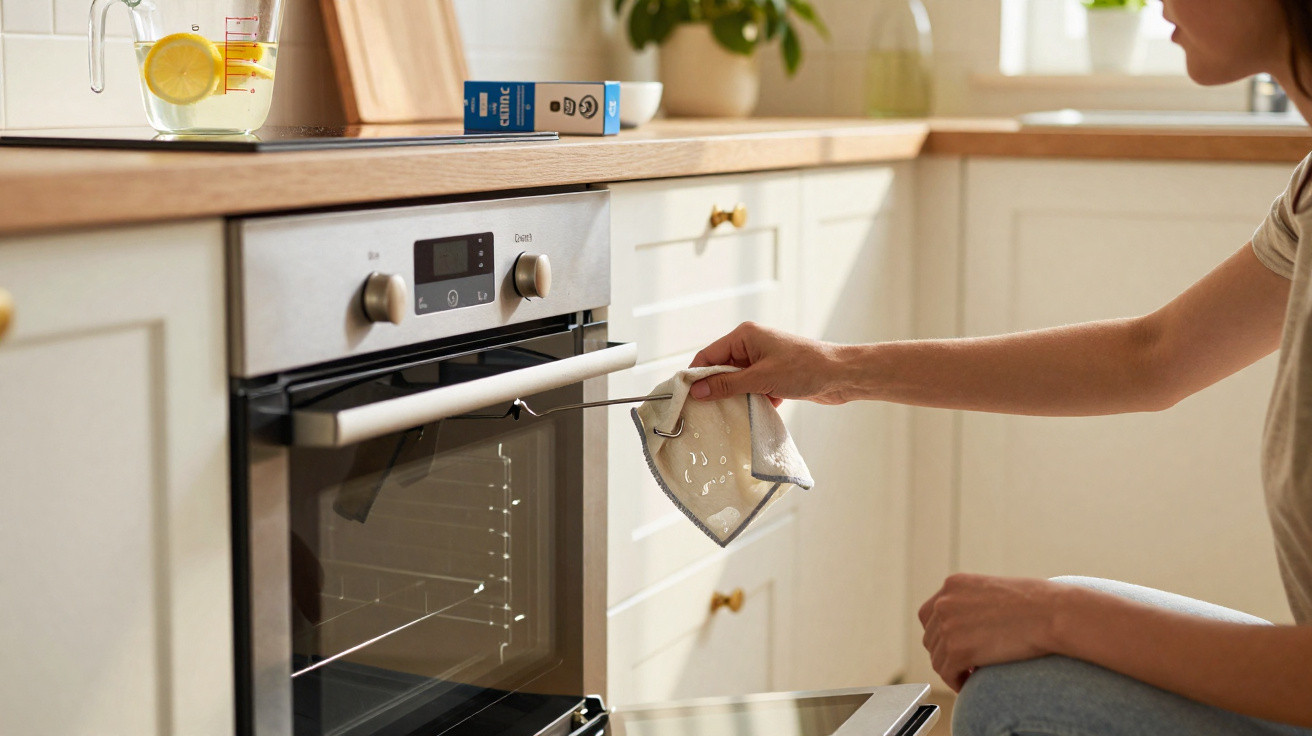
Anyone who has ever stood in front of their oven wondering how the grimy strip between the glass panes could possibly be cleaned is far from alone. A practical chef’s tip now shows that a simple coat hanger, some household vinegar and a microfibre cloth can do the job – without screws, specialist tools or expensive harsh chemicals.
Why the area between oven door glass panes becomes a dirt trap so quickly
Ovens regularly operate at 200°C or above. Fat splatters, sauce bubbles over and cheese runs off a baking tray – and some of it ends up not only on the oven floor, but around the door as well. Over time, hot steam works its way between the glass panes.
That is where the residue nobody wants to see begins to collect:
- baked-on grease splashes
- dried sauce drips
- crumbs and food debris from baking trays
- streaky condensation marks
Most oven doors contain two or even three panes of glass, with only an exceptionally narrow gap between them. An ordinary sponge, cloth or piece of kitchen roll simply cannot reach inside.
Although the panes can be removed quite easily on some models, many people are reluctant to do so because they fear breaking the glass, reassembling it incorrectly or invalidating the warranty. On plenty of appliances, removing the panes is not intended at all.
The result is that you clean the inside and outside, yet still get annoyed every time by the grey, streaky layer that remains visible in the glass.
The professional kitchen trick: cleaning with vinegar and a coat hanger
A professional chef shared a surprisingly straightforward solution online which also works in ordinary homes. The principle is to create an extended “cleaning arm” that reaches deep into the gap between the panes without dismantling the oven.
The homemade cleaning mixture
Before starting, prepare a basic but effective solution. It requires just two ingredients:
- 1 part water
- 1 part clear household vinegar
Pour the mixture into a spray bottle. A microfibre cloth or a thin, absorbent cotton cloth is all that is needed for cleaning.
Vinegar is highly effective at dissolving grease, loosens baked-on splashes and will not normally damage glass – it is a classic household remedy from grandma’s day.
If you have a particularly delicate oven or are unsure, test the mixture first on an inconspicuous area of the door frame.
How to make a “cleaning hook” from a metal coat hanger
The central item in this method is an ordinary wire coat hanger, such as the kind returned by dry cleaners. With a few simple adjustments, it becomes a slim, flexible cleaning rod.
- Straighten the metal hanger until it forms the longest, smoothest rod possible.
- Bend one end slightly so that it creates a small hook.
- Wrap a microfibre cloth or a thin piece of rag around the bent end.
- Secure it with a sturdy elastic band or adhesive tape so that it cannot shift.
- Thoroughly dampen the cloth with the vinegar-and-water solution.
Once prepared, the hanger is flexible enough to fit into narrow slots while remaining firm enough for you to apply pressure.
Step by step: how to reach between oven door glass panes
Many ovens have small openings or slots along the lower section of the door. Air normally circulates through these gaps to stop the outside of the door becoming too hot. This is exactly where the trick comes in.
Creating access without dismantling the oven
In practice, proceed as follows:
- Switch off the oven and allow it to cool down completely.
- Remove any baking trays and shelves from the oven.
- If fitted, pull out the storage drawer or warming drawer beneath the oven completely.
- Examine the area beneath the door: narrow slots or openings are often visible there.
Carefully slide the wrapped metal hanger into these openings. It may feel unfamiliar at first, but it is usually easier than expected.
Movement, pressure and patience: how the marks come away
Once the tool is positioned between the panes, the actual cleaning can begin:
- Move the hanger slowly up and down like a tiny windscreen wiper.
- Add sideways movements to reach edges and corners.
- For more stubborn marks, press the hanger briefly against the affected spot and hold it there for a few seconds.
- Pull the hanger out, rinse the cloth, soak it again in the mixture and reinsert it.
After a few passes, the difference is clearly visible: the cloudy film disappears, while brown marks fade or come away completely.
Depending on how dirty the door is, the process takes between five and 20 minutes. Regular cleaning will make the task much quicker.
Maintaining oven door glass panes so they stay clean for longer
A simple routine can prevent this task from becoming a major job each time. A few everyday habits are enough.
Small measures with a major effect
- After heavy splashing from roasting, bakes or pizza, give the oven a quick wipe once it has cooled.
- Place a baking tray beneath bakes or dishes to catch anything that spills over.
- Once a month, spray the outer glass surfaces with vinegar and water, then buff them with a microfibre cloth.
- Leave the oven door slightly open while cleaning so that no cleaning product runs into the hinges.
Spending a few minutes on it regularly prevents thick yellowish deposits from becoming fixed between the panes.
What you must consider when using this oven door glass cleaning trick
As clever as the coat-hanger method is, there are a few points to check before you begin.
| Aspect | What to consider? |
|---|---|
| Safety | Always ensure the oven is completely cold; unplug it if you are unsure. |
| Materials | Never scrape the glass with bare wire; always wrap it in a cloth. |
| Manufacturer’s instructions | Check the instruction manual for any manufacturer guidance on cleaning the door. |
| Cleaning products | Do not allow aggressive oven cleaner between the panes; use mild products only. |
Very hard water marks or old, deeply baked-on residue may sometimes require several attempts or a slightly stronger mixture with a higher proportion of vinegar. For extremely delicate surfaces, it is better to stick with the 1:1 mixture.
Why household remedies such as vinegar work so well here
Many people instinctively reach for supermarket sprays and gels when cleaning an oven. However, not every chemical product is suitable for use inside a multi-layered glass door. Some products can damage seals or create unpleasant fumes when left in crevices.
Household vinegar and water offer a clear benefit in this situation: the solution is inexpensive, clear, its smell dissipates relatively quickly and it can be rinsed away easily. It works reliably against grease and lighter baked-on deposits on metal, glass and ceramic.
If you dislike the vinegar smell, wipe again with clean water afterwards, or attach a second fresh cloth to the hanger to pick up any remaining residue.
When the trick is not enough: when to call a professional
In some situations, professional help is the better option. This applies, for instance, if the door appears damaged, the glass is loose or fine stress cracks are already visible. Any further pressure or levering then carries a risk.
For expensive designer appliances with specialist coatings, it is also worth consulting the instruction manual or making a quick call to customer services. Some brands provide their own cleaning kits or precise instructions for opening the door during servicing.
For the vast majority of standard appliances in rented homes and family houses, however, the coat-hanger trick is entirely sufficient. It is especially useful for older ovens that remain technically sound but look a little dated.
The final effect is one many people underestimate: a clear, clean glass pane changes how the kitchen feels. You can see the food baking through the door again, the oven looks well maintained, and you no longer have to be frustrated by dirt that once seemed impossible to reach.




Comments
No comments yet. Be the first to comment!
Leave a Comment