
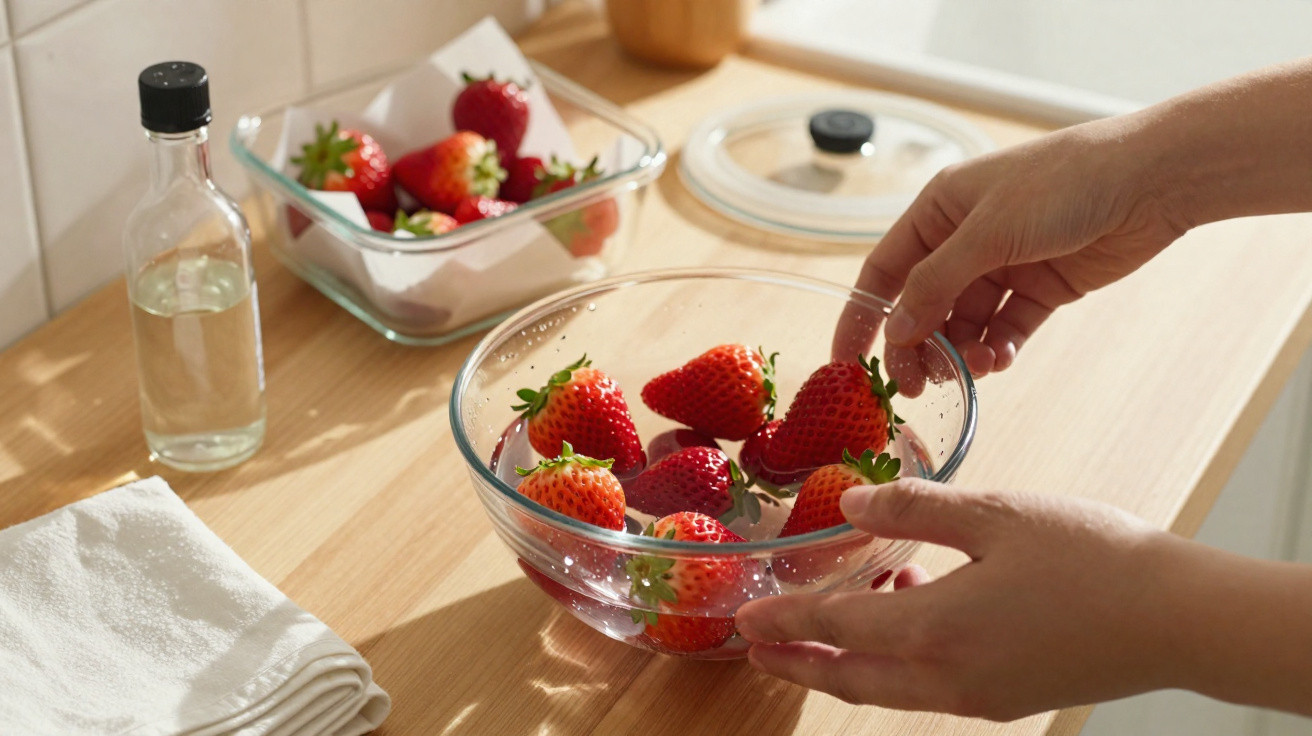
Strawberries are an essential part of spring and summer in the UK, yet countless punnets end up in the bin every year when the fruit has partly spoiled. Their exceptional delicacy is not the only reason: the wrong storage spot in the kitchen is often to blame too. A few simple, targeted steps can substantially extend the life of these red berries, without chemicals or much effort.
Why strawberries spoil so quickly
Botanically, strawberries are not conventional fruits but aggregate fruits. This makes them particularly susceptible to pressure damage. Even a tiny bruise can allow moisture to collect, creating ideal conditions for mould spores.
Two further factors also contribute:
- High water content: Strawberries are more than 90 per cent water. Any minor damage to their surface causes juice to escape, providing an ideal feeding ground for bacteria and mould.
- Thin skin: Unlike apples or oranges, their skin offers very little protection against germs in the surrounding environment.
Many people automatically put strawberries in the fridge. While this seems sensible, it can often have the opposite effect: the berries lose flavour, become watery and may even develop a slightly “chilled” taste. Cold temperatures and fridge humidity are an unfavourable combination for strawberries.
Most strawberries do not spoil during transport, but in the kitchen – because of incorrect storage and too much moisture.
The biggest mistake: the wrong place and container
In shops, strawberries are often packed tightly together in a plastic punnet. It is convenient for transport, but soon becomes problematic at home. The fruit presses against itself, condensation gathers at the bottom and air cannot circulate properly.
This is precisely what speeds up decay:
- damp patches between the berries
- very little air circulation
- pressure marks on the bottom layer
Putting the punnet straight into the coldest part of the fridge is even less suitable. As well as losing flavour, the berries’ texture changes: they become soft and translucent.
The simple trick: a gentle vinegar bath and thorough drying
A small amount of preparation immediately after shopping can keep strawberries fresh for noticeably longer. The key is brief contact with lightly acidified water, followed by particularly careful drying.
How to use a vinegar bath step by step
- Prepare a bowl: Fill a large bowl with cold water.
- Add vinegar: Mix roughly one part mild vinegar, such as cider vinegar, with ten parts water.
- Add the berries: Place the strawberries in the water carefully, keeping their green hulls attached.
- Keep the contact brief: Gently move the fruit through the water for no more than a few minutes.
- Drain them: Transfer the strawberries to a colander and allow them to drain briefly.
- Dry gently: Spread them over kitchen roll and, where possible, carefully pat each berry dry.
The advantage is that the mild acidity of the water reduces surface germs without “cooking” the berries or leaving them with a strong vinegar flavour. It is crucial that the fruit is genuinely dry afterwards, as remaining moisture is mould’s best friend.
No taste of salad dressing: at the right dilution, vinegar is protection, not flavour.
The best place in the home for strawberries
For delicate food, most people instinctively turn to the fridge. With strawberries, another location is often more suitable: a cool, dark, dry cupboard away from the cooker and windows.
Why a cool food cupboard is often better for strawberries
- Stable temperature: There are no major temperature changes caused by repeatedly opening the fridge door.
- No direct cold: The berries retain a firmer texture and a more intense flavour.
- Less condensation: Dry air slows mould growth.
In many homes, a food cupboard in the hallway or a cool corner of the kitchen, away from radiators and sunlight, works well. Anyone with a cool cellar can store strawberries there for even longer, provided the room is dry.
How to package strawberries properly
The packaging method matters just as much as the storage location. The best containers absorb moisture while still allowing the fruit some air.
The best combination: tightly sealed and absorbent inside
- Use a shallow container with a tight-fitting lid.
- Line the base generously with kitchen roll.
- Arrange the dried berries in a single layer rather than stacking them.
- Close the lid securely and place the container in a cool cupboard.
The kitchen roll absorbs any remaining moisture and guards against condensation. A sealed container stops the berries from drying out or absorbing surrounding odours. With this combination, properly treated strawberries last noticeably longer than they do in their supermarket packaging.
Less is more: it is better to use two shallow containers than one full one in which the berries crush each other.
How long strawberries stay fresh with optimal storage
The nature of a strawberry cannot be completely overcome, but it is possible to gain a few extra days. Under good conditions, many households can expect:
| Storage method | Approximate shelf life |
|---|---|
| In the original punnet in the fridge | 1–2 days |
| Vinegar bath, dried, in the fridge | 2–4 days |
| Vinegar bath, dried, in a container in a cool cupboard | 3–5 days |
| Eaten on the day of purchase | maximum flavour |
These figures are only guidelines. Ripeness at the time of purchase, variety and the temperature in the home all play an important part. Very ripe, strongly scented strawberries should ideally be eaten on the day they are bought.
Why the effort also benefits your health
This small extra storage step pays off in more than just flavour. From a nutritional perspective, strawberries have plenty to offer. They contain substantial amounts of vitamin C, which supports the immune system and protects cells from oxidative stress.
They also provide antioxidants and plant compounds that have a protective function in the body. Many studies examine the link between eating berries and cardiovascular health, with strawberries regularly ranking highly. They also supply fibre, which supports regular digestion.
- Vitamin C: supports immune defences and connective tissue
- Potassium: plays a role in blood pressure and muscle function
- Manganese: contributes to metabolic processes and bone health
- Fibre: promotes a healthy gut microbiome
Because they are low in calories, strawberries fit well into a balanced diet. They sweeten desserts, cereal or yoghurt without increasing energy intake substantially.
Practical tips for shopping and everyday use
Following a few rules while shopping means less work at home and less waste.
- Buy only as much as you will use within a few days.
- Look for dry fruit: shiny, but not damp.
- Remove berries that appear mouldy before they can “infect” the others.
- Leave the green hulls on until just before eating or using the fruit.
- Avoid transferring them unnecessarily: every movement creates further pressure marks.
If you have strawberries left over, they can quickly be made into compote, purée or a simple dessert. Frozen strawberries keep for months, although they lose some of their firm texture, making them ideal for smoothies or sauces.
There is another point many people underestimate: strawberries often come from highly intensive farming. A brief bath in diluted vinegar water not only reduces germs but also loosens surface residues more effectively than a quick rinse under the tap.
Handled correctly, strawberries can therefore be stored for longer and enjoyed more consciously – flavourful, juicy and with a far lower chance that half the punnet ends up in the bin.





Comments
No comments yet. Be the first to comment!
Leave a Comment