
The freezer is the one spot at home that can quietly work against you. You pull open a drawer for peas and are met by a sighing glacier. Frost locks lids in place, labels disappear beneath rime, and cleaning it turns into a proper expedition. Yet there is a simpler approach: one food-safe trick that prevents frost from clinging, reduces the mess and turns wiping down into a two-minute task. No gadgets or chemicals you would not want near food. Only a very fine film that makes a remarkable difference.
She hacked at the frost with a wooden spatula, grumbling about the last time she “meant to keep on top of it”. The cat watched, thoroughly unimpressed. After 20 minutes, the shelves were shining. Then she did something I had never seen before: wiped the walls with an almost invisible layer of food-grade glycerine and lined the drawers with flexible sheets. The following month, there was no curtain of ice, no tubs frozen in place-just an orderly, gentle hum.
Glycerine is hardly glamorous, but it is quietly effective. It forms an ultra-thin, hydrophilic layer that prevents ice gripping like Velcro. Diluted slightly with water and buffed onto the surface, it gives frost a surface it cannot properly bond with. Add straightforward freezer-safe liners and crumbs, leaks and ice crystals can be lifted away in a single movement. It is a doddle, and it works with almost every freezer model produced in the past decade. The change itself is tiny.
Why frost keeps returning
Frost comes from everyday use rather than neglect. Whenever you open the door, warm air reaches cold surfaces; its moisture condenses and then freezes in layers. A minor spill or poorly sealed bag gives crystals extra texture to cling to. Over the weeks, that means a crunchy edge on the rear wall and a stubborn lid you battle with at 9 pm. It is normal, frustrating and wasteful of energy.
There is also an unwelcome figure: independent tests suggest that severe frost can increase a freezer’s energy consumption by around 10–30%. One Leeds family I visited insisted their bill fell in the month after they dealt with the slab of ice on the top shelf. The food and routine stayed the same; the frost simply disappeared. It is not magic, but physics doing its job. Less ice improves airflow, stabilises the temperature and reduces the workload on the motor.
Frost attaches itself through microscopic contact points. Picture Velcro made from ice crystals and tiny ridges in the plastic. Introducing a fine, unbroken film interrupts those points, leaving frost with nothing to hold on to. It may still develop in the air, but it will not weld itself to the walls or baskets. That is the principle: prevent the grip, not the cold. The cold is helpful; the sticking is not.
The simple trick: a food-safe anti-frost film
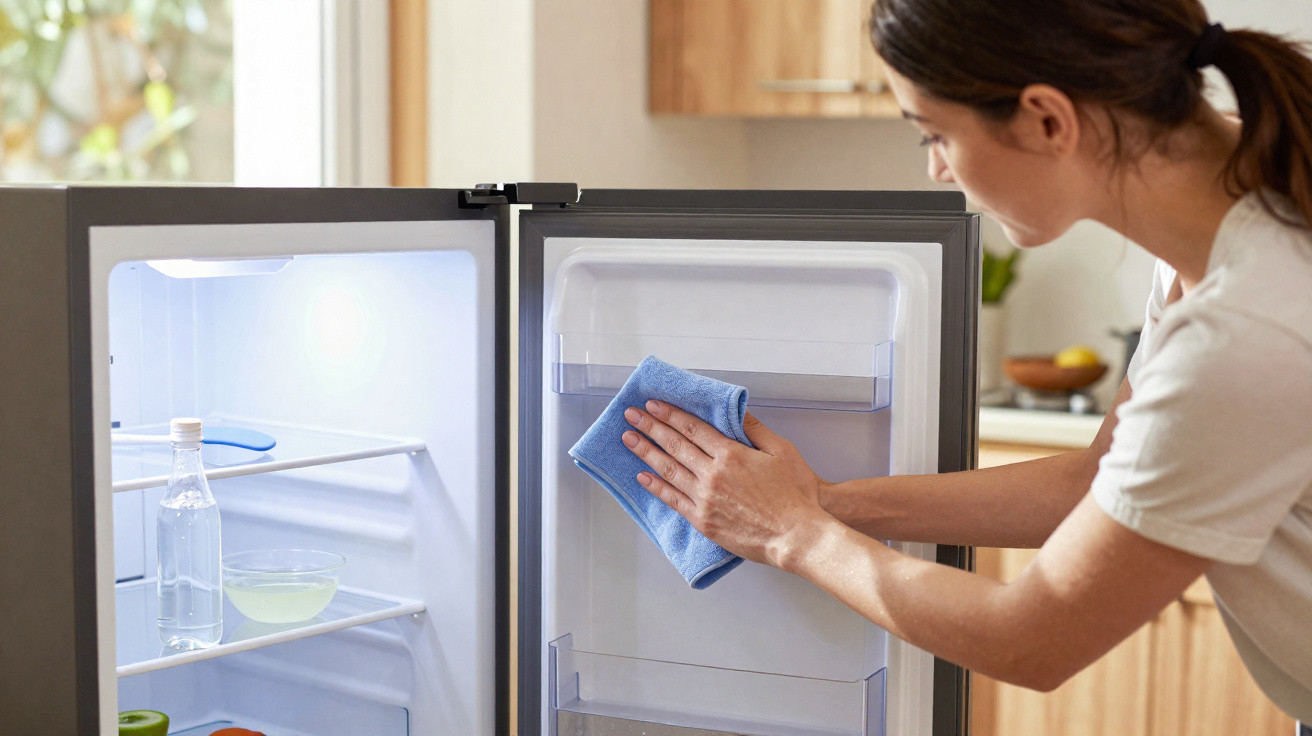
Start by unplugging the freezer. Help the ice loosen by placing bowls of hot water on tea towels inside, then dry every surface thoroughly. Stir one teaspoon of food-grade glycerine into a mug of warm water, moisten a microfibre cloth and buff an exceptionally thin layer over the interior plastic: the walls, undersides of fixed shelves and insides of drawers. You are aiming for a slight sheen rather than a wet finish. Next, fit freezer-safe liners, such as silicone baking mats or PTFE freezer sheets cut to size. Plug the freezer back in, allow it to become cold again and restock it.
A few sensible precautions apply. Keep the film away from the door seal and sensors, applying it to hard plastic surfaces only. Do not overdo it: a light buff is enough, and there will be no taste or smell. Replace damaged liners immediately so crumbs cannot get underneath them. Deal with spills when you notice them using a warm cloth. Realistically, nobody manages that every day. Aim for “good enough most weeks” and you will be streets ahead.
We have all had the moment when a tub of ice cream turns into an ice sculpture and we promise ourselves we will tackle the freezer at the weekend. This method gives you more time and makes cleaning painless, as ice and mess come away without a struggle. That’s the quiet win a tired Thursday deserves.
“Think of glycerine like a non-stick pan for your freezer-safe, invisible, and brilliant at stopping things from clinging,” says Sophie, a home economist who trialled the method through three family kitchens.
- Choose food-grade glycerine, the type sold for baking, rather than cosmetic gels.
- Apply the film as lightly as possible: a glossy wipe, with no droplets.
- Cover drawers with cut-to-size silicone mats for immediate, easy clean-ups.
- Label containers and press out excess air to reduce frost inside packets.
- Spend 60 seconds checking the door seals once a month.
A cleaner freezer, week after week
After the initial reset, the result is less fuss and more smooth movement. Drawers open without crunching, labels remain legible and loose peas no longer stick themselves into corners. Your weekly food top-up becomes a two-minute check: remove a liner, rinse it in the sink, wipe the wall and put it back. Food stays visible, leading to fewer “mystery boxes” and fewer days when items go in the bin. It is a small amount of effort for a reassuringly calm result. At last, your freezer behaves itself.
| Key point | Detail | Benefit for the reader |
|---|---|---|
| Ultra-thin glycerine film | Buffed on with a damp microfibre cloth after defrosting | Prevents frost bonding, so cleaning takes minutes |
| Freezer-safe liners | Silicone or PTFE sheets cut to fit drawers and shelves | Catches crumbs and leaks; lift, rinse and replace |
| Door and packing habits | Closing the door quickly, airtight containers and neat stacking | Less moisture enters, airflow improves and energy use falls |
FAQ:
- Is glycerine safe to use near food? Yes-choose food-grade glycerine from the baking aisle. You’re using a tiny amount, buffed thin on hard plastic, then letting it dry before restocking.
- Will this void my freezer’s warranty? Wiping interior plastic with a food-safe film doesn’t modify the appliance. Skip sensors, lights, and the door gasket, and you’re fine.
- How often should I reapply the film? Every 2–3 months for busy households, or after a full clean. If you notice frost starting to cling again, give it a fresh wipe.
- Does this work on frost-free models? It helps keep surfaces cleaner and food from sticking, even on frost-free units. You’ll still get easier wipe-downs and fewer icy specks.
- Can I use oil or cooking spray instead? Skip oils-they can go tacky and smell. Food-grade glycerine stays stable, neutral, and doesn’t leave a greasy feel.



Comments
No comments yet. Be the first to comment!
Leave a Comment