
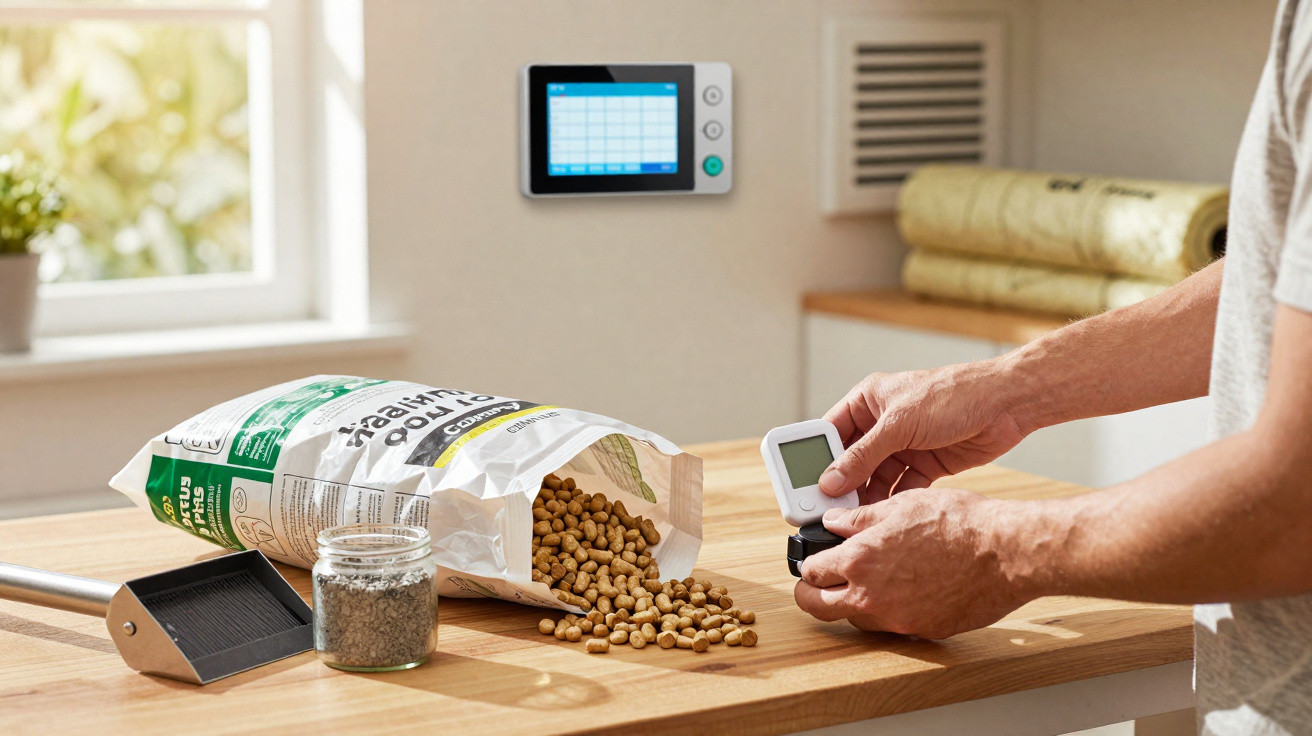
Pellet stoves have gone from a specialist choice to a common sight across Europe and North America in only a few years. Plenty of households are now noticing that their appliance gets through more pellets than they expected, even though the home does not feel particularly cosy. With energy markets under strain once again this year, a handful of technical adjustments plus better day‑to‑day routines can noticeably reduce how often you need to top up the hopper.
Why 2026 is a turning point for pellet users
Pellet costs surged after 2022, later softened, and then began edging upwards again towards the end of 2025. Supply chains are still vulnerable, and a growing number of manufacturers and distributors are passing increased haulage and labour costs directly on to buyers. If pellets are your primary heating fuel, winter 2026 could be costly unless you take a planned approach.
Pellet stoves rarely run at their best “out of the box”. Owners who treat them like plug‑and‑play devices often pay 10–30% more in fuel.
Energy agencies in several European countries already caution that poorly optimised pellet installations resemble a car with the engine badly tuned: it will run, but it will use far more “fuel” than necessary. The encouraging part is that most improvements are low cost and typically do not mean replacing the stove.
Fine‑tuning the stove: where most of the savings hide
A large number of pellet stoves are delivered with settings suited to factory test environments, not the realities of your living room, local weather, or the insulation standard of the building. Keeping every parameter on the default can steadily push up consumption without you realising.
Adjusting power instead of overheating the room
One of the most common errors is to drive the stove at too high a setting and then crack open a window when the space feels stuffy. That routine burns pellets unnecessarily and vents warm air straight outdoors.
- Begin on a lower output setting and allow 30–40 minutes for the room temperature to settle.
- Target 19–20°C in living spaces rather than 22–23°C.
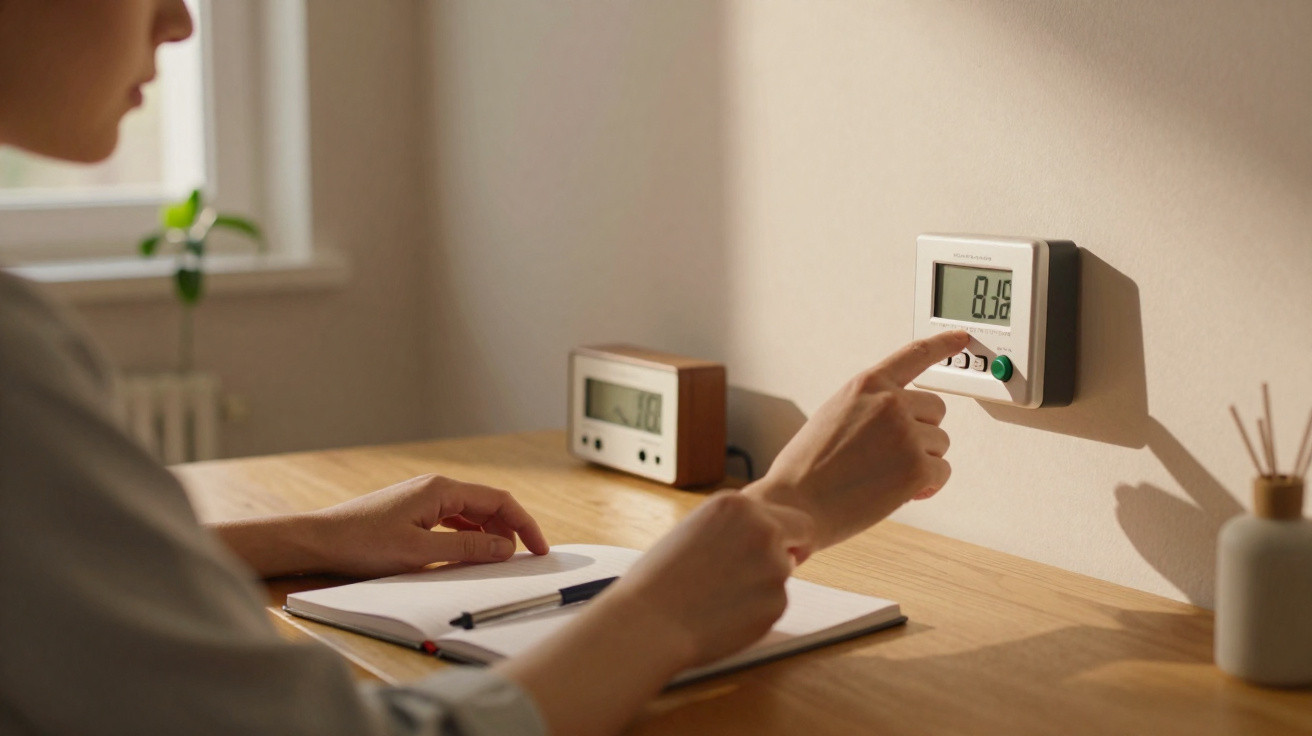
- Rely on a basic digital thermometer positioned away from the stove to judge comfort, rather than using only the control panel display.
Specialists often highlight that each additional degree above 20°C can increase use by around 6–7%. Over the course of a winter, that can amount to the equivalent of an extra pallet of pellets for a medium‑sized home.
Airflow, flame shape and hidden waste
How well pellets burn is strongly influenced by air supply. Insufficient air smothers the flame; excessive air sends heat up the flue and can even pull pellets along with it.
On many newer stoves, you can alter fan speed and the air intake via the settings menu. When the balance is right, you typically see a steady, bright flame and relatively little soot accumulation.
If the flame looks wild and noisy or, on the contrary, dark and lazy, the stove is turning pellets into smoke rather than into heat.
It can also help to make small adjustments as the season changes. Cold, dry air outdoors in January behaves differently from the damp air often seen in October. Some installers advise reviewing fan settings at least twice during the heating season, particularly in exposed or windy locations.
Maintenance that actually changes your bill
Pellets produce fine ash and residues. As these build up, they can restrict the burn pot, the heat exchanger, and the exhaust route. Reduced heat transfer then forces the appliance to run harder to deliver the same level of comfort.
- Empty the ash pan and clean the burn pot several times each week during peak use.
- Brush the heat exchanger surfaces in line with the manufacturer’s guidance.
- Arrange a professional chimney sweep and a full service once per year, ideally before winter begins.
In places where annual servicing is legally required, failing to comply can also have implications for home insurance if a fire occurs. That regulatory pressure leads many people to look after their stove more diligently, which can also cut pellet usage.
Choosing better pellets instead of just cheaper ones
Because most pellets look broadly the same in the bag, many shoppers choose purely on price. However, manufacturing quality affects both how cleanly pellets burn and how much heat you get per kilogram.
Why certification labels matter in 2026
Within Europe, ENplus and DINplus markings still provide a strong indication that moisture content, ash levels, and durability are being controlled. In North America, it is worth looking for established national or regional certification schemes. These standards are not a promise of perfection, but they do reduce the likelihood of damp or fragile pellets that burn too fast.
| Pellet feature | Low‑quality effect | High‑quality effect |
|---|---|---|
| Moisture content | Slower ignition, more smoke, more ash | Clean burn, higher heat per bag |
| Density | Pellets break, feed irregularly | Stable feed, predictable flame |
| Ash level | Frequent cleaning, blocked airflow | Less maintenance, better efficiency |
Many installers say they have seen customers reduce seasonal consumption by 10–15% after switching from the very cheapest bulk pellets to a dependable certified brand, even if the price per bag rises slightly.
Storage: the forgotten factor
Even premium pellets perform poorly if they are kept in damp garages or placed directly on concrete floors. Moisture gradually makes its way into the bag and swells the wood fibres.
- Keep bags on wooden pallets or shelving rather than on the floor.
- Store them away from walls where condensation can develop in cold weather.
- Open bags only as required, and reseal them to limit humidity ingress.
A dry, cool storage space can turn an average pellet into a good one and help the stove deliver more heat for the same quantity.
Insulation: the invisible “fuel saver” around your stove
Even a very efficient stove struggles if a property leaks heat through multiple gaps and poorly performing surfaces. In that situation, pellets end up compensating for the building’s weak points rather than the outdoor temperature.
Simple measures that stop cold drafts
Before considering major renovation, many homes can cut air leakage with inexpensive changes:
- Fit self‑adhesive seals to window and door frames to reduce draughts.
- Add brush strips at the bottom of external doors.
- Use thick curtains and close them as soon as it gets dark to reduce radiant heat loss through glazing.
These small steps matter even more in 2026 because electricity tariffs for supplementary electric heaters are also rising. When households tackle draughts, they often lean less on backup heaters, creating an extra layer of savings.
When deeper insulation starts to pay off
Heat commonly escapes through roof spaces, lofts, and attic rooms. Public energy bodies frequently estimate that as much as a third of heat loss may occur through an uninsulated roof.
During an inflationary period, the upfront cost of extra insulation can feel daunting. However, several factors are shifting the calculation this year:
- A larger number of governments are providing tax credits or low‑interest loans for energy improvements.
- Better insulation improves comfort in summer heatwaves as well as during winter cold.
- Buyers increasingly value documented energy performance, including pellet‑based heating systems.
Every kilowatt‑hour you keep inside your walls is a kilowatt‑hour you do not need to buy as pellets, electricity or gas.
Smarter daily heating habits for 2026 lifestyles
Changes in work patterns have altered how people heat their homes. Many now spend three or four days each week at home, but not necessarily in the same room all day. That makes thermostat and scheduling choices especially important.
Programming based on real presence, not old routines
Rather than relying on one fixed weekly schedule, more capable controllers allow separate weekday and weekend programmes, and sometimes different plans for each day.
- Reduce the set temperature overnight and whenever the home is empty.
- Choose a gentle pre‑heat before you get up, instead of pushing the stove to full output at the last moment.
- If you work from home, concentrate heat in the main living space during working hours while keeping seldom‑used rooms cooler.
Room‑by‑room planning is most effective in properties where doors close properly. In open‑plan layouts, you may need a different approach, such as creating zones with partial screens or positioning the stove to prioritise the areas you actually use.
Using complementary tools: fans, sensors and curtains
Low‑cost add‑ons can often repay their cost within a single winter:
- A quiet ceiling fan or tower fan running on a low setting can distribute warm air from the stove area across the room.
- Simple smart thermostats or standalone temperature sensors offer more dependable readings than judging comfort by feel.
- Door draught excluders and thick rugs help reduce cold patches at floor level, so occupants remain comfortable at a lower air temperature.
Comfort does not depend only on the number on the thermostat; it also comes from air movement, floor temperature and humidity.
Looking ahead: what pellet users should watch in the next few years
A number of developments could affect both burn rates and costs beyond 2026. More stoves now include Wi‑Fi and mobile apps, enabling owners to monitor consumption week by week. Certain models can even adjust airflow and pellet feed automatically based on chimney draught and pellet quality, narrowing the performance gap between average use and careful optimisation.
Regulation may reshape the market too. Stricter urban air‑quality rules can drive manufacturers towards cleaner, more efficient combustion. New building standards may increasingly pair pellet heating with solar panels or thermal storage tanks, smoothing demand throughout the day. If you understand your stove’s settings now, you will adapt more quickly as these hybrid arrangements become more common.
For households prepared to go further, a straightforward energy audit often clarifies which action should come first: sealing draughts, insulating the loft, adjusting stove parameters, or improving pellet storage. A quick modelling exercise with a local energy adviser can estimate how many bags you could save from each change. That kind of evidence helps you decide whether to put £200 into insulation this year, or hold that budget for a more efficient stove in two or three winters.
Pellets are still an attractive option for many properties, but the period of cheap, careless burning is over. People who treat the stove as one part of a broader energy plan-covering the building envelope, household habits, and fuel quality-are generally the ones who see the biggest reduction in consumption, without giving up comfort when the next cold snap arrives.


Comments
No comments yet. Be the first to comment!
Leave a Comment