
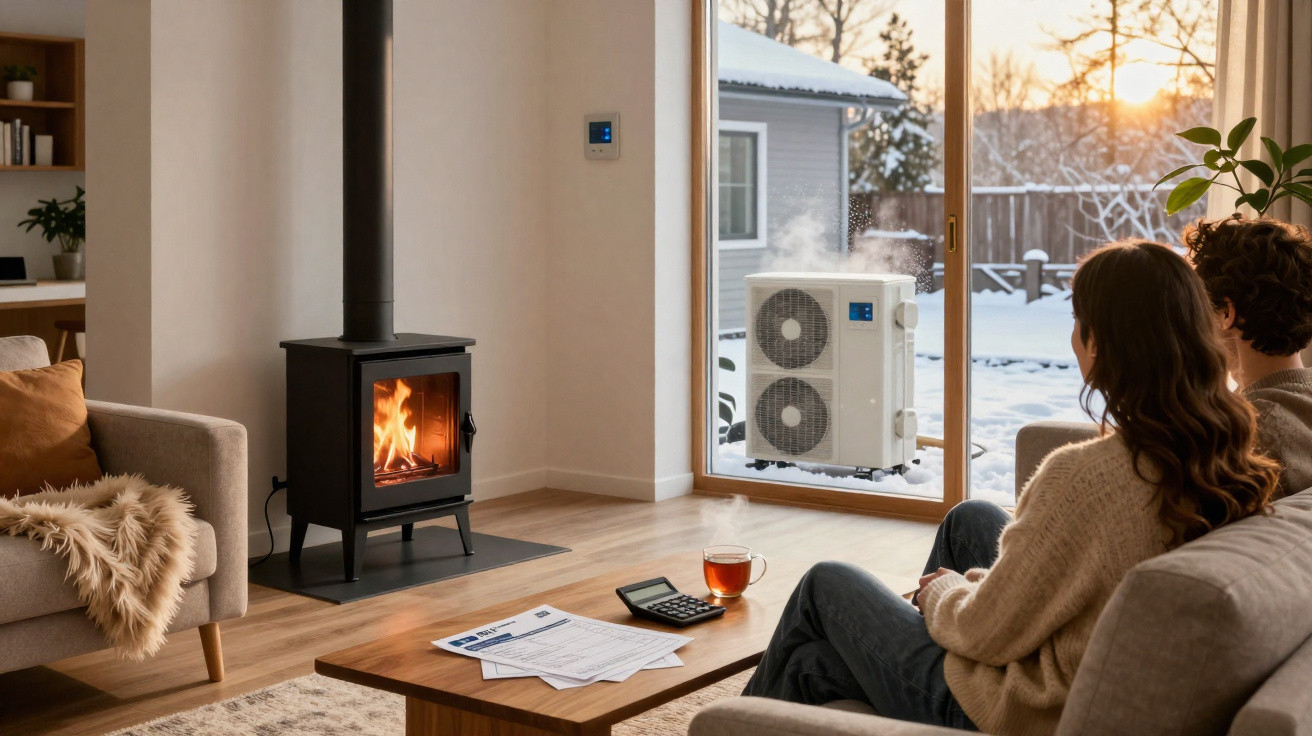
Two contenders offer a way to take the sting out of winter heating, but they come with very different feel, ongoing costs, and day-to-day routines.
As the weather turns colder, many households find themselves comparing pellet stoves with heat pumps. Either option can reduce what you spend, and either one changes how your home feels to live in. The right choice comes down to your property, your local climate, and the way you prefer to heat the spaces you actually use.
Two paths to warm rooms, one goal: lower bills
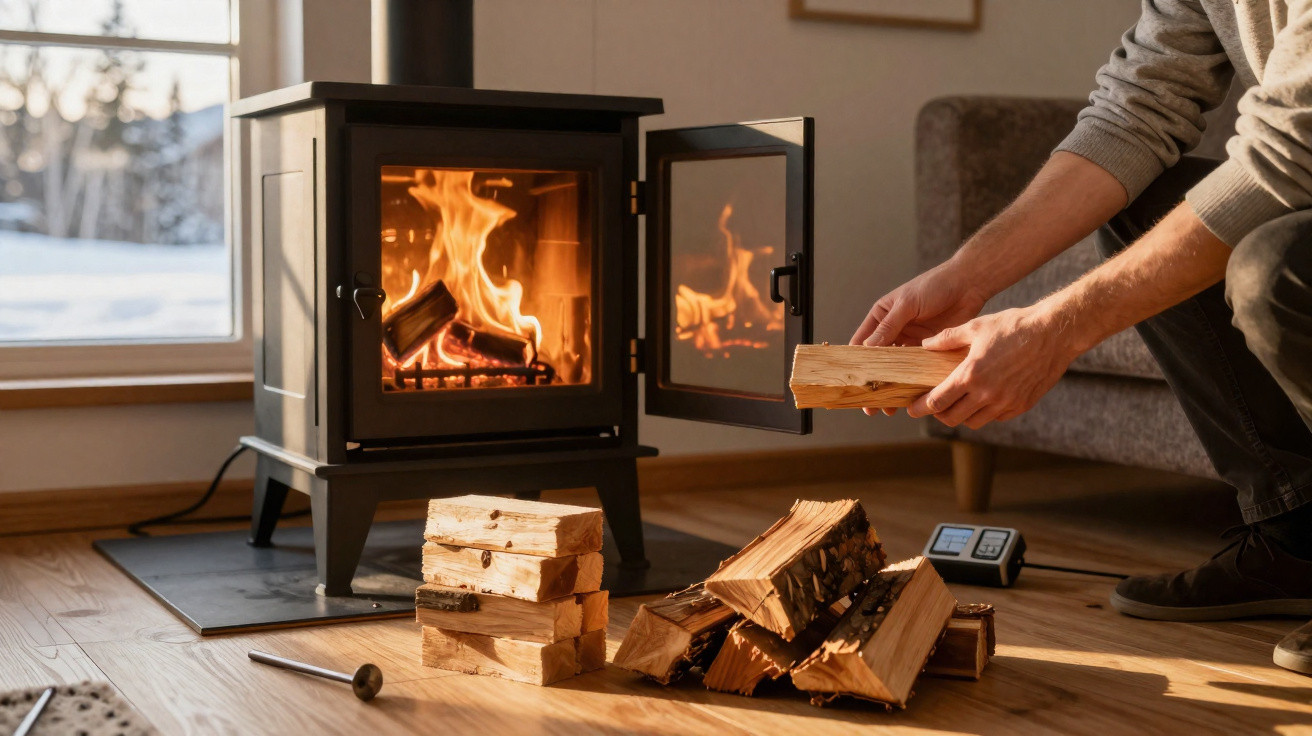
A pellet stove creates heat by burning compressed wood pellets, pushing out both radiant warmth and circulating heat into the room you’re in. In practice, it’s like a contemporary fire you can control with a thermostat. A heat pump, by contrast, produces no flame at all-it uses electricity to transfer heat from outdoor air or from the ground into your home.
At the appliance itself, pellet stoves commonly reach about 75–90% efficiency and can bring a room up to temperature quickly. Air-source heat pumps often provide 2.5–4 units of heat per unit of electricity in milder conditions, with performance dropping in severe frost. Ground-source systems are typically more consistent in colder spells, though installation costs are higher.
Heat pumps move heat rather than make it. That’s why their efficiency can beat gas, oil, and direct electric heat when sized and set up well.
Pellet stoves excel at zoned heating. Warm the living room deeply, let spare rooms sit cooler, and watch the meter slow down.
Upfront cost and running cost for pellet stoves and heat pumps
For many people, budget is the deciding factor. The table below sets out broad, real-world ranges, but keep in mind that local pricing and the details of your installation can shift the totals significantly.
| Item | Pellet stove | Air-source heat pump |
|---|---|---|
| Typical installed cost | £2,000–£5,000 / $2,500–$6,000 | £6,000–£13,000 / $7,000–$16,000 |
| Annual maintenance | Owner cleaning weekly + sweep yearly (£80–£150 / $100–$200) | Annual service (£120–£250 / $150–$300) |
| Fuel or power | Pellets £250–£400 / $280–$500 per ton | Electricity 18–35p/kWh UK, $0.12–$0.30/kWh US |
| Typical seasonal use | 2–4 tons in a cold climate zone | 2,000–6,000 kWh depending on home and climate |
To put those numbers into a simple example: if pellets are £320 ($380) per ton and you burn 3 tons over the season, you’re looking at around £960 ($1,140). A properly sized heat pump with a seasonal COP close to 3 uses roughly one kWh of electricity to provide three kWh of heat. At 28p/kWh ($0.18/kWh), using 4,000 kWh of electricity could come to about £1,120 ($720). Change the insulation level, thermostat settings, or your tariff, and the outcome can swing quickly.
Before swapping systems, tighten the house. Insulation and air‑sealing shrink bills for every heating technology, year after year.
Where each system wins
Small homes and open-plan living
In smaller properties, or where the ground floor is open plan, a pellet stove can work especially well. It builds a cosy “heat hub” in the main living space, while bedrooms remain cooler-often with doors left slightly ajar. Heating in this way can cut energy use without compromising comfort where you spend most of your time.
Whole-home comfort and summer cooling
With ducting or several indoor units, an air-source heat pump can cover the entire home rather than just one area. It can also provide cooling in summer, which changes the value proposition: one system, two functions. With smart controls you can programme setbacks and, where your tariff supports it, shift some usage to off-peak electricity.
Cold snaps and climate reality
Today’s “cold-climate” heat pumps can still operate well below freezing, but they typically deliver less output and the defrost cycle can introduce extra noise and short interruptions. A pellet stove, meanwhile, maintains a stable burn through a blizzard-so long as you have pellets available and electricity for the auger and fans. For short power cuts, a small battery backup or generator may be enough.
- Very cold, rural areas with pellet supply nearby often favour pellet stoves for resilience.
- Urban and suburban homes with decent insulation lean toward heat pumps for whole-home coverage.
- Oil or direct electric users see the biggest savings from heat pumps; mains gas users see mixed results based on tariffs.
Noise, space, and maintenance
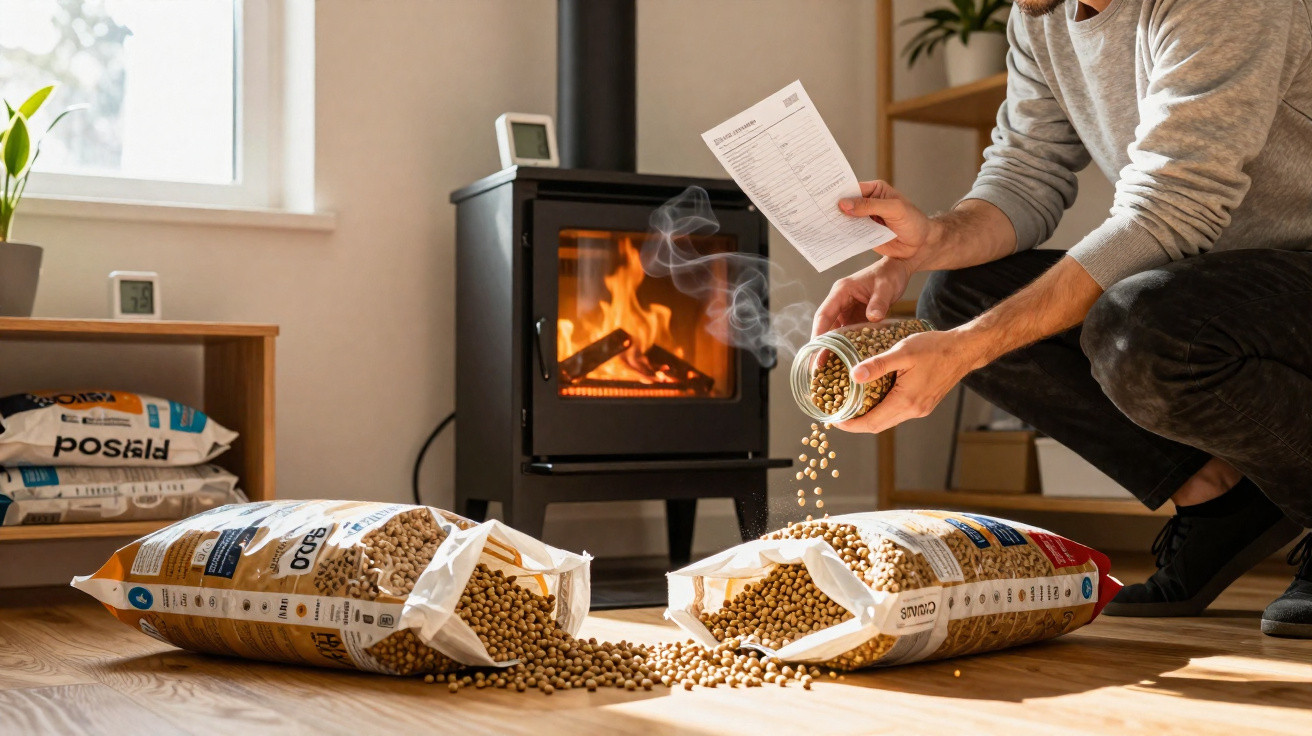
A pellet stove needs a suitable flue and somewhere dry to store bags of fuel. During the busiest part of the heating season you’ll usually be emptying ash weekly, alongside an annual thorough clean. Fans create a steady hum, and cheaper pellets can dirty the glass more quickly and increase ash production.
Heat pumps add an outdoor unit that produces a low, steady whirr, plus an indoor unit that moves air. Routine care typically means cleaning filters, keeping the outdoor unit clear of leaves, and arranging annual servicing. On cold mornings, the defrost cycle can create visible plumes that look like steam rather than smoke.
Incentives and carbon
Financial support can tip the balance. In the UK, the Boiler Upgrade Scheme provides grants towards heat pumps. In the US, federal tax credits currently cover a portion of installed costs for qualifying heat pumps and biomass appliances, and many utilities also provide rebates. Eligibility, local rules, and paperwork can all affect what you actually receive.
From an emissions perspective, heat pumps generally improve as electricity generation becomes cleaner. Pellets are often made from wood waste or from managed forestry, but poor burning can still produce particulates. Using dry pellets in a modern stove that’s correctly installed and vented can significantly reduce smoke. In some urban areas, solid-fuel appliances are restricted, so it’s sensible to confirm the local rules before committing.
This winter’s money question: which saves more?
There’s no single answer that fits every home. What saves the most depends on what you currently use, how your home performs, and what you pay for energy.
Well‑insulated home, average electricity price, and a need for whole‑home heating: a right‑sized heat pump usually delivers lower annual cost and adds cooling.
Older, leaky home where you mostly use one living area: a pellet stove can cut bills by heating the zone you live in and dialing back the rest.
For a quick reality check, you can use a straightforward method:
- Estimate heat demand: last winter’s kWh of gas/oil/electric or pellets used, adjusted for a typical year.
- Pellet option: multiply expected tons by local price, add sweeping and a small electricity allowance.
- Heat pump option: divide your heat demand by a realistic seasonal COP (2.5–3.5), then multiply by your electricity rate.
- Add maintenance, then compare over five to ten years, including the upfront cost and any grants or credits.
Hybrid tricks that stretch savings
Combining systems can be very effective. Some households rely on a pellet stove during evenings and at weekends, while a heat pump-or the existing heating-maintains lower background temperatures the rest of the time. Others take advantage of time-of-use tariffs by preheating when electricity is cheaper. Smart thermostats can help avoid both systems running unnecessarily and wasting energy.
Extra pointers before you buy
Insist on a proper heat-loss calculation rather than an estimate. Heat pumps that are too large can short-cycle and waste electricity; stoves that are too small can struggle during a cold snap. It’s also worth asking installers for noise figures, warranty details, and references for similar homes.
Look closely at pellet quality and how you’ll store it. Damp pellets can break down and lead to higher ash levels, so low-ash, certified products are usually preferable. Fit CO and smoke alarms near stoves, and follow the required clearance distances. If you go with a heat pump, choose an outdoor unit position that avoids bedrooms and neighbouring windows, and make sure airflow won’t be obstructed.
If you like working through the figures, try modelling two scenarios: pellet-stove zoned heating versus whole-home heating from a heat pump across different electricity tariffs. Run the numbers for a colder winter week as well as a milder shoulder-season week. Small changes in how you use the house can be enough to change which option looks best on the cost chart.
Another factor is comfort. A visible pellet flame can transform how a room feels on a dark January evening, while a heat pump’s quieter, steady output changes the overall behaviour of the whole home. That preference matters, because the system you genuinely like is the one you’ll operate more intelligently-and that’s often where the biggest savings are found.



Comments
No comments yet. Be the first to comment!
Leave a Comment