
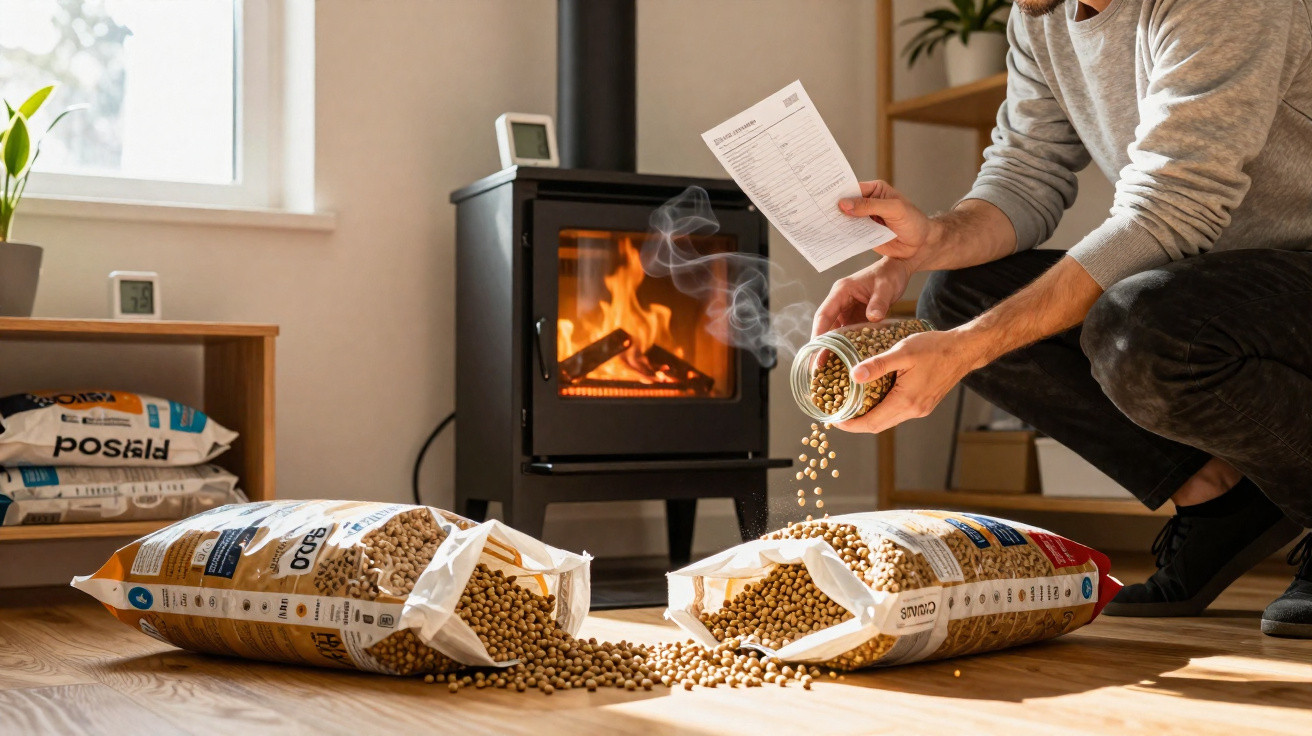
Last winter’s pellets-abandoned in the back of the garage-end up rattling into the hopper. You give the bag a shake, watch the crumbs and powder slide down, press “start” on the stove and tell yourself it’s a bargain: heat for next to nothing.
Then the fire catches… but the flame looks sluggish, more yellow than you expect, almost half-hearted. The glass hazes up sooner than you remember. The room takes longer to come up to temperature. You shrug it off. Pellets are pellets, aren’t they?
The reality is less reassuring. Across North America and Europe, plenty of households do the same thing each autumn: they burn leftover pellets from the previous winter, convinced they’re cutting costs. In practice, many are quietly sending money up the flue and shaving years off the life of their stove. Moisture, dust and poor storage-small, easy-to-miss details-can quietly wreck your heating efficiency. The worst part is that it feels like “free” warmth.
Why last winter’s pellets are quietly draining your wallet
On a bitter Tuesday morning, the living room seems fine at a glance. The stove is humming, the flame is flickering, and it feels like you’ve outsmarted rising energy prices. You dragged a few half-forgotten bags out of the shed and avoided a trip to the shop. It feels sensible. It feels frugal.
But the room never quite reaches that deep, steady warmth you remember from fresh pellets. You edge the thermostat up. You let the stove run longer. You blame the season-maybe it’s just a strange cold snap. Your pellets didn’t change overnight… did they? In truth, they often do, just slowly.
Ask a chimney sweep or a pellet-stove engineer and you’ll hear the same tired refrain. “People think pellets are non-perishable,” they say, shaking their head. A customer proudly points to a stack of bags from two winters ago, stored in a damp cellar. On paper, those pellets still look like fuel. In reality, they behave like little sponges: compact cylinders that have taken on moisture and collected dust, so they burn cooler, dirtier and more slowly. And the only way to make up the difference is to burn more.
Damp pellets come with a hidden price tag. Some of the energy you’ve paid for doesn’t heat your home at all-it goes into boiling off water inside the stove. The knock-on effects are familiar: lower flame temperature, more smoke, more ash and more frequent cleaning. Your auger ends up working harder, the glass soots up faster, and your flue can collect sticky deposits.
Over a full winter, the sums begin to bite. Extra bags bought in February. Call-outs you hadn’t budgeted for. Time spent chiselling clinker from the burn pot. All of it, sparked by “free” leftover pellets that are quietly underperforming. You don’t see the waste on a receipt-you notice it in how often you’re refilling the hopper.
There’s also a comfort penalty that’s hard to put a number on, but easy to feel. With fresh, low-moisture pellets, the heat is sharp and responsive. With older, damp fuel, the warmth can be slow and uneven. The stove cycles differently. The fan kicks in at odd times. You end up sitting close to the appliance instead of enjoying the whole room. You think you’re saving by using what you already have, when you’re actually paying in comfort, time and maintenance.
How to turn leftover pellets into real savings instead of “ghost heat”
If you want genuine savings, the change starts before the first fire of the season. Take a single bag of last winter’s pellets and treat it as a question mark. Lift it. If it feels noticeably heavier than a new bag of the same brand in the shop, that extra weight is often moisture. Run your hand over the plastic: condensation, soft patches or caked sawdust are all warning signs.
Then do a quick burn check. Outside, in a metal bucket or tray, light a small handful with a match or blowtorch. Dry pellets catch quickly and burn with a clean, bright flame and very little smoke. Pellets that are old or badly stored often hiss, smoke and leave behind an unexpected amount of dark residue. Five minutes of testing can tell you more about the coming winter than any glossy label.
After that, start treating storage as part of your heating system-not as some dull afterthought. Keep bags off concrete by using pallets or wooden battens. Put a simple tarp or plastic sheet beneath and over the stack to block rising damp. Leave a small air gap from the wall. And avoid storing pellets in utility rooms or unventilated cellars where humidity creeps in all summer without you noticing. Looking after your pellets is a bit like servicing your stove before the season begins.
In practical terms, many people get the best results by blending old and new pellets 50/50. Tip in half a hopper of last season’s stock, then top it up with fresh bags. The stronger performance of the new fuel helps offset any weakness in the older batch. You still use up what you’ve got, but you’re not sacrificing comfort out of stubbornness.
This is also where cleaning becomes non-negotiable. When you burn older pellets, ash and fines (the powder at the bottom of the bag) accumulate more quickly. Emptying the burn pot, brushing the heat exchanger and vacuuming the ash pan more often keeps airflow strong and combustion cleaner. Let’s be honest: hardly anyone does it every day. But shifting from “when I remember” to “once a week in peak season” can noticeably change how your stove sounds, smells and heats.
One more tip: don’t pour the dusty dregs from the end of the bag into the hopper. Those fines can clog augers, restrict air passages and contribute to those lazy, sooty flames. Tip the last cup or two into the bin or compost instead. It feels wasteful for about three seconds-right up until you recall what an auger blockage call-out costs.
“People don’t realize a ‘cheap’ pellet season can still be expensive,” explains a veteran stove installer I spoke with. “You can buy the best stove on the market, but if you’re feeding it tired, damp fuel, you’re throwing away 10 to 20 percent of its potential every single night.”
A lot of readers will recognise themselves in that picture. Pellets get bought by price per bag, not by how they’ll be stored or how quickly they’ll be used. They’re stacked wherever there’s space, and everyone hopes for the best. Months later, when the fire feels wrong, the blame lands on the stove, the brand or the weather.
To get out of that loop, it helps to manage your pellet stash the way you’d manage food you actually care about:
- Rotate stock: use the oldest bags first each season.
- Check every bag: throw out any with split seams or water staining.
- Store “just enough”: avoid buying more than one winter ahead.
That small mindset change-from “pile of fuel” to “managed resource”-is what turns leftover pellets from a false economy into genuine savings. You stop accepting mediocre heat as normal. You notice how your stove behaves with better fuel, and your expectations for comfort at home quietly rise.
Rethinking what “saving on heating” really means this winter
In the next few weeks, the same scene will play out in thousands of houses. Someone drags last winter’s pellets out of storage, pleased to be organised, confident they’re staying ahead of price rises. The stove will light, the room will warm, and nobody will see the handfuls of euros or dollars disappearing with the exhaust.
Once you understand how old pellets behave, you start spotting the signs everywhere. The lazy flame. The fan working harder. The constant wiping of glass and scraping of the burn pot. Gradually, you connect those annoyances to the ageing stack of bags in the garage-not as a guilt trip, but as a prompt to do it differently next time.
Maybe that means buying fewer bags and topping up mid-season. Maybe it’s spending an hour on a Saturday building a raised, dry storage corner that doesn’t sit at the mercy of ground damp. Perhaps you’ll give a few questionable bags to a neighbour who burns them outdoors in a workshop heater, and keep the best ones for the living room. Everyone will draw their own line.
What’s striking is how small, almost invisible choices around pellets can reshape an entire winter’s comfort: less ash, clearer glass, a steadier flame, and a room that warms up faster when you get in tired and cold. On a screen, these sound like minor technical tweaks. In day-to-day life, they add up to evenings that feel better-and bills that sting a little less.
| Key point | Detail | Why it matters to you |
|---|---|---|
| Ageing pellets lose performance | Moisture and dust reduce heat output and increase ash | Understand why “free” fuel can cost you in comfort and energy |
| Careful storage = steadier heat | Bags raised off the floor, kept dry, stock rotated | Preserve pellet quality and reduce waste all season |
| Small habits, big savings | Simple tests, mixing old/new, regular cleaning | Cut breakdowns and overuse, and extend the life of the stove |
FAQ:
- How long can wood pellets actually be stored? In ideal conditions (dry, cool, off the ground, no direct moisture), most manufacturers suggest pellets can keep their quality for 1–2 years. Past that, the risk of moisture uptake and crumbling rises sharply.
- Can I “dry out” old moist pellets by moving them indoors? Not really. Once pellets have absorbed moisture and started to swell or crumble, you can’t fully reverse the damage. They might still burn, but they’ll never perform like fresh pellets.
- Is it dangerous to burn very old pellets? They’re rarely dangerous by themselves, but they can lead to increased ash, incomplete combustion, and more deposits in the flue. That raises the risk of blockages or, in extreme cases, chimney problems if maintenance is ignored.
- Does pellet quality matter more than stove brand? Both count, yet many technicians say bad pellets can make a good stove behave badly, while high-quality pellets can help an average stove perform surprisingly well.
- Should I throw away leftover pellets every spring? No. Use them first the following season, but only if they were stored properly. Inspect the bags, run a small burn test, and be ready to mix them with fresh pellets instead of relying on them alone.




Comments
No comments yet. Be the first to comment!
Leave a Comment