
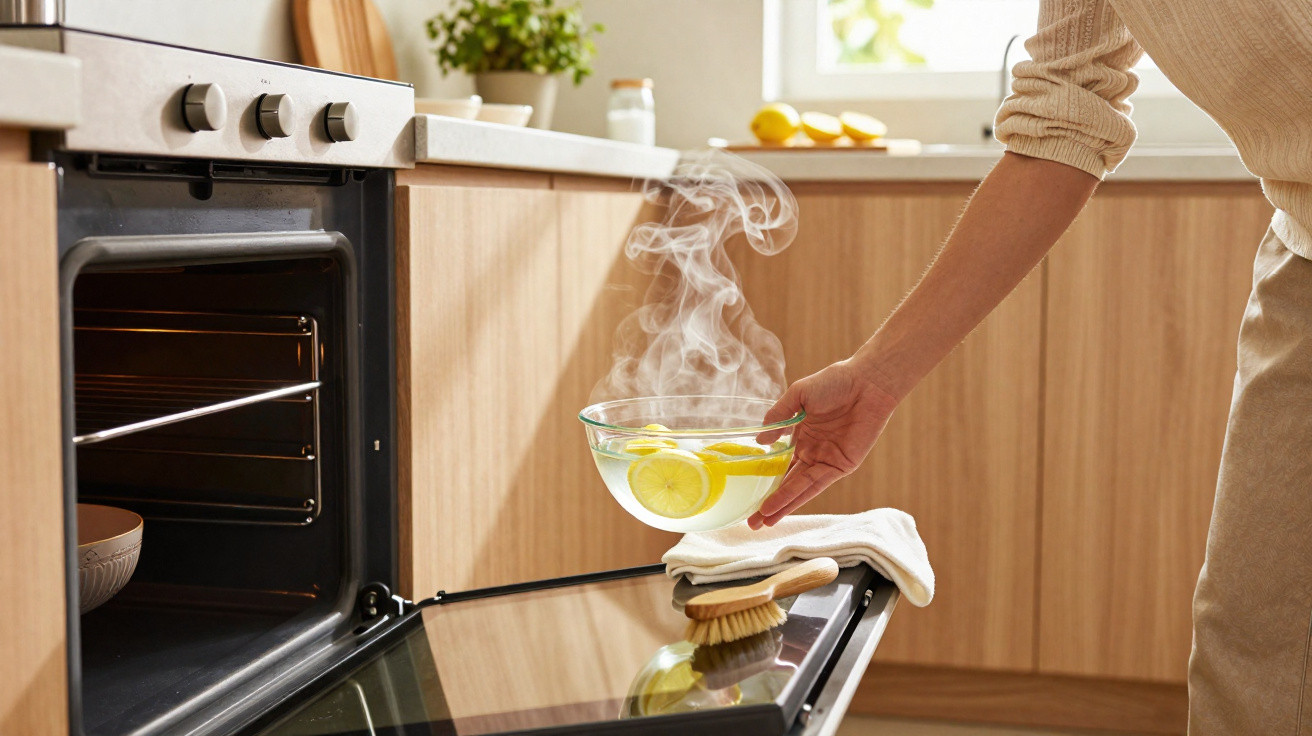
A gratin bubbles over on a Sunday evening, a tart leaves behind a few drops of butter, and then the weeks slip by. Each time the oven heats up, a faint wisp of smoke appears, along with that persistent smell reminding you that it has been waiting far too long for a clean. We all know the moment: you crack open the door, glance at the browned walls… and decide to put the job off again. Yet there is a straightforward, almost comforting approach that loosens a large share of the grime without attacking it with an abrasive sponge: a bowl of hot water and a few pieces of lemon. It is not miraculous, but it genuinely makes this chore easier.
When the oven feels beyond saving
A dirty oven is not necessarily a neglected one. A few generous dishes, an over-cheesy pizza or a roast chicken are enough to leave their mark. At every subsequent use, splatters bake on again, becoming hard and almost varnish-like, making the task seem as though it will take an entire morning. The inner glass door is often the most disheartening part, as a greasy film gradually blocks the light. We delay the task because scrubbing in front of the appliance on our knees is hardly appealing. By the following day, the oven still looks just as unwilling to cooperate.
For many households, the turning point comes when the smell of hot fat fills the kitchen while dinner is still uncooked. One reader said she had left her oven alone for nearly six months, assuming that the pyrolytic cleaning programme would sort everything out on a particularly motivated day. Before having friends over, she eventually tried the bowl of lemon water. After half an hour of steam, the deposits had not vanished by magic, but they came away with a simple wipe of a cloth. That difference matters: removing softened dirt is nothing like scraping off a burnt-on crust.
The process is very practical. Heat sends water vapour throughout the oven cavity, while the lemon’s mild acidity helps soften greasy residue and dried splashes. Condensation settles on the walls, in the corners and on the door, including the areas that are difficult to reach with a sponge at first. The steam does the work before you do. It will not replace a powerful degreaser on a long-standing layer of burnt fat, but it removes the initial resistance that makes cleaning so unpleasant. Let us be honest: nobody really does this every day.
The oven lemon water bowl method, step by step
First, take out the shelves and baking trays, then put a heatproof glass bowl or dish in the middle of the oven. Pour in around 300 to 500 millilitres of water, add one lemon cut into slices or wedges, and gently squeeze the pieces into the water. Heat the oven to between 100 and 120 °C for 25 to 30 minutes. Then switch it off and leave the door closed for around ten minutes. This brief pause prevents burns and gives the steam time to work on the most obvious marks.
While the oven is still warm, carefully remove the bowl using oven gloves, then wipe the walls and glass with a damp microfibre cloth. There is no need to reach immediately for the green scouring side of a sponge: it can scratch certain finishes and may leave marks that look worse than the stains themselves. If one area remains stubborn, place a cloth soaked in the still-warm lemon water over it for a few minutes. The right approach is to let it work rather than force it. This method is also pleasant because it leaves a fresh scent, unlike the harsh fumes of some household cleaners.
A common mistake is to fill the container to the brim or turn the thermostat up far too high in the hope of finishing faster. The water only needs to create steam, without any danger of overflowing, and the oven does not need to be scorching hot. For thick marks, a second treatment is often better than aggressive cleaning.
“Cleaning becomes manageable when you start by softening the dirt instead of declaring war on it.”
- Use a stable container designed to withstand heat.
- Do not pour water directly onto the heating elements or fan.
- Clean the oven when it is warm, never when it is still very hot.
- Repeat the process if the deposits have been there for several months.
A simple habit that changes this household chore
The real benefit of this tip is not that it promises a like-new oven in 30 minutes. It makes the first step achievable, even when the appliance appears to have collected the entire history of winter meals. Once the splatters have softened, cleaning becomes almost ordinary again: a cloth, hot water and a few calm minutes. You can use the same time to soak the shelves in the sink with hot water and a little washing-up liquid. The oven quickly feels fresher, both to look at and in your mind.
This method also encourages a small routine that prevents major battles. Wiping away splatters after a particularly messy cooking session, once the oven has cooled but remains slightly warm, is often enough to stop layers building up. There is no need to aim for perfection: kitchens are lived in, dishes overflow, and happy meals sometimes leave evidence behind. Modest but regular maintenance mainly prevents that familiar smell of grease from making an appearance during the next cake. Many people then rediscover the pleasure of cooking with a clean appliance, without having spent the afternoon scrubbing it.
It is still worth adapting the method to your equipment. Some ovens have a specific coating or a cleaning function recommended by the manufacturer, so it is worth checking the manual briefly, especially before using acidic or abrasive products. Lemon and water are mild, accessible and economical, but they do not remove the usual need for care around heat. One thing is certain: opening the door after this steam treatment and seeing marks lift away with barely any struggle brings remarkably tangible satisfaction. It is the feeling of finally crossing an old chore off the list.
| Key point | Detail | Benefit for the reader |
|---|---|---|
| Lemon steam | A bowl of water with one lemon, heated for 25 to 30 minutes at 100–120 °C | Softens grease and makes wiping easier |
| Cleaning while warm | Wait around ten minutes before opening the oven | Reduces the risk of burns and improves effectiveness |
| Realistic regularity | Wipe away splatters after messy cooking sessions | Prevents baked-on deposits and lengthy scrubbing sessions |


Comments
No comments yet. Be the first to comment!
Leave a Comment