
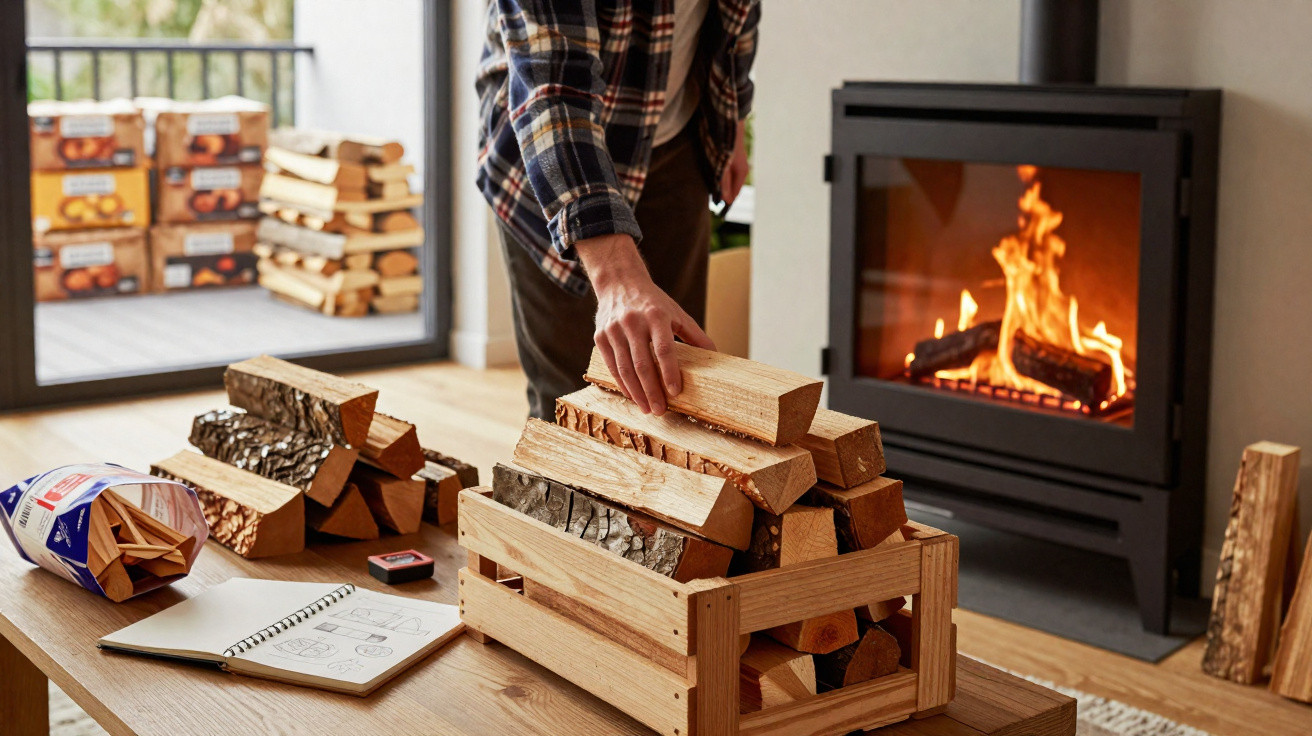
Orders are surging in DIY stores and online retailers: compressed wood briquettes, also sold as pressed wood logs, are said to deliver noticeably more heat from the same stove. What is actually behind the hype, how big is the difference compared with standard logs, and is switching worthwhile for households in Germany, Austria and Switzerland?
What’s behind the new pressed wood logs
Pressed wood logs are not made from whole trunk wood, but from leftovers: sawdust, planing shavings and small offcuts from sawmills and joinery workshops. These materials are dried and then compressed under very high pressure-without chemical additives.
"The result is evenly dense logs that store significantly more energy per kilogram than conventional firewood."
Because of this, they tend to burn more slowly, at a higher temperature, and with more consistency. Many users report that a single pressed log can have a similar effect to several normal logs.
Why these wood briquettes heat so much more
Very low moisture content
Moisture is the key factor. Standard, well-seasoned firewood often sits at around 20–30% moisture; poorly dried wood can be as high as 50%.
Pressed wood logs are frequently below 10%. That means:
- less energy is wasted evaporating water
- more energy is available as usable heat
- the flames burn more steadily and cleanly
This is why one pressed wood log can often match the heat output of three to four conventional logs-depending on the wood type, the stove, and how the draught behaves.
High density, high energy content
Intense compression concentrates mass into a small volume. One cubic metre of these briquettes contains far more kilograms of wood substance than a cubic metre of stacked logs with the usual air gaps.
The outcome: the fuel burns for longer, the embers last better, and the temperature rises higher. Modern wood-burning stoves benefit particularly, as they can transfer that heat into the room efficiently.
More consistent warmth instead of heat waves
With standard firewood, the familiar pattern is a rise and fall: strong flames at first, then the heat drops away until more is added. The uniform composition of pressed wood logs helps counter this. They provide a comparatively steady flow of heat over a longer period.
"If you want to keep the fire going through the evening rather than topping up every half hour, pressed wood logs offer a clear comfort advantage."
Practical advantages in everyday use
Less mess, less effort
For many people, the switch is not only about heat output, but also about making day-to-day use simpler:
- noticeably less ash in the stove
- hardly any bark and no loose splinters brought into the living space
- neatly stackable packs rather than unstable log piles
- no need to pre-dry wood outdoors for years
Because the fuel burns largely cleanly, there is less soot and fewer deposits. That reduces the risk of chimney fires and places less strain on the flue.
A space-saver in the cellar or on the balcony
Another point-especially persuasive for city residents-is storage space. In practice, the comparison often looks like this:
| Fuel | Storage space required | Heat output (rough comparison) |
|---|---|---|
| Firewood (air-dried) | approx. 4 m³ | baseline |
| Pressed wood logs | approx. 1 m³ | similar total energy |
If you only have a small cellar, a garage, or a sheltered balcony, you can store far more heating energy in a tight footprint.
How to use pressed wood logs properly
The right way to get a fire going in a fireplace or stove
They are straightforward to use, but a few basic rules are still worth following:
- Place two to three firelighters in the firebox.
- Put a little kindling or a smaller piece of briquette on top.
- Light the firelighters and open the air supply wide at first.
- Once the fire is stable, add one to two pressed wood logs.
Important: do not fill the stove to the brim. These logs generate a lot of heat, and overloading can lead to excessive temperatures.
Take care with temperature
Many stoves have a thermometer on the flue pipe. If you are switching to pressed wood logs, take that gauge seriously. If the temperature rises unusually fast or high, reduce the air intake or avoid adding more fuel for a while.
"Before using them for the first time, it’s worth checking the operating manual: not every older tiled stove is designed for the high energy density of modern pressed wood logs."
Comparison with classic firewood
Calorific value and burn time
Per kilogram, pressed wood logs often provide a higher calorific value than mixed firewood because the moisture content is minimal. In everyday terms, that can mean: less carrying, less topping up, and more time with actual warmth.
With mixed firewood, the calorific value varies widely. Softwood burns down quickly, hardwood lasts longer, damp wood soots up, and genuinely dry logs can be hard to source. Pressed wood logs reduce these uncertainties.
Storage and pests
A frequent complaint with traditional wood stacks is insects, fungi and mould. Pressed wood logs are dried industrially and usually sold wrapped in film or in cardboard. That way, neither ant colonies nor woodworm are brought indoors.
Environmental aspects
These briquettes make use of by-products from the timber industry that might otherwise be discarded or put to lower-value energy use. As a result, they reduce the need for trunk wood and can help relieve pressure on forests.
Because they burn drier and cleaner, they tend to produce less particulate matter and fewer pollutants than damp or poor-quality firewood. This can be particularly relevant in densely populated areas with strict air-quality plans.
Who benefits most from switching
Pressed wood logs will not suit every household equally. They are particularly sensible for people who:
- do not have large storage space for log piles
- do not have their own woodland or access to inexpensive trunk wood
- use the stove as an important heat source, not just for ambience
- value a clean living space and minimal mess
If you can already get dry firewood for free and enjoy sawing, splitting and stacking, classic logs may well work out cheaper. For urban households with limited time and space, the calculation is often different.
What buyers should look out for when trying them first
There are noticeable quality differences between manufacturers. Checking the information on the pack helps:
- wood type (pure hardwood, softwood, or a mix)
- stated moisture content
- shape (cylinder, block, with or without a central hole)
- origin of the raw materials
Buying one or two packs as a trial is sensible before ordering full pallets. That lets you see how the fuel behaves in your own stove, how long a log actually holds as embers, and how pleasant the heat feels.
If you are moving from a traditional wood stack to pressed wood logs, it is worth paying close attention during the first few evenings: how quickly does the room warm up, how does the chimney draught respond, and does the stove door remain properly sealed? These observations help you find the ideal amount per firing and get the most out of the new logs.


Comments
No comments yet. Be the first to comment!
Leave a Comment