
On a all had that Saturday morning: the toolbox has been left open for months, the pliers squeak, the screwdriver has acquired an orange film, and the pruning shears barely open. It is easy to decide the tool is “done for”, despite hardly using it, and buy a replacement. That seemingly minor cycle becomes expensive when it also affects an open-ended spanner, a drill or the old metal tape measure in the garage. More frustratingly, the failure does not always come from a genuine fault. It can start with fingerprints, a forgotten drop of water or compacted dust in a joint. A thirty-second habit can alter what happens next.
The real enemy of tools is almost always silent
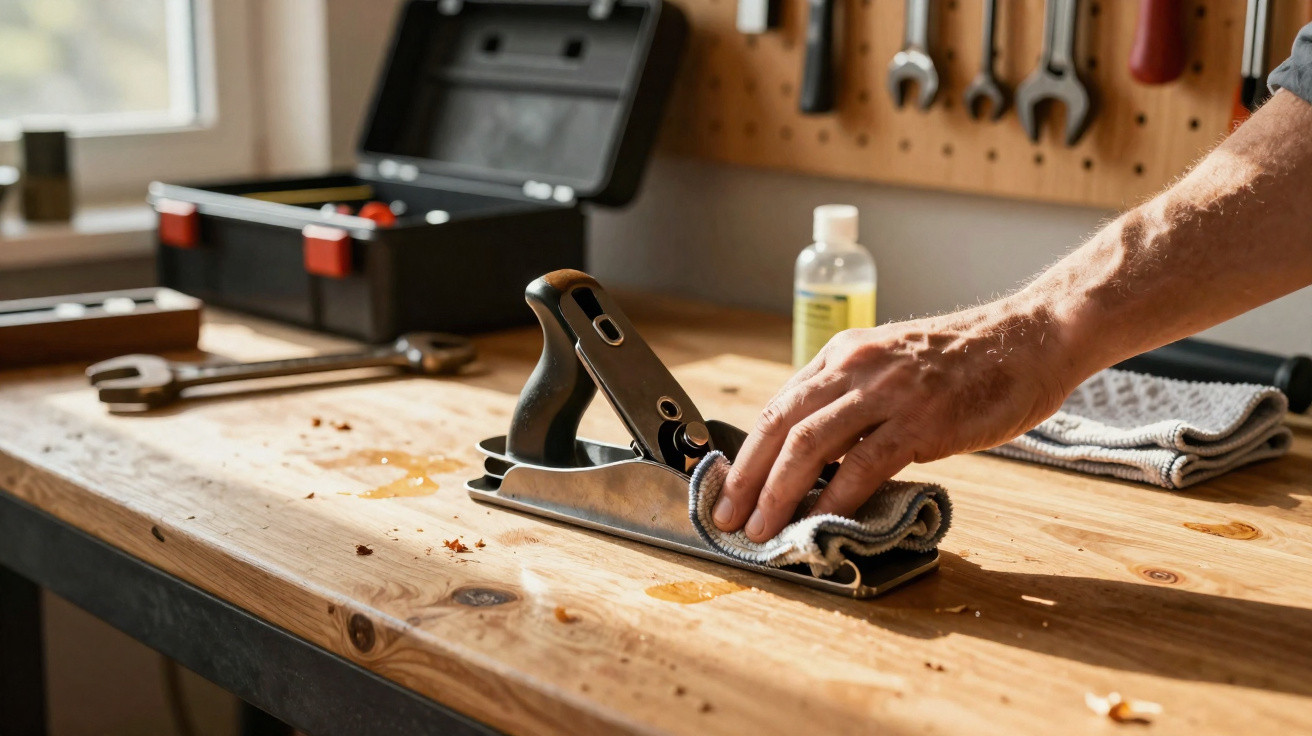
We all know the moment when we pick up a tool “just for two minutes” and realise too late that it has become stiff or speckled with rust. The simple trick is to wipe metal parts with a very lightly oiled cloth after use, before putting the tool away. There is no need to soak the pliers or screwdriver: a few drops of light oil, machine oil or even mineral oil on an old cloth are enough to form a barrier against moisture.
Marc, a weekend DIYer in Lille, kept his father’s adjustable spanners for years in a cold garden shed. He began wiping them down after every job, then stored them in an old metal box with an oiled cloth at the bottom. Two years later, those same spanners still work without stiff spots, while older pliers he had left unprotected had seized up within a few months. It is not dramatic. That is exactly why it works.
Rust forms when metal is exposed to both oxygen and moisture. A thin oily layer slows this contact and also protects springs, hinges and screw threads. Hands leave perspiration on steel too, along with salt and moisture: a discreet but formidable recipe for damaging tools. A clean tool may not look brand new, but it remains dependable when it is needed.
The thirty-second habit that prevents needless replacements
Once you have finished a DIY job, first brush away dust, sawdust, plaster residue or shavings with a soft brush or dry cloth. Then run a cloth with just a trace of oil over the metal surfaces, paying particular attention to plier joints, pruning-shear blades and the chuck of an unplugged drill. The aim is not heavy lubrication: protect the tool, rather than turn the toolbox into a sticky trap.
The most common mistake is storing a tool while it is still damp after outdoor work, cleaning, or a day in the boot of a car. Many people do it without thinking because tiredness takes over once the job is complete. Let us be honest: nobody really does this every day. Yet quickly drying a tool before oiling it makes a remarkable difference, especially in an unheated garage, cellar or shed subject to changing temperatures.
A modest routine is more useful than a thorough clean postponed for months. Keep a dedicated cloth, a small bottle of oil and a brush beside your toolbox: this trio already prevents a large share of problems.
“A tool maintained for five minutes after use can be useful for decades.”
- Wipe away visible moisture before storing anything.
- Apply a light coat of oil to steel, hinges and springs.
- Avoid cooking oils, as they can go rancid and attract dirt.
- Store tools in a dry place, ideally raised off the floor and away from a window where condensation forms.
Tool storage matters as much as oil
Even a perfectly oiled tool will suffer if it sits in a damp box at the back of a garage where moisture condenses in the air every night. A sensible habit is to place a few desiccant sachets recovered from packaging in the storage area, or use a small reusable silica-gel container. For larger toolboxes, a piece of chalk can also absorb some of the surrounding moisture, although it will need replacing regularly.
Power tools call for a little extra care. Do not spray oily products directly into motor vents, onto cables or over electrical contacts. A clean, dry cloth is sufficient for the body of the appliance, while a suitable oil may be sparingly applied to certain external mechanical parts, in line with the manufacturer’s instructions. The straightforward rule is to protect metal without contaminating electronics.
This routine also changes how you view your equipment. An old scratched spanner becomes less of a worn-out object and more of a companion that has assembled furniture, repaired a bicycle or rescued a shelf at the last minute. Maintenance requires neither a flawless workshop nor an expensive collection. Above all, it means not abandoning the tool immediately after the effort, while it still carries the marks of the work.
| Key point | Detail | Added value for the reader |
|---|---|---|
| The lightly oiled cloth | After dusting, an extremely thin coating of oil on steel limits contact with moisture and stops joints becoming stiff. | Less rust, with pliers and spanners that remain smooth to use, without a rushed purchase at the first sign of corrosion. |
| Drying before storage | A wet or condensation-covered tool should be wiped dry before going into a closed box, drawer or carrying case. | A quick action that protects blades, screws, springs and metal finishes over time. |
| A drier toolbox | Silica-gel sachets, chalk or storage raised off the floor lessen the effects of a damp garage, cellar or shed. | Tools are ready when required, with no unpleasant surprise or seized mechanism. |


Comments
No comments yet. Be the first to comment!
Leave a Comment