
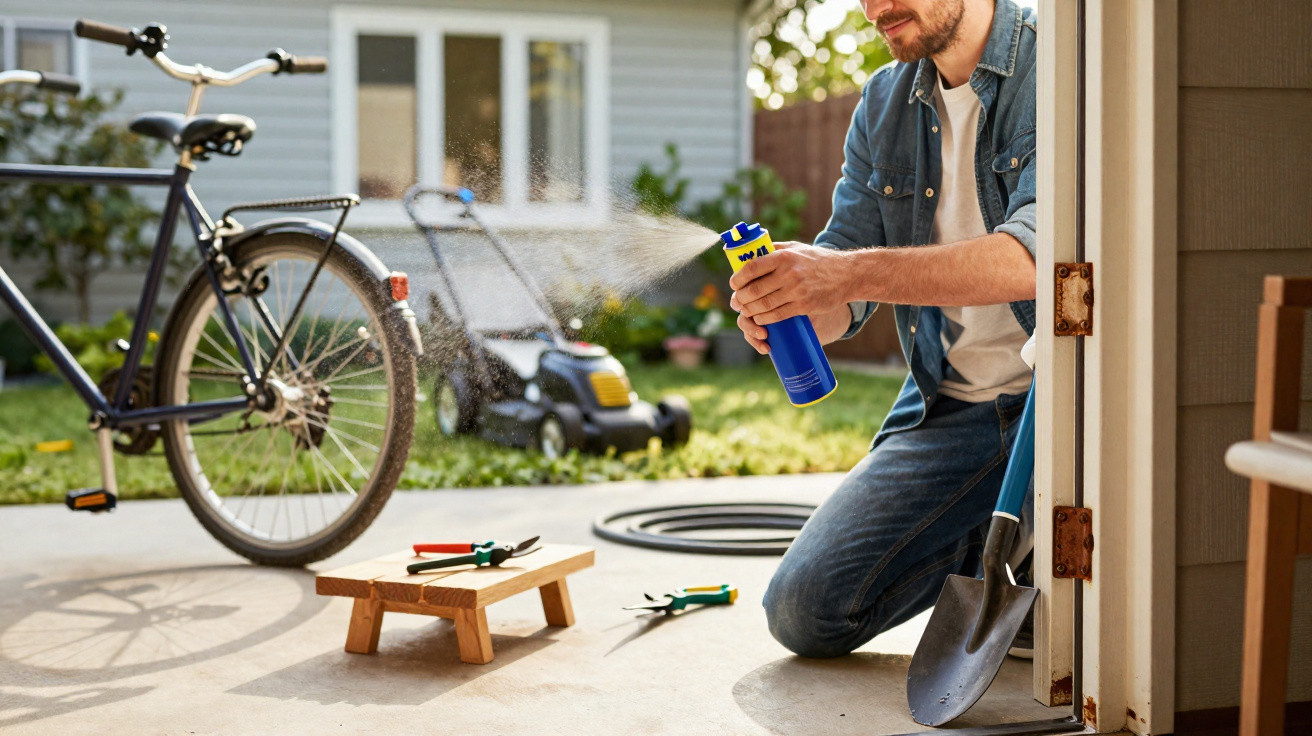
The blue-and-yellow can often ends up at the back of a cupboard, beside an odd screwdriver and a pile of screws whose origin nobody really knows. It comes out for a squeaking hinge, then goes straight back, with the assumption that it has done all it can do. Yet this spray, originally developed to displace moisture, has surprisingly useful applications around the home, in the garage and even in the garden. Some save you twenty minutes of scrubbing. Others can rescue an item you had written off for the bin. Most surprisingly, they remain little known.
When WD-40 removes the most frustrating marks
Everyone knows the annoyance of an label leaving an impossible-to-remove sticky layer on a jar, box or piece of furniture. Here is a discreet first use: WD-40 can help dissolve glue residue on glass, metal and some durable plastics. Spray a small amount onto a cloth, wait a few seconds and wipe gently. There is no need to soak the surface: the product works best in a thin film. If the item will be used in the kitchen again, wash it afterwards with soapy water.
A second, more unexpected tip concerns chewing gum stuck beneath a shoe sole. Applying a little spray to an old cloth can soften the material, which can then be lifted away with a rigid card or a piece of kitchen roll. This always seems to happen at the worst possible time, just before getting into the car or entering somebody’s home. The effect can be particularly striking on a white sole. Still, test an inconspicuous area first, as coloured rubbers and fragile plastics do not all react in the same way.
The third use is for pencil, wax crayon or scuff marks on washable painted walls, laminate tables or tiles. Thanks to its lubricating, penetrating formulation, WD-40 can lift certain pigments without requiring frantic scrubbing. Caution remains essential: a discreet test can prevent plenty of regret. Avoid using it on matt paint, wallpaper or untreated wood. Let us be honest: nobody really carries out a test every day, until a halo mark appears.
WD-40 in the garage and garden: time-saving jobs
A fourth use is freeing a stubborn zip on a jacket, sports bag or outdoor cushion cover. Rather than spraying straight onto the fabric, apply the product to a cotton bud and run it precisely along the metal teeth. Move the slider gently instead of tugging sharply. This simple technique may save a zip that is otherwise still in good condition. Avoid delicate fabrics, light-coloured leather and areas that will touch skin, as WD-40 can leave a persistent greasy mark.
Garden tools left in the shed through winter can also benefit from a fifth use: light protection against moisture and surface rust. Once you have brushed soil from secateurs, a spade or hedge-trimmer blade, apply a light mist of the product and wipe away any excess. This helps restrict oxidation and makes spring cleaning easier. It is neither magical nor permanent, but it is a straightforward habit. A clean, dry tool often lasts far longer than expected.
A sixth idea is loosening a screw, nut or external hinge seized by rain. Let WD-40 penetrate for a few minutes before using the correct spanner; trying to force it immediately is the classic mistake, and one that ends with a damaged screw head. Patience costs less than a broken part. For mechanisms exposed to heavy loads, the spray is primarily a first-aid solution: dedicated grease or lubricant should take over afterwards. The two products do not quite serve the same purpose.
The most surprising WD-40 tips, to use carefully
The seventh use is removing hardened candle wax from a metal or glass candlestick. First lift off the bulk with a wooden spatula or flexible card, then place a tiny amount of WD-40 on a cloth. The remaining film will come away far more easily. This is especially useful after a dinner when candles have dripped everywhere without warning. Never spray near an open flame, heat source or still-burning candle: the product is flammable.
An eighth use, popular with motorists in a hurry, is softening tar or tree-resin marks on an alloy wheel, lower bodywork or car paintwork. Put the product on a microfibre cloth, allow it to work briefly, then wipe without pressing down. Afterwards, rinse the area and wash it with car shampoo. Fresh resin will often lift much more readily than a stain left unnoticed all summer. The rule is simple: work on cold bodywork and test a small section first, particularly on older or delicate paintwork.
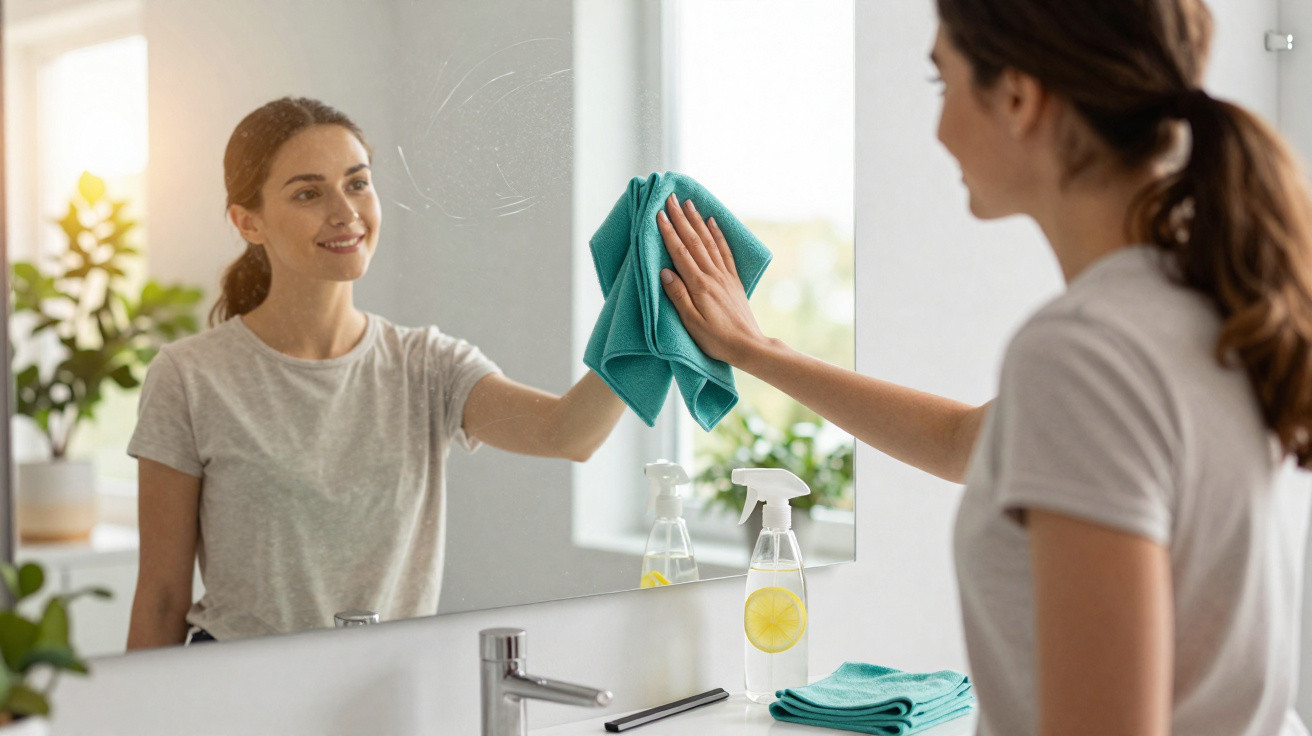
The ninth and tenth uses are preventing wet snow from sticking to a shovel, and restoring the shine of a stainless-steel sink or chrome dulled by fingerprints. A thin, wiped-off coating on the shovel blade makes clearing snow less arduous; for stainless steel, the cloth should be only barely dampened and any excess must be removed carefully.
“Good DIY is not about using more product, but about using the right product in the right place.”
- Do not use it on a surface intended to come into contact with food.
- Keep it away from flames, sparks and hot appliances.
- Ventilate the room and protect your hands during prolonged use.
- Always wipe away excess to prevent slippery floors or handles.
WD-40 is not a miracle product capable of repairing a broken lock, flaking paintwork or a tired engine. It remains an excellent problem-solver when used sparingly, in the right setting and without experimenting on delicate surfaces. These ten actions mainly underline one point: small household problems keep returning, but they do not always require major solutions. The old can in the garage may sometimes prevent a purchase, replacement or an entire evening spent scraping at a stain. You simply need to look closely at what is in front of you, test carefully, then pass on the tip to the person grumbling about their stuck zip or sticky label.
| Key point | Detail | Added value for the reader |
|---|---|---|
| Targeted cleaning | Glue, wax, chewing gum, resin and marks on certain surfaces | Avoids lengthy scrubbing and reduces the need for multiple household products |
| Mechanical troubleshooting | Zip, seized screw, lightly oxidised tool | Extends the life of small everyday items |
| Careful use | Prior testing, ventilation, keeping away from flames and food | Makes it possible to use these tips without damaging surfaces or taking unnecessary risks |

Comments
Основа различий: подход к производству
Мебельная фабрика MipoLine производит корпусную мебель на заказ, реализуя проекты любой сложности https://mebel-er.ru/portfolios/myagkaya-mebel
Основные направления деятельности компании - производство мебели для дома и для бизнеса по индивидуальным размерам https://mebel-er.ru/
Современное оборудование с ЧПУ, накопленный опыт, высококачественные материалы и отлаженный сервис позволяют решать нестандартные задачи, создавая продукт, аналогичный крупным отечественным и иностранным производителям https://mebel-er.ru/portfolios/mebel-dlya-spalni
Можно смело считать эксклюзивную мебель своего рода произведением искусства https://mebel-er.ru/portfolios/raznoe
Если вы жаждете проявить свою индивидуальность и не желаете иметь дома мебель как у многих других, то ваш вариант - эксклюзивная мебель https://mebel-er.ru/portfolios/skafy-i-garderobnye
Вы сами подберете обивку и по цвету, и по фактуре, сами определитесь с размером, внешним видом и остальными мелочами https://mebel-er.ru/portfolios
Можете подобрать фурнитуру, в общем, вы практически сами сотворите свою неповторимую мебель!
Производители эксклюзивной мебели широко представлены на выставке «Мебель» https://mebel-er.ru/terms-of-use
Здесь можно увидеть самые разные компании, специализирующиеся на изготовлении стильных столов, стульев, мягких гарнитуров https://mebel-er.ru/contacts
Leave a Comment