
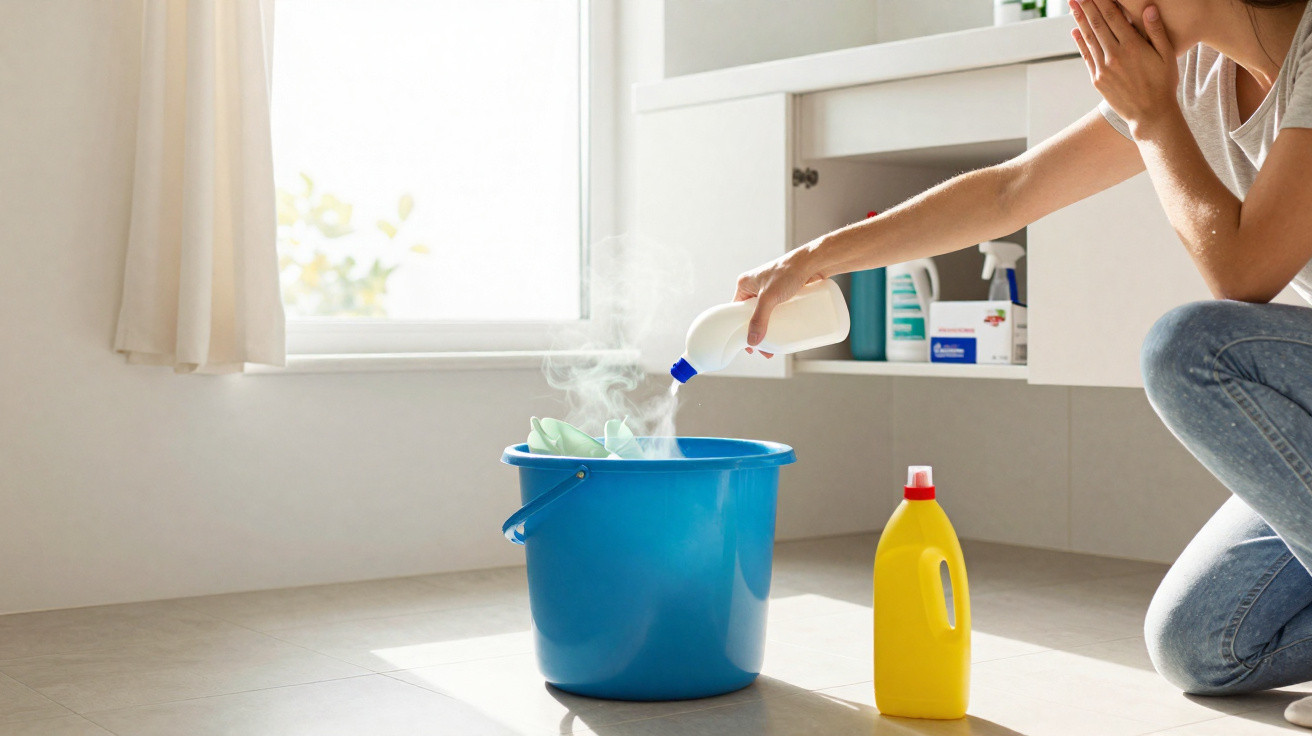
Combining several household products can sometimes seem more effective. Yet this habit can turn routine cleaning into a household incident.
A stronger smell, lots of foam or a visible reaction does not mean a surface will be cleaned more thoroughly. In the kitchen, bathroom or toilet, the instinct to combine two liquids “to make them work better” mainly puts people in the home at risk from harmful fumes. One particular combination must always be avoided: bleach and ammonia.
The mixture that can irritate the airways
In a video about cleaning mistakes, a domestic cleaning specialist highlights the danger of combining bleach with ammonia. When they come into contact, they can produce chloramines, compounds released as irritating vapours.
Mixing bleach with a product containing ammonia can cause coughing, breathing discomfort and irritation to the eyes, nose or throat.
The risk is not limited to products clearly labelled as containing ammonia. It may also be present in certain window cleaners, degreasers, floor products and toilet-cleaning solutions. Reading the label is therefore the first precaution to take.
The hazard is greater in small, poorly ventilated spaces. A bathroom without a window, an enclosed toilet or a kitchen with little ventilation can hold vapours for longer. The smell may initially seem tolerable before becoming highly unpleasant after a few minutes. Do not wait for symptoms to develop before stopping.
A strong smell does not mean cleaning has worked
Many people link a chemical smell with cleanliness, but this is misleading. A properly cleaned surface depends mainly on selecting the right product, allowing the manufacturer’s stated contact time and using mechanical action, such as scrubbing with a suitable sponge or cloth.
Foam is not a reliable sign either. It can be created by foaming agents included in a formula and may have no direct connection to how well dirt is removed. Likewise, a colour change or visible reaction can indicate a chemical interaction rather than improved results.
- In most situations, one product used in line with its instructions is enough.
- Cleaning removes visible dirt and some microbes.
- Disinfection should only be used where the circumstances warrant it.
- Every product must remain in its original container.
When there is a small amount left in two bottles, pouring them together can be tempting. This is exactly the sort of action to avoid. Even if both products are intended for the same room, their ingredients may be incompatible.
What to do if fumes are released
If a harsh smell appears after using more than one product, stop cleaning straight away. The first step is to move away from the area and breathe fresh air. Do not try to “correct” the mixture with a third product, hot water, vinegar or any other substance.
If an unexpected reaction occurs, do not try to neutralise the liquid: move away, ventilate if this can be done without exposing yourself, then seek medical advice if symptoms occur.
Persistent coughing, shortness of breath, chest pain, dizziness or pronounced eye irritation require immediate contact with the emergency services or a poisons centre. People with asthma, children, older people and pets may be more sensitive to irritating vapours.
Do not return to the room to finish the job
Wanting to complete the cleaning quickly may lead someone to go back into the room after a few minutes. That choice can extend their exposure. It is safer to leave the area unoccupied, provide natural ventilation where possible without remaining in contact with the fumes, and seek advice from a qualified professional before resuming any cleaning.
A simple method for cleaning without improvising
The safest routine can be reduced to a few steps. It prevents risky mixtures and cuts down the amount of products used each day.
- First remove dirt using water and an appropriate detergent.
- Rinse the surface if the product instructions require it.
- Then use one disinfectant only, and only when needed.
- Follow the dosage and contact time shown on the label.
- Ventilate the room during and after use.
- Close each bottle before taking out another one.
Bleach requires particular care. It must not be mixed with ammonia, but also not with acidic products, including certain toilet descalers or vinegar-based solutions. When combined with an acid, it can release chlorine gas, which is also highly irritating to the airways.
Good practice under the sink
Orderly storage reduces the risk of mistakes. Bottles should be kept upright, sealed and out of children’s reach. Decanting them into a water bottle, food container or unlabelled spray bottle creates a risk of confusion. The original label provides safety precautions, permitted uses and first-aid guidance.
Before dealing with a stubborn mark, it is better to spend a few seconds identifying the material involved: limescale, grease, mould and soap residue do not require the same solutions. Using the right product without combining it with another protects people in the home, surfaces and pipes alike.
Cleaning gains nothing from becoming a chemical experiment. A ventilated room, careful reading of instructions and one bottle at a time already provide a dependable everyday method.

Comments
No comments yet. Be the first to comment!
Leave a Comment