
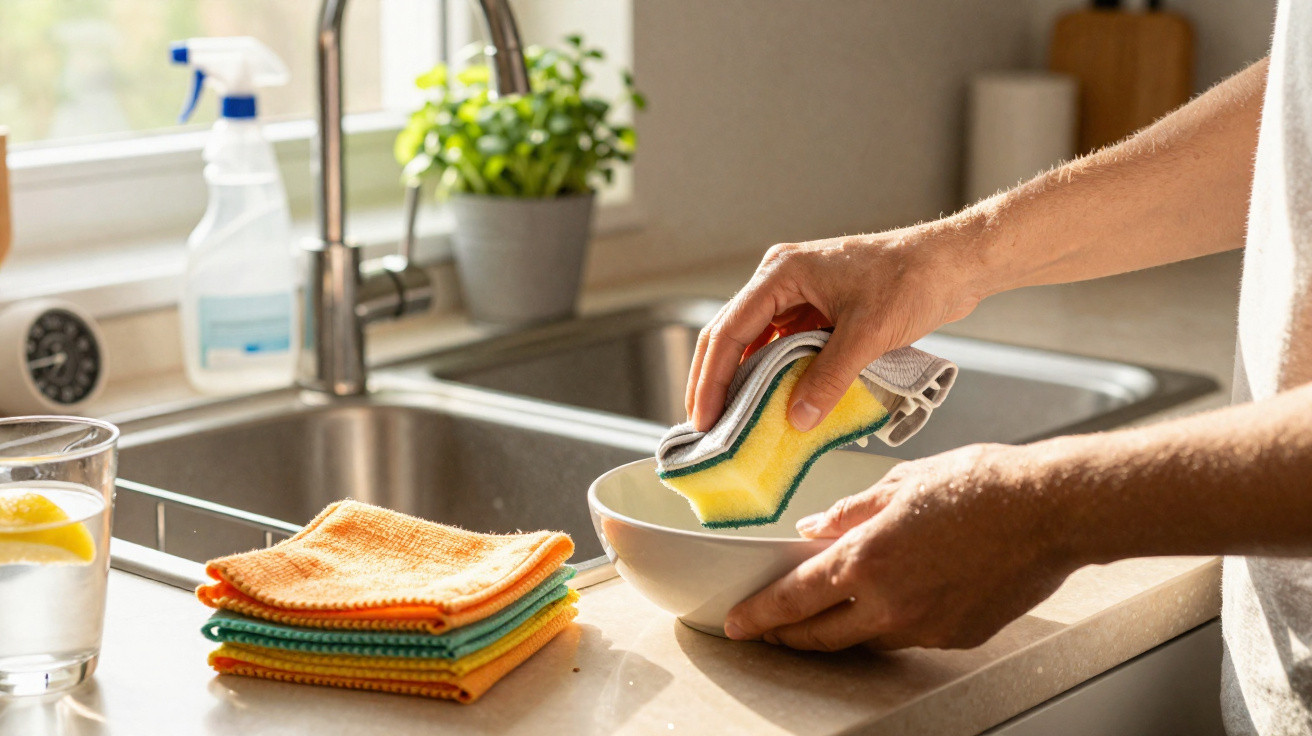
The cloth is, as always, lying beside the sink. Slightly damp, slightly worn out and a little grey, even though it used to be yellow. As you pass, you run it quickly over the worktop to remove coffee marks without giving it much thought. The smell? Briefly ignored. The thought of everything living in those fibres? Dismissed even faster. In day-to-day life, what matters is that the kitchen “looks clean”: smooth surfaces, no visible dirt, job done. Yet looking clean and being genuinely hygienic are two entirely different things. Between them sits a small, invisible colony that you feed every day.
When a kitchen cloth becomes a bacterial flat-share
Anyone who takes a closer look soon notices that kitchen cloths age as quiet witnesses to everyday life. The brightly coloured microfibre cloth that seemed new only recently looks dull after a few days, develops a faintly sour smell and eventually turns stiff. Still, it stays in use because you “haven’t opened a new one yet”. We all know that moment: you pick up the cloth, hesitate for a second, then use it once more anyway. Convenience wins over vague unease. Until the question eventually arises: what am I actually wiping away here?
Hygiene researchers have measured millions of germs per square centimetre on kitchen sponges and cloths. One German study identified more than 360 different bacterial species in used household sponges, including germs that also cause problems in hospitals. And we faithfully rub these items across chopping boards, children’s plates and the knife intended for the next sandwich. A sponge that remains damp for several days is like a spa hotel for microorganisms: warm, moist and well supplied with food residues. A little discolouration is all that can be seen. The real party is invisible.
The logic is brutally simple: moisture plus food plus time equals an explosion in germs. If cloths and sponges are never properly disinfected, a cycle develops. You clean one surface but transfer some germs to the next one in the process. In theory, remnants of raw chicken end up on the lunchbox, while tomato sauce reaches the baby’s chopping board. The kitchen appears orderly while quietly becoming a transfer point for germs. Let’s be honest: nobody enjoys cooking with the feeling that their “clean” crockery has just won a round of bacterial bingo.
Practical kitchen cloth and sponge hygiene without becoming a cleaning robot
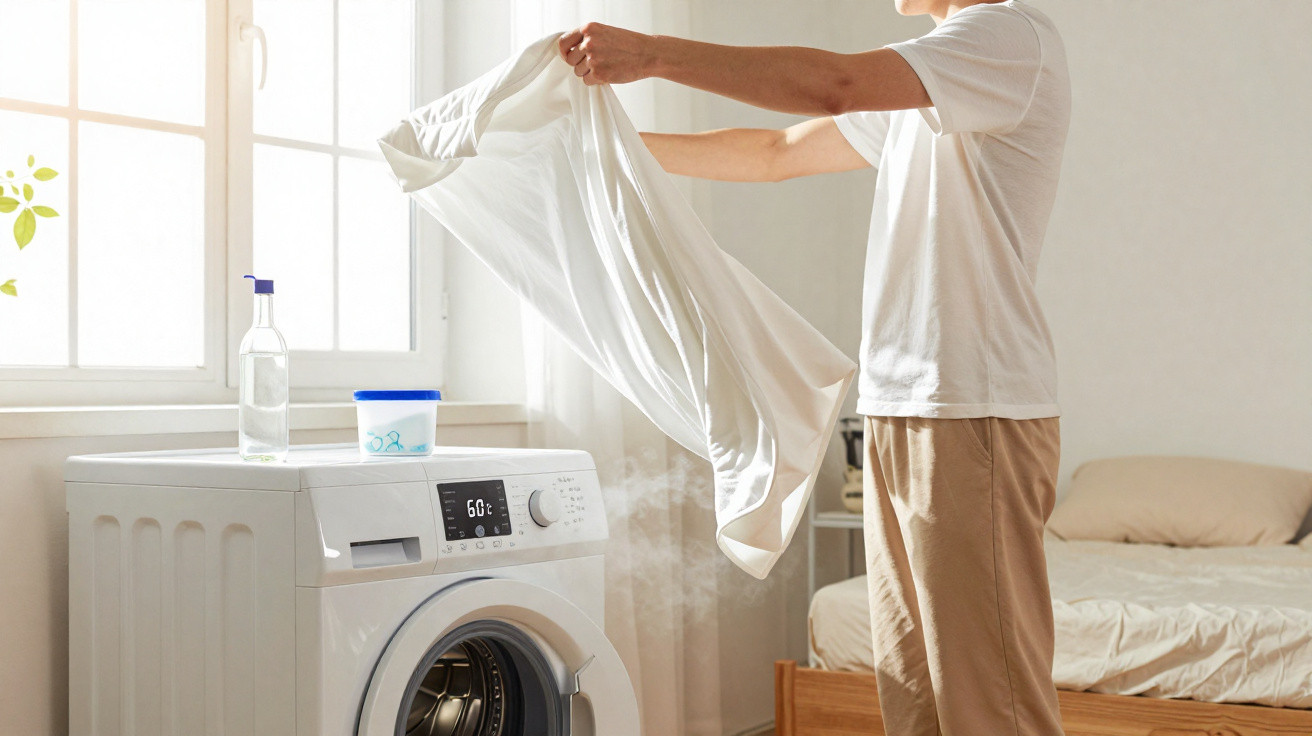
The good news is that you do not need to turn your life upside down to rescue your cloths and sponges from the bacterial trap. One highly effective routine is to change kitchen cloths every day, replace sponges every 2–3 days and allow both to dry out properly in between. Hang them up spread out rather than leaving them crumpled in the sink. For disinfection, it is often enough to rinse them briefly, wring them out and put them in the washing machine at a minimum of 60°C. Sponges can also be placed in boiling water from time to time; a few minutes is enough to eliminate most germs.
The biggest mistake is not “cleaning too little”, but carrying on using something half-heartedly out of convenience. You smell the cloth, think, “that needs replacing”, put it down, then reach for exactly the same one an hour later. This back and forth is precisely what keeps the germ load high. Many people are almost embarrassed when visitors are present and the sponge smells strong, telling themselves: “Other people probably do this better.” No. The truth is much more ordinary: most of us simply keep wiping with the same things for too long.
A hygienist I spoke to put it bluntly:
“If a kitchen sponge is never disinfected, it is no longer a cleaning tool but a mobile habitat for an entire zoo of microbes.”
What can help in everyday life?
- Use a set of several cloths so that one is always dry and another is fresh.
- Treat sponges as disposable items and replace them regularly.
- Accept smell as a clear signal to stop rather than ignoring it.
- Use kitchen paper rather than reusable cloths for raw meat.
- Create a simple weekly schedule: which day is wash day for kitchen textiles.
What happens on the cloth does not stay on the cloth
Once you understand how strongly a small cloth can affect the hygiene of an entire kitchen, you never look at one quite so casually again. These inconspicuous fibres touch plates, hands and worktops, and sometimes even children’s hands when something is wiped up “just quickly”. A poorly maintained cloth therefore becomes a quiet housemate that interferes with every daily routine: at the breakfast board, during dinner and when cleaning up quickly after cooking. The danger lies in getting used to it; at some point, the condition begins to seem normal.
At the same time, this offers a quiet opportunity. Treating kitchen textiles more consciously is one of the most effective ways to improve everyday hygiene, without needing disinfectant sprays in every corner. A fresh cloth can suddenly feel almost luxurious, while a new sponge feels like a small fresh start. Cooking feels more relaxed when the surface is right. And it becomes clear that hygiene is not a rigid cleaning schedule, but a series of small decisions that can feel good.
In the end, one simple question remains for the next time you reach for a wet cloth: am I cleaning now, or merely spreading the stories of the past week across my kitchen? Those who answer this honestly often begin to handle their cloths and sponges differently without much effort. Perhaps the old cloth will go into the wash sooner. Perhaps you will feel like sharing the subject with friends. And perhaps an unremarkable piece of fabric will become the starting point for a kitchen that not only looks clean, but feels that way too.
| Key point | Detail | Benefit for the reader |
|---|---|---|
| Bacteria build up rapidly | Sponges and cloths can carry millions of germs when they remain damp and unwashed | Awareness of the invisible everyday risk increases, making the need to act tangible |
| Regular replacement and disinfection | Change cloths daily, replace sponges every 2–3 days, and wash at 60°C or boil them | A specific, easy-to-follow routine for better kitchen safety |
| Smell as a warning sign | An unpleasant smell indicates a high germ load and that the item has reached the end of its useful life | A straightforward everyday test for acting in time |
FAQ:
- Question 1 How often should I really replace my kitchen sponge? – Every 2–3 days is ideal, or sooner if it remains damp or starts to smell.
- Question 2 Is rinsing the cloth with hot water enough? – It removes some dirt, but does not replace thorough cleaning in a washing machine at 60°C.
- Question 3 Can I wash all cloths together with ordinary laundry? – Yes, as long as you use a 60°C programme and let them dry completely afterwards.
- Question 4 Are microfibre cloths more hygienic than cotton? – They pick up dirt effectively, but they can become just as contaminated with germs if they are not washed regularly.
- Question 5 What should I do with cloths that still smell musty after washing? – The fibres have usually reached the end of their life: discard them and replace them with a new cloth or sponge.



Comments
No comments yet. Be the first to comment!
Leave a Comment