
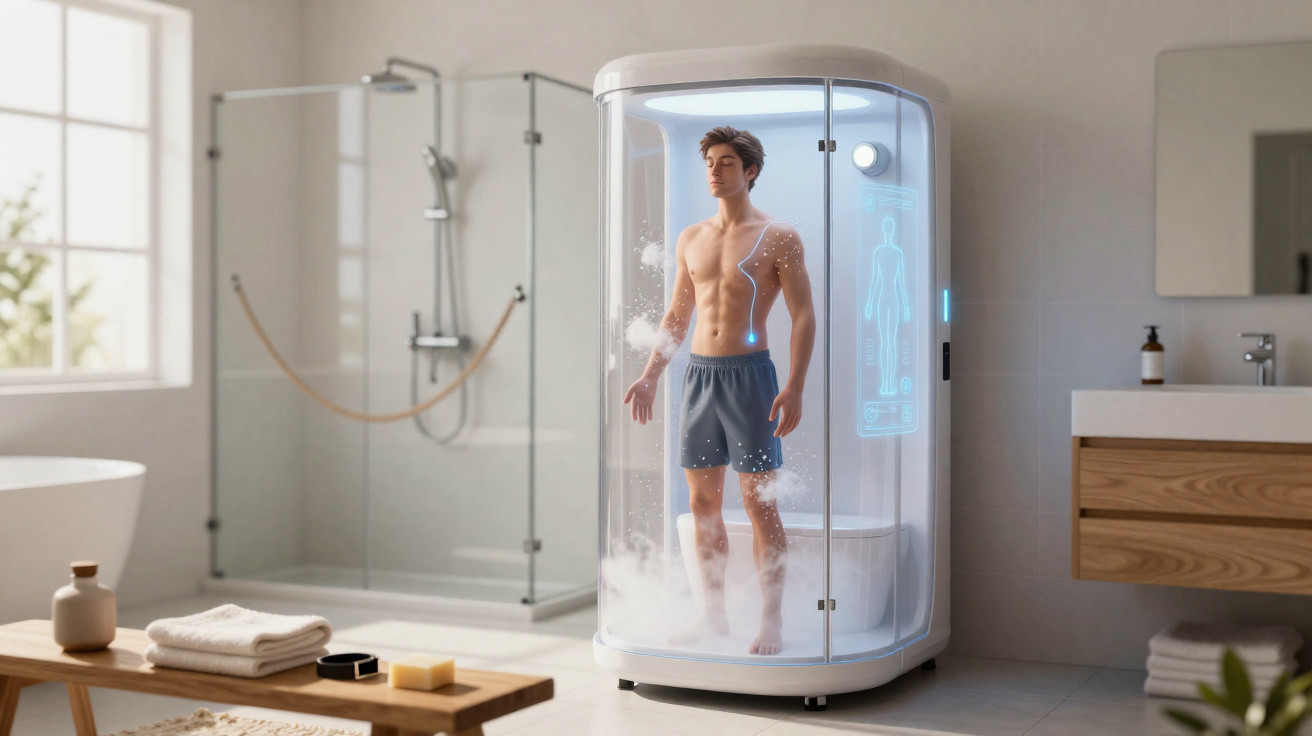
In Osaka, engineers have created a futuristic washing capsule designed to wash and dry the entire body in around 15 minutes with almost no effort from the user. Combining hygiene, wellness and health data in one process, the machine uses artificial intelligence to tailor the experience precisely to the person inside.
How the “human washing machine” works
In appearance, the device resembles a cross between a large bath and a miniature sauna. The user sits inside the enclosed capsule, closes the door and the automated cycle begins.
- The capsule fills with water.
- A microbubble system cleans the skin.
- Sensors record body data, including pulse rate and stress levels.
- Artificial intelligence adjusts the temperature, pressure and ambience.
- An integrated system dries the body at the end of the process.
Its key difference from an ordinary shower is that cleaning is achieved without lathering up or scrubbing. Instead, exceptionally fine bubbles in the water are intended to enter the skin’s pores and gently lift away dirt particles, leaving the person inside without having to scrub themselves.
“The capsule promises: sit down, wait – then step out clean, dry and relaxed.”
Personalised cleaning with AI – more than soap and water
Several biometric sensors are installed inside the capsule. Among other things, they monitor heart rate and further physical indicators that can reveal signs of stress or fatigue. This information is fed into an AI system, which continually modifies the conditions during the wash.
For example, the machine controls:
- Water temperature: warmer for relaxation, cooler for stimulation
- Water-jet pressure: from a light tingling sensation to a stronger massage effect
- Interior lighting: subdued and warm for calm, or brighter for a more alert feeling
- Soundscape: such as the sound of waves or quiet music to aid relaxation
This brings the machine close to offering an individual spa appointment – except that it is automated and available at the touch of a button in a home bathroom or wellness facility.
Three functions in one: cleaning, relaxation and a health check
The developers have a clear ambition: personal care should become not only quicker, but more holistic. Rather than simply running water over the body, the system brings together three approaches that have previously been separate.
| Area | Role of the capsule |
|---|---|
| Hygiene | Thorough cleaning through microbubbles without vigorous rubbing |
| Relaxation | Personalised temperature, lighting, sounds and water pressure |
| Health | Monitoring of pulse, possible stress and other vital indicators |
As the body is washed, measurements continue in the background. In future, the information gathered could potentially be used to spot changes – for instance, if a pulse settles noticeably faster than usual, or conversely remains elevated for a prolonged period.
Fewer daily showers – does this capsule fit the new trend?
Alongside this technology, another development is emerging: many people are showering less frequently than they once did. Dermatologists have pointed out for years that long, daily showers in hot water can dry out the skin and weaken its natural protective barrier. Some people therefore limit themselves to a few showers each week, using targeted care for particular areas of the body in between.
A capsule that cleanses, cares for and relaxes the body in one session could suit this changing view of hygiene. Those who do not want to stand under the shower every day might occasionally choose a more intensive yet gentler full-body clean.
“For many people today, being clean no longer means standing under the hottest possible water as often as possible, but caring for the body more selectively, consciously and gently.”
Technology with a history – a 70s idea, now with AI
The basic concept of an automated body-washing capsule is not entirely new. An early prototype was already presented at the Osaka Expo in the 1970s. At that point, the technology was far removed from what is now achievable: there were no high-resolution sensors, no learning systems and no precisely controllable microbubble technology.
Today, the developers can draw on modern components, including powerful processors, AI models, accurate sensors and efficient drying systems. This makes use beyond exhibition halls and laboratories appear more realistic – although it remains unclear whether such capsules will actually reach ordinary homes or mainly be used in hotels, rehabilitation clinics and care settings.
Where a human washing machine could be useful
Potential applications extend well beyond the private bathroom. The capsules could be especially interesting in the following places:
- In care homes: residents who struggle to shower independently could receive gentle cleaning, while care staff face less physical strain.
- In hospitals and rehabilitation centres: patients with limited mobility could be washed with less effort.
- In wellness and spa facilities: as a high-tech alternative to conventional hydrotherapy.
- In hotels aimed at business travellers: offering a rapid refresh after long-haul flights, including a relaxation programme.
In care environments in particular, a standardised and easily controlled cleaning process could offer greater dignity and comfort when implemented properly. Human contact remains essential, however: the machine can at most take over physically demanding work, not replace care and attention.
Risks, questions and unresolved issues
For all its futuristic appeal, the capsule raises several concerns. Data protection comes first. Health-related measurements are among the most sensitive types of information. They would need to be stored securely and kept clearly separate from advertising or profiling systems.
Another question is what happens if the technology fails. A fault in an enclosed capsule containing water, electronics and heating would be far from pleasant. Fail-safe systems, emergency releases and routine maintenance would be essential.
There are also physical considerations. People with certain cardiovascular conditions, open wounds or skin diseases may not be able to use every setting without issue. Clear guidance, medical testing and tailored programmes would be needed.
What microbubbles and sensors can actually do
The term microbubbles may sound like marketing language, but it has a genuine basis. These bubbles are substantially smaller than ordinary air bubbles in water. Their size increases the surface area that comes into contact with the skin and dirt particles. This allows residues to be loosened without harsh mechanical friction, which could be particularly beneficial for sensitive or ageing skin.
The sensors measure values such as pulse rate and potentially skin temperature. These can provide indications of stress, overheating or severe fatigue. A calm, steady pulse combined with relaxed breathing suggests recovery, while a persistently rapid pulse is more likely to indicate tension. With sufficient data over a longer period, such systems could identify patterns – for example, whether someone regularly enters the capsule stressed and only calms down during the session.
Will the conventional shower become obsolete?
Whether this technology will genuinely replace the standard shower remains uncertain. It is more likely to serve as an addition: people in a hurry may still step under the shower briefly, while those seeking a deeper clean with a wellness effect could choose the capsule. Combined with the trend towards less frequent but more mindful personal care, this could create a new ritual somewhere between a bath, a spa and health monitoring.
One thing is clear: if a machine takes over the entire washing process, it will alter everyday habits. The focus would no longer be on a quick rinse, but on a short, technology-assisted reset for body and mind. Whether many people embrace that change will ultimately depend on the price, how comfortable it feels and trust in the technology.

Comments
No comments yet. Be the first to comment!
Leave a Comment