
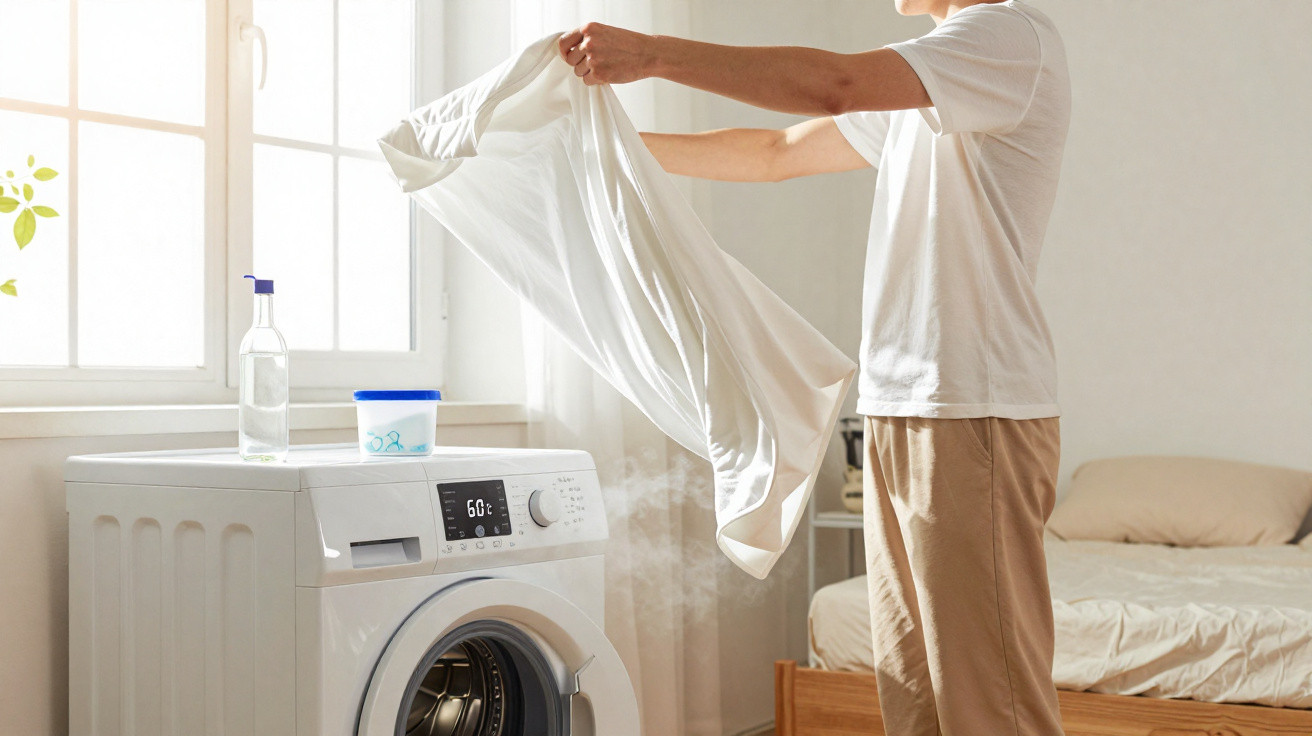
A 40°C wash is often seen as a sensible balance between cleanliness, time and electricity costs. However, current assessments from bacteriologists and allergists call this routine into question. Their message is clear: anyone who washes bed linen exclusively at 40°C over the long term may achieve a fresh scent, but not a bed that is genuinely low in germs or dust mites.
What really happens in your bed overnight
Freshly changed bedding feels clean, smells pleasant and looks inviting. Behind that appearance, though, the reality is rather less idyllic. According to experts, every night people shed:
- up to one litre of sweat;
- large quantities of dead skin cells;
- sebum from the pores;
- hair and dust particles.
All of this ends up in the fabric of the bed linen. The resulting mixture provides an ideal food source for mites and bacteria. They multiply wherever conditions are warm, damp and mildly soiled - precisely the environment found in an ordinary bed after several nights.
“After just a few days, bed linen can become like a biotope for house dust mites, their allergens and numerous bacteria - even when it smells clean.”
Mite allergens in particular - their droppings and other residues - are considered a significant trigger for symptoms such as sneezing fits, itchy eyes and asthma-like complaints. The bed can then become a constant irritant to the airways.
What a 40°C wash can really do - and what it cannot
In an age focused on saving energy, 40°C programmes and Eco cycles have become standard in many homes. They use less electricity and water, often remove stains adequately and fit the trend for washing clothes as gently as possible.
Bacteria: apparently clean, but not entirely
Research indicates that, in an average healthy household, a 40°C programme with modern enzyme-based detergent can remove a large proportion of bacteria. Some studies suggest a reduction of up to 99 per cent in “normally soiled” bed linen.
There are limitations, however. These findings come from laboratory conditions involving controlled bacterial strains. Everyday life brings contact with a wide range of germs, from harmless skin bacteria to pathogens linked to colds, gastrointestinal infections and skin inflammation. Not all of them respond equally well to lukewarm wash cycles.
Dust mites: 40°C achieves very little
The situation is much clearer when it comes to house dust mites. According to specialists, a standard wash below 60°C removes only around 6 to 10 per cent of mites. The vast majority survive a 40°C wash without difficulty.
“At 40°C, mites and micro-organisms are briefly disturbed - but they are not reliably destroyed. It provides reassurance rather than genuine hygiene.”
Soft fibres, removed stains and a pleasant fragrance can be misleading. Mite debris, living mites, their droppings and some bacteria remain in the fabric. People prone to allergies often notice this through a blocked nose in the morning, coughing or itchy eyes.
Why 60°C is considered the hygiene threshold
Professional associations and hygiene specialists have cited the same threshold for years, and it has been supported by many studies: from around 60°C, maintained for preferably more than an hour, germ levels fall sharply and mites are reliably killed.
At this temperature, the evidence points to:
- near-complete elimination of house dust mites;
- a substantial reduction in common household and everyday bacteria;
- a considerably lower allergen load in the fabric.
Temperature is the key factor. Detergent, drum movement and water provide the mechanical cleaning, while heat performs the disinfecting role. Many allergists emphasise that only high temperatures act as a “natural disinfectant”, without the need for chemical additives.
How often bed linen should actually go in the washing machine
When it comes to changing bedding, what people would like to do and what actually happens are often very different. Bacteriologists and allergists generally advise replacing bed linen every 7 to 10 days. Anyone who sweats heavily, sleeps with pets in the bed or eats in the bedroom should stay closer to the lower end of that range.
When a 60°C wash is essential
A 60°C wash is particularly appropriate in certain circumstances. Experts recommend the higher temperature especially when:
- a contagious illness is circulating in the home, such as a gastrointestinal infection, flu or a weeping skin infection;
- a house dust mite allergy has been diagnosed;
- the bed linen has been soiled with blood, vomit or urine.
For allergy sufferers, many clinics advise washing bed linen at 60°C roughly once a month to reduce the allergen burden in the sleeping area. Lower temperatures may be sufficient between these washes if there are no acute infections.
When a 40°C programme is still sufficient
In healthy households with no particular risks, bed linen can also be washed at 40°C from time to time. The important points are a sufficiently long programme, a good enzyme-based detergent and thorough drying. Problems arise when laundry is put away while still slightly damp or returned straight to the bed. This allows micro-organisms to multiply especially quickly.
Tips for genuinely hygienic bed linen
Anyone wishing to care for bed linen more hygienically does not need to set every wash to 90°C. A few straightforward habits can make a considerable difference:
- Change it regularly: put on fresh bed linen every 7–10 days, or more often if you sweat heavily or have allergies.
- Use hot washes selectively: choose 60°C programmes for infections, allergies or heavy soiling.
- Choose the right programme: opt for “Cotton” or “Bed linen/household textiles” cycles with a sufficiently long running time.
- Do not overfill the drum: water and air need to circulate properly, otherwise the heat will not reach every fibre.
- Dry it completely: use either a tumble dryer or sunlight, and never fold laundry while it is still damp.
“A well-chosen 60°C programme every few weeks works like a reset for the microscopic world in your bed.”
Household remedies that support the wash cycle
Alongside temperature and detergent, simple household remedies can help keep the bed more hygienic. Specialists frequently mention ordinary household vinegar as a useful addition.
Vinegar in the fabric conditioner drawer
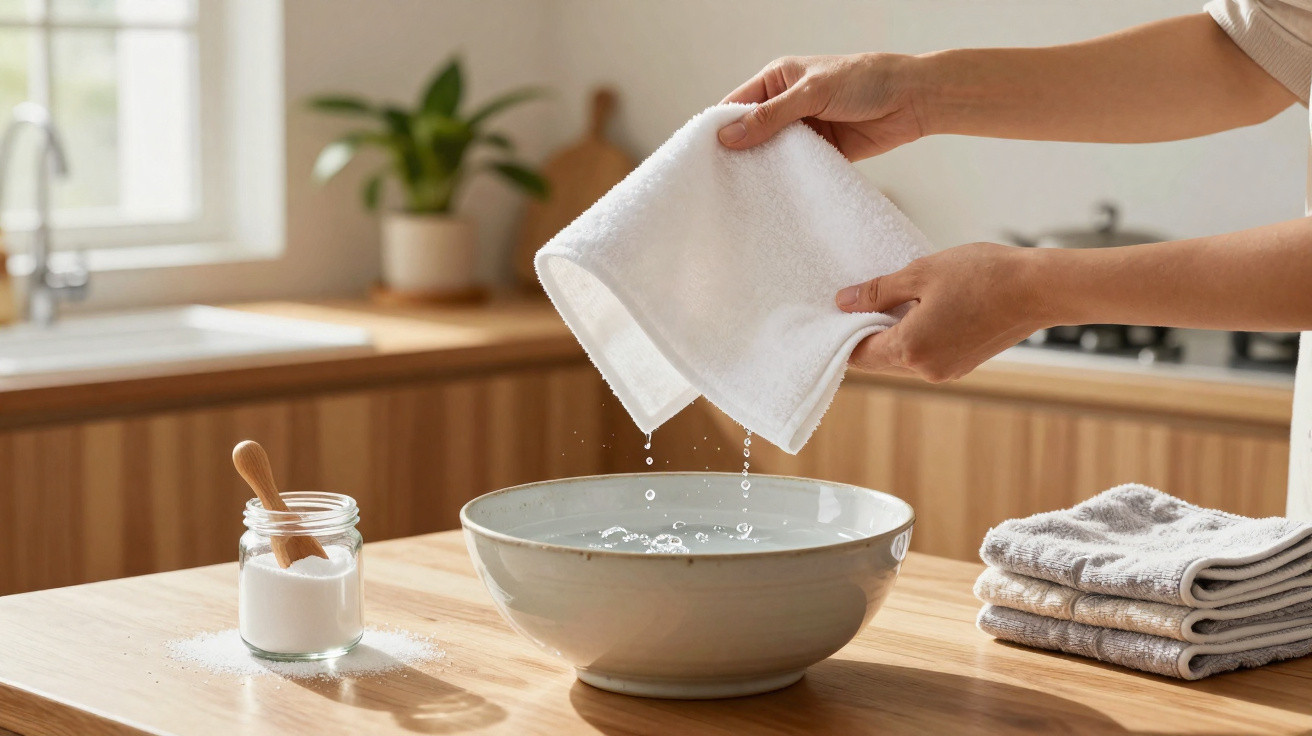
Around half a glass of clear household vinegar in the fabric conditioner compartment can neutralise odours and lightly reduce limescale in the fabric. This is especially useful in hard-water areas, helping laundry stay softer without heavily perfumed fabric conditioners. Vinegar does not replace high temperatures for controlling mites, but it can be a worthwhile complement.
Sunlight as a natural ally
Anyone able to dry bed linen outdoors benefits in two ways: UV radiation has a certain germ-reducing effect, while moving air helps draw remaining moisture out of the fabric. This reduces the likelihood of micro-organisms settling again in damp material.
What else people with a dust mite allergy should consider
People with a confirmed house dust mite allergy are particularly sensitive to what collects in mattresses, bed linen and pillows. For them, focusing solely on washing temperature is not enough. Useful additional measures include:
- encasings, meaning specially tightly woven covers for the mattress, pillow and duvet;
- airing the bedroom regularly;
- avoiding open shelving and heavy curtains in the bedroom;
- vacuuming with a HEPA filter where there is fitted carpet.
This combination significantly reduces the overall burden. Each individual measure removes part of the mites’ basis for survival.
Balancing hygiene and electricity costs sensibly
A common argument against 60°C washes is the higher energy cost. In practice, a 60°C programme uses considerably more electricity than a 40°C Eco cycle, depending on the machine. Many experts therefore suggest a middle-ground approach: rather than washing everything hot, plan targeted “hygiene washes”.
In practical terms, this means washing most bed linen at 40°C while nobody is ill and no allergy is present. If an infection occurs in the household or someone experiences severe symptoms in the bedroom, at least that person’s bed linen should be washed at 60°C. This keeps both the electricity bill and health risk within reasonable limits.
Those who also check care labels and choose durable materials that can be washed at 60°C will face fewer difficulties in the long run. Delicate silk or synthetic-fibre covers may look elegant, but they are only of limited suitability for people who regularly need high washing temperatures.



Comments
No comments yet. Be the first to comment!
Leave a Comment