
A simple scent from your kitchen can tackle the problem surprisingly quickly.
Leave fruit out for only a short time, or return after a weekend away, and they appear: tiny flies circling the sink, bin and fruit bowl. Many people then reach for harsh sprays. Yet a straightforward kitchen trick can work without chemical insecticides – while also making the room smell fresher.
Why fruit flies take over your kitchen so quickly
Fruit flies, also commonly called vinegar flies, are exceptionally sensitive to smells. Even tiny amounts of fermenting material are enough for them to detect.
- Overripe or rotting fruit
- Uncovered leftover wine or juice
- Warm, slightly damp bins
- Damp compost in houseplants
- Drains where food debris has collected
When something ferments, it produces ethanol and acetic acid, among other substances. These are precisely the compounds that attract the insects. A single female fruit fly can lay up to several dozen eggs a day. Over its short lifespan, this can result in hundreds of offspring. It is hardly surprising that a swarm seems to multiply overnight.
Many households respond by spraying insecticides in enclosed rooms. However, health authorities repeatedly warn about the effect such products can have on indoor air, particularly in small kitchens with limited ventilation.
“There is another way: a powerful but natural scent can disrupt the flies’ sense of direction – and make the air seem cleaner.”
The scent fruit flies genuinely dislike
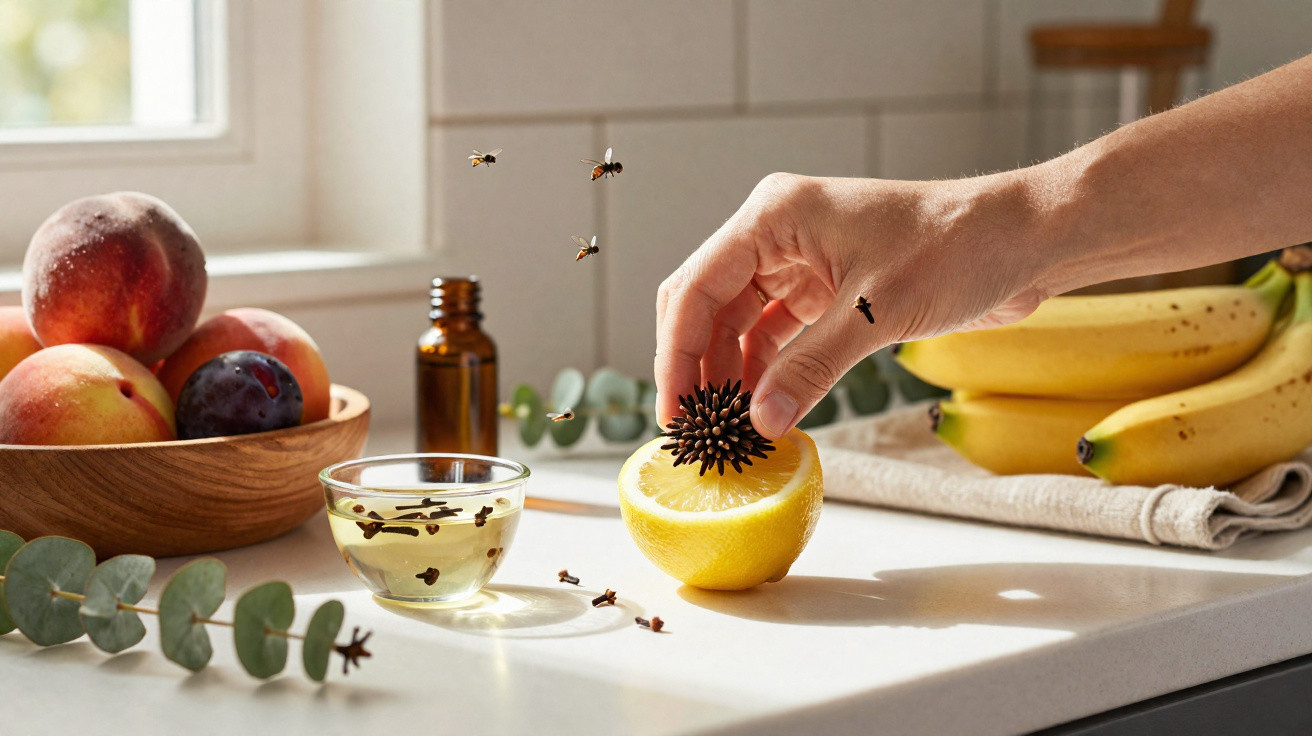
The simplest and, at the same time, highly effective solution is already in many spice cupboards: cloves. More specifically, whole cloves, also known as clove buds.
Their key active ingredient is called eugenol. This aromatic compound overwhelms the flies’ sensitive scent receptors. The insects find it harder to pick up signals from fermentation, become disorientated and increasingly avoid the area.
Cloves work particularly well when paired with citrus fruit. An orange or lemon acts as a natural “scent booster”:
- The damp fruit surface releases the aroma slowly and evenly.
- The combination of citrus and clove smells pleasant to people, but acts as a barrier for flies.
- The scented cloud settles over the very areas where fermenting odours would otherwise dominate.
“Cloves pushed into a halved citrus fruit act like an invisible protective ring around the fruit bowl, sink and bin.”
Step-by-step guide: how to use the anti-fly scent
Option 1: a lemon and clove scent barrier
This everyday method takes only a few minutes to prepare.
- Cut a lemon or orange in half.
- Push 15 to 20 whole cloves into each half.
- Place the halves, clove side up, on small saucers.
- Put them in strategic locations:
- directly beside the fruit bowl
- at the edge of the sink
- on or beside the bin lid
- Replace them roughly every three to four days, once the fruit becomes shrivelled.
For most people, the scent is subtle rather than overpowering, though it will be clearly noticeable in smaller kitchens. Anyone who is sensitive to it should start with just half a lemon and increase gradually.
Option 2: an “emergency measure” with hot vinegar and cloves
If a dense cloud of fruit flies has already formed, a stronger layer of scent can help.
- Pour around 250 millilitres of white vinegar into a saucepan.
- Add about ten whole cloves.
- Simmer gently for around 15 minutes.
- Turn off the hob and leave the saucepan uncovered in the kitchen.
The rising vapour creates an intense veil of scent that the insects avoid. It is best to leave a window slightly open at this stage so the smell can disperse afterwards. Many people report that swarms reduce noticeably within one to two days.
Other scents that can help in the kitchen
Cloves are not the only natural aroma that small flies find unappealing. If an infestation persists, several others can be combined.
Eucalyptus for persistent visitors
Eucalyptus leaves contain potent essential oils. They can be used to make a spray for problem areas:
- Add around 150 grams of fresh or dried eucalyptus leaves to five litres of water.
- Boil for approximately 15 minutes.
- Leave to cool, strain and decant into spray bottles.
- Lightly spray worktops, bins and window sills.
The liquid should not be used on delicate natural-stone surfaces or untreated wood; test it first on a small, inconspicuous area.
Essential oils as targeted scent spots
Several familiar oils can help keep flies away when used sparingly:
- Lavender
- Peppermint
- Lemongrass
- Tea tree oil
- Geranium
Put a few drops on small sponges or cotton pads, then place them at entry points: on the windowsill, by the sink or beside the bin. If you own a diffuser, add two to three drops to water and run it from time to time. Pet owners should first check which oils are safe for their animals.
Even the best fruit fly scent is of little use without a clean kitchen
Scents provide lasting relief only when the actual attractants are removed. Fruit flies follow food first; only afterwards are they deterred by the smell of cloves.
| Problem area | Measure |
|---|---|
| Drain | Flush regularly with coffee grounds and hot water; if needed, follow with bicarbonate of soda and white vinegar. |
| Bin | Empty it more often, clean the inside with soft soap or washing-up liquid, and always keep the lid closed. |
| Fruit bowl | Store only ripe, not overripe, fruit; remove bruised or rotten parts immediately; seal wine bottles and juices tightly. |
| Plant pots | Avoid waterlogging, allow the top layer of compost to dry, and add sand if necessary. |
Certain fruits – including bananas, kiwis, peaches, tomatoes, figs and pears – release gases as they ripen that are particularly attractive to flies. Keep these varieties separately where possible, and do not pile them up uncovered right beside the sink.
One simple tip borrowed from the world of wine: placing a clean cork in the fruit bowl can lightly absorb odours and alter the microclimate. It is not a miracle cure, but it can have a noticeable effect alongside cloves and citrus.
Risks and limits of home remedies – what to keep in mind
Natural scents may be practical, but they do not work without limits. If the infestation is severe, those affected should also look for breeding sites: sticky juice residue beneath the fruit bowl, small pools of fermenting liquid in the bin, or forgotten scraps of fruit in the cupboard beneath the sink.
Anyone with particularly sensitive airways should use clove and vinegar vapour in moderation, and keep intense vinegar boiling brief. In homes with young children or animals, bowls containing highly concentrated oils must be kept out of reach.
It is interesting how much personal perception can differ: some people find the clove-and-citrus combination festive and pleasant, while others quickly find the scent irritating. In smaller flats, it makes sense to create several small scent spots rather than one extremely intense one.
Combinations of different natural scents often work best: cloves in the fruit bowl, a little eucalyptus by the bin and a drop of lavender on the windowsill. Together, they create an environment that fruit flies find unappealing, while people can still cook and eat as normal.



Comments
No comments yet. Be the first to comment!
Leave a Comment