
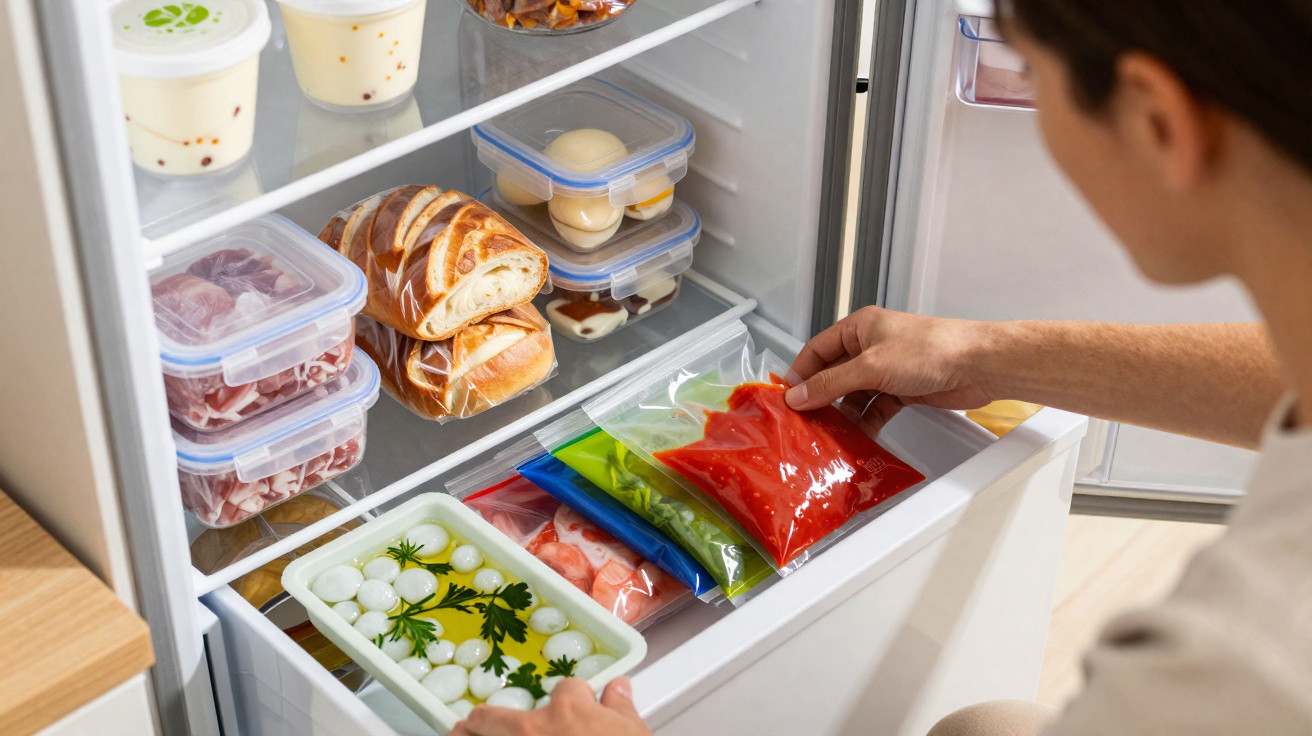
At some point, every freezer becomes a frosty archive of good intentions. Open the door and a puff of cold air meets your face, revealing last year’s half-used bag of peas, an unidentifiable ice-covered tub, and bread that crunches like packing foam. You may tell yourself you are “doing batch cooking” and “reducing food waste”, yet somewhere inside you know you are also creating a monument to plans that never quite happened. A freezer should be a safety net for difficult days, not a burial ground for overlooked leftovers. Still, items quietly meet their end there, one by one.
The catch is that much of this waste comes down not to what you freeze, but to how you do it. A few small habits - unsuitable containers, vague labelling or an overfilled drawer - can spoil food well before it should be past its best. Some errors are so routine that they barely register as errors at all. Others may be genuinely unexpected. Once you notice them, though, they are impossible to ignore.
1. Putting meat in the freezer in supermarket packaging
You know the situation: you put a pack of chicken straight from the shopping bag into the freezer, promising yourself you will “sort it properly later”. Naturally, later never arrives. Thin supermarket trays and flimsy plastic film are made to get food home, not to withstand months below zero. The air pockets around the meat encourage freezer burn: that grey, leathery layer which makes food smell faintly like old ice cubes when you eventually cook it.
Wrapping meat properly can be the difference between a succulent roast and something that tastes as if it came from an airline meal in 1998. Take it out of the supermarket tray, dry it with kitchen paper, then wrap it firmly in freezer paper or foil, squeezing out as much air as possible. Adding a labelled freezer bag gives further protection and makes neat stacking easier. It may feel like a faff after a big shop, but meat stays frozen for longer and tastes much better when it is not partly exposed to freezing air.
2. Freezing leftovers while they are warm
Everyone has had the evening when the pasta bake is finally ready, the washing-up is staring at you, and all you want is to sit on the sofa. It is very tempting to put hot leftovers into containers, hide them away and consider the job finished. Into the freezer they go, lids secured. But a freezer is not a magical portal: it has to work hard to bring down that heat, and the food around it pays the price.
Putting warm food in the freezer can briefly increase the temperature inside, partly thawing nearby items before they freeze again. That is when food textures become strange and ice crystals build up. Leave cooked dishes out until they are only slightly warm, refrigerate them, then freeze them. Shallow containers speed up cooling and help prevent that questionable “what even is this?” frost covering everything in the freezer.
3. Reusing whichever container is nearby
Saved takeaway tubs can seem like a brilliant solution. They are free, stackable and feel mildly virtuous. Yet not every plastic container is made for freezing: some become brittle, their lids distort and tiny splits allow air and ice to enter. The result can be dried-out patches on your lasagne and a tub that cracks as soon as you try to flex it “just a little” to release the food.
Freezer-safe containers are not simply a marketing gimmick. They are sturdier, seal more effectively and shield food from the cold, dry air that removes its moisture. If bags are your preference, select strong ones and expel as much air as you can before sealing them. That is the difference between opening a tidy drawer of labelled meals and recoiling as distorted plastic tubs and nameless frozen blocks cascade towards your feet.
4. Freezing food in one huge solid lump
Few things are more frustrating than battling a frozen slab of mince the size of a paperback at 6 pm. You only wanted two portions, not a small ice monument. Berries, sliced fruit and prepared vegetables present the same problem. Once they have frozen into one large clump, you must thaw more than you need, and some will almost certainly be wasted.
Why flat freezing works so well
Dividing food into portions may be dull, but your future self will be remarkably thankful. Put mince, cooked rice or sauces into freezer bags, flattening them into thin layers while removing as much air as possible. They will freeze and defrost more quickly, while stacking like books on a shelf. For berries, chips or chopped vegetables, use a “tray freeze”: spread them on a baking tray, freeze them until firm, then transfer them to a bag. Your freezer suddenly becomes a pick-and-mix rather than a monument to regret.
5. Skipping labels and dates while relying on memory
In truth, hardly anyone records the precise date and full description on every item they freeze, every time. You assume you will recall that a particular orange-stained tub contains “lentil curry from December, definitely not soup from last March”. Then months go by. On one dreary Tuesday, you thaw what you are convinced is Bolognese, only to find it is apple purée.
A budget marker pen and basic labels can transform the situation. There is no need for an elaborate system: the contents and month/year will do, such as “Chilli – Sept 24” or “Chicken stock – Jan 25”. Your mind already has plenty to manage; it should not also have to function as a freezer inventory. You will throw away less food, plan meals more quickly and stop being taunted by mystery tubs lurking at the back of the drawer whenever you open it.
6. Putting bread wherever there is room
Frozen bread often gets an unfair reputation. People claim it “tastes stale” or “goes weird”, when the real issue is usually where and how it has been stored. A loose loaf, a partly open bag or sliced bread pushed behind the ice cream without the air being squeezed out is bound to dry out. Within a few weeks, it can take on the flavour of the freezer, with a slight icy-cardboard quality that no amount of toasting can fully conceal.
Keeping bread free from freezer flavour
For sliced bread, press the air from the bag before tying it securely. With bakery loaves, slice first, then wrap portions in foil or place them into freezer bags with the air removed. Storing bread near the centre of the drawer, rather than in the path of the coldest air, helps to prevent it drying out too fast. Frozen toast can then feel like a clever shortcut again, rather than a disappointing compromise.
7. Assuming herbs will last forever
At some point, you buy a generous bunch of coriander or parsley with ambitious plans: fresh salsa, impressive garnishes or perhaps a soup that looks as though it belongs in a cookbook. In reality, it becomes a drooping bundle in the fridge. You then do the “virtuous” thing by chopping it and putting it in a freezer bag. A month later, it emerges as a frosty green clump with barely any scent.
Herbs need a little attention before going into the cold. Chop them, put them into ice-cube trays with a little oil or melted butter, and they will be ready to add to sauces and stews. Alternatively, spread them over a tray, freeze them, then pour the separate leaves into a bag, allowing you to take a pinch instead of breaking off a block. It requires a few extra minutes on a Sunday afternoon, but those small bursts of flavour can feel miraculous on a rushed Thursday night.
8. Storing ice cream in the freezer door
Every home seems to have someone who keeps ice cream in the freezer door “to make it easy to reach”. It sounds sensible, but that area is the most temperamental part of the freezer. It is repeatedly exposed to warm air whenever someone opens the door for peas or chips. The ice cream softens a little and refreezes, again and again, leaving it grainy and icy, with a sad beard of frost around the lid.
If you are treating yourself to good ice cream, it deserves a good place to live. The rear of the main compartment is colder and more consistent, helping the ice cream retain a smoother texture for longer. Before replacing the lid, press a piece of baking paper or cling film directly onto the surface to limit ice crystals. It may seem fussy at first, but once you taste the difference, it quickly becomes automatic.
9. Filling the freezer too tightly “to be efficient”
There is something oddly satisfying about a completely packed freezer: tubs piled up, bags wedged in and small packets squeezed into every spare gap. From the outside, it seems thrifty and organised. In reality, air cannot circulate well, the motor has to work harder, and you end up playing the risky game of “if I pull one thing, will everything else collapse?”
Space, cold air and the forgotten drawer
Freezers benefit from being reasonably well stocked, but not from Tetris-level cramming. When drawers are overflowing and need forcing shut, food around the edges may not freeze evenly, while newly added warm items take longer to cool. Every so often, bring older food to the front and realistically assess what will never be eaten. There is a quiet satisfaction in throwing away that mysterious bag from 2021 and restoring a little breathing space to your freezer.
10. Believing that “frozen means forever”
There is a reassuring belief that frozen food stays good indefinitely. From a safety perspective, there is some truth to this: frozen food does not instantly become unsafe because it has sat there too long. Quality is a different matter. Flavours weaken, textures alter and even carefully wrapped food can start tasting like the freezer’s background hum after it has been there beyond its prime for months.
Frozen food has an ideal window too, even if it is less rigid than the dates on fresh food. Most meals frozen at home are at their best within three to six months; meat and fish can keep longer when wrapped well, but they are not immortal. A useful guide is this: if you cannot remember freezing it, it is probably no longer at its best. Making a small habit of checking the freezer before writing a shopping list can save money, time and a little guilt each week.
A colder space, a warmer life
Your freezer hums away in the corner, carrying out its quiet, unglamorous role. We slam its door, pack it too full, forget what we stored inside and then blame it when food emerges bland or covered in ice. Usually, the appliance is not the problem; it is the collection of small shortcuts and “I’ll deal with it later” moments. Thankfully, changing this does not require a spreadsheet or a Pinterest-worthy pantry.
Improve a few habits - wrap food properly, cool it first, label it and leave some room - and your freezer can become what it should be: a back-up brain, a midweek rescuer and a small comfort when you are running on fumes. You may even begin opening it without that flash of dread. If you still uncover one sad, unidentifiable, frost-covered mystery at the back, smile, bin it and take it as proof that you and your freezer are learning to do things differently now.


Comments
No comments yet. Be the first to comment!
Leave a Comment