
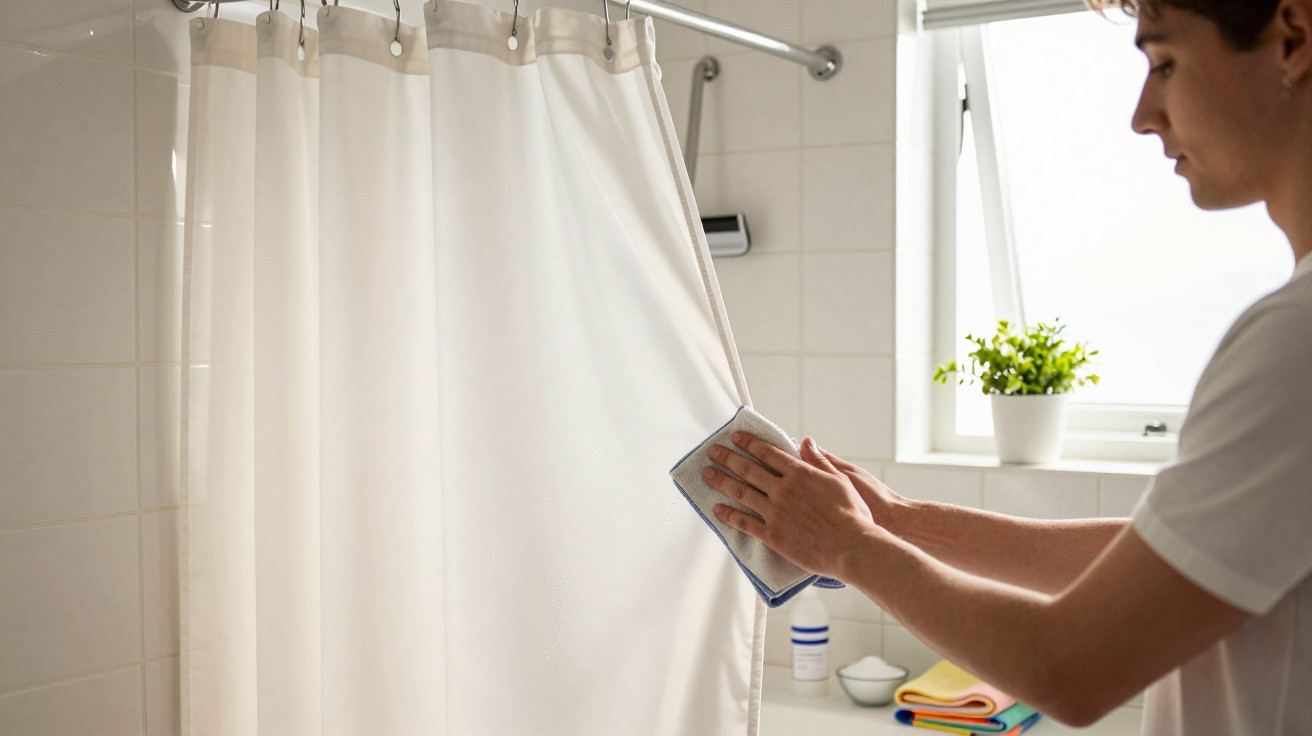
The moment you draw back the shower curtain, you notice it: a faint, sour odour reaching you before the steam has even faded. The plastic clings to your body, its lower edge is slightly darker than before, and pale specks of mildew have quietly appeared along the hem. As you turn on the water, you promise yourself you will sort it out “this weekend” and look the other way. Three weeks later, it is still there.
A shower curtain is an oddly personal thing. It separates the everyday disorder from those ten minutes when you finally have some time to yourself.
When it has a damp smell, though, the entire routine feels different.
Why shower curtains develop a wet-basement smell
Most shower curtains are not unpleasant when you first get them. They come clean and folded, occasionally with a slight scent of plastic and possibility. But then the first showers begin: hot steam wraps around the material, water droplets gather along the bottom, and warmth fills the room. You get out, reach for your towel and shut the bathroom door.
The curtain remains inside, hanging wet and heavy, with little real opportunity to dry. The same pattern happens every day, and tiny unseen spores recognise the ideal conditions.
Think of a student bathroom on a Monday morning: three flatmates taking early showers, all too rushed to open the window. The curtain stays mostly drawn, the extractor fan scarcely works, and its bottom edge constantly sits in the bath where water pools.
By Friday, you can smell it simply walking past the door. It is not a complete mould takeover, only that musty, changing-room-like hint. You spray some fragrance around, light a candle or perhaps open the window for an hour. The odour becomes less noticeable, but never actually disappears; it is simply waiting for the next hot shower.
That persistent damp odour almost always has the same cause: pooled water, inadequate ventilation and a curtain that never gets properly dry. Whether fabric or plastic, the material behaves like a sponge, retaining moisture in its creases and around its hem. The bathroom turns into an ideal microclimate: warm, humid, commonly dark and with hardly any air movement.
Mildew and bacteria live off soap scum, dead skin cells and shampoo residue left on the curtain. What you smell is not merely “wet”; it is that living coating making itself at home. Once you smell it, the process is already well underway.
How to clean shower curtains and remove the damp smell
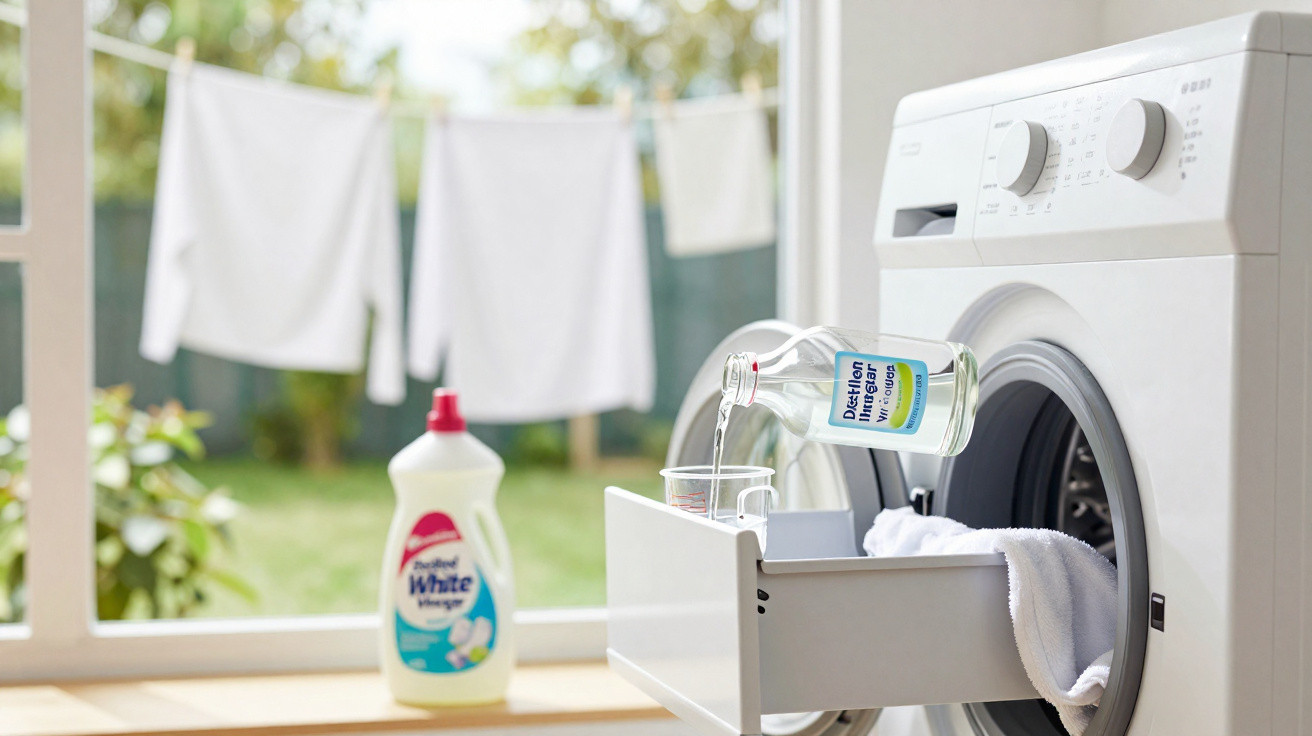
Begin with a proper wash rather than a fast rinse. Remove the curtain from its hooks and check its care label. Most fabric curtains, as well as many plastic or PEVA ones, are suitable for the washing machine. Choose a gentle warm wash, use your usual amount of detergent and add one cup of white vinegar directly to the drum. Put in two old towels too, so they can scrub the surface as the machine turns.
After the cycle finishes, put the curtain immediately back on the rail and allow it to air-dry completely. Pull it fully out so it cannot fold over itself, and wait until it is dry before showering again.
The mistake people make most often is leaving it until the curtain is visibly mouldy. At that stage, they scrub in growing frustration, leaning over the bath with a depressing sponge while the bleach fumes sting. Another common mistake is spraying perfume or “bathroom freshener” over the damp odour in the hope that it will vanish. It will not. You just end up with floral mould.
We have all had that moment of ignoring the brownish line near the bottom because we are already late for work. Honestly, no one truly keeps up with this every day. The answer is to regard the curtain as you would a towel: an item requiring routine, easy maintenance rather than a last-minute rescue operation.
“You don’t need a spotless, hotel-style bathroom,” says an obsessive curtain-washer friend of mine. “You just need a routine simple enough that you’ll actually keep doing it.”
- Wash every 2–4 weeks in the washing machine using detergent and white vinegar.
- Fully pull out the curtain after every shower to let air move around it.
- Raise or reposition the hem so that it is not left in standing water.
- Use the bathroom fan for at least 15–20 minutes after having a shower.
- Keep a spray bottle containing a 50/50 mix of water and vinegar for a quick weekly spray.
- If black spots return fast, replace the liner and inspect your ventilation.
Small daily habits to stop the damp smell returning
The real solution is not an epic deep clean but the little habits that prevent the swampy odour from developing in the first place. Once you have showered, spread the curtain across the entire rail rather than leaving it gathered at one side. That straightforward action changes a wet bundle of material into a single layer that has a chance to dry. Leave the bathroom door ajar, open a window if there is one or switch on the extractor fan.
Those additional minutes of airflow are more useful than any expensive product. A curtain that dries properly almost never smells.
The bottom edge is another easily missed cause: it may be resting inside the bath or shower tray, where water gathers. Alter the height so the hem only brushes the inside instead of lying in puddles. If you share the bathroom, mention that you are trying to prevent the curtain from smelling. It may seem insignificant, but it affects the way others use it.
There is no need to bleach every surface or make your bathroom feel like a laboratory. For controlling moisture and odour, modest, unexciting routines win over intense cleaning sessions every time.
Material also makes a difference. Fabric curtains generally feel better and are easier to wash, whereas inexpensive plastic versions can cling and retain more odour. If your current curtain still smells damp days after being cleaned, upgrading to a washable fabric liner may simply be the right choice.
As soon as you notice the first slight musty smell, see it as an early signal rather than a catastrophe. A quick wash, some vinegar and improved drying habits can refresh the whole space. Your bathroom may never become a spa, but it can at least smell like somewhere you would like to stay rather than flee.
| Key point | Detail | Value for the reader |
|---|---|---|
| Regular washing | Machine-wash every 2–4 weeks with detergent and white vinegar | Prevents damp smells from building up |
| Proper drying | Fully open curtain, keep hem out of standing water, use fan or window | Stops mildew and bacteria from taking hold |
| Simple routine | Weekly quick spray, visual inspections, replace liners when required | Easy habits that keep the bathroom fresh over time |
FAQ:
- How often should I wash my shower curtain? Every 2–4 weeks is best for most homes. If several people shower every day, or your bathroom has poor ventilation, target every 2 weeks instead.
- Can I put a plastic shower curtain in the washing machine? Yes, many plastic or PEVA curtains can be machine-washed on a gentle cold or warm cycle. Include two towels to provide some scrubbing action, then always air-dry the curtain on the rail rather than using a tumble dryer.
- What’s the best way to remove mildew spots? Treat the marks first with equal amounts of white vinegar and water, or use a paste made from baking soda and water. Leave it for 10–15 minutes, gently scrub, then wash the curtain.
- Why does my curtain still smell after washing? It may not be drying completely. Spread it out fully, run the extractor fan and make sure the hem is not sitting in water. When the smell is ingrained and returns soon after washing, replacing the liner may be quicker.
- Are fabric shower curtains better than plastic for odours? Fabric curtains and liners are normally easier to wash and, when cleaned routinely, tend to retain fewer lingering odours. Plastic suits many people, but once it becomes badly stained or scratched, smells can stick to it more persistently.



Comments
No comments yet. Be the first to comment!
Leave a Comment