
Your phone continues to flash, a little rectangle of daytime in your palm, as ceiling LEDs pour an unyielding, chilly white light across the room. You may be worn out, yet your brain is still acting as though it is 3 p.m. in an open-plan office.
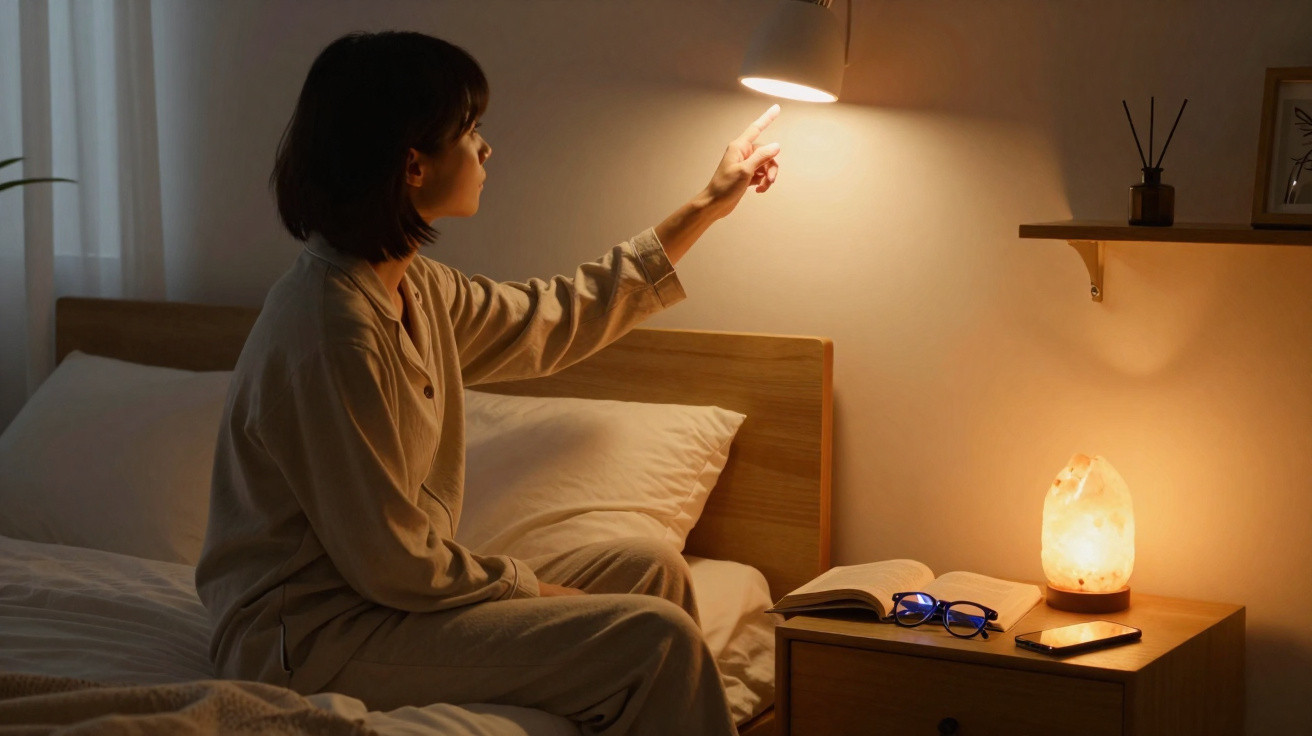
Then the main light is turned down. A corner lamp comes on, glowing warmly, almost amber. Shadows lengthen; the room immediately seems more intimate, quieter and less severe. Without consciously choosing to, you let your shoulders sink a few millimetres. You yawn, not because you are bored, but because something within you has changed pace.
Only the lighting has altered. Yet that small adjustment can subtly reshape your entire evening.
The quiet cue your brain has been waiting for
On most evenings, we jump from emails to Netflix to doomscrolling beneath the same unforgiving ceiling lighting used for cleaning the kitchen or dealing with receipts. Our bodies receive no indication that the day is drawing to a close. The space remains in “action mode”, and we do too.
Ambient lighting works in the reverse direction. It blurs hard edges, reduces contrast and changes a room from a place of work into a cocoon. Rather than relying on a single powerful overhead fitting, it creates small pools of illumination: a lamp near the sofa, a strip behind the television or a candle flickering on a shelf. In the best sense, the atmosphere becomes richer. You do not feel instructed to unwind; you simply begin to drift that way.
Biologically, this goes beyond decoration. Bright, cool light signals to your brain: remain alert, continue producing cortisol and hold back melatonin. Dimmer, warmer lighting is more like a murmur in the background of your thoughts: it’s getting late, time to slow down. Filling your evening with gentle amber or soft pink tones is not about being extravagant. It gives your circadian rhythm a clear but kind message.
Picture a compact flat at 8.30 p.m. in late autumn. Streetlights blur across the windows outside. Indoors, a low-standing lamp is the only light on, its glow collecting around the base of an armchair. Beneath the kitchen cupboards, a strip light gives off subdued honey-coloured light. The laptop has been shut and moved to one side of the table. A couple scroll through their phones, yet their voices are softer, their sentences more measured and their hands less animated.
Their timetable has not changed. It is still the same job, commute and inbox. The difference lies in the way the room is illuminated. This kind of ambient cocoon carries genuine influence in day-to-day life. In surveys conducted by sleep foundations, those who say they dim their lights and screens during the final hour before bed are often also those who get to sleep more quickly and wake less during the night.
Most of us know the hotel-room scenario: flimsy curtains, a punishing overhead light and a television throwing blue light over the bed. Your body remains switched on, as if you are trying to sleep in an office. Compare that with a guest house offering low, gentle bedside lamps, perhaps fitted with a warm filament bulb. You settle into that type of room without being told how. Your system understands the message the lighting is sending.
It makes logical sense. Human brains developed beneath sunsets rather than LED panels. As daylight faded, light became warmer in spectrum while its overall intensity declined. Melatonin would rise, eyelids would grow heavy and the village would become still.
Modern homes disrupt this sequence. We have fitted miniature suns into our ceilings and keep them blazing until it is time to brush our teeth. At 11 p.m., bright white lighting says: stay awake. Using ambient lighting is therefore a way of returning to that older rhythm. By switching off overhead lights and leaving only low, warm points of illumination, you make a small artificial sunset in your sitting room.
That is why “relaxation lighting” can feel unexpectedly potent. It is not merely about atmosphere; it is about timing. A room that slowly softens at around 9 p.m. tells your body that night is more than a number on the clock - it is an environment. And it is more difficult to resist an environment than an alarm on your phone.
How to make ambient lighting part of your evening ritual
Begin by choosing a single point in your evening to connect with a lighting change. Do not choose five tasks or try to build a flawless routine. Pick one cue. For plenty of people, that moment comes after dinner: the plate goes into the sink, the overhead lights go off and the lamps come on. It is the turning point at which “doing” gradually becomes “winding down”.
Opt for two or three sources of warm light rather than one intense fitting. Put a table lamp in a corner and a floor lamp behind the sofa. You could also place an LED strip behind a shelf or television, set to muted amber or dim gold. Position them at eye level or lower, allowing the glow to spread sideways rather than descend from above. That one adjustment can make a sitting room resemble a lounge rather than a boardroom.
If small rituals appeal to you, attach them to the light: light a candle when opening a book, switch on fairy lights when putting your phone aside, or turn on a salt lamp while making herbal tea. These small “switches” are not so much about spirituality as training your brain to understand: this is what we do now, and nothing else.
Many people purchase smart bulbs but never alter their settings. The standard white light remains in use throughout the year, like a permanently lit supermarket aisle. Others hold out for the “perfect” lamp and, meanwhile, continue living beneath the harsh glare of the main fitting. Let’s be honest: nobody really does that every day.
When you are exhausted, planning the ideal ambient lighting scheme can seem like another job. Take it slowly instead. Even one lamp counts as a win. If your partner prefers strong light for reading, meet in the middle: retain one targeted reading lamp while dimming the rest of the room. The aim is not an Instagram-ready sitting room; it is a nervous system that no longer assumes it is midday.
A frequent mistake is making the room too dark too quickly. When it is almost black, your eyes work harder and you may reach for your phone simply to get “a bit of light”. Lower the brightness in stages instead: use medium lighting after dinner, then make it softer an hour later. Offer your senses a staircase rather than a cliff edge.
“When the light changes, the conversation changes. People drop their shoulders, speak a little slower, and remember to breathe,” confided an interior designer who secretly judges every overhead light she meets.
For busy evenings, focus on straightforward actions rather than full design projects.
- Turn off the ceiling light after 8 p.m., apart from in the bathroom or hallway.
- Fit bulbs marked 2700K or “warm white” in lamps you use during the evening.
- Place at least one light behind you rather than directly in your face, such as a lamp behind the sofa.
- Set one “signal” colour on smart bulbs - soft amber or pale peach - to mean: nearly bedtime.
- Connect lighting shifts to habits already in place: television off, lamp on, phone in aeroplane mode.
Let your evenings use a different language of light
Once you begin experimenting with ambient lighting, evenings may seem oddly more spacious. This is not because you go to bed later, but because the changeover is no longer abrupt. There is more texture between “working” and “sleeping”. You gain a small stretch of time in which nothing is urgent, while the light quietly reinforces that feeling.
That stretch is delicate. One email or one bright kitchen light flicked on for “just a second” can send your brain straight back into forward gear. This is why some people see their lighting as an agreement with themselves: after 9 p.m., only gentle lamps and no overhead lights. It is not a punishment, but a means of guarding the slow space in which the day finally responds to you, rather than the reverse.
After a difficult day, you may still find yourself scrolling TikTok beneath a warm bulb. Even so, your eyes are likely to sting less, your jaw may be less tense and your heart rate a little lower. The body follows the script written by light, even while the mind is elsewhere. That is the understated strength of this approach: it can still be helpful without perfect discipline.
Ambient light will not resolve insomnia caused by severe anxiety, chronic pain or shift work. No lamp can bargain with a 4 a.m. alarm. However, many of us are working against our biology every night under unsuitable bulbs. Altering that does not require a complete life reset. It takes a few switches, used at the right moment and in the right parts of the room.
Read on a screen, this may sound like another lifestyle improvement to chase. In practice, it is far more modest: an inexpensive yellow-toned bulb, a second-hand lamp or perhaps a timer plug. It is a small rebellion against the belief that every room needs enough brightness to film an advert. It is also a quiet invitation to your brain: perhaps tonight, we can arrive a little more gently.
Ambient lighting is about consent more than aesthetics. It softly asks your body: ready to call it a day? On some nights, the answer will remain no. There are emails, children and life. On other nights, the warm halo in a corner will feel like a hand on your shoulder, leading you towards bed without saying anything.
The approach lies in the details: when the light changes, how many sources you use, their colour and the way they reflect from your walls. It is an art, but it is also a collection of simple, almost mundane choices that build into something remarkably gentle. When sleep comes more easily, you may not credit the lamps. When it does not, you may suddenly see how severe the ceiling light looks and switch it off with a small, weary laugh.
We have all experienced the moment when party lights come on at the end of the night and everything abruptly feels too loud and too real. Evening ambient light does the opposite: it is a slow dimmer for your day, an exit that does not bang shut. It is neither magic nor a cure-all. It is simply a way to tell yourself, through the quiet language of shadow and glow: you are allowed to unwind now.
| Key point | Detail | Benefit for the reader |
|---|---|---|
| Gentle signal for the brain | Warm, dim evening light supports melatonin production and relaxation | Understand why you feel calmer and more ready for sleep |
| Simple, practical ritual | Turn off the ceiling light after dinner and switch on 2–3 warm-light lamps | Have an easy method to introduce without changing your entire routine |
| Cumulative small changes | Use low lamps, a recurring colour and stepped levels of brightness | Transform the evening atmosphere and sleep quality over time |
FAQ
- Which light colour is best in the evening? Choose warm white at around 2700K or lower. Amber, soft gold or even a very subtle pink is better than cool white or blue-toned lighting for signalling relaxation.
- Do I need smart bulbs to create ambient lighting? No. Two inexpensive warm bulbs in floor or table lamps can already make a substantial difference. Smart bulbs simply make timing and colour easier to automate.
- How long before bed should I dim the lights? Try to allow at least 60 minutes of softer, warmer lighting, or 90 minutes if falling asleep is often difficult for you. Treat it as a runway rather than an on-off switch.
- Can I still watch television with ambient lighting? Yes, but use a gentle backlight behind or close to the screen and avoid watching in complete darkness. Reduce the television brightness slightly so it is not blasting your eyes.
- What if my partner prefers bright lights at night? Create zones: give them one focused bright lamp and keep softer lamps in the rest of the room. Frame it as an experiment in sleep quality rather than a battle over taste.






Comments
No comments yet. Be the first to comment!
Leave a Comment