
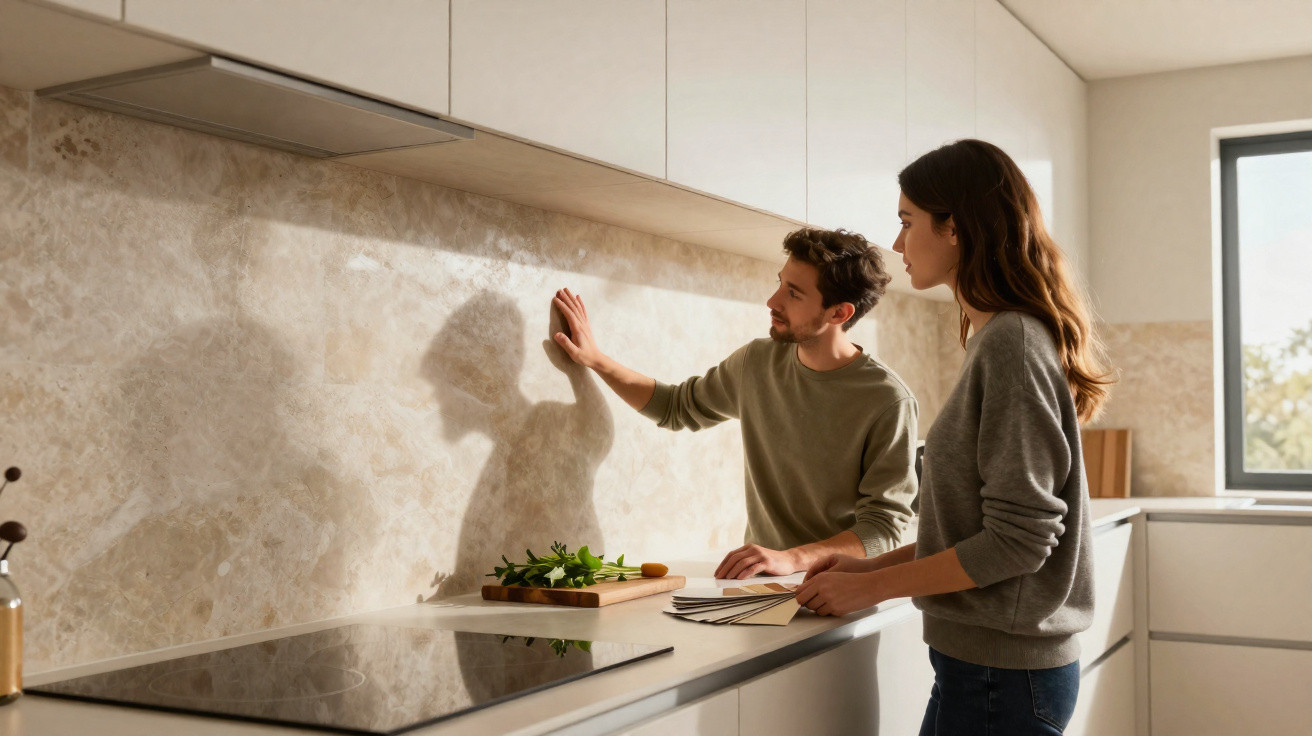
Anyone planning a new kitchen or considering an upgrade is increasingly likely to encounter one term: seamless wall covering. Rather than traditional tiles with visible grout lines, the worktop and splashback rise upwards as though formed from a single piece – smooth, calm and almost like a solid block of stone. Although it may sound like a design-showroom feature, it is now finding its way into everyday family kitchens, as appearance, maintenance and durability work remarkably well together.
Why kitchen tiles are suddenly starting to look dated
For decades, tiled splashbacks above worktops were regarded as the standard choice. They were durable, reasonably affordable and reassuringly familiar. Yet the look of numerous small grout lines is becoming less compatible with current interior trends. Many homeowners want cleaner lines, less visual clutter and surfaces that can be cleaned quickly.
Grout runs counter to that contemporary preference: it discolours, cracks, and collects dirt and grease even when maintained carefully. In open-plan kitchens that flow into the living area, these small-scale surfaces can also soon appear busy.
The new kitchen look for 2026: a calm, uninterrupted wall surface with no breaks – from the hob to the extractor hood.
This is precisely where seamless wall covering comes in: large panels or poured surfaces replace the patchwork effect of tiled walls. The area behind the worktop remains practical, but looks considerably more orderly.
The “monolith effect”: one material, one look, one sense of space
Designers often refer to a “monolithic” effect. In other words, the worktop and splashback visually appear to be made from one material, with no edges or interruptions in the pattern.
More space, more light, less clutter
A continuous surface makes a kitchen feel larger, even in compact rooms. Rather than being stopped by grout lines, the eye travels across one uninterrupted plane. This creates a noticeably calmer effect, particularly in narrow kitchens.
- the surface reflects light more evenly
- colours and veining are shown to greater advantage
- wall cabinets, shelving and lighting become more prominent
Subtle natural shades in particular – such as pale beige, sand, warm stone greys or a restrained marble look – feel especially high-end in this application without appearing cold. Paired with timber cabinet fronts, they create a warm, inviting atmosphere suited to long evenings of cooking and family breakfasts.
Materials suitable for seamless kitchen walls
The trend depends not only on the concept, but also on modern materials. The main options include:
- Quartz and quartz composites: highly robust, resistant to staining and available in many understated plain or stone-effect finishes.
- Dekton and other ultra-compact surfaces: exceptionally heat- and scratch-resistant, making them well suited to the area behind the hob.
- Natural stone such as marble, granite or quartzite: each has distinctive veining and an elegant appearance, but requires careful sealing.
- Resin and solid-surface materials such as Corian or Hi-Macs: can be shaped with minimal or no joins and feel pleasantly warm to the touch.
- Newer composite panels made from ceramic and engineered stone: comparatively slim yet stable, with highly realistic stone or concrete effects.
Many of these materials are available both as worktops and wall panels, making them ideal for creating the monolith look without major changes in material.
Everyday test: how practical are seamless kitchen walls really?
Easier to maintain than tiles – especially over time
The greatest benefit becomes clear in day-to-day use: the area behind the hob and sink is splashed during every cooking session. Where grease and tomato sauce once lodged in grout, a damp cloth will now usually do the job.
No more scrubbing porous grout – one wipe and the surface looks as good as new again.
Many panels withstand standard household cleaners and absorb hardly any odours. With heat-resistant materials, it may even be possible to place hot pans briefly against the splashback without causing damage – although the individual manufacturer’s specification is important here.
Hygiene and longevity
As far fewer deposits can build up, the walls stay not only more attractive but also more hygienic. This becomes apparent particularly quickly in family kitchens where cooking is frequent, or in kitchens with islands used as breakfast bars.
Another consideration is that many seamless systems last for decades when correctly planned and installed. With some solid-surface materials, scratches and minor damage can even be sanded down and polished again.
A design playground for walls: colours, textures and finishes
From velvety matt to stone-like texture
Seamless does not automatically mean dull. Manufacturers are currently making extensive use of texture and finish:
- Gently textured surfaces feel less cold than mirror-smooth panels and work well in Scandinavian-inspired kitchens.
- Ultra-matt options are on trend because fingerprints are less apparent and light is reflected more softly.
- Slightly glossy, satin finishes offer a balance between easy care and an elegant appearance.
Colour trends are clearly moving towards earthy, mineral tones: brick-red-inspired shades, warm greige, deep anthracite and muted greens. In white kitchens, a dark seamless wall covering creates an elegant contrast; in timber kitchens, pale stone effects look calm and timeless.
How professionals plan a new splashback
Architects and kitchen studios pay particular attention to transitions: where does the panel finish at the sides? How does it terminate beneath wall cabinets? Is it taken up to the ceiling, or only to the lower edge of the upper cabinets?
| Option | Effect |
|---|---|
| up to the lower edge of wall cabinets | classic look, less material, more affordable |
| up to the ceiling | the calmest possible appearance, feels particularly high-end |
| only behind the hob | a focused feature, ideal for a partial refurbishment |
A partial solution is especially suitable for existing kitchens: remove the old tiled splashback and fit a large-format panel, while leaving the worktop in place initially. When upgrading later, the material can then be matched.
Planning and costs: what homeowners should consider
Steps from initial idea to finished wall
Careful planning is worthwhile so that the seamless look is not compromised by sockets or awkward recesses. The typical process is as follows:
- Clarify requirements: cooking habits, willingness to maintain the surface and the desired style.
- Choose the material: view samples in the actual kitchen setting, not only in the showroom.
- Arrange precise measuring appointments: including cut-outs for sockets, light strips and window reveals.
- Have it installed by a specialist: this is essential, especially for heavy stone or Dekton panels.
Those with DIY experience can sometimes install lighter composite panels or certain resin systems themselves. However, a professional will generally achieve better results where perfect joins, invisible bonding and precisely fitted cut-outs are concerned.
Price range and common mistakes
Seamless splashbacks are clearly part of the higher-end specification. Depending on the material and finish, several hundred pounds per linear metre is realistic, with branded stone or specialist surfaces costing more.
Typical pitfalls include:
- panels that are too thin and may flex over large spans
- inaccurate measuring – every discrepancy is clearly visible
- poor preparation of the substrate, for example old plaster or remaining tiles
- pairing the wall covering with very inexpensive worktops that cannot match it visually or in quality
Anyone already planning a new kitchen should always consider the wall panel and worktop as one unit. This creates a coherent overall impression that will remain contemporary for longer than the next fashionable high-gloss or on-trend coloured cabinet front.
How the trend can be combined with other kitchen ideas
Seamless walls show their greatest strength in open-plan layouts. The kitchen feels less like a workspace and more like part of the living room. Combined with warm timber fronts, dimmable lighting and a small number of well-chosen decorative elements, it creates a room suitable both for cooking and working from home.
The trend is also interesting from a sustainability perspective: choosing long-lasting materials means renovating less often. Natural stone, high-quality composites and ultra-compact surfaces in particular often last significantly longer than fashionable cabinet colours or cheap laminate worktops. Investing in these materials places the emphasis on lasting quality rather than short-lived visual impact.
There is another aspect that many people only notice once they start using the kitchen: a simple, calm wall is less distracting. Spice shelves, open shelves displaying attractive plates or designer lights stand out far more clearly. The kitchen becomes a stage, while the wall serves as the quiet backdrop that holds everything together.



Comments
No comments yet. Be the first to comment!
Leave a Comment