
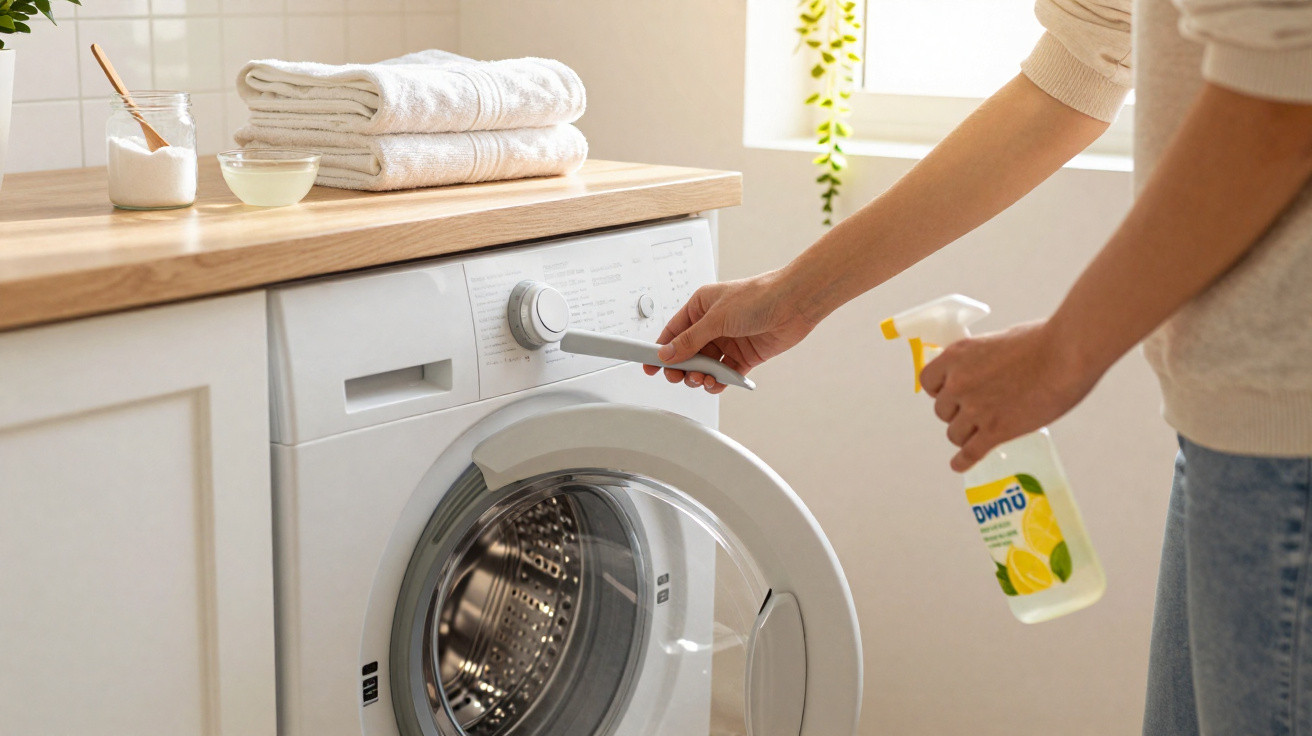
Persistent smells on laundry can sometimes come from an overlooked area: the flexible seal around the drum.
Moisture, detergent residue and limescale can quickly turn a washing machine into a favourable environment for bacteria and mould. Regular maintenance stops the appliance from passing an unpleasant smell on to freshly washed clothes.
The washing machine door seal traps moisture and dirt
The door seal requires particular care. This rubber component has several folds that can collect water, textile fibres, hair and product residues. Over time, grey or black marks may develop, usually indicating mould.
This is not merely a cosmetic issue. A poorly maintained machine can produce a musty smell, even after a hot wash. That odour can then cling to towels, sportswear or laundry left in the drum for too long.
When black marks appear in the folds of the seal, the area needs treating, while allowing enough contact time for the product to work.
One approach is to soak pieces of kitchen roll or small cloths in bleach, then tuck them into the dirtiest folds. This keeps the product directly against the marks rather than letting it run straight into the machine.
A slow treatment over several hours
Take care when preparing this treatment. First open the door, gently pull back the seal folds and identify the stained areas. Place the soaked paper or cloth pieces only where deposits can be seen.
Leave them in place overnight, with the door open and the room well ventilated. The following day, remove the used pieces and wipe the seal with a damp cloth. Rinse it several times so that no product remains on the rubber.
- Put on household gloves before handling bleach.
- Open a window or thoroughly ventilate the utility room.
- Never mix bleach with vinegar, ammonia or a limescale-removing product.
- Keep children and pets away while cleaning.
- Check the appliance manual if the seal is delicate, cracked or already misshapen.
Bleach is a powerful product. It can fade certain fabrics and irritate the skin or respiratory system. Where marks are minor, cleaning with mild soap and drying thoroughly may be enough. If mould is firmly established, targeted treatment often delivers better results.
The drum also needs an empty maintenance wash
The seal is not the only part affected. During every cycle, the drum receives water, detergent, dirt particles and sometimes too much fabric conditioner. These residues form an invisible film that feeds unpleasant odours.
An empty maintenance cycle is advisable once a month, especially in households where the machine runs several times a week. A 60-degree programme helps sanitise the inside of the drum and the parts of the system reached during washing.
For a drum that leaves marks or an odour on laundry, two cups of white vinegar in an empty 60-degree cycle can help loosen deposits.
White vinegar can reduce limescale marks, but it should be used sparingly. Manufacturers particularly advise against combining it with bicarbonate of soda in the same cycle. Their reaction creates foam and may look impressive, yet it lessens the effectiveness of both products. Repeated use of this method may also wear some seals and components.
Using one product at a time is enough. If your appliance has a dedicated maintenance programme, use that in preference. Washing machine cleaners are another option, provided the quantity stated on the packaging is followed exactly.
Everyday habits that prevent odours from returning
The most effective maintenance is carried out routinely, rather than waiting for marks to appear. After each wash, leave the door slightly open for a few hours. This allows air to circulate, moisture to escape and makes mould less likely to develop.
The detergent drawer also needs regular attention. Remove it, where the model allows, and rinse it with hot water. An old toothbrush can reach the small compartments where liquid detergent and fabric conditioner create sticky build-up.
- Wipe the seal after particularly wet loads, such as towel or bedding cycles.
- Take laundry out of the drum promptly when the programme has finished.
- Avoid overdosing detergent, as excess product does not always rinse away properly.
- Clean the drain filter at the frequency specified by the manufacturer.
- Run a hot maintenance cycle roughly once a month.
Useful advice for everyday laundry
A clean washing machine also improves washing results. To help white laundry retain its brightness, oxygen bleach can be added to detergent on a 40-degree programme, following the recommendations on the product. It helps limit the gradual yellowing of fibres without routinely relying on bleach.
Shirt collars, make-up marks and grease splashes often need pre-treatment. A few drops of washing-up liquid applied to the dry area and rubbed in gently before machine washing can help remove greasy substances. Always test on an inconspicuous area first when dealing with delicate or coloured fabrics.
Why towels become rough
Towels lose their softness when cotton fibres build up detergent and fabric conditioner. Conditioner leaves a thin coating that can initially feel soft, but gradually reduces the fabric's absorbency.
To prevent this, use less fabric conditioner and do not overfill the drum. Towels need room to rinse properly. Better-rinsed laundry is also less likely to smell damp, reducing repeat washes and the overall build-up inside the appliance.






Comments
No comments yet. Be the first to comment!
Leave a Comment