
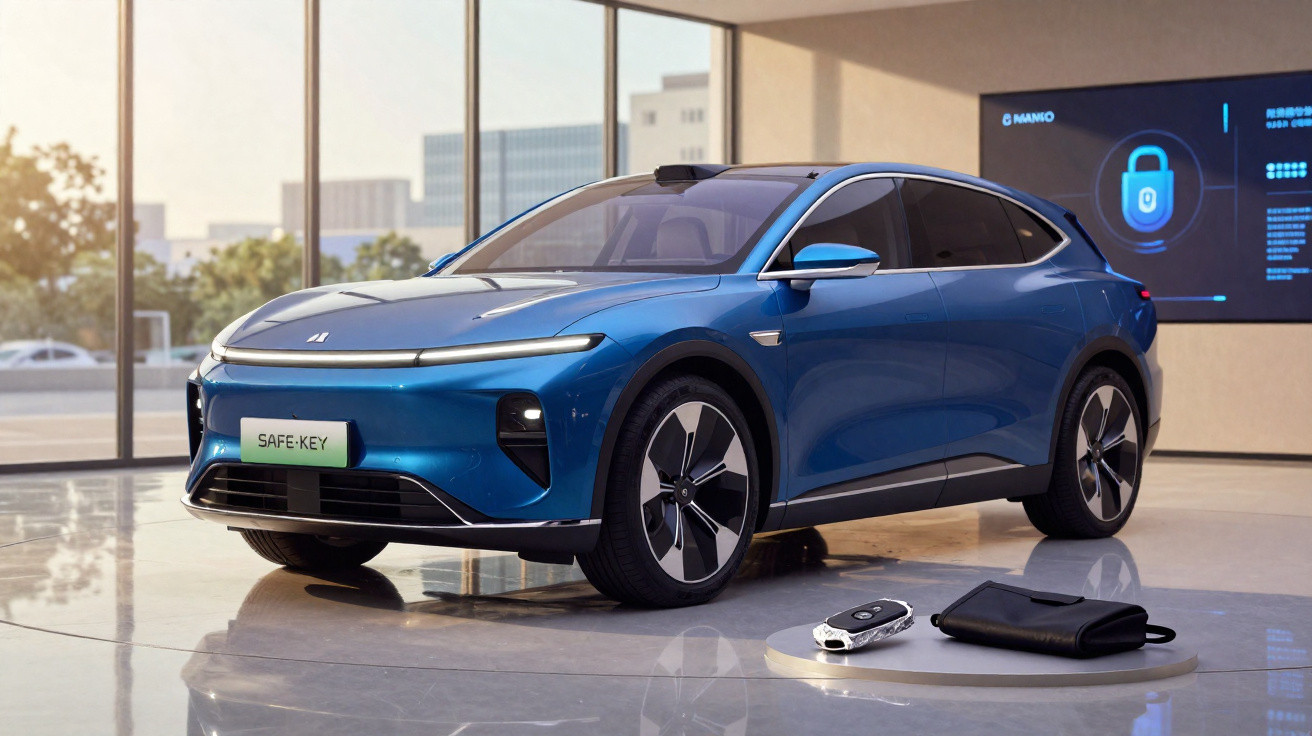
A very serious problem lies behind it.
At first glance, it may seem like an odd internet tip. Yet anyone who unlocks their car with a remote key or starts it at the press of a button is a popular target for modern car thieves. A thin sheet of aluminium foil can significantly reduce precisely this vulnerability – provided you understand how the method works and what else you should do.
Remote car keys often make things far too easy for thieves
Keyless systems have made everyday life more convenient: the key stays in your pocket, while the car detects it automatically and unlocks or starts. Communication takes place by radio, usually at frequencies around 315 or 433 megahertz. For thieves, that is exactly what makes these systems so appealing.
The most common attack is known as a “relay attack”. It involves two offenders working together:
- One stands close to the front door or flat entrance, where the key is kept in the hallway.
- The other waits beside the car.
- They use a signal-boosting device to extend the key’s radio signal.
- The car “believes” that the key is right next to it – the doors unlock and the engine starts.
Nobody needs to touch the original key during this process; it remains inside the home. On a driveway or street, it looks like an entirely ordinary vehicle start. Many victims do not realise their car has gone until the following morning.
Another approach involves so-called signal or code grabbers. These record the radio communication when a driver locks or unlocks the vehicle, then attempt to misuse the data later. Such devices are becoming cheaper and can be obtained relatively easily through indirect channels.
“Thieves no longer need a screwdriver today – a radio signal booster is enough to steal many modern cars in just a few seconds.”
Anyone who cares about their vehicle therefore cannot rely solely on convenience features, but needs a plan to counter these digital attacks.
Why aluminium foil really shields a remote car key
The aluminium-foil trick may initially sound like advice from the tinfoil-hat brigade, but it is based on sound physics. The key principle is the so-called Faraday cage.
The science behind the Faraday principle
A Faraday cage is an enclosure made from conductive material – usually metal – that shields electrical and electromagnetic fields from both inside and outside. When radio radiation hits this enclosure, the resulting currents travel along its surface. The space within remains radio-silent.
This is exactly what happens when you carefully wrap a remote car key in aluminium foil:
- Aluminium conducts electricity very effectively.
- Radio waves are reflected by the foil or travel along its surface.
- The signal can no longer pass from the inside to the outside – or in the opposite direction.
The key can therefore neither transmit nor receive a radio signal. Signal boosters and code grabbers then simply have nothing to intercept.
“When used correctly, a piece of aluminium foil creates complete radio silence – making the key practically invisible to car thieves.”
How to wrap the key properly
For the protective effect to work, a half-hearted attempt is not enough. A few straightforward but important steps matter:
- Wrap the entire key, including its plastic casing, without leaving any gaps.
- Use two to three layers of foil to compensate for small tears or creases.
- Press down the edges firmly so that no openings remain.
- Test it immediately: ideally, stand close to the car and try to unlock the doors or start the engine.
- Replace the foil regularly, as it can tear and become creased over time.
Standard household aluminium foil is generally sufficient to substantially weaken the usual remote-car-key frequencies. The shielding works regardless of make or model – whether it is a small car, SUV or executive vehicle makes no difference.
Those seeking a more convenient and durable option can choose dedicated RFID protective pouches or boxes. They use the same Faraday principle, but look tidier and are sturdier. They do, however, cost more than a piece of kitchen foil.
Where the key should really be kept at home
Where you leave the key indoors matters more than many people assume. If it is kept directly beside the front door, burglars may only need to walk past briefly with equipment in a backpack.
Useful rules at home include:
- Do not store keys by external walls, windows or front doors.
- Keep them as close to the centre of the flat or house as possible.
- Use a metal container, such as a robust tin or small metal box.
- Ensure every family member uses the same storage location.
In homes with more than one car, a single forgotten key left on the hallway coat stand can undermine every other precaution. A fixed routine – for example, placing every key in a metal box deeper inside the hallway when arriving home – noticeably reduces the risk.
Why combining measures makes the most sense
Aluminium foil or an RFID box addresses one core problem, but neither is a cure-all. The best way to protect a vehicle is to use several layers of security.
Traditional deterrents still work
Mechanical aids may seem old-fashioned, but they remain surprisingly effective. Typical options include:
- A steering-wheel lock or pedal lock
- Visible alarm systems, flashing LEDs and stickers
- Parking in well-lit, busy locations rather than dark corners
Thieves always look for the easiest option. Simply suggesting that extra effort or noise will be involved is often enough to make them move on to the next, less well-protected car.
Using electronic aids correctly
Many cars leave the factory with sophisticated security equipment, including immobilisers, tilt and interior sensors, and GPS trackers. The issue is that hardly anyone ever checks whether these systems still work correctly.
A brief inspection at a garage or with an automotive electrician usually costs little, but can reveal faults or incorrect settings. Anyone who travels frequently or lives in an area with high vehicle-theft rates can have an additional GPS tracker installed. This improves the chance of recovering a stolen vehicle.
Many manufacturers now also allow the passive keyless function to be disabled in the settings. The car can still be unlocked by radio, but the purely proximity-based start without actively pressing a button is removed. Anyone able to forgo that level of convenience can effectively shut down the classic relay attack.
What the technical terms mean – briefly explained
Specialist radio-technology terms repeatedly arise in discussions about car theft. Drivers encounter two of them particularly often.
- RFID: This stands for “Radio-Frequency Identification”. It refers to small chips that can be read by radio; the technology is found in modern car keys, bank cards, identity documents and much more.
- Faraday cage: A metal enclosure that blocks radio waves. A car itself is already partly such a cage, but radio signals for convenience features are deliberately allowed to enter and leave it – and that is exactly what thieves exploit.
Understanding these basics makes it much easier to judge new security advice and less likely that you will fall for pointless or overpriced products.
Practical examples: everyday security with a remote car key
A realistic level of protection can be achieved through a few set habits that soon become second nature. One possible daily routine is:
- While out: Keep the key in a trouser pocket or handbag, rather than leaving it on a café table.
- When refuelling or shopping: Check the car visually, lock it deliberately and briefly confirm that the doors are actually shut.
- On arriving home: Take the key out of your jacket, place it in aluminium foil or a protective pouch, and put it straight in its designated storage place.
- Once a month: Check that the alarm system works, inspect the key’s battery level and replace the foil.
Anyone who also deactivates the passive keyless function and uses visible mechanical security devices makes their vehicle unattractive to most offenders. Crime can never be prevented completely, but these steps substantially increase the effort required even for professionals.
Ultimately, the convenience of keyless systems comes at a price, but motorists are not powerless. Spending a few seconds with a piece of aluminium foil, establishing clear household storage habits and using a handful of well-considered security measures can significantly lower the risk – and make it highly likely that the car will still be where it was parked the night before.






Comments
No comments yet. Be the first to comment!
Leave a Comment