
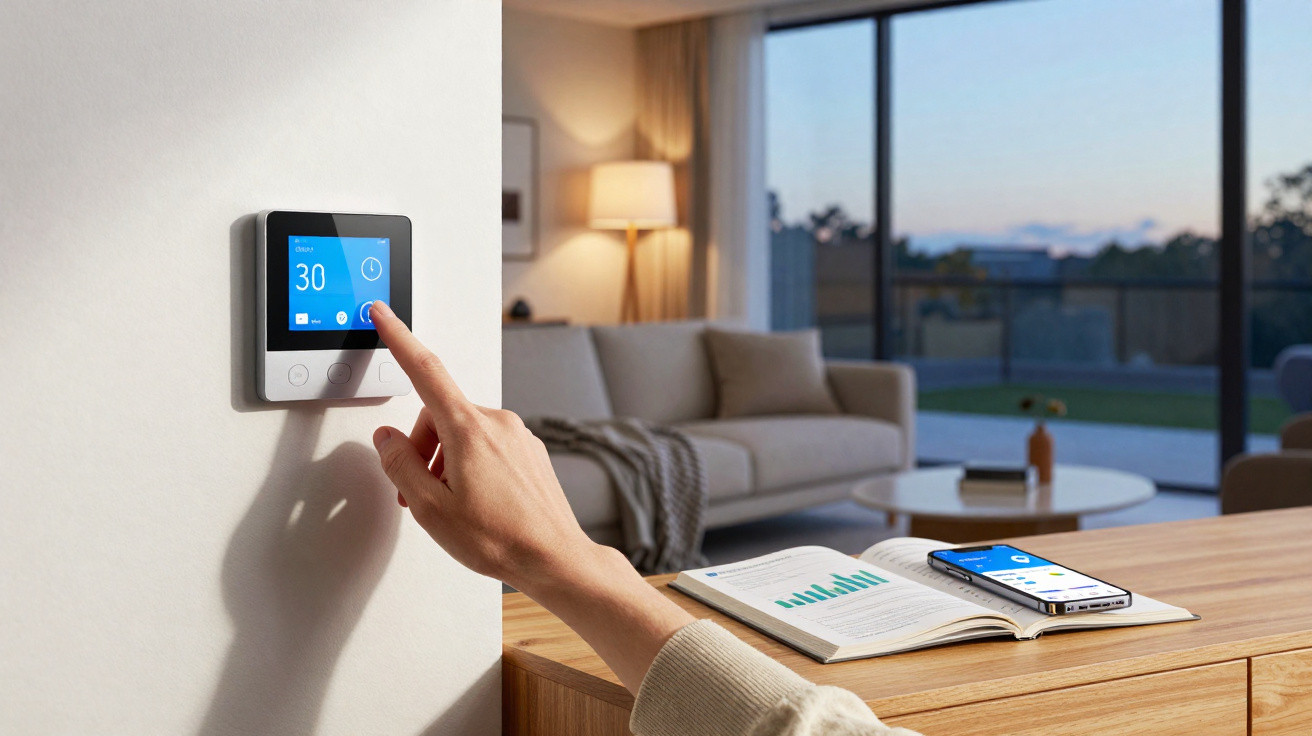
When there is a prolonged hard frost outside, heating seems to run around the clock in many homes – and electricity bills soar.
Many people turn up the thermostat without thinking, especially before leaving for work in the morning and when they get home in the evening. It may seem sensible, but it is often the worst possible timing for household finances. Energy experts explain how two carefully chosen time slots can significantly reduce heating costs without leaving anyone shivering in a jumper in front of the television.
Why heating times make such a difference
During the heating season, electricity use rises sharply in the mornings and evenings. This is when heating systems, cookers, hot-water boilers, washing machines and often electric cars are all in use at once. At precisely these times, many households react in the same way: they turn the heating up fully to make the home feel comfortable quickly.
That puts them right in the middle of the national peak in electricity demand. At this point, power is particularly sought after, generating stations must increase output and reserve capacity is brought online. These peak periods have consequences in two areas: for individual bills and for grid stability.
“Those who heat at the same time as everyone else generally pay more and place the greatest strain on the grid.”
These peaks can become especially expensive with time-of-use electricity tariffs or future dynamic tariffs. At the same time, grid operators may issue calls to reduce consumption when demand rises too steeply. The aim, therefore, is to schedule heating so that it operates just before these peaks rather than in the middle of them.
The two ideal time windows for lower consumption
Energy professionals advise concentrating heating output into two clearly defined periods. This keeps the home comfortably warm while spreading electricity consumption more efficiently.
1. Morning: heat shortly before the main rush
Many people only switch on the heating when their alarm goes off and they get out of bed. That puts them directly into the main demand period, between 7 am and 9 am. Starting a little earlier is the smarter option.
“Ideally, run the heating between 6.30 am and 7.30 am – before nationwide demand reaches its peak.”
The principle is simple: rooms have time to warm up before cookers, showers and thousands of other radiators contribute to the shared peak. The temperature will then usually remain comfortable enough while you have breakfast and get ready.
2. Evening: maintain moderate heat instead of turning it up sharply
The same applies after work. The familiar scenario is arriving home, feeling slightly cold and turning the thermostat right up. The result is a short but highly intensive heating period during hours when the grid is already under considerable strain.
A different approach is recommended:
- start heating at around 5.30 pm
- maintain a continuous, moderate temperature until about 9 pm
This allows the heating to work evenly instead of running at full power to warm the space quickly. Rooms retain the heat, and the grid is not burdened any more than necessary.
Adjust heating habits intelligently for everyday life
The good news is that no one needs to completely reorganise their daily routine to make this change. Much of it can be managed with technology already installed on the wall in many homes: the programmable thermostat.
Most modern controls allow precise times and temperatures to be set for every day of the week. Anyone who spends a little time configuring them can relax afterwards.
Practical steps at a glance:
- Adjust the morning heating schedule: Set the heating period for 6.30 am to 7.30 am, rather than starting at 7 am or later.
- Begin the evening period early: Start with slightly increased output at 5.30 pm, then limit it to a comfortable, consistent temperature.
- Avoid major temperature changes: Rather than jumping from 18°C to 23°C, maintain a moderate temperature of around 20°C.
- Heat only rooms that are being used properly: Keep the living room and home office pleasantly warm, while hallways and guest rooms can be cooler.
“Consistent, well-planned warmth uses less energy than constantly turning the thermostat up and down.”
According to various calculations, intelligent programming and slightly lower temperatures can cut heating costs by up to 15 per cent – a noticeable amount over the course of a year.
What the ideal temperature means for household finances
Timing is one lever; the room temperature selected is another. Many homes are simply overheated. Each degree reduced saves an average of around six per cent of energy, particularly during longer heating periods.
| Room | Recommended temperature |
|---|---|
| Living room | 19–21°C |
| Bedroom | 16–18°C |
| Kitchen | 18–19°C |
| Bathroom (when in use) | 21–23°C |
| Hallway, ancillary rooms | 16–18°C |
Combining these guideline temperatures with the recommended time windows creates a double saving opportunity: fewer kilowatt-hours used and less exposure to the most expensive demand peaks.
How building type and technology affect the result
Not every home responds in the same way to changed heating times. An older house with little insulation cools down far faster than a modern low-energy building. The heating system itself also matters.
Slow-response systems versus fast heaters
Underfloor heating and solid walls retain heat for a long time, but they respond more slowly. With these systems, it is worth setting the heating to start slightly earlier so that the desired temperature is reached at the right time.
Electric direct heaters and infrared panels, by contrast, provide warmth almost immediately but also lose it more quickly. More precise timing makes sense here, potentially in shorter intervals as well.
Smart-home technology helps with fine-tuning
Anyone using smart thermostats can turn the proposed time windows into automated schedules relatively easily. Some systems incorporate weather data or electricity tariffs and adjust heating periods dynamically. This makes it possible to shift the morning or evening phase slightly when particularly cold days or specific tariff models are expected.
Further ways to reduce heating costs
Alongside the time windows, several small everyday measures can strengthen the effect. Many cost very little but deliver lasting benefits.
- Do not obstruct radiators with furniture or curtains, so heat can circulate freely.
- Air rooms fully for five to ten minutes instead of leaving windows tilted open for long periods, particularly during heating phases.
- Check seals around windows and doors, and use draught excluders on older doors.
- Close shutters and curtains at night to reduce heat loss.
People who rent can at least replace thermostat valves and fit a programmable controller. For homeowners, it is worth reviewing insulation and the condition of the heating system, for example when an upgrade is already planned.
Why mindful heating pays off in several ways
Many households are worried about their next heating bill. The time windows described provide straightforward guidance on how to make noticeable savings without sacrificing comfort. Those who heat a little earlier in the morning and maintain an even temperature in the evening rather than turning it up abruptly benefit from a less stressed grid and, in many cases, lower costs.
At the same time, every kilowatt-hour saved reduces an individual’s CO₂ emissions. During particularly cold weeks, many small choices add up to a substantial effect – both for household finances and for wider security of supply. Managing heating sensibly not only keeps a home warm but also brings a little more stability to the entire system.






Comments
No comments yet. Be the first to comment!
Leave a Comment