
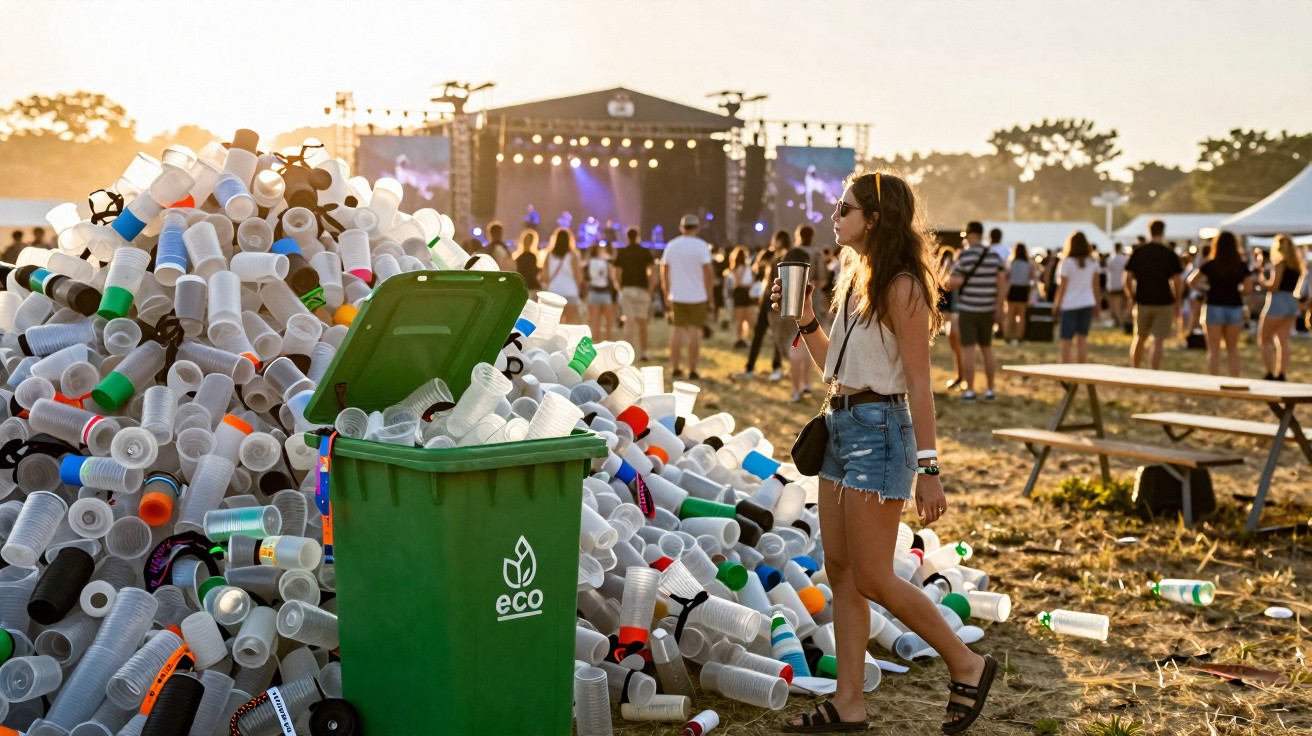
Plastic containers at major music events are often presented as part of modern sustainable practices. Yet, unless effective systems are in place to ensure these items are returned and properly washed, the initiative loses its genuinely transformative purpose.
How does the current false ecological model work?
A range of civil society organisations warn that the unrestricted distribution of utensils at festivals does not lead to genuine reuse. With no clear regulation, these products become costly commercial souvenirs, leaving thousands of containers to be improperly discarded after performances end.
Environmental campaigners stress that neither the thickness of the material nor the green messages printed on it is enough to justify calling an item reusable. A truly positive environmental impact necessarily relies on logistics that ensure every item is collected and washed on a regular basis.
Environmental organisations have put forward key measures to address this glaring shortcoming:
- Legal definition: A requirement for a complete collection, transport and washing circuit before reuse can be validated.
- Mandatory return: Accessible, clearly visible return points must remain available until the event closes.
- Full transparency: The sale of rigid plastic must not be disguised, and deposit amounts must be clearly stated.
- Audited traceability: Genuine data on usage cycles and recovery rates must be published publicly.
- Sanctions regime: Strict inspections should be introduced, with public sponsorship linked to compliance with logistical rules.
What legal requirements are currently in force?
Since July 2023, Spanish legislation has required organisers to provide workable alternatives to disposable products. However, the lack of continuous operational enforcement allows major festivals to sidestep fundamental environmental obligations.
Current guidance requires promoters to provide durable solutions that meet specific technical manufacturing criteria. Even so, activists caution that regulatory loopholes undermine the purpose of the circular economy, causing serious harm to the preservation of the planet.
What role do environmental organisations play?
More than 130 consumer associations and environmental groups have joined forces to demand urgent action from ministerial authorities. This representative coalition aims to end the corporate privileges enjoyed by brands that profit from misleading claims of sustainability.
Alianza Residuo Cero
Urgent demand to MITECO
The organisations within the movement are calling for immediate reforms to curb mass disposal.
Their primary goal is to turn reuse into a real, transparent practice that is fully audited by public bodies.
Activist groups argue that major music events must no longer improve their institutional image by passing excessive costs on to customers. According to experts, charging extra fees without providing accessible refund points amounts to an unfair commercial practice.
The leading movements signing this formal petition include:
- Alianza Residuo Cero
- Plataforma #LeydeResiduosYA
- Greenpeace Spain
How can the European framework help?
The planned reform of the legal landscape offers the ideal opportunity to permanently resolve this existing operational gap. Bringing national standards into line will help align the country with the environmental targets in force across the continent.
New continent-wide rules designed to reduce plastic waste will apply from August 2026. This update is expected to profoundly alter the approach taken by production companies towards urgent climate challenges.
The principal legal frameworks cited by the organisations to support this legal transition include:
- Waste Law 7/2022
- Packaging Royal Decree 1055/2022
- European Regulation 2025/40
What is the real solution for the future?
A genuine circular economy requires society to move beyond superficial answers and discuss what recycling truly means. National authorities must introduce strict rules that turn reuse into a mandatory, transparent logistical system.
Only rigorous monitoring of return rates, alongside the industrial washing of containers, can tackle waste. In this way, Brazilian and global festivities can finally celebrate entertainment without jeopardising the ecological future.
Official source: Information obtained directly from Greenpeace Spain.






Comments
No comments yet. Be the first to comment!
Leave a Comment