
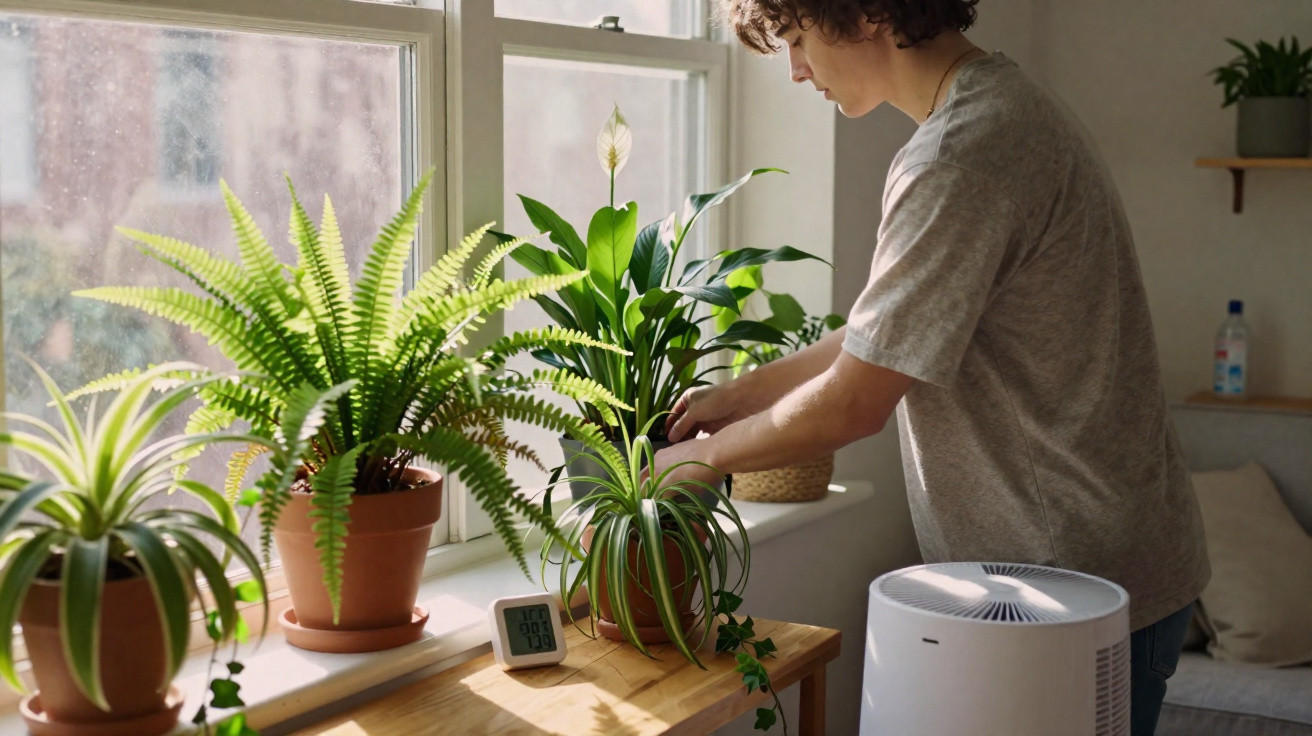
Every winter, damp walls, musty air and no room for a condenser tumble dryer?
There is a remarkably straightforward, eco-friendly answer.
Many households face the same issue: windows steam up, wallpaper begins to peel and a dark mark gradually appears in the corners. Rather than immediately reaching for an electricity-hungry dehumidifier, increasing numbers of people are turning to an attractive natural aid: selected houseplants that draw moisture from the air like a sponge.
How plants absorb excess humidity from the air
Too much moisture indoors does more than make a room feel unpleasant. It encourages mould and dust mites, and can eventually damage the fabric of the building. From a health perspective, consistently high humidity is considered a risk to the respiratory system and immune system, particularly for children and allergy sufferers.
This is where certain houseplants can help. They absorb water vapour through their leaves and release it again in controlled amounts. Specialists refer to this process as leaf transpiration. Although the term may sound technical, the effect can be highly useful: thanks to their extensive leaf area, some species act like a natural dehumidifying system.
“Correctly positioned houseplants can remove several percentage points of humidity in problem rooms – without electricity, noise or chemicals.”
Plants are not a replacement for regular rapid ventilation, however. They can still make a noticeable difference in spaces that are difficult to air properly, such as internal bathrooms, windowless hallways or bedrooms with limited air circulation. A green solution is especially worthwhile where conventional appliances are intrusive or costly.
Lesser-known humidity specialists instead of just Monstera
The usual choices, such as devil’s ivy or snake plants, now feature in almost every home. Less familiar species are particularly interesting because they can perform especially well when it comes to managing humidity – in some cases better than a small dehumidifier from a DIY shop.
Boston fern: a classic with a hidden superpower
At first glance, the Boston fern (Nephrolepis exaltata) may look like nostalgic décor from a grandmother’s sitting room. Yet its delicate, arching fronds conceal a genuine workhorse. Its substantial leaf mass continually transpires water while also drawing moisture from the room’s air.
Trials have shown that a healthy, well-established plant can absorb a noticeable share of the moisture in a medium-sized room. It is particularly effective in areas where water vapour is regularly produced:
- A bathroom with a heated towel rail but inadequate ventilation
- A kitchen where a great deal of steam is created during cooking
- A laundry room or utility room
The fern is best placed slightly above floor level, on a shelf, chest of drawers or in a hanging planter. This allows warmer, more humid air to pass directly through its fronds. It prefers bright conditions without direct midday sun, and its root ball should remain evenly moist rather than waterlogged.
Peace lily: a moisture filter and air purifier in one
The peace lily (Spathiphyllum) can initially seem like little more than a decorative houseplant from a homeware shop. In reality, it is among the most versatile “all-rounders” for improving the indoor climate. Its broad, glossy leaves take in water vapour, while its roots process considerable amounts of moisture.
At the same time, the plant is regarded as an air filter for certain pollutants released by furniture, laminate flooring and paint. This makes the peace lily especially suitable for the following areas:
| Room | Benefit of the plant |
|---|---|
| Bedroom | reduces humidity and certain pollutants |
| Home office | makes the air feel better in poorly ventilated workspaces |
| Windowless hallway | copes with low light and helps to stabilise the indoor climate |
Care is uncomplicated: water it once a week, allow the compost to dry slightly between waterings and keep it out of intense sunshine. Drooping leaves indicate that conditions have become too dry; after watering, they will usually lift again within a day.
English ivy, spider plant and more: understated but highly effective
Alongside these two standout plants, several other varieties can also provide impressive help with air humidity:
- English ivy: draws moisture from the air, trails along shelves or plant supports, and is well suited to older flats that tend to be damp.
- Spider plant (Chlorophytum): produces dense clumps of numerous narrow leaves that transpire water continuously. Ideal for a laundry room, hallway or child’s bedroom.
- Calathea: mainly valued for its decorative, striking leaf patterns, it likes higher humidity but still contributes to regulation through its leaf surface.
- Indoor bamboo: grows quickly, absorbs plenty of water through its roots and is often placed in damp corners, where pots with saucers are useful anyway.
“Several medium-sized plants in a damp room often work more consistently than one single huge specimen.”
How to use plants specifically against humidity
Strategic positioning in problem areas
Simply putting a fern in a corner will produce only a limited effect. A better approach is to plan around humidity hotspots:
- Bathroom: place a Boston fern or peace lily next to the shower or bath, preferably raised on a stool or wall shelf.
- Kitchen: two or three spider plants close to the window or on top of wall cupboards can catch cooking steam that is not aired out immediately.
- Bedroom: position a larger peace lily near the bed, together with consistent morning ventilation.
- Cellar room: use robust English ivy in pots where there is slight dampness in the walls – and add a mechanical dehumidifier if the moisture is severe.
It is important to remember that plants can buffer humidity but cannot remedy structural faults. Wet walls, leaking roofs and major mould patches cannot be solved by adding greenery; they require professional repair.
Care mistakes that undermine the effect
Many people wonder why their “humidity plants” seem to make very little difference. The reason is often one of these simple mistakes:
- Pots that are too small: less compost means fewer roots and less leaf growth, which also reduces the dehumidifying effect.
- Saucers that remain wet all the time: waterlogging damages the roots, causing the plant to lose leaf mass and work less effectively.
- Insufficient light: without light there is no photosynthesis, and without photosynthesis there is hardly any water turnover – plants in a dark corner achieve almost nothing.
- Dusty leaves: dust stops the leaf surface from working properly. Wipe the leaves with a soft cloth or rinse them off once a month.
“For plants to have a noticeable influence on humidity, they need above all: light, enough space in the pot and reasonably consistent care.”
How many plants can replace a dehumidifier?
There is no precise conversion. Mechanical appliances can extract several litres of water from the air in a short period. Plants work more quietly, gradually and continuously. In a typical two-room flat with a minor moisture issue, a combination of the following can help:
- 2–3 larger specimens (Boston fern, peace lily, indoor bamboo)
- plus 4–6 medium-sized plants (spider plant, Calathea, English ivy)
- combined with thorough rapid ventilation two to three times each day
This creates a balance between technical measures, good ventilation habits and support from plants. Anyone already using a dehumidifier can often noticeably reduce its running time when enough plants are also present in the room.
Health considerations and minor risks
In addition to creating a more pleasant indoor climate, the plants mentioned offer another advantage: they can partly filter volatile substances released from carpets, furniture and paint. Many people report fewer headaches and a fresher feeling in their head since bringing more greenery into their home.
There are still several points worth considering:
- Some species are mildly toxic to pets – peace lilies and English ivy, for example, should not be placed where cats like to chew plants.
- Anyone highly sensitive to pollen or mould should keep the compost well maintained and remove old leaves promptly, so that micro-mould does not develop.
- Allergy sufferers should initially try new species in a room where they do not spend all their time.
If you are unsure, begin with a hardy spider plant or indoor bamboo and observe how both the indoor climate and your own wellbeing change. When combined with a hygrometer, ventilation and, if needed, a small dehumidifier, this gradually creates a system that removes the conditions mould needs to thrive – while also making the home noticeably more inviting.






Comments
No comments yet. Be the first to comment!
Leave a Comment