
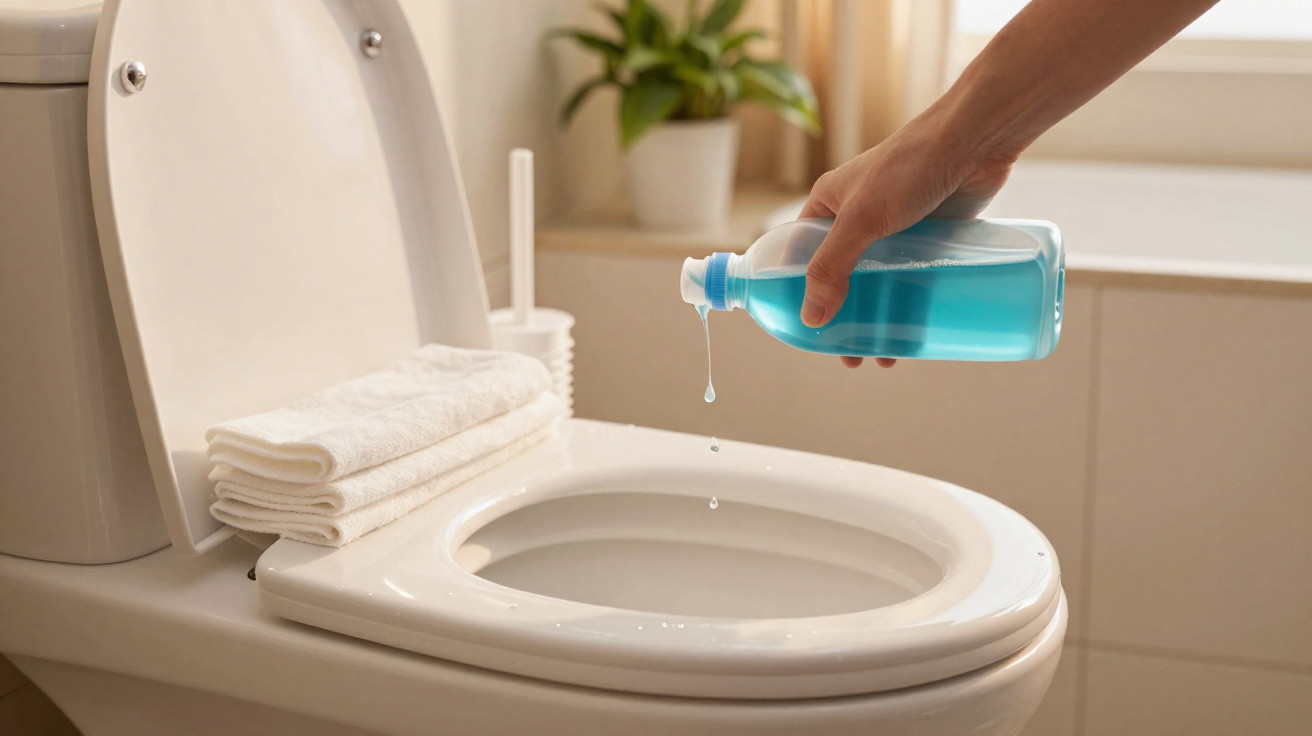
Rather than reaching straight for another abrasive toilet gel or drain cleaner, an increasing number of households are discreetly using everyday washing-up liquid as an initial solution. When applied correctly, the slippery blue or green liquid may help shift stubborn minor blockages, remove grime and even limit limescale build-up.
Why washing-up liquid works so effectively in the toilet
Washing-up liquid is formulated to disperse grease and food residue from plates, which gives it a specific behaviour in water. Those same qualities can be unexpectedly helpful in a toilet bowl and the pipework beneath it.
Washing‑up liquid lowers the water’s surface tension, helping it slide into tiny gaps and wrap around dirt and waste.
By lowering surface tension, it allows water to travel more easily across porcelain and through the U-bend. Rather than adhering to surfaces, the water is better able to grip grime, helping to release:
- oily deposits from body oils and cosmetics
- organic waste that has begun to dry out and solidify
- paper that has collected in a mass rather than breaking down
Most washing-up liquids contain gentle surfactants as well as a small quantity of solvent. These components raise particles from the surface and hold them in the water, allowing them to be flushed away rather than sticking back onto the bowl.
The “evening drop” routine for a cleaner bowl
A straightforward routine has begun appearing on home-care forums. It requires only a bottle of washing-up liquid and some patience.
Before bed, apply a narrow line of washing-up liquid around the inner rim of the toilet bowl. It gradually runs down the bowl sides, coating both the porcelain and standing water with a light, slippery layer.
Left overnight, the detergent has hours to soften rings, stains and residue that normal flushing never quite removes.
In the morning, add a kettle of hot, but not boiling, water from waist height, then flush normally. The heat, added water pressure and loosened dirt can often remove marks without needing a toilet brush.
Step-by-step: using washing-up liquid for minor clogs
In a toilet that drains slowly or has a minor blockage, washing-up liquid can work as both a softener and lubricant within the pipes. Plumbers generally point out that it will not resolve a major obstruction, although it can be sufficient for clogs at an early stage.
A practical method for a sluggish toilet
This is a simple technique that many plumbers consider suitable for modern toilets:
- Do not flush again if the water is rising close to the rim.
- If you can, allow 10–15 minutes for the water level to fall a little.
- Squeeze roughly 200–300 ml of washing-up liquid directly into the bowl, directing it towards the outlet where the water drains away.
- Leave it for 10–20 minutes, allowing it to run down and cover the blockage.
- Gently pour in a bucket of hot, not boiling, water from approximately hip height, maintaining a steady pour for additional force.
- Wait a further five minutes, then flush once and monitor the water level.
The detergent acts as a lubricant, helping heavy waste and paper slip through tight bends instead of wedging in place.
If the water remains high or drains extremely slowly, a plunger or professional assistance will usually be required. Trying the detergent method repeatedly can cause the toilet to overflow and leave the floor soaked.
How it compares to harsh chemical cleaners
Many homes store gels and powders beneath the sink that claim to work instantly. Although these can be effective, they also have disadvantages.
| Product type | Main effect | Downside |
|---|---|---|
| Washing-up liquid | Lubricates and loosens light grime and minor clogs | Limited effect on heavy limescale or deep blockages |
| Bleach-based toilet gel | Disinfects and whitens stains | Can irritate lungs and damage some seals if overused |
| Caustic drain cleaner | Dissolves organic matter quickly | Aggressive, can harm older pipes and septic systems |
Washing-up liquid contains the same surfactants used to clean dinner plates and cutlery, meaning that, in moderate quantities, it presents a relatively low risk to household plumbing and septic tanks.
Simple combinations that remain gentle
For routine upkeep rather than serious unblocking, some people combine washing-up liquid with other common cupboard ingredients. Frequently used options are:
- Lemon juice or citric acid: can help break down limescale marks as the washing-up liquid releases grime.
- Bicarbonate of soda: provides gentle abrasion when sprinkled into the bowl before adding detergent.
- Cola: when used from time to time, the phosphoric acid in cola may soften mineral deposits before a detergent flush.
Avoid mixing washing‑up liquid with bleach or aggressive drain products, as extra fumes and unpredictable reactions can follow.
When the trick helps-and when it does not
It is best to treat washing-up liquid as a useful aid rather than a solution for every plumbing emergency. Recognising where it works and where it does not can avoid both damage and frustration.
Situations where a detergent drop shines
- the first indications of a clog, including a slower flush or water briefly rising in the bowl
- weekly routine cleaning when specialist cleaning products are unavailable
- holiday lets or guest bathrooms where a mild option is wanted between thorough cleans
Professional equipment is nearly always needed for blockages caused by tree roots, foreign items such as toys, wipes or sanitary products, or recurring overflows. In these circumstances, extra washing-up liquid will merely coat an obstruction that cannot be shifted.
Risks, moderation and small plumbing lessons
For most modern toilet systems, an occasional squeeze of washing-up liquid is regarded as safe. Many plumbers even suggest it as an initial measure before using a plunger, as it will not corrode pipework.
However, using excessive quantities has drawbacks. Large volumes may produce substantial foam, particularly in low-flush toilets. This foam can hold air, causing unusual flushing noises and occasionally forcing bubbles back into the bowl. Septic tanks also benefit from restraint, since a continual supply of detergents can disrupt the bacteria responsible for breaking down waste.
A thumb‑length squirt once or twice a week is usually enough for cleaning; more than that rarely adds extra benefit.
Helpful terms and what they actually mean
Social-media home-care advice often uses technical terms without properly explaining them. Discussions of washing-up liquid in toilets regularly include two particular phrases.
Surface tension describes how water molecules attach to one another. When surface tension is high, water forms beads; when it is low, it spreads out and enters small gaps. Detergents lower surface tension, which is why they help liquid work its way through the tight bends of a U-bend.
Surfactants are the cleaning ingredients that do the active work in washing-up liquid. One side of each surfactant molecule attaches to water, while the other binds to oil and grease. During flushing, they draw oily particles off the porcelain and keep them suspended in moving water, helping all the material pass down the pipe together.
Knowing these principles makes this everyday household method more predictable. Rather than expecting a miracle, you can understand what that blue drop can and cannot achieve whenever it enters the bowl.

Comments
No comments yet. Be the first to comment!
Leave a Comment