
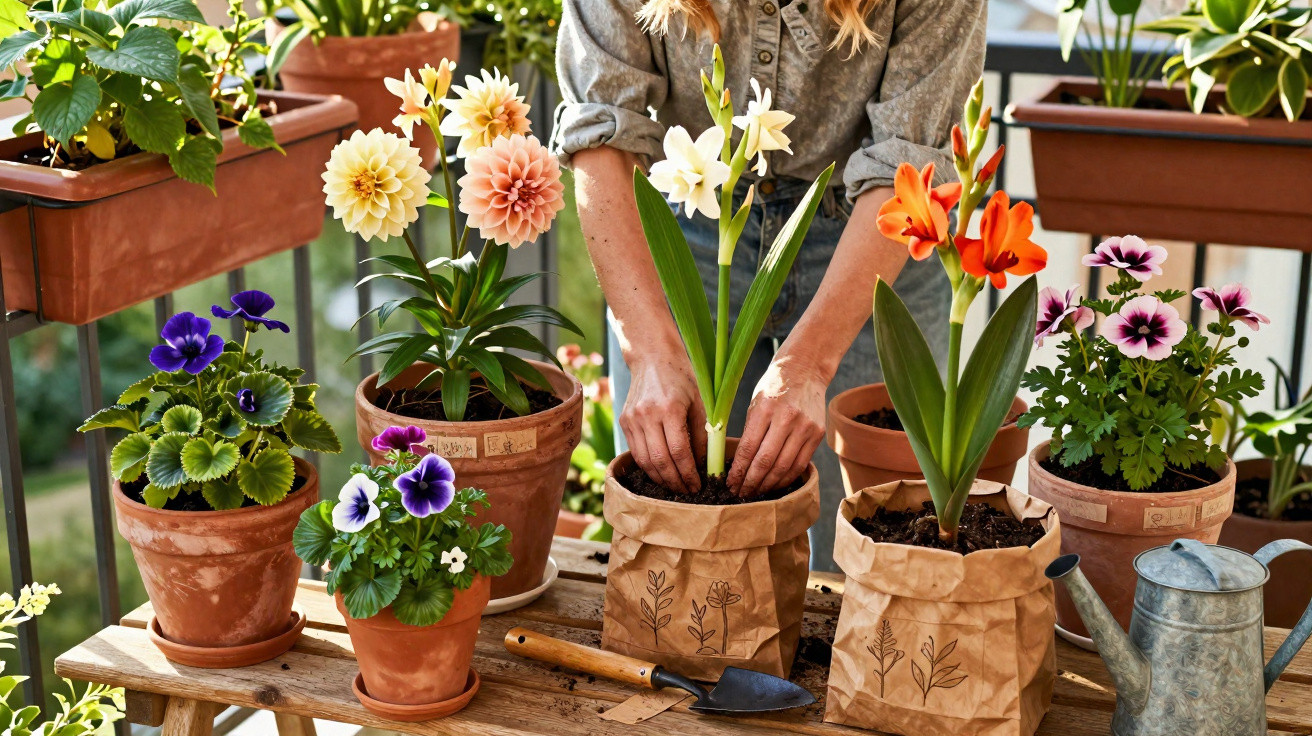
Winter has passed, the beds look bare and window boxes feel bleak. Right now is the moment that determines whether summer will be merely “quite nice” or turn into a genuine explosion of colour. Certain flower bulbs and tubers are planted in spring and provide fresh blooms for months, often for years to come. That means you do not have to start again from scratch every summer.
Why perennial summer bulbs are the best choice now
When people think of flower bulbs, tulips and daffodils planted in autumn often spring to mind. Yet for a show-stopping display in July and August, different contenders are working behind the scenes: bulbs and tubers planted in spring that really get going in summer.
The major benefit is that many of these summer bulbs are perennial and, if treated correctly, return for several seasons.
Many of these plants have already received their required “cold treatment” in storage. All they need is loose, well-drained soil. Depending on your area and the risk of frost, the ideal planting period runs from late February until the end of May at the latest. Missing this window means losing considerable flowering potential.
It is crucial that water does not sit in the soil during winter. Waterlogging makes bulbs rot. In borders, this means using friable soil; in pots, always include a drainage layer of gravel or expanded clay.
How to plant spring bulbs for continuous summer flowering
Whether you are handling a bulb, tuber, rhizome or corm, the planting process is broadly the same. This makes the job less daunting for beginners and saves time.
- Prepare loose, free-draining soil and remove weeds.
- Dig a planting hole around two to three times the height of the bulb.
- Place the bulb in the hole with its pointed end facing upwards.
- Cover it with fine soil and firm it gently.
- Water thoroughly so that the soil makes good contact with the bulb.
For containers, add a layer of gravel, broken terracotta or expanded clay at the base. This allows surplus water to drain away. Many summer-flowering plants even perform better in pots, as warmth and nutrients can be managed more precisely.
The 10 most important summer bulbs for the garden and balcony
Good planning now means combining height, colour, fragrance and flowering time. These ten varieties are particularly dependable, both in borders and containers.
Amaryllis for huge exotic flowers
Known from indoor pots, amaryllis also makes an impact outdoors. Its dramatic trumpet-shaped flowers are held on sturdy stems and thrive in sunshine and well-drained soil. It brings a touch of the tropics to a border, while in a container it quickly becomes a focal point on the patio.
Anemones as delicate clouds of bloom
Anemones spread across the ground like a carpet. Their fine flowers dance in the breeze, making them ideal for edging borders or loosely filling gaps among perennials. They look especially natural in pots when several tubers are planted close together.
Tuberous begonias for tricky shady corners
Where hardly anything else is willing to flower, tuberous begonias step in. They enjoy partial shade to shade and reward you with lavish, almost uninterrupted flowering. Plant the tubers in pots or window boxes in spring, then lift them again in autumn and store them somewhere frost-free.
Caladiums as foliage stars rather than flower stars
Caladiums are valued less for their flowers than for their spectacular foliage. Their heart-shaped leaves, patterned in white, pink, red and green, look almost painted. The tubers are happiest in warm spots or on a sheltered urban balcony. For storage, keep them dry and relatively warm, such as indoors.
Cannas for a tropical holiday feel
Cannas add height to a border. Their large leaves, sometimes marked with red, and vivid flower spikes evoke holidays in warm countries. They are ideal specimen plants in a sunny border or a large container on a roof terrace. In colder areas, lift the rhizomes before the first hard frost and store them somewhere cool and dark.
Crocosmias for fiery splashes of colour
The narrow, arching flower stems of crocosmias carry dozens of small blooms ranging from orange to scarlet. They work well in naturalistic borders, attract bees and butterflies, and are fairly robust, particularly with winter protection from leaves or mulch.
Dahlias – classics that return year after year
Dahlias are regarded as the queens of late-summer borders. Their forms range from simple, star-shaped flowers to perfectly round pompons. Plant the tubers once the last frosts have passed. If you lift them again in autumn and store them frost-free, you can grow the same plants for many years.
Gladioli for striking lines and cut flowers
Gladioli bring order and structure to a border: their upright stems work particularly well among lower-growing plants. Planting fresh corms every two weeks gives you staggered flowering well into late summer. They also last well in a vase as cut flowers.
Lilies for fragrance and elegance
Lilies are among the most classic summer-flowering plants. Many varieties are strongly scented, making them especially suitable near seating areas or paths. Their bulbs can often stay in the ground for several years, gradually forming larger clumps.
Tuberoses for evening fragrance on the patio
Tuberoses are less widely known, yet they are a hidden gem for fragrance lovers. Their white flowers release an intense scent, especially in the evening. Containers positioned close to the patio are ideal, as this is where you will really notice the fragrance. Their tubers can tolerate very little frost, so they need to be brought indoors in autumn.
Which position suits which bulb?
To help the plants fulfil their potential, it is worth taking a quick look at available light and space. Not every variety copes equally well with full sun or shaded corners.
| Plant | Position | Note |
|---|---|---|
| Cannas | Full sun | Large containers or the back of a border |
| Dahlias | Sun to partial shade | Feed regularly and provide support |
| Tuberous begonias | Partial shade to shade | Ideal for north-facing balconies |
| Caladiums | Bright shade | Only partly rainproof; choose a sheltered position |
| Gladioli | Sun | Suitable for borders and cutting |
| Lilies | Sun, with cool roots | Underplanting with ground cover is useful |
How perennial summer bulbs survive winter
In mild areas, some varieties, such as crocosmias and certain lilies, can remain in the ground if the soil is loose and not too wet. A thick mulch of leaves or bark pieces provides added frost protection.
Where winters are harsh, a small autumn routine is worthwhile: after the first frost, lift the tubers of dahlias, cannas, tuberous begonias, caladiums and tuberoses. Allow them to dry, remove old foliage, then store them in boxes with a little dry soil or sawdust. The storage space should be frost-free, dark and well ventilated, such as a cool cellar.
Practical tips for low-maintenance gardeners and balcony owners
Anyone short on time should choose robust pairings: dahlias with crocosmias in a sunny border, or tuberous begonias with anemones in partial shade. In large pots, combine lilies with low-growing summer flowers. This makes the planting look full and lively from the outset.
Another useful trick is to mix slow-release fertiliser into the soil at planting time. This gives the bulbs sufficient nutrients for weeks. Regularly removing faded flowers encourages fresh buds, turning one flush of bloom into an entire summer of flowers.
What beginners should know before buying summer bulbs
The term “perennial” does not automatically mean plants can stay in the ground through every winter. This is often possible in warmer areas with little frost, but colder locations require a little help. Those with only window boxes may even benefit: containers can easily be moved into a cellar or stairwell.
It becomes particularly rewarding when you build up your own collection of “favourite varieties” over the years. Many gardening enthusiasts exchange tubers and bulbs with one another or try one or two new varieties each year. In this way, not only does the plant collection grow, but so does experience – and summer will soon feel anything but empty, even if everything still looks bare in March.





Comments
No comments yet. Be the first to comment!
Leave a Comment